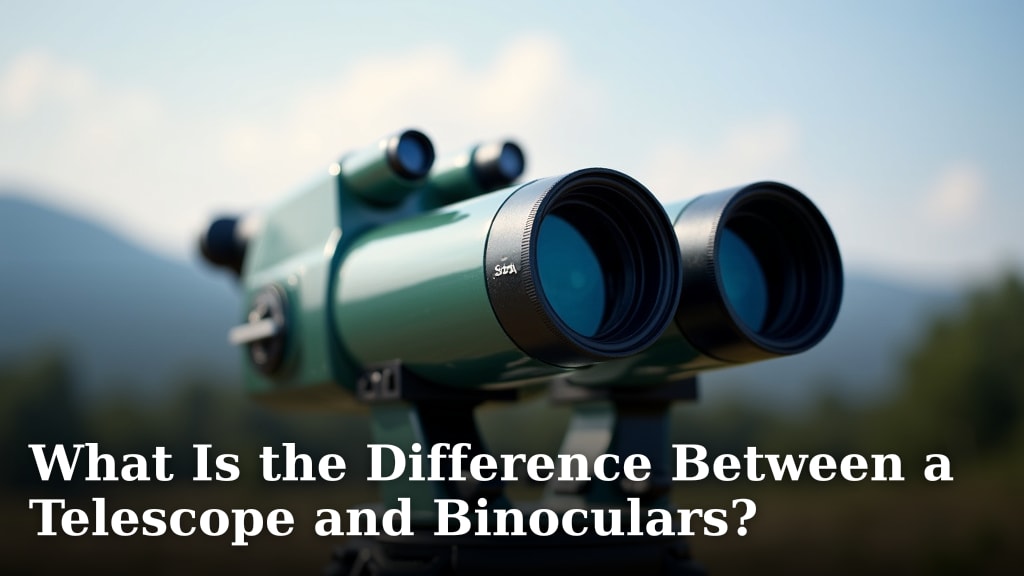
What Is the Difference Between a Telescope and Binoculars?
When you’re looking at distant objects, both a telescope and binoculars can help. The main difference is how you use them and what they’re best for. Binoculars are great for handheld viewing of things like birds or sporting events. Telescopes are designed for looking at very distant objects, like stars and planets, and need a stable surface.
Think of binoculars as having two small telescopes joined together. They offer a wider field of view, making it easier to find and track moving subjects. Telescopes, on the other hand, gather more light and magnify objects far more, but usually have a narrower field of view and require more setup.
- Binoculars are handheld and good for general viewing.
- Telescopes magnify much more for distant, stationary objects.
- Binoculars offer a wider view; telescopes offer deeper magnification.
- Both use lenses or mirrors to see farther.
Let’s break down what makes each one unique and help you choose the right tool for your stargazing or birdwatching adventures.
Understanding the Core Differences Between Telescopes and Binoculars
So, you’re curious about seeing farther, whether it’s the soaring hawk or a distant planet. You’ve heard about telescopes and binoculars, but what’s the real scoop? At their heart, both devices use lenses or mirrors to bend light and make faraway things look closer. The main divergence lies in their purpose, design, and how you typically use them.
Think of binoculars as your trusty sidekick for everyday adventures. They’re compact and easy to handle. Telescopes are more like specialized tools, built for serious observation of things extremely far away, often in the night sky. We’ll walk through what makes each one tick so you can pick the perfect match for your needs.
Binoculars: Your Portable Window to the World
Binoculars are designed for convenience and versatility. Their most defining feature is that they are handheld and portable. This makes them ideal for activities where you’re on the move or need to react quickly.
What Binoculars Are Best For
Imagine you’re at a baseball game, trying to catch the action on second base. Or maybe you’re hiking and spot a colorful bird in a distant tree. Binoculars are your go-to for these kinds of scenarios. They offer a wider field of view, which is like having a broader panorama. This makes it much easier to find and follow moving subjects. Many people find them comfortable for extended viewing without needing extra support.
Portability and Ease of Use
You can easily slip a pair of binoculars into a bag or wear them around your neck. They require minimal setup. Just lift them to your eyes, adjust for focus, and you’re ready to go. This simplicity is a big reason why they are so popular for outdoor activities like birdwatching, hunting, or attending live events.
Understanding Binocular Magnification and Objective Lenses
Binoculars are usually described by two numbers, like 8×42 or 10×50. The first number (e.g., 8x or 10x) tells you the magnification power. This means the object will appear 8 or 10 times closer than it does with your naked eye. The second number (e.g., 42 or 50) refers to the diameter of the objective lenses in millimeters. These are the lenses at the front that gather light. A larger number means more light enters the binoculars, leading to a brighter and clearer image, especially in low-light conditions like dawn or dusk.
Types of Binoculars
There are a couple of main designs. Porro prism binoculars have a more traditional, offset barrel shape. They tend to offer a slightly wider field of view and better depth perception. Roof prism binoculars have a straighter, more compact design, making them more streamlined and often more durable and water-resistant. Both types can provide excellent views, but the shape and size can affect how they feel in your hands.
Telescopes: Unveiling the Depths of the Universe
Telescopes are built for a single, powerful purpose: to observe extremely distant and often faint objects. They are designed to gather a significant amount of light and provide very high magnification.
What Telescopes Are Best For
When you think of a telescope, you probably picture someone gazing at the moon or distant planets. This is exactly what they excel at. Telescopes are for stargazing and astronomical observation. They can reveal details on the moon’s surface, show you the rings of Saturn, or help you spot faint galaxies and nebulae. Because they magnify so much, they are typically used for looking at objects that are not moving quickly, if at all. If you’re interested in astronomical observation, learning about star charts can help you navigate the night sky.
Magnification Power and Light Gathering
Telescopes offer much higher magnification than binoculars. While binoculars might go up to 10x or 12x, telescopes can easily reach 50x, 100x, or even much more. This extreme magnification allows you to see incredibly fine details. However, with great magnification comes a narrower field of view. It’s like looking through a straw; you see a small, magnified part of the whole. The large objective lens or mirror of a telescope is its most critical feature for light-gathering. The bigger it is, the more light it collects, allowing you to see fainter objects and with more clarity.
Stability and Setup Requirements
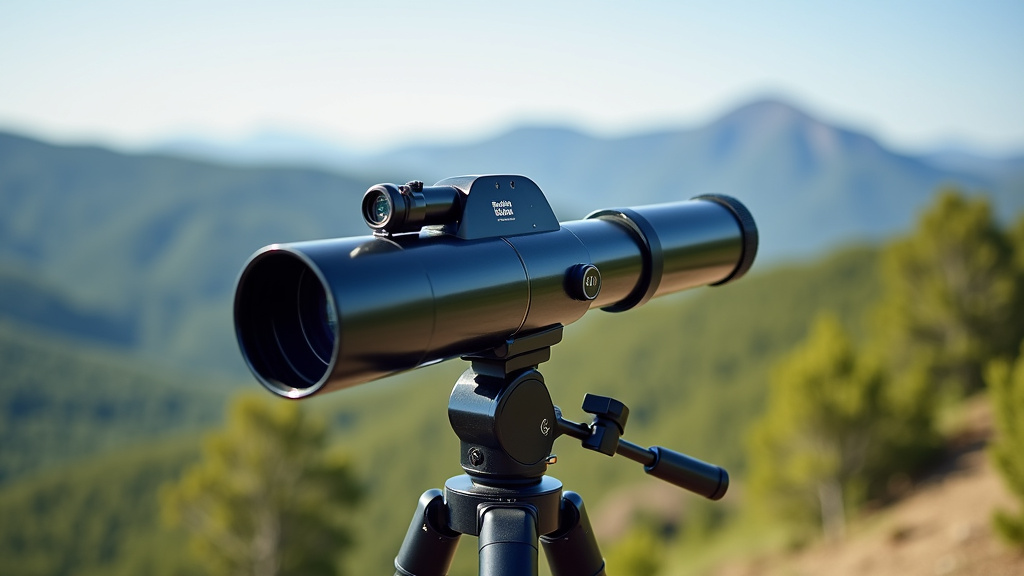
Because of their high magnification, even the slightest shake can cause a jarring wobble in the image. This is why telescopes almost always require a stable mount and tripod. You can’t comfortably hold a telescope to view the stars. Setting up a telescope can take more time and effort than using binoculars. You need to assemble the mount, attach the telescope tube, and often align it to find your target. Many beginner telescopes come with different eyepieces that offer varying magnifications.
Types of Telescopes
There are three primary types of telescopes, each using different optical designs:
- Refractor Telescopes: These use lenses to gather and focus light. They are often praised for their sharp, high-contrast images, making them great for viewing planets. They are typically sealed, which means less maintenance.
- Reflector Telescopes: These use mirrors to gather and focus light. They are generally more affordable for their aperture size (the diameter of the main mirror) and are excellent for viewing fainter, deep-sky objects like nebulae and galaxies.
- Catadioptric Telescopes: These combine both mirrors and lenses. They are often very compact for their aperture size and offer a good balance of magnification and portability.
Choosing the right type often depends on your budget and what you plan to observe most often.
Key Differences at a Glance: Binoculars vs. Telescopes
To help solidify the distinctions, let’s put the main differences side-by-side. This table highlights the core functional and design variations you’ll encounter.
| Feature | Binoculars | Telescopes |
|---|---|---|
| Primary Use | General viewing, wildlife, sports, travel, daytime observation | Astronomy, deep-sky objects, planets, detailed lunar observation |
| Portability | Highly portable, handheld, quick to deploy | Less portable, requires stable mount, longer setup time |
| Magnification | Lower (e.g., 7x to 15x) | Much higher (e.g., 50x to 300x+) |
| Field of View | Wider, easier to track moving objects | Narrower, focused on specific distant objects |
| Light Gathering | Moderate to good, depending on objective lens size | Excellent, designed to collect maximum light |
| Stability Needs | Minimal, handheld is usually sufficient | Requires a stable tripod or mount |
Making Your Choice: Which Is Right for You?
So, how do you decide? Ask yourself what you really want to see and where you’ll be doing your viewing. If you enjoy spotting birds in your backyard, watching wildlife on a hike, or getting a better view at a concert, a good pair of binoculars will likely serve you wonderfully. They are user-friendly and don’t require much fuss.
On the other hand, if your dreams are filled with galaxies, nebulae, and the craters on the moon, a telescope is what you need. While it requires more commitment in terms of setup and learning to use, the rewards of glimpsing the wonders of the cosmos are immense. Many amateur astronomers begin with binoculars to get a feel for stargazing before investing in a telescope.
A Quick Checklist for Your Decision
To make your choice even clearer, consider these points:
- What do you want to observe? (e.g., birds, stars, sports)
- Where will you be observing? (e.g., backyard, hiking trails, open fields)
- How important is portability? (Do you need to carry it easily?)
- How much setup time are you willing to invest?
- What is your budget? (Both can range widely in price)
- Do you prefer daytime or nighttime viewing primarily?
By thinking through these questions, you can steer yourself toward the optical instrument that will bring you the most joy and discovery.
Conclusion
You’ve learned that while both telescopes and binoculars help you see farther, they serve different purposes. Binoculars are your compact, portable companions for general viewing, from birdwatching to sporting events, offering a wider field of view. Telescopes, on the other hand, are specialized for deep-sky observation, providing immense magnification for planets and stars but requiring more setup and a stable base. Consider your primary viewing interests and where you’ll be using your instrument. If you’re drawn to the wonders of the night sky, a telescope is your path to discovery; for everyday adventures and broader sights, binoculars are likely your best bet. Take a moment to think about what you want to see most, and that will guide you to the right choice.
Frequently Asked Questions
Can I use binoculars for stargazing?
Yes, you absolutely can! Many amateur astronomers start with binoculars. They are great for viewing the moon, some brighter star clusters, and even larger nebulae under dark skies. Because they are easy to use and portable, they’re a fantastic way to begin exploring the night sky without a large investment.
Are telescopes difficult to set up and use for beginners?
Telescopes can require more setup than binoculars, often involving assembling a mount and tripod. Learning to find celestial objects can also take practice. However, many beginner telescopes are designed to be user-friendly, and there are plenty of resources available to help you learn the basics quickly.
Which has a wider field of view: binoculars or telescopes?
Binoculars generally offer a much wider field of view. This makes them excellent for scanning the sky, tracking moving objects like birds, or getting a general overview of a scene. Telescopes typically have a narrower field of view due to their high magnification, focusing on specific, distant targets.
Can I use a telescope for daytime viewing, like birds?
While a telescope provides high magnification, it’s usually not ideal for viewing birds or other distant terrestrial objects. Their narrow field of view makes them difficult to track moving subjects, and they often require a special diagonal prism to view objects right-side up. Binoculars are much better suited for general daytime observation.
What does the ‘x’ number mean on binoculars and telescopes?
The ‘x’ number refers to the magnification power. For example, 8x binoculars or a 100x telescope mean the object will appear that many times closer than with your naked eye. Higher magnification allows you to see finer details but often results in a narrower field of view and can require a stable mount to avoid shaky images.