Telescope vs Spotting Scope: Which Should You Choose? (October 2026)
Choose a telescope for astronomy and a spotting scope for daytime targets. If you want both, compare the viewing angle, portability and mount before you buy.
On this page (8 sections)
- Telescope vs spotting scope: what is the main difference?
- Which one should you choose for astronomy?
- When is a spotting scope the better choice?
- Can one scope work for both day and night?
- How do mounts and viewing angles affect the choice?
- What should you compare before buying?
- Which option suits a beginner?
- Telescope vs spotting scope: which should you buy?
Choose a telescope for astronomy and a spotting scope for daytime targets. If you want one optic for both, compare the viewing angle, portability and mount before you buy.
A telescope is usually the better match for the Moon, planets and other sky objects. A spotting scope is designed for birds, wildlife, landscapes and other distant daytime subjects.
Some models can serve both roles, but the experience differs. The telescope may need an image-correcting diagonal for daytime use, while a spotting scope may be less suited to finding and tracking faint or moving sky targets.
 Best for night and day
Celestron Travel Scope 70mm Beginner Portable Telescope

Telescope vs spotting scope: what is the main difference?
A telescope is chosen mainly for astronomy; a spotting scope is chosen mainly for terrestrial viewing. Their optics, viewing angle and included accessories reflect those priorities.
Astronomy telescopes commonly use interchangeable eyepieces and mounts intended to point toward the sky. Many spotting scopes use an angled or straight body, a built-in zoom eyepiece and a compact tripod for looking across land.
A spotting scope typically presents an upright view for scenery. With a telescope, image orientation depends on its design and accessories.
A star diagonal may make viewing more comfortable, but an erect-image diagonal is the feature to look for when you want a natural daytime orientation.
For a simple explanation of the terrestrial option, see What Is a Spotting Scope? A Simple Guide.
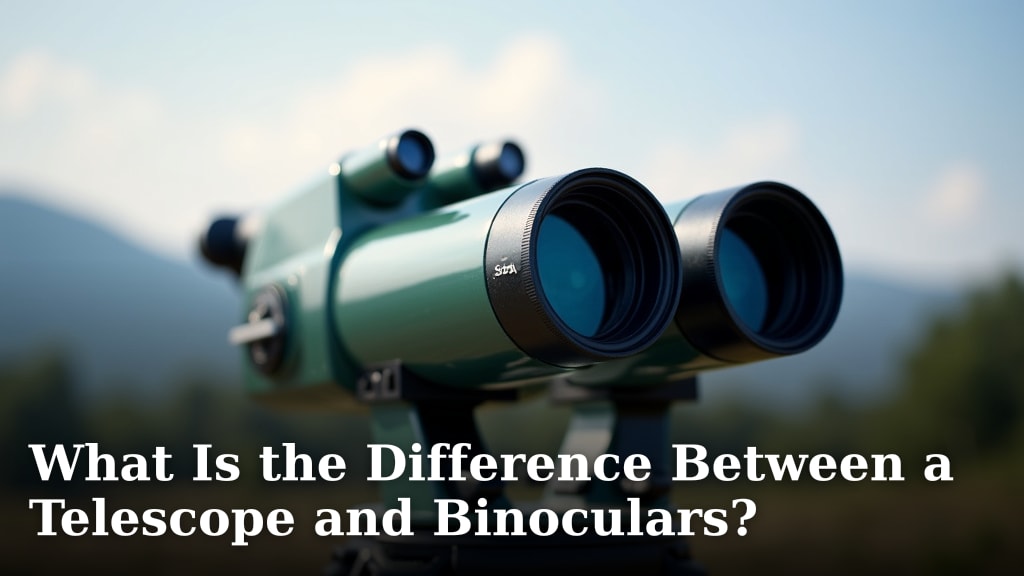
Binoculars are another option if you want two-eye viewing and a lighter setup; our guide explains what is the difference between a telescope and binoculars.
Which one should you choose for astronomy?
Choose a telescope if the night sky is your main target. Its design and mount options are better suited to observing celestial objects.
A telescope's aperture affects how much light it can collect, while magnification depends on the telescope and eyepiece combination. Higher magnification alone doesn't guarantee a clearer view, since steadiness, focus and sky conditions matter too.
A spotting scope can show bright targets such as the Moon. But astronomy often calls for a stable mount and the ability to find and follow objects, especially as they move across the sky.
When does a telescope make more sense?
A telescope makes sense when you expect to observe from a backyard, campsite or other planned viewing spot. You can spend time setting up the mount and learning how to aim it at sky targets.
The Celestron Travel Scope 70mm Beginner Portable Telescope includes a 70mm aperture, 20mm and 10mm eyepieces, and a 45° erect image diagonal. Its backpack and no-tool setup also suit trips where you want one kit for scenery and night viewing.
For a beginner buying specifically for astronomy, start with how to choose a telescope for beginners. A larger aperture may be the priority if deep sky viewing is part of your plan, while a compact refractor can be easier to carry.
When is a spotting scope the better choice?
Choose a spotting scope if you mostly observe wildlife, birds, landscapes or distant outdoor activity. Its zoom eyepiece and terrestrial viewing setup make it practical for finding and following land-based subjects.
A zoom eyepiece lets you adjust magnification without changing eyepieces. That can help when a bird moves or when you want to scan a broad area before getting a closer view.
What makes spotting scopes useful outdoors?
A spotting scope's angled body can make viewing comfortable from a lower tripod position, particularly when looking uphill. A phone adapter can also help you capture or share a view, though phone imaging depends on alignment and setup.
The SVBONY SV28 Spotting Scope has a 25–75x zoom, a 70mm objective lens, an angled body and a phone adapter. It is a fit for casual outdoor observation when you want adjustable magnification and a compact kit.
The Gosky Flagship 20-60x80 Spotting Scope with Tripod uses a 20–60x zoom and an 80mm objective lens. Its supplied accessories include a tabletop tripod and smartphone adapter, making it another option for terrestrial viewing.
If you are comparing historical or simpler optical designs, our guide to telescope vs spyglass explains how those terms differ.
Can one scope work for both day and night?
Yes, some optics can handle both, but the best all-purpose choice depends on which use matters more. A dual-use instrument is a compromise in orientation, mounting and portability.
The Celestron Travel Scope 70 is described for celestial and terrestrial targets, and it includes a 45° erect image diagonal. That makes it a reasonable starting point if you want to view the Moon at night and scenery during the day.
A spotting scope can also be aimed at bright celestial objects. Still, its primary design is terrestrial, so it may not be as convenient for locating and tracking objects in the night sky.
For mixed use, consider where you'll observe most often. A scope that stays steady on a table or tripod and is easy to point may be more useful than one with the highest magnification printed on its box.
How do mounts and viewing angles affect the choice?
The mount affects how quickly you can aim and how steadily you can view. Think about whether you'll point across a landscape or high into the sky.
Spotting scopes often use a tripod with an angled eyepiece. This can be comfortable for sharing views among people of different heights, since the tripod can stay in one position while viewers look through the angled body.
Astronomy telescopes may use different mount styles, depending on the model. Some mounts help you follow objects across the sky, while a simple altazimuth mount moves up, down and side to side.
Check whether the tripod comes with the scope and whether its height suits your observing position. A tabletop tripod may be fine on a sturdy bench, but awkward if you need to stand or view over tall grass.
What should you compare before buying?
Compare aperture, magnification range, optical orientation, mount and included accessories. These details tell you more about fit than the words “telescope” or “spotting scope” alone.
Aperture matters for both types because it sets the diameter of the objective lens or primary mirror. For astronomy, it can affect how much light reaches your eye; for outdoor use, it is one factor in the brightness of distant views.
Magnification is only useful when the image remains steady and clear. A high zoom range can make aiming harder, and atmospheric shimmer can soften distant scenery at strong magnification.
Also check the included diagonal, tripod, case and phone adapter. The accessories can determine whether you can use the scope comfortably right away or need extra equipment.
Which option suits a beginner?
Choose based on the activity you want to do first, then favor a setup that's simple to carry and aim. Beginners often benefit more from a clear purpose than from extra magnification.
For a child's first lunar viewing, the Blue Marble NASA Lunar Telescope for Kids Ages includes a finder scope, low- and high-power eyepieces, a tabletop tripod and a learning guide. Its stated age range is 8 years and up.
For outdoor observation, a spotting scope's zoom can be handy when subjects are at different distances. For sky viewing, a beginner telescope guide can help you understand aperture, eyepieces and mount choice before narrowing down models.
Telescope vs spotting scope: which should you buy?
Pick a telescope if astronomy is your priority; pick a spotting scope if daytime viewing is your main use. For a mix of both, look for a telescope with an erect-image diagonal and a portable setup.
If you still need to decide which telescope type fits your space and goals, read How Do I Know What Telescope to Choose? What to Know.
For a more specific astronomy setup, compare an 8 inch Schmidt-Cassegrain telescope with a Dobsonian telescope 8 inch, or consider whether a Dobsonian telescope 12 inch fits your storage and transport needs.
Frequently asked questions
Can you use a spotting scope for astronomy?
Yes, a spotting scope can show the Moon and bright sky targets, especially if it has a stable mount and useful magnification. It is designed primarily for terrestrial viewing, so a telescope is usually the more flexible choice for exploring a wider range of astronomical objects.
Can a telescope be used for daytime viewing?
Some telescopes can show daytime scenery, but the view orientation depends on the optical design and diagonal. A 45° erect image diagonal, like the one included with the Celestron Travel Scope 70, is intended to present an upright terrestrial view.
Which is easier to carry, a telescope or spotting scope?
Portability depends on the complete kit, including tripod and accessories, not just the optical tube. The Celestron Travel Scope 70 includes a backpack, while the SVBONY SV28 includes a carrying case; check what you need to carry and how you plan to mount it.
Is a spotting scope the same as a telescope?
Both use lenses or mirrors to magnify distant objects, but their usual purposes differ. Spotting scopes are built around terrestrial viewing, while astronomy telescopes are chosen for night sky targets and often need a mount suited to tracking objects as Earth rotates.