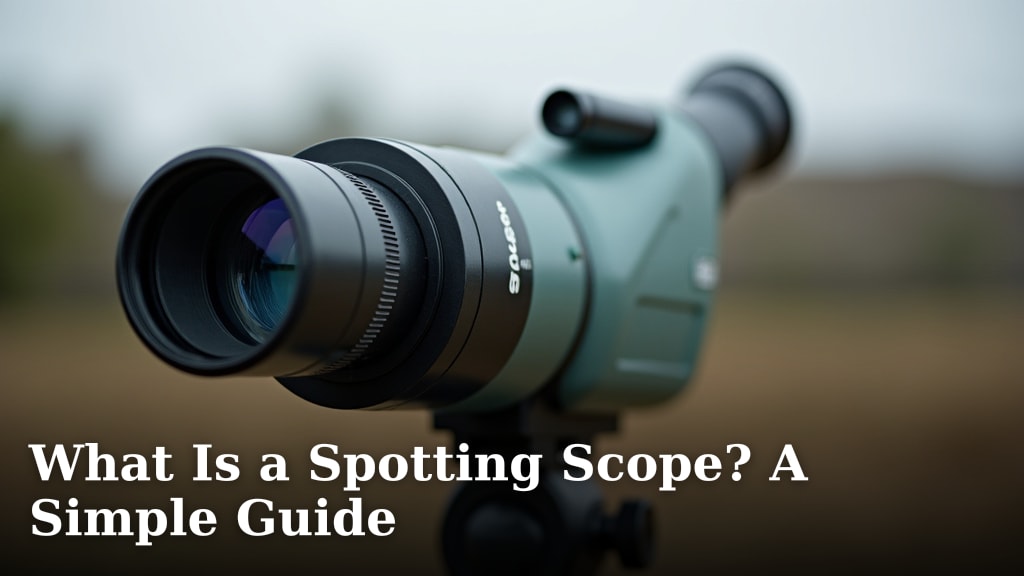
What Is a Spotting Scope? A Simple Guide
A spotting scope is a compact, powerful telescope you use from a fixed position for long-distance viewing. Think of it as a middle ground between standard binoculars and a large, mounted telescope. It provides high-powered magnification for clear, steady views of distant subjects.
You’ll often see these tools used for birding, wildlife observation, target shooting, and stargazing. We found that their key feature is delivering a bright, detailed image of something far away, like a hawk in a tree or a flag on a distant hill. The stability of a tripod mount makes all the difference.
- A spotting scope is a powerful, portable telescope for land-based viewing.
- It excels at detailed observation of distant wildlife, scenery, and targets.
- You get higher magnification than binoculars but with a clearer, more focused view.
- A tripod is almost always required to keep the powerful image steady.
- Many people use them for birdwatching, hunting, and long-range shooting.
Below, we break down everything you need to know about choosing and using a spotting scope, from its main parts to what magnification you really need.
Understanding Your Spotting Scope: How It Works
A spotting scope is essentially a high-powered telescope designed for viewing objects on land. It works by gathering light through a large objective lens at the front, then magnifying that image through a series of internal lenses. Finally, you look through an eyepiece to see the enlarged, clear picture of something very far away.
The key is its fixed-position design. Unlike binoculars you hold up to your eyes, a spotting scope is mounted on a sturdy tripod. This stability is what allows you to see tiny details, like the feathers on a bird or the scoring ring on a target, without a shaky, blurry view.
Key Parts You’ll Encounter
When shopping, you’ll see a few main parts listed. Understanding them helps you choose wisely.
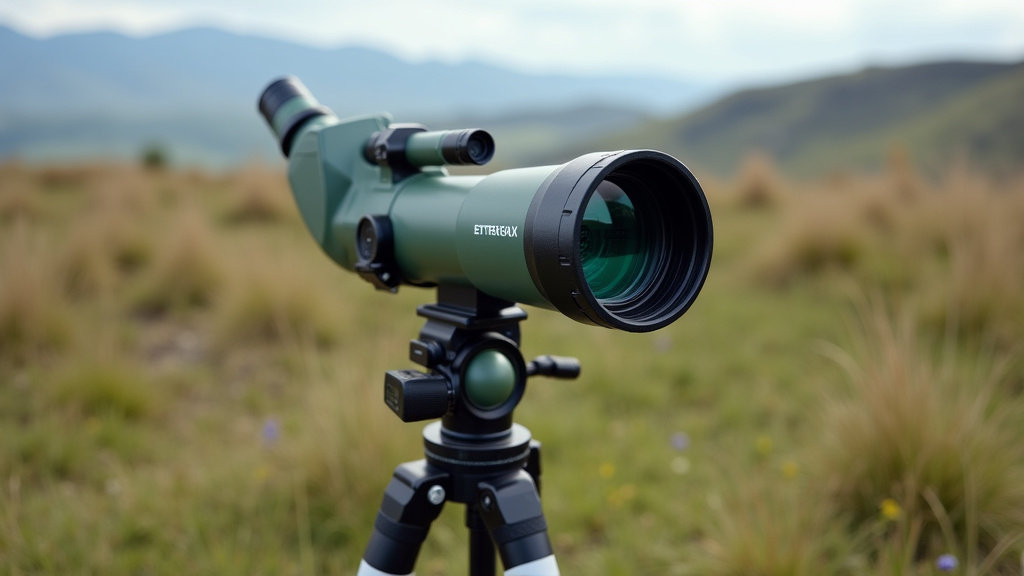
- Objective Lens: This is the big lens at the front. A larger lens, like 65mm or 80mm, gathers more light, which means a brighter image, especially at dawn or dusk.
- Zoom Eyepiece: This is the lens you look through. Most come with variable magnification, like 15-45x, letting you zoom in and out.
- Angled vs. Straight Body: An angled body (eyepiece at a 45-degree angle) is often more comfortable for sharing and viewing upward. A straight body can feel more intuitive for pointing directly at a target.
- Magnification: This is how close the object appears. A setting of 20x makes something look 20 times closer. We found that 15-20x is great for wide views, while 40x+ helps spot fine details.
How It Compares to Binoculars and Telescopes
You might wonder why you’d need a spotting scope if you already own binoculars. The biggest differences are power and precision. Binoculars are fantastic for scanning an area and are easy to carry. However, they typically max out at 10x or 12x magnification. A spotting scope starts there and goes much higher.
Compared to a large astronomical telescope, a spotting scope is built for terrestrial (land-based) use. It’s more portable, quicker to set up, and gives you a right-side-up image by default. Think of a telescope as a dedicated tool for deep space, while a spotting scope is your all-star for earth-bound viewing.
| Feature | Binoculars | Spotting Scope | Telescope |
|---|---|---|---|
| Primary Use | Scanning, moving subjects | Detailed, stationary observation | Astronomical viewing |
| Typical Magnification | 8x – 12x | 15x – 60x | 25x – hundreds of x |
| Support Needed | Hands (or harness) | Sturdy tripod (essential) | Heavy-duty mount |
| Image Orientation | Right-side up | Right-side up | Often upside-down |
| Portability | Very high | Moderate | Low |
What Do People Actually Use Them For?
You’ll spot these scopes in the hands of many different enthusiasts. Their high-powered view is perfect for any activity where detail at a distance matters.
- Birdwatching: This is the most common use. A scope lets you identify subtle field marks on a warbler 100 yards away without disturbing it. Many birding clubs keep a scope on a tripod for group viewing.
- Target Shooting & Hunting: Shooters use them to see bullet holes on a paper target from 100 yards or more. Hunters use them to safely identify game and assess its size and health from a distance.
- Wildlife Observation: Whether it’s watching bears at a safe distance or observing nesting behavior, a scope provides a respectful, non-intrusive way to view animals.
- Stargazing & Lunar Viewing: While not for galaxies, a good scope reveals stunning craters on the Moon and can even show you the rings of Saturn as a thin line. It’s a fantastic bridge to casual astronomy.
Choosing the Right Scope for Your Hobby
The best choice depends heavily on what you’ll do most. A birder in a swampy area might prioritize low-light performance. A target shooter needs rock-solid clarity for precise shots.
For Birding and Nature
Look for a bright, wide field of view at lower magnifications. An angled body is often preferred. A 65mm to 80mm objective lens strikes a good balance between light-gathering ability and portability. Many birders we found start with a 20-60×65 model.
For Target Shooting and Hunting
Clarity and resolution are king here. A straight body can be more natural for quickly finding a target. Durability and a smooth zoom mechanism are also critical. A 15-45x or 20-60x magnification range covers most needs.
The Absolute Necessity of a Good Tripod
This point cannot be overstated: do not buy a spotting scope without planning to buy a tripod. At high magnification, even your heartbeat can cause the image to vibrate wildly. A cheap, wobbly tripod will ruin the experience.
You need a tripod that can support the weight of your scope and eyepiece. Look for ones made of carbon fiber for lightness or aluminum for affordability. Ensure it has a fluid head for smooth panning and a sturdy base. This is an investment in your view, not an afterthought.
Magnification Power: What Do You Really Need?
It’s easy to be drawn in by numbers like “60x magnification.” But more isn’t always better. Extremely high power magnifies atmospheric haze, heat waves, and every tiny shake. It also narrows your field of view, making it harder to find your subject.
Many experts suggest that 15x to 25x is the sweet spot for general observation. It provides a bright, stable, and wide view. You’ll likely use the higher zoom settings (40x-60x) only in very stable conditions or for pinpoint detail. We found that a versatile 15-45x or 20-60x zoom range offers the best flexibility for most users.
A Quick Buyer’s Checklist
Before you click “buy,” run through this list. It helps ensure you’re getting a setup you’ll actually enjoy using.
- I have considered my primary activity (birding, shooting, general nature).
- I have chosen between an angled or straight body based on my use case.
- I know the magnification range and objective lens size I need.
- I have set aside a budget for a sturdy, compatible tripod and head.
- I plan to test the scope in person if possible or buy from a retailer with a good return policy.
- I have checked if the eyepiece is included, as some are sold separately.
Final Thoughts on Getting Started
Choosing your first spotting scope is exciting. Remember to prioritize optical quality over maximum magnification. A clear, bright 20x view is infinitely better than a shaky, dim 60x view. Start with a reputable brand known for optics, and invest properly in the support system—the tripod. With the right setup, you’ll unlock a new level of detail in the world around you, whether it’s the bird in your backyard or the mountain range on the horizon.
Conclusion
A spotting scope is your key to unlocking detailed views of distant wildlife, targets, or scenery. The core idea is simple: it provides high-powered, stable magnification for land-based viewing. Remember, the scope is only half the system; a sturdy tripod is essential for a clear, usable image. Your final choice should align with your primary hobby, whether that’s birding, shooting, or casual nature observation. To find the perfect fit, we recommend visiting a local optics retailer. You should try out a few models to see the difference in clarity and comfort for yourself. This hands-on experience will guide you to the best investment for your viewing adventures.
Frequently Asked Questions
Is a spotting scope good for a beginner birdwatcher?
Absolutely. It’s an excellent upgrade from binoculars once you want to see more detail, like plumage on a distant bird. Many starters choose a versatile 20-60×65 model for its balance of power and portability.
Can I use my phone with a spotting scope?
Yes, you can take photos and videos through the eyepiece with a smartphone adapter. This is called digiscoping. The quality depends on your phone’s camera and how steady you keep the setup.
How much should I expect to spend on a good beginner setup?
A solid, entry-level scope from a reputable brand often costs between $300 and $600. You should add another $100 to $300 for a tripod that won’t ruin your view with wobble.
Can I use a spotting scope for stargazing?
Yes, for casual lunar and planetary viewing. You can see lunar craters and Saturn’s rings clearly. It’s not designed for deep-space objects like distant galaxies.
How do I clean and care for my spotting scope?
Use a lens brush to remove dust and a microfiber cloth for smudges. Always keep the lens caps on when not in use and store it in a padded case to protect the optics from bumps.