9 Best Telescopes for Bird Watching (November 2026)
The best telescopes for bird watching include the Gosky 12x55 HD Monocular Telescope with BAK4 (best overall for bird watching), the FEEMIC Monocular Telescope High Power 8x42 Monoculars for quick handheld spotting, and the Pankoo 40X60 Monocular Telescope for high-power phone viewing.
On this page (5 sections)
The best telescopes for bird watching are daylight monoculars in the 8x to 12x range, with enough field of view to find moving birds and enough optical light to show feather detail. The Gosky 12x55 is the strongest all-around choice here, while the FEEMIC 8x42 is easier for quick handheld scanning.
That range works because bird watching is usually about finding a subject first. A bird may appear in a tree, cross a shoreline or land briefly on a fence, and you need to locate it before you can study it.
Magnification helps only after that first step. More power can make a distant bird larger, but it also narrows the view and makes small movements less forgiving.
Bird watching needs a different balance than astronomy. You usually need to locate a moving subject, focus quickly, keep the image upright and follow a bird through changing light.
Daylight conditions also change as you watch. Sun, cloud, shade and the angle of the bird can alter contrast, so a clear view depends on more than the power number alone.
Objective size matters for the same reason. A larger front lens can gather more available light, which may help you see pattern and detail when a bird is in shade or the day is overcast.
Field of view matters just as much in daily use. A wider view gives you more room to find a bird and keep it in frame as it turns, hops or flies a short distance.
Extreme magnification can bring a distant bird closer, but it also narrows your view and makes movement more noticeable. That is why very high power often works best from a tripod or another steady support.
A monocular suits many bird watchers because it is simple to carry and quick to raise. You can keep it in a bag, lift it for a short sighting and lower it again without setting up a larger instrument.
Phone support can be useful, but it should not decide the purchase on its own. Taking a photo takes extra alignment, and a steady view is still the main goal when you are watching live.
This roundup compares terrestrial viewing scopes and monoculars for upright daytime images. We checked magnification, objective size, field of view, optical details, weather protection, phone support and included tripods where those details were available.
We also looked at how each format fits real routines. A light 8x monocular suits quick walks and scanning, while a 12x model with a tripod suits slower watching from one place.
Higher power models have a place for open country. They can help with distant birds over fields or water, provided you accept slower aiming and a greater need for support.
Weather protection is worth checking if you watch in damp places. Rain, mist and cold can affect comfort and clarity, so sealed bodies and fog-resistant designs can matter as much as optical size.
The right choice depends on distance, movement and how long you plan to watch. Most people will find birds more easily with moderate power, then add support for longer sessions.
That balance runs through every pick below. We favored combinations that help you find a bird, focus on it and keep watching without making the equipment the main task.
Our picks at a glance
-
1
 Best overall for bird watching
Gosky 12x55 HD Monocular Telescope with BAK4
9.7/10 our score
See it on Amazon -
2
 Best for quick handheld spotting
FEEMIC Monocular Telescope High Power 8x42 Monoculars
9.6/10 our score
See it on Amazon -
3
 Best for high-power phone viewing
Pankoo 40X60 Monocular Telescope
9.4/10 our score
See it on Amazon
- 4
 Check it
PhysioPhyx 80x100 High‑Powered Monocular Telescope HD Portable
Best for distant open views - 5
 Check it
ASxmhGo Monocular-Telescope 80x100 High Powered Monoculars High
Best for portable high power - 6
 Check it
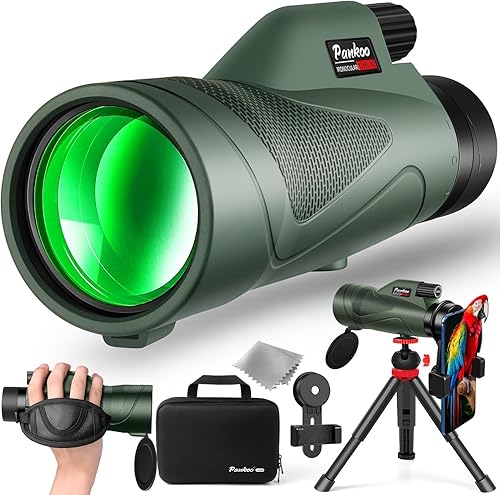
Pankoo 12x60 HD Monocular Telescope for Adults
Best for a bright 12x view - 7
 Check it
PhysioPhyx Monocular Telescope 80x100 HD High Power
Best for a complete outdoor kit - 8
 Check it
SSZS Pirate Monocular Telescope
Best for a compact retro design - 9
 Best for a simple 16x optionCheck it
Which telescopes are best for bird watching?
The Gosky 12x55 is the best overall pick because it combines moderate-high magnification with a large objective, wide stated field of view, BAK4 prism, FMC optics and included support. The FEEMIC 8x42 is better for quick movement, while the Pankoo and PhysioPhyx models suit distant open views.
That split reflects how bird watching changes with distance. Nearby birds in trees or gardens reward speed and a wide view, while birds across a lake or field reward reach and steady support.
The Gosky sits near the middle of that divide. Its 12x power adds detail without moving into the handling demands of 40x or 80x, and its included tripod helps when you want to watch one bird for longer.
The FEEMIC takes a lighter approach. At 8x, it is easier to raise, scan and follow movement by hand, which suits people who want a monocular ready for short sightings on a walk.
The Pankoo and PhysioPhyx models answer a different need. Their higher magnification can show distant subjects at a larger size, but they ask more of your support and focusing.
Our score weighs specs, features and buyer feedback against what you're shopping for. It does not treat the largest power number as the automatic winner.
Instead, we looked for a match between the equipment and the watching style. A bird watcher who moves often needs a different balance from someone who sets up in one open spot.
That is why the same roundup can praise both low and high power. The best pick is the one that helps you find birds consistently in the places you actually visit.
| Product | Best for | Magnification | Objective lens | Outdoor protection | Our score |
|---|---|---|---|---|---|
| Gosky 12x55 HD Monocular Telescope with BAK4 | overall for bird watching | 12x | 55mm | IPX7 waterproof and nitrogen-filled | 9.7 |
| FEEMIC Monocular Telescope High Power 8x42 Monoculars | quick handheld spotting | 8x | 42mm | 9.6 | |
| Pankoo 40X60 Monocular Telescope | high-power phone viewing | 40x–60x | 6cm | 9.4 | |
| PhysioPhyx 80x100 High‑Powered Monocular Telescope HD Portable | distant open views | 80x | 10cm | 9.4 | |
| ASxmhGo Monocular-Telescope 80x100 High Powered Monoculars High | portable high power | 80x | 10cm | 9.3 | |
| Pankoo 12x60 HD Monocular Telescope for Adults | a bright 12x view | 12x | 60mm | 9.2 | |
| PhysioPhyx Monocular Telescope 80x100 HD High Power | a complete outdoor kit | 80x | 8cm | 9.1 | |
| SSZS Pirate Monocular Telescope | a compact retro design | 25x | 30mm | 8.5 | |
| 16x52 Monocular Telescope | a simple 16x option | 16x | 52mm | 8.3 |
Best bird-watching telescopes for different viewing styles
The best telescope for bird watching depends on how far away your subjects are and how often you need to move the scope. Lower magnification helps with scanning, while larger objectives and tripods become more useful for distant or shaded subjects.
Gosky 12x55 HD Monocular Telescope with BAK4: Best overall for bird watching
- 12x magnification
- 55mm objective lens
- 352 ft field of view at 1,000 yards
- BAK4 prism and FMC optics
- Tripod and smartphone adapter
The 12x view brings distant birds closer without moving into the extreme magnification range. A 55mm objective, BAK4 prism, FMC optics, tripod and smartphone adapter make it a flexible daylight pick.
Pros
- Wide field of view
- Large 55mm objective
- Tripod and smartphone adapter included
Cons
- Higher magnification needs steadier hands
- Larger optical body than a basic monocular
The Gosky 12x55 gives you a useful middle ground for bird watching. Its 12x magnification brings distant subjects closer, while the stated 352 ft field of view at 1,000 yards leaves more room for locating and tracking birds.
The 55mm objective lens gathers more available light than a smaller objective. That can help during cloudy weather, shaded woodland viewing, dawn and dusk, although bird detail still depends on distance, contrast and the light around the subject.
Its 18mm BAK4 prism and fully multi-coated optical surfaces are aimed at light transmission, contrast and fine detail. The IPX7 waterproof body, nitrogen filling and rubber armor also fit outdoor use in damp conditions.
For longer observations, use the included tripod. The smartphone adapter is useful when you want to align a phone with the eyepiece for photos or video, but phone alignment takes patience at higher magnification.
Choose the Gosky if you want one flexible monocular for gardens, wetlands, travel and open countryside. If your main need is fast handheld scanning, an 8x model may feel easier.
FEEMIC Monocular Telescope High Power 8x42 Monoculars: Best for quick handheld spotting
- 8x magnification
- 42mm objective lens
- 360 ft field of view at 1,000 yards
- BAK4 prism and FMC optics
- Waterproof, fogproof, dustproof and shockproof
The 8x view is easier to hold while following birds through branches or across open sky. Its 42mm objective and 360 ft field of view favor quick target finding and portable use.
Pros
- Easy 8x handheld view
- Wide stated field of view
- Compact 285g body
Cons
- Less reach than 12x and 80x models
- Smaller objective than the largest picks
The FEEMIC 8x42 is the easiest pick here for quick handheld bird watching. Its 8x magnification is less demanding than 12x or 80x, so you can scan branches, hedges and open sky with fewer interruptions from hand movement.
The 42mm objective and stated 360 ft field of view at 1,000 yards favor target finding. That wider view matters when a bird lands briefly or crosses your view before you have time to make a careful adjustment.
Its BAK4 prism and fully multi-coated lens elements are designed to support light transmission. The nitrogen-filled waterproof body, lens dust cover and rubber finish add protection for hiking, camping and changing outdoor conditions.
The 285g weight also supports portable use. Adjustable eyecups can help you set the viewing position with or without glasses, while the hand strap and carry case make it easier to keep the monocular ready.
Choose FEEMIC if you value speed and low carry weight over maximum reach. For distant birds across a lake, the Gosky 12x55 or a tripod-supported high-power model may show more size.
Pankoo 40X60 Monocular Telescope: Best for high-power phone viewing
- 40x to 60x zoom ratio
- 6cm objective lens
- BAK4 prism and fully multi-coated lens
- Smartphone holder and adjustable tripod
- Waterproof and antifogging design
The zoom range gives you room to frame a bird before increasing magnification. The phone holder and tripod support steadier viewing and photo recording.
Pros
- Zoom range for framing and detail
- Tripod and phone holder included
- Waterproof and antifogging design
Cons
- High magnification is harder to hold steady
- Manual focus takes adjustment
The Pankoo 40X60 suits bird watchers who want a wide zoom range and phone support. Its 40x to 60x zoom ratio lets you start at a lower setting to find a subject, then increase power after the bird is centered.
The 6cm objective and BAK4 prism with fully multi-coated lens are intended to support brighter, higher-contrast images. At this level of magnification, the included adjustable tripod is important because small hand movements can shift the bird out of view.
The smartphone holder adds a way to record a view after alignment. The package also includes a hand strap, dust cover and cleaning cloth, so the main setup is centered on observation and phone use.
Manual focus means you should focus at the bird's distance rather than relying on a fixed setting. Start with the lowest useful magnification, center the bird, focus, then raise the zoom carefully.
Choose this Pankoo for distant birds in open habitats where a tripod can stay in place. It is less convenient for fast-moving birds in dense branches.
PhysioPhyx 80x100 High‑Powered Monocular Telescope HD Portable: Best for distant open views
- 80x magnification
- 10cm objective lens
- Wide-angle design
- Adjustable eyecup
- Smartphone adapter and monocular tripod
The 80x and 10cm objective target distant subjects in open settings. The wide-angle design helps follow moving birds, while the included tripod supports steadier observation.
Pros
- Very high magnification
- Large 10cm objective
- Tripod and smartphone adapter included
Cons
- High power makes steady support more important
- Less suited to fast handheld scanning
The PhysioPhyx 80x100 is aimed at distant bird watching where high magnification matters more than fast handheld scanning. Its 80x magnification and 10cm objective provide a large optical format for open views.
The wide-angle design is useful because high power can make moving targets harder to follow. A broader viewing area gives you more room to keep a bird in frame after you find it.
The soft adjustable eyecup can fit glasses and non-glasses wearers. The sealed internal design helps protect the optics from moisture and reduce fogging, while the lightweight, pocket-friendly body is described for travel and outdoor carrying.
A monocular tripod and smartphone adapter are included. Use the tripod for extended observation, especially at 80x, and adjust focus slowly after the scope is supported.
Choose this pick for distant birds over fields, shorelines or open land. For birds that move quickly through nearby trees, the FEEMIC 8x42 is likely easier to use.
ASxmhGo Monocular-Telescope 80x100 High Powered Monoculars High: Best for portable high power
- 80x magnification
- 10cm objective lens
- Multi-layer optical coating
- Wide field of view
- Smartphone adapter
This ASxmhGo combines 80x power with a 10cm objective in a compact, lightweight body. Its wide field and smooth focusing design address the main challenge of locating moving birds at high magnification.
Pros
- 80x magnification
- Large 10cm objective
- Compact and lightweight design
Cons
- High power needs careful focusing
- A smartphone adapter is included, but no tripod is specified
The ASxmhGo 80x100 is another high-power choice for bird watchers who need reach in open areas. It pairs 80x magnification with a 10cm objective and a wide field of view intended to help locate moving targets.
Its multi-layer optical coating is designed to improve light transmission and reduce glare and stray light. The sealed waterproof structure is suited to rainy or humid outdoor conditions, while the compact, lightweight body is easier to carry than its power rating might suggest.
The smooth manual focusing knob matters at high magnification. Make small adjustments after the bird is centered, because a large focus change can make it harder to know which direction brings the subject into clarity.
A smartphone adapter is included. The information does not specify a tripod, so plan for another stable support if you want extended 80x viewing or phone recording.
Choose ASxmhGo if you want high power in a compact body and already have a stable viewing setup. If you want a tripod included, consider the PhysioPhyx 80x100 instead.
Pankoo 12x60 HD Monocular Telescope for Adults: Best for a bright 12x view
- 12x magnification
- 60mm objective lens
- 6.5-degree field of view
- 21mm BAK4 prism and FMC lens
- Smartphone holder and tripod
The 12x view balances reach and practical bird finding, while the 60mm objective gathers more available daylight than smaller objectives. A tripod and smartphone holder support longer sessions.
Pros
- Large 60mm objective
- 6.5-degree field of view
- Tripod and phone holder included
Cons
- More demanding to hold than 8x
- Manual focus requires adjustment
The Pankoo 12x60 is a strong choice when you want more light-gathering potential without moving to extreme magnification. Its 12x power keeps the view useful for bird finding, while the 60mm objective is larger than the 42mm and 55mm options above.
The stated 6.5-degree field of view and 325 ft at 1,000 yards give you room to locate birds before focusing on detail. The 21mm BAK4 prism and fully multi-coated lens are designed to support bright, clear views with less light loss.
The rubber-armored body gives you a non-slip grip, and the adjustable eyecup supports viewing with or without glasses. The included smartphone holder and tripod help with longer sessions and phone recording.
At 12x, support still helps when you are watching one bird for several minutes. Use the tripod when you want a steadier view, then return to handheld use for quick changes in direction.
Choose this Pankoo if brightness and a large objective are more important than the smallest carry size. The Gosky offers similar 12x use with a slightly smaller objective and a stated IPX7 waterproof body.
PhysioPhyx Monocular Telescope 80x100 HD High Power: Best for a complete outdoor kit
- 80x magnification
- 8cm objective lens
- BAK4 prism
- Smartphone adapter and retractable tripod
- Hand strap, lens covers, storage bag and user manual
This PhysioPhyx pairs 80x power with an 8cm objective and a broad accessory kit. It suits bird watchers who want a tripod, phone holder and storage items in one package.
Pros
- High 80x magnification
- Retractable tripod included
- Broad accessory kit
Cons
- High power needs stable support
- Smaller objective than the 10cm PhysioPhyx picks
The PhysioPhyx 80x100 suits bird watchers who want a complete high-power outdoor kit. It combines 80x magnification with an 8cm objective, plus a retractable tripod, phone holder, hand strap, lens covers, storage bag and user manual.
Its BAK4 prism and high-quality optical components are intended to improve light transmission and reduce internal light loss. At 80x, use the tripod before making fine focus adjustments, then keep the scope supported while following a distant bird.
The adjustable eyecup can be set for glasses wearers and non-glasses wearers. The compact, lightweight body is described as similar in size to a smartphone, which may make it easier to carry between observation points.
This model has a smaller objective than the 10cm PhysioPhyx and ASxmhGo options. That makes the complete accessory kit its main distinction rather than the largest objective in the group.
Choose it if you want high magnification and a broad set of carry and support accessories. For close or fast birds, a lower-power monocular remains easier to aim.
SSZS Pirate Monocular Telescope: Best for a compact retro design
- 25x magnification
- 30mm objective lens
- Collapsible brass telescope
- 270 ft field of view at 1,000 yards
- Waterproof design
The collapsible 25x30 design is compact and distinctive for casual bird watching. Its 270 ft field of view gives you more context than a narrow high-power view, but the 30mm objective is smaller.
Pros
- Collapsible design
- Waterproof
- Compact handheld format
Cons
- Smallest objective in this roundup
- 25x power can be demanding without support
The SSZS Pirate Monocular is best for casual bird watching and a compact retro design. Its 25x30 format provides more reach than 8x or 12x models, while the collapsible body is intended for portable handheld use.
The aluminum-alloy body has a brass-style finish, and the handheld section is covered with leather. The 270 ft field of view at 1,000 yards provides useful context for distant scenery, though the 30mm objective is the smallest in this roundup.
Its waterproof design fits outdoor use. The package includes a pirate monocular, poncho, lens cloth and user manual, so it is also suited to buyers who value the distinctive presentation.
At 25x, adjust the scope in small steps and take care not to chase birds too quickly. The manufacturer’s instructions describe extending the telescope, setting the objective and changing the Barlow length bit by bit for a clear view.
Choose SSZS for casual use, travel or a gift-like retro style. For serious long sessions, a 12x model with a tripod or a high-power model with included support is more practical.
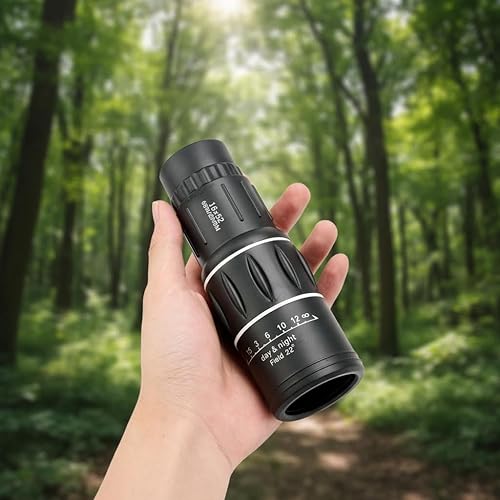
16x52 Monocular Telescope: Best for a simple 16x option
- 16x magnification
- 52mm objective lens
- Portable HD design
- Outdoor bird-watching use
The 16x52 format sits between moderate and very high power. It may suit bird watchers who want more reach than 8x or 12x in a portable monocular format.
Pros
- 16x magnification
- 52mm objective
- Portable format
Cons
- Fewer confirmed details than the other picks
- Higher power needs steadier handling
The 16x52 Monocular Telescope gives you a middle option between 12x and the much higher 25x to 80x picks. Its 16x magnification adds reach for distant birds, while the 52mm objective keeps it in a portable monocular format.
That middle position is the main appeal. You get more size on a distant bird than with 8x or 12x, without committing to the very narrow view and support needs of an 80x scope.
The 52mm objective also places it above smaller portable formats for gathering available daylight. In bright conditions that difference may be easy to manage, while in shade it can help keep detail visible.
The available product information identifies it as a portable HD telescope for outdoor bird watching. It does not specify a tripod, waterproof rating, optical coating or phone adapter, so check the exact package before relying on those features.
That lack of detail matters for planning your setup. If you want to watch for long periods or take phone photos, you should confirm what support and accessories are included before you buy.
At 16x, hand movement will be more visible than with an 8x model. Brace your arms against a stable surface when possible, and use slow focus changes after you have centered the bird.
Slow handling is especially helpful with moving birds. Find the bird at a comfortable position first, then make small adjustments rather than sweeping quickly across the scene.
This format may suit bird watchers who often watch across moderate distances. It can work for fields, parkland, wetlands and coastal paths where birds are not close enough for low power.
It is less suited to fast scanning in dense trees. In that setting, a wider and steadier 8x view may let you find more birds before they move on.
Choose this pick when 12x seems too modest but an 80x scope feels excessive. Choose the Gosky or Pankoo 12x60 if you want more confirmed optical and accessory details.
What should you look for in a telescope for bird watching?
The most important features are useful magnification, a manageable field of view, objective size, focusing control and steady support. Start with how you watch birds, then choose the optical format that matches that setting.
How much magnification do bird watchers need?
For most people, 8x to 12x is the easiest range for finding and following birds. FEEMIC's 8x42 favors fast scanning, while the Gosky 12x55 and Pankoo 12x60 add more reach without moving into the very narrow handling demands of 40x to 80x.
High magnification works best when the bird is far away and the scope is supported. A high-power monocular can show more detail after you find the bird, but it takes longer to aim and focus.
Why does the objective lens matter?
The objective lens is the front lens, and a larger size can gather more available light. The FEEMIC uses a 42mm objective, the Gosky uses 55mm, the Pankoo 12x60 uses 60mm and the high-power models use 8cm or 10cm objectives.
Larger objectives can help in shade or lower daylight, but they can also add bulk. Compare light needs with the distance you carry the scope.
Is a spotting scope better than a monocular?
A spotting scope can be a better fit for a fixed observation point because it is designed around supported viewing. A monocular is usually easier to carry and quicker to raise for a short sighting.
Read our spotting telescope buying guide if you plan to watch from a hide, deck or fixed shoreline position. For a broader outdoor comparison, our guide to the best telescopes for wildlife viewing covers similar distance and movement trade-offs.
Do bird-watching telescopes show upright images?
These products are presented as terrestrial monoculars for daytime viewing, so they are intended for upright scenes rather than the inverted view common with some astronomical telescope designs. Always check your viewing position and focus before following a moving bird.
A tripod helps keep the image stable, especially when you use 12x or more. The best nautical telescope with tripod guide may also help if your bird watching happens from a boat, dock or shoreline.
How do you use a bird-watching telescope?
Start at the lowest useful magnification, find the bird with both eyes open, then bring the monocular to one eye and focus slowly. Once the subject is clear, increase magnification only if you still need more detail.
Finding the bird before you raise the scope saves time. Your eyes can track movement across a branch or open sky more easily than a narrowed view can.
Keep both eyes open while you search if that feels natural. Once the bird is centered, close the other eye or simply bring the eyepiece to your viewing eye.
Focus in small steps, then pause. A quick turn of the focus control can move past the clearest point, especially when the bird is moving or the light is flat.
For handheld viewing, brace your elbows against your body and avoid gripping the optical tube too tightly. A relaxed grip reduces shake and leaves you better able to follow small movements.
Stand or sit with a stable base before you start. Leaning against a fence, tree or vehicle can help, provided you can still turn smoothly to follow the bird.
At 12x and above, a tripod or another stable surface can make a bigger difference than another increase in power. Support keeps the bird in view and makes focusing less tiring.
Set the support before you make fine adjustments. It is easier to center a bird and focus when the scope is not shifting under your hands.
Protect the front and eyepiece lenses with their covers when the scope is not in use. Covers help limit dust during carry and reduce the chance of scratches in a bag.
Use a cleaning cloth for dust and keep moisture from staying on the body after wet outdoor sessions. A short wipe and a dry carry case are enough for most routine care.
Store the monocular where it can stay dry between outings. Avoid leaving damp lenses or a damp case closed for long periods.
If you watch from a hill, deck or shoreline, compare the setup with our guide to the best telescope for viewing mountains. Distant landscape viewing and bird watching both reward a wide field, careful focusing and steady support.
Plan your position with the light in mind when you can. Birds are often easier to judge when they are lit well and not lost against a bright background.
Take your time with unfamiliar birds rather than rushing to maximum detail. A clear view of shape, color and movement is often more useful than a shaky close view.
Which telescope should you choose?
Choose the Gosky 12x55 if you want the best balance of bird detail, field of view, daylight brightness, outdoor protection and included support. Choose FEEMIC 8x42 when quick handheld scanning and low weight matter more.
Those two choices cover the needs of most bird watchers. One favors reach and longer viewing, while the other favors speed and easy carrying.
If you watch gardens, woodland edges, wetlands or open countryside, the Gosky gives you a flexible starting point. Its tripod and phone adapter also support slower sessions without a separate accessory purchase.
If you walk trails, scan hedges or watch brief appearances in trees, the FEEMIC may feel more natural. Its lower power can make finding and following a bird less tiring by hand.
Pick the Pankoo 40X60 or one of the PhysioPhyx 80x100 models for distant birds in open country, but plan to use stable support. High power is most useful when the bird is far away and the view can stay steady.
That support is not an optional extra at those levels. Without it, small movements can hide the detail you bought the magnification to see.
Pick the SSZS Pirate or 16x52 when portability and a distinctive format matter more than the most complete optical information. They suit casual watching, travel and situations where a simpler monocular is easier to carry.
Consider how often you will use the equipment as well as how you will use it. A scope that stays in a bag or car may be less helpful than one you enjoy raising for short sightings.
Also think about where you watch most often. Dense trees favor a wider view, while open fields and shorelines favor reach and a tripod.
For most bird watchers, moderate power is the safer starting point. You can find more birds with an 8x or 12x view, then use a tripod-supported high-power telescope when distance makes extra reach worthwhile.
Start with the format that matches your usual distances and pace. You can always add support or a higher-power scope later once you know what you miss most.
The goal is not to own the most powerful monocular in the list. It is to have a clear, steady view ready when a bird appears.
Our top 3 picks at a glance
-
1
Best overall for bird watching
Gosky 12x55 HD Monocular Telescope with BAK4
9.7/10 our score
See it on Amazon -
2
Best for quick handheld spotting
FEEMIC Monocular Telescope High Power 8x42 Monoculars
9.6/10 our score
See it on Amazon -
3
Best for high-power phone viewing
Pankoo 40X60 Monocular Telescope
9.4/10 our score
See it on Amazon
Frequently asked questions
What magnification is best for bird watching?
For most bird watching, 8x to 12x magnification is the easiest range to use. It gives you useful detail while keeping a wider view for finding moving birds.
Higher magnification can show more distant detail, but it makes hand shake and target finding more difficult.
Is a monocular or binocular better for bird watching?
A monocular is lighter, simpler to carry and useful when you want one-eye viewing or phone photos. Binoculars make two-eye viewing more natural and can be easier for long sessions.
Choose a monocular when low weight and compact storage matter most.
What objective lens size should a bird-watching telescope have?
A 42mm objective is a practical portable size, while 55mm to 60mm objectives can gather more available daylight. A 10cm objective may suit distant open views, but the larger optical system can be less convenient to carry and harder to hold steady.
Do I need a tripod for a bird-watching telescope?
A tripod is helpful at 12x and especially useful at 25x, 40x, 60x or 80x. It reduces hand movement during longer observations and helps keep a phone aligned with the eyepiece.
At 8x, many people can scan comfortably by hand.