9 Best Telescopes That Connect to a Laptop (November 2026)
The best telescopes that connect to laptop include the Gskyer Telescope for travel beginners, the Dianfan Telescope for high-power beginners, and the MEEZAA Telescope for family stargazing.
On this page (8 sections)
- Our best telescopes that connect to laptop, ranked by use
- How laptop-connected telescopes compare
- Which type of laptop connection do you actually need?
- How do smart telescopes differ from laptop-controlled telescopes?
- What aperture and focal length should you choose?
- Can you add laptop imaging to a telescope you already own?
- How should you set up and care for a laptop-connected telescope?
- Verdict: which of these telescopes that connect to laptop should you buy?
The best telescopes that connect to laptop split into three clear groups. The Celestron NexStar 8SE offers laptop-compatible control with a computerized mount.
The SVBONY SV205 adds direct laptop imaging to a telescope you already own.
Smart telescopes from DWARFLAB and ZWO use phone apps for automatic tracking and image capture.
That split matters more than brand names. A telescope that connects to a laptop can mean mount control, live camera video or photo capture through a phone adapter.
Each route gives you a different workflow at the eyepiece, at the desk and on the road.
For visual observers, the connection may matter less than stable tracking and a comfortable eyepiece height. For imagers, cable length, sensor size and software support will shape the night more than the tripod feet.
We compared aperture, focal length, mount type, weight, included adapters and the device each model lists as compatible. Our score weighs specs, features and buyer feedback against what you are shopping for.
We did not test these telescopes.
Our picks at a glance
-
1
-
2

-
3

- 4
 Check it
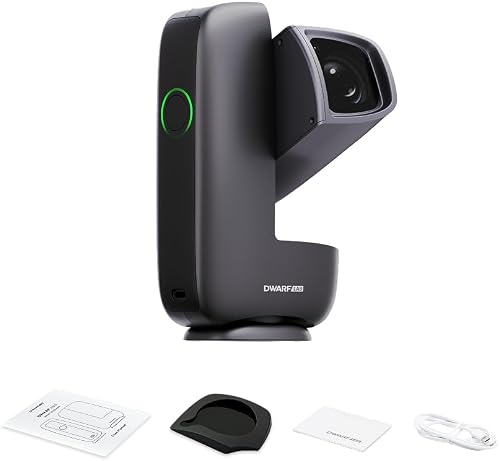
DWARFLAB Dwarf Mini Smart Telescope
Best for pocketable smart imaging - 5
 Check it
ZWO Seestar S30 Pro Smart Telescope
Best for one-tap astrophotography - 6
 Check it
Celestron NexStar 8SE Computerized Telescope
Best for laptop-compatible control - 7
 Check it
ToyerBee Telescope for Adults & Kids
Best for gifts and first scopes - 8
 Check it
Fuoibl Telescope for Kids and Adults
Best for easy backyard setup - 9
 Best for direct laptop imagingCheck it
Our best telescopes that connect to laptop, ranked by use
A laptop connection is only useful if the telescope itself fits your targets. A large computerized scope suits detailed visual observing.
A small smart telescope suits travel and automated imaging.
A camera suits lunar and planetary video with your current scope.
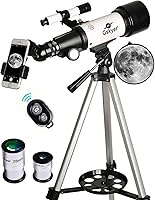
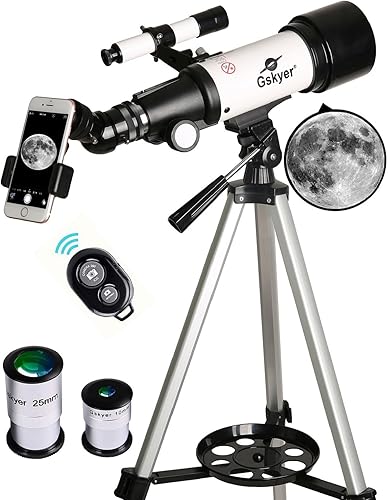
Gskyer Telescope: Best for travel beginners
- 70mm aperture and 400mm focal length
- Phone adapter and wireless remote
- Adjustable aluminum tripod and carry bag
- Two eyepieces and 3x Barlow lens
A compact 70mm refractor with phone adapter and wireless remote for travel and beginner viewing.
Pros
- Portable carry bag setup
- Phone adapter included
- Two eyepieces plus Barlow lens
Cons
- Manual focus
- Smartphone focus rather than direct laptop control
The Gskyer Telescope suits kids, beginners and travelers who want a light refractor that packs into a carry bag. Its 70mm aperture and 400mm focal length give a balance of light gathering and short-tube portability.
Two eyepieces plus a 3x Barlow lens cover low-power scanning and higher-power lunar viewing. The 5x24 finder scope with cross-hair lines helps you point the main tube before you zoom in.
That finder scope reduces the early frustration of searching the sky with the main eyepiece alone.
A phone adapter and wireless camera remote let you capture images through your phone screen. Fully coated optics aim to give clean views while protecting your eyes during use.
The 40 centimeter optical tube keeps the format compact enough for car trips, camping and storage in a small space.
That is photo capture rather than true laptop control, so treat the laptop link as indirect here. The adjustable aluminum tripod and bag make storage and transport simple.
Trade-off: longer refractors in this guide gather more light and reach higher magnification, while this one wins on compact travel.
For phone-based workflows, compare with our best telescope that connects to phone guide.
Dianfan Telescope: Best for high-power beginners
- 90mm aperture and 800mm focal length
- 32x to 240x magnification range
- Stainless steel tripod and phone adapter
- Carry bag included
A longer 90mm refractor aimed at adults who want higher magnification for the Moon and bright planets.
Pros
- Larger aperture than 70mm picks
- Wide magnification range
- Quick setup design
Cons
- Longer tube is less compact
- Manual focus and smartphone adapter
The Dianfan Telescope suits adults and beginners who want more reach than a 70mm starter scope. Its 90mm aperture and 800mm focal length gather more light and support magnification from 32x to 240x.
That range helps with lunar craters, bright planets and distant terrestrial targets. The 45 degree zenith mirror keeps images upright for daytime or neighborhood viewing.
A larger aperture in daily use means a brighter Moon view and better contrast on brighter planetary disks, even before you add Barlow power.
A stainless steel tripod, phone adapter and carry bag cover the basics for backyard sessions. Dianfan says assembly takes about 15 minutes, which suits buyers who want a clear first setup path.
The straight-through finder scope helps you center a target before switching to the main eyepiece.
Trade-off: the longer tube is harder to pack than the 70mm models, and focus is manual. It also connects through a phone adapter, not a direct laptop camera feed.
For users who need a live laptop view, a dedicated camera will suit better than this phone adapter route.
If automatic pointing matters to you, read our guide to the best telescope with auto tracking before you decide.
MEEZAA Telescope: Best for family stargazing
- 90mm aperture and 800mm focal length
- Fully multi-coated optics
- Phone adapter and adjustable tripod
- Carry bag and accessory tray
A 90mm refractor set built around family use, with a phone adapter for sharing photos and videos.
Pros
- Adjustable tripod height
- Full accessory set in carry bag
- Strong lunar magnification range
Cons
- Manual focus
- Not a direct laptop imaging scope
The MEEZAA Telescope suits families and astronomy beginners who want a larger refractor with a full accessory set. Its 90mm aperture and 800mm focal length match the Dianfan on paper, with fully multi-coated optics for brightness and clarity.
Two eyepieces at 10mm and 25mm plus a 3x Barlow lens give a 32x to 240x range. That helps you move from wide target finding to closer lunar views without buying extra eyepieces first.
In daily use, that range supports a simple routine: start low to find the Moon, then move up for craters and brighter planets.
The adjustable stainless steel tripod extends from 28 to 46 inches, so kids and adults can share viewing positions. An accessory tray in the listed set gives a place for eyepieces while you switch power.
A phone adapter lets you take photos and videos for sharing after a session, which suits family star parties and camping nights.
Trade-off: like the other refractors here, it relies on manual aiming and a phone adapter for images. Choose it for family feature depth, and choose a computerized scope if you want the mount to find targets for you.
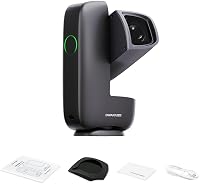
DWARFLAB Dwarf Mini Smart Telescope: Best for pocketable smart imaging
- 1.85 lb portable smart telescope
- App control with built-in sky atlas
- Auto GOTO and 360 degree pivot
- 90-second exposures and light pollution filter
A very light app-controlled smart telescope for star numba and deep-sky imaging on the move.
Pros
- Featherweight for travel
- Auto tracking and long exposures
- Built-in sky atlas
Cons
- Small 30mm objective lens
- Phone app workflow, not laptop-first
The DWARFLAB Dwarf Mini Smart Telescope suits travelers, campers and beginners who want automation in a tiny package. At 1.85 lb, it fits in a backpack or large pocket and goes from unboxing to first shot in about 3 minutes according to DWARFLAB.
App control and a built-in sky atlas remove the need to learn star hopping first. Auto GOTO and 360 degree pivot let the telescope find and follow a target after you select it.
That automation is the main benefit for new users, since aiming and tracking happen through the app rather than by hand.
A Sony IMX662 sensor, 90-second single-frame exposures and a light pollution filter support deep-sky imaging in brighter skies. EQ mode adds a more advanced tracking option for longer captures.
Built-in light pollution handling and automated dark frame calibration help reduce noise in processed images.
Trade-off: the 30mm objective lens and 150mm focal length limit visual detail compared with the 90mm refractors and the 8-inch Celestron. This is an imaging-first smart scope, not a laptop-first visual telescope.
ZWO Seestar S30 Pro Smart Telescope: Best for one-tap astrophotography
- App-controlled astrophotography
- Automatic GOTO targeting and tracking
- Dual-camera 4K imaging
- Built-in light pollution filters
A portable smart telescope that finds, tracks and captures deep-sky images through its app.
Pros
- One-tap capture modes
- 4K dual-camera imaging
- Anti-dew protection
Cons
- Designed for deep sky, not planetary viewing
- App control as the main interface
The ZWO Seestar S30 Pro Smart Telescope suits beginners who want one-tap astrophotography without manual setup. You power it on, connect the app and let automatic GOTO targeting and tracking find the object.
Its dual-camera 4K imaging and apochromatic optics aim for sharper stars and higher contrast. Built-in light pollution filters help in urban skies, where faint deep-sky objects are harder to capture.
ZWO also lists anti-dew protection, which matters on long sessions when temperature falls after midnight.
Modes cover the Milky Way, star trails, nebulas, galaxies, the Moon and the Sun. ZWO says intelligent imaging and automatic mosaic stitching reduce the work needed for wide-field captures.
AI smart imaging can reduce noise and separate sky from foreground for more balanced photos.
Trade-off: ZWO notes it is designed for deep-sky objects and not intended for planetary observation. At 3.64 lb it is portable, but the main control surface is a phone or tablet app rather than a laptop.
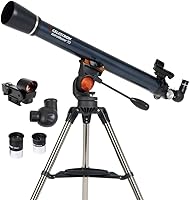
Celestron NexStar 8SE Computerized Telescope: Best for laptop-compatible control
- 8-inch Schmidt-Cassegrain optics
- Fully automated GoTo mount
- 40,000 plus object database
- Compatible with laptop, desktop and smartphone
The large computerized scope in this group, listed as compatible with laptops for control and imaging workflows.
Pros
- Large light-gathering aperture
- Computerized tracking
- Strong accessory upgrade path
Cons
- Heaviest and largest pick here
- Higher cost tier than refractors
The Celestron NexStar 8SE Computerized Telescope suits intermediate observers who want laptop-compatible control plus strong visual optics. Its 8-inch Schmidt-Cassegrain aperture gathers far more light than any refractor in this guide.
The fully computerized GoTo mount uses the NexStar+ hand control to select from a 40,000 plus object database. The mount then slews to the target and tracks it as Earth rotates.
A 25mm eyepiece, star diagonal and StarPointer finderscope are listed in the set, so visual observing can start without a separate finder purchase.
SkyAlign alignment centers any three bright stars or planets, even if you do not know their names. Celestron lists compatibility with laptop, desktop, smartphone and GPS devices, which makes it the clearest laptop link among complete telescopes here.
StarBright XLT coating is listed for the optics.
Trade-off: size and weight jump sharply. The tube and mount setup is a major step up from carry-bag refractors.
Storage space and transport planning become part of the decision.
If computerized pointing is your priority, also check our best go to telescope guide for the wider GoTo category.
ToyerBee Telescope for Adults & Kids: Best for gifts and first scopes
- 70mm aperture and 300mm focal length
- 15x to 150x magnification
- Phone adapter and wireless remote
- Star chart included
A light 70mm refractor gift set for kids and beginners who want simple phone photos of the Moon.
Pros
- No-tools quick setup
- Gift-ready presentation
- Good starter magnification range
Cons
- Short focal length limits detail
- Manual alt-azimuth aiming
The ToyerBee Telescope for Adults & Kids suits gift buyers and first-time observers who want a simple backyard scope. Its 70mm aperture and 300mm focal length deliver 15x to 150x magnification with two eyepieces and a 3x Barlow lens.
A 20mm eyepiece gives a wider view for finding targets. A 6mm eyepiece plus the Barlow lens helps with closer views of the Moon, Jupiter and Saturn's rings in good conditions.
Fully multi-coated optical glass is listed to maximize light transmission for sharper daytime and nighttime images.
The phone adapter, tripod and wireless camera remote support simple photo and video capture. A star chart helps kids learn constellations while they observe.
Quick setup with no tools required suits families who want to observe soon after opening the gift box.
Trade-off: the short focal length limits fine detail compared with the 800mm refractors. It is a starter and gift pick, not a laptop imaging system.
Celestron backs its scope with a 2-year warranty in its own listing, while ToyerBee emphasizes lifetime maintenance in its offer, so compare support terms before you buy.
Fuoibl Telescope for Kids and Adults: Best for easy backyard setup
- 70mm aperture and 300mm focal length
- 15x to 150x magnification
- Phone adapter and wireless remote
- Adjustable tripod up to 45 inches
A tool-free 70mm refractor for beginners who value a taller adjustable tripod and simple setup.
Pros
- Tool-free assembly
- Tall adjustable tripod
- Phone holder and remote included
Cons
- Same optical class as other 70mm picks
- Manual focus
The Fuoibl Telescope for Kids and Adults suits beginners who want tool-free setup and a taller tripod. Its 70mm aperture and 300mm focal length provide 15x to 150x magnification for lunar views and bright planets.
A 20mm eyepiece gives a wider starting view. A 6mm eyepiece with the 3x Barlow lens reaches higher power for craters and brighter planetary disks when seeing conditions allow.
Fully multi-coated glass is listed to capture more light and reduce glare for brighter, sharper images of the lunar surface.
The adjustable tripod extends up to 45 inches, which helps observers of different heights share the view. A phone holder and wireless remote handle simple image capture.
A 5x24 finderscope helps with target location, and an inverted image in that finder is described as normal.
Trade-off: it shares the same basic optical class as the ToyerBee, with manual focus and manual aiming. Choose it for setup ease and tripod height.
If you plan to watch fast-moving objects, our best telescopes for spotting satellites in orbit guide covers a different set of needs.
SVBONY SV205 Telescope Camera: Best for direct laptop imaging
- 1.25 inch telescope camera
- 7.05MP IMX415 sensor
- USB 3.0 cable included
- Real-time video to laptop or PC
A plug-and-play eyepiece camera that turns a compatible telescope into a laptop imaging setup.
Pros
- Direct laptop or PC video
- No driver needed
- Fits many 1.25 inch eyepiece interfaces
Cons
- Camera only, not a complete telescope
- Needs a compatible telescope and adapter check
The SVBONY SV205 Telescope Camera suits anyone who already owns a telescope and wants live imaging on a laptop or PC. It is a 1.25 inch telescope camera with a 7.05MP IMX415 sensor, not a complete telescope.
Plug-and-play UVC operation means no SVBONY driver is needed. You can send real-time video to a laptop or PC and share views of bright planets, the Moon and terrestrial targets.
Dark light compensation technology is listed to improve clarity in low light conditions.
MJPG video reaches 30 frames per second at 2K resolution. YUV format supports 15 frames per second at higher resolution, which gives you a choice between smoother motion and more detail.
The 1.25 inch machined aluminum adapter barrel is listed for direct connection to many telescopes.
Trade-off: you must confirm your telescope eyepiece interface and get an adapter if needed. It also needs a telescope to work with, so compare it against complete scopes rather than judging it alone.
How laptop-connected telescopes compare
The Celestron wins on aperture and control. The SV205 wins on direct laptop video for an existing scope.
Smart scopes win on automation and portability.
Small refractors win on price tier, simplicity and visual transition from phone photos.
| Product | Best for | Aperture | Focal length | Mount | Our score |
|---|---|---|---|---|---|
| Gskyer Telescope | travel beginners | 70mm | 400mm | Altazimuth | 9.7 |
| Dianfan Telescope | high-power beginners | 90mm | 800mm | Altazimuth | 9.7 |
| MEEZAA Telescope | family stargazing | 90mm | 800mm | Altazimuth | 9.6 |
| DWARFLAB Dwarf Mini Smart Telescope | pocketable smart imaging | 150mm | Altazimuth and Equatorial | 9.5 | |
| ZWO Seestar S30 Pro Smart Telescope | one-tap astrophotography | 160mm | Alt-Azimuth, supports Equatorial Mode | 9.3 | |
| Celestron NexStar 8SE Computerized Telescope | laptop-compatible control | 8 inches | 2032mm | Computerized Altitude-Azimuth | 9.3 |
| ToyerBee Telescope for Adults & Kids | gifts and first scopes | 70mm | 300mm | 9.1 | |
| Fuoibl Telescope for Kids and Adults | easy backyard setup | 70mm | 300mm | Altazimuth | 8.9 |
| SVBONY SV205 Telescope Camera | direct laptop imaging | 8.8 |
We compared listed aperture, focal length, mount type, weight, included adapters and compatible devices. We also checked whether each model offers direct laptop compatibility, phone adapter capture or app-based smart control.
That distinction drive the ranking for this search.
Aperture still decides how much light you collect. Focal length decides magnification range with each eyepiece.
Mount type decides how you find and track targets.
The laptop link decides where you watch, control and save images. A model with a phone adapter may still help you share images, but it will not give you the same live laptop workflow as a USB camera.
Weight and portability in this group
Weight ranges from the DWARFLAB at 1.85 lb to the Celestron setup at a far larger scale. That gap reflects automation and aperture, not just build quality.
Carry bag refractors sit in the middle for backyard and campsite use.
Which type of laptop connection do you actually need?
Direct laptop control means the telescope lists laptop or desktop compatibility, as the Celestron NexStar 8SE does. This suits planetarium software, mount control and a desk-based observing workflow.
Direct laptop imaging means a camera sends live video to your computer. The SVBONY SV205 fits this route with its USB connection and real-time laptop or PC video.
This suits lunar and planetary recording with a scope you already own.
Phone adapter capture means the telescope shows an image at the eyepiece and a phone adapter holds your phone for photos. The Gskyer, Dianfan, MEEZAA, ToyerBee and Fuoibl all use this route.
It is simple, but it is not a true laptop feed.
App-based smart control means a phone or tablet app finds, tracks and captures images. The DWARFLAB and ZWO models use this route.
It is the easiest path for beginners who care more about results than manual control.
How do smart telescopes differ from laptop-controlled telescopes?
Smart telescopes handle aiming, tracking and capture through an app. You pick a target on a sky map, and the mount moves to it.
The camera then stacks or processes images on the device or in the cloud.
Laptop-controlled telescopes keep more of the workflow in your hands. You may use a hand control, planetarium software or a camera feed to guide the session.
That gives you more choice, and more learning.
Smart scopes are best for travel and first-night success. Laptop systems are best for growth, accessory upgrades and visual observing with a larger aperture.
If you want USB and software as the main route, see our best telescopes with USB connection and software guide.
What aperture and focal length should you choose?
Aperture is the diameter of the main lens or mirror. More aperture means more light, brighter images and more detail on bright targets.
The 8-inch Celestron gathers far more light than the 70mm and 90mm refractors.
Focal length sets magnification with a given eyepiece. The 800mm Dianfan and MEEZAA reach higher magnification for lunar detail.
The 300mm ToyerBee and Fuoibl give a wider, more forgiving view for beginners.
Smart scopes use short focal lengths and fast imaging. The DWARFLAB lists 150mm focal length, and the ZWO lists 160mm.
Those numbers suit wide-field deep-sky capture, not high-power planetary viewing.
Aperture for visual observing
Choose 70mm for a light starter scope. Choose 90mm for more lunar and planetary detail without a large mount.
Choose 8 inches when you want deep-sky visual observing and accept the size.
Focal length for magnification
Longer focal lengths need more precise aiming and steadier air. Shorter focal lengths make target finding easier.
Start with the lower-power eyepiece, then add Barlow power only when the image stays sharp.
Can you add laptop imaging to a telescope you already own?
Yes, with a telescope camera and a matching eyepiece interface. The SV205 uses a 1.25 inch interface, so check your telescope before you order.
If your eyepiece holder is a different size, you may need an adapter.
Laptop imaging changes how you observe. You watch the live feed on a screen, adjust focus with the image in front of you and record video for later processing.
That is a different skill from visual observing at the eyepiece.
Software and cable checks
Check whether your laptop uses Windows, macOS or another system. The SV205 notes Apple laptop use needs Astroamx Capture, while Apple phones and tablets on iOS are not compatible.
Confirm your system before you buy.
Check the cable too. The SV205 includes a 1.2m USB 3.0 cable.
A longer run to a desk may need a different cable plan, so measure your setup first.
How should you set up and care for a laptop-connected telescope?
Start with a stable tripod on level ground. Tighten all tripod screws, then level the mount before you attach the tube.
A shaky base ruins both visual views and laptop video.
Let the telescope reach outdoor temperature before you observe. That wait reduces focus drift caused by temperature differences.
Keep the lens cap off only when you are ready to observe, and keep it on for storage.
Cable and power setup
Run cables so they do not pull the mount or camera as it moves. Give the telescope room to track without snagging a USB or power lead.
Test the laptop connection before dark if you can.
Charge batteries before a session. Smart telescopes use included batteries, so a flat battery can end a night early.
Keep a spare cable and a cleaning cloth in your bag.
Focus and target finding
Start at the lowest magnification. Center a bright target, adjust focus slowly and only then increase power.
On a laptop feed, use the live image to judge focus instead of guessing by feel.
Use a finder scope or smart sky map to point the main tube. The Gskyer, ToyerBee and Fuoibl include 5x24 finderscopes.
Smart scopes use their app sky atlas instead.
Verdict: which of these telescopes that connect to laptop should you buy?
Buy the Celestron NexStar 8SE if laptop-compatible control and a large aperture matter most.
Buy the SVBONY SV205 if you already own a telescope and want live video on a laptop.
Buy the DWARFLAB or ZWO if you want app-based automation for travel imaging.
Choose the Gskyer, Dianfan or MEEZAA if you want a traditional refractor with phone photo capture and simple visual observing. Choose the ToyerBee or Fuoibl for a gift or first scope where setup ease matters more than laptop features.
Before you order, confirm the connection type you want: laptop control, laptop camera video, phone adapter photos or app-based smart imaging. That one choice will point you to the right telescope in this guide.
Our top 3 picks at a glance
-
1
-
2
-
3
Frequently asked questions
What is the best telescope that connects to a laptop?
The Celestron NexStar 8SE is the best complete telescope here for laptop use because it lists laptop and desktop compatibility. The SVBONY SV205 is best if you already have a telescope and want a camera that sends live video to a laptop.
Match the choice to control or imaging.
Can a beginner telescope connect to a laptop?
Some beginner refractors connect through a phone adapter rather than a laptop. That still lets you capture photos and share them, but the live view stays on the phone.
If you want a live laptop view, a dedicated telescope camera is the clearer path.
Do smart telescopes connect to a laptop?
The smart telescopes in this guide are mainly app-controlled on a phone or tablet. They are strong for automatic tracking and imaging, but they are not the same as a laptop-first control system.
Check the control method before you buy for laptop use.
What should I check before buying a telescope camera?
Check the eyepiece interface size, cable type and software your laptop uses. The SV205 uses a 1.25 inch interface and a USB 3.0 cable.
Confirm your telescope accepts that size or needs an adapter before you order.