How to Choose a 12-Inch Dobsonian Telescope
Choose a 12-inch Dobsonian for its light-gathering ability if you can store, move and set up a large telescope. Compare solid and collapsible tubes, your transport route, and whether you want manual tracking or an added tracking system.
On this page (8 sections)
- What should you look for in a 12-inch Dobsonian telescope?
- Is a 12-inch Dobsonian practical to transport?
- Should you choose a solid tube or collapsible tube?
- How much space and setup time does a 12-inch Dobsonian need?
- Do you need tracking or computerized object finding?
- What accessories should you plan for?
- Which smaller Dobsonians make sense as alternatives?
- How do you decide if a 12-inch Dobsonian is right for you?
A 12-inch Dobsonian telescope is a strong choice for deep-sky observing if you have space to store it and a practical way to move it. Before choosing one, compare solid and collapsible tubes, measure your transport route and decide whether manual tracking suits you.
The mirror's aperture helps gather light, but a large telescope can be awkward to carry, store or set up. Think through those daily demands before focusing on accessories or extra features.
If you're still deciding on size, compare our guides to an 8-inch Dobsonian telescope and a 6-inch Dobsonian telescope. You can also read how a Dobsonian telescope works to understand its simple mount.
What should you look for in a 12-inch Dobsonian telescope?
Choose a 12-inch Dobsonian by matching its tube design, total setup demands and mount features to where and how you'll observe. Aperture matters, but the scope only helps if you can get it outside and use it comfortably.
Start with these questions:
- Can the tube and base fit in your vehicle and storage space?
- Will you carry the scope over stairs, gravel or a long path?
- Do you want a solid tube or a collapsible tube?
- Are you comfortable moving the scope by hand to follow an object?
- Will you observe mostly at home or travel to darker skies?
A solid tube is straightforward to enclose and store, but its length can be a challenge in a small vehicle. A collapsible tube can reduce the space needed for transport, though its open structure needs protection from stray light and dust.
The mount matters, too. A basic Dobsonian base moves by hand in altitude and azimuth.
Computerized object finding or motorized tracking may be available on some configurations, but those features are not standard across every 12-inch model.
For a broader decision guide, see how to know what telescope to choose. If you are comparing mirror sizes, our guide to a 10-inch telescope mirror explains what to consider before stepping up in aperture.
Is a 12-inch Dobsonian practical to transport?
A 12-inch Dobsonian is practical to transport when the tube, base and route fit your vehicle and strength. Treat the scope as two bulky pieces to move, and plan how you'll secure them on the way to an observing site.
Measure the tube's length and width, the base's footprint, and the narrowest door or hatch opening along your route. Check vehicle cargo height and width as well as floor space, since a tube may not fit through a small opening even when the cargo area looks large.
At home, consider the path from storage to your observing spot. Stairs, narrow turns, a sloped yard or uneven ground can make frequent use harder.
Wheels or a hand truck may help with moving a heavy base, but confirm how the telescope can be secured and transported safely.
A 12-inch telescope also needs a stable place to observe. If you will carry it outside for short sessions, a smaller model may get used more often.
Our guides to an 8-inch Dobsonian and a 6-inch Dobsonian help compare more compact options.
Should you choose a solid tube or collapsible tube?
Choose a solid tube for a fully enclosed optical tube or a collapsible tube when shorter storage and transport dimensions matter more. Neither design removes the need to protect the optics and plan for setup.
A solid tube is a single enclosed cylinder. That can keep the optical path shielded from stray light, but the tube's length can be harder to store and fit in a car.
A collapsible tube shortens for transport and storage by sliding its sections together. When extended, the open structure leaves parts of the optical path exposed, so a shroud can help block stray light and keep dust away.
The collapsible design also needs a consistent setup. Extend and secure the tube as directed, then check alignment if the instructions call for it.
Plan for a cover or safe storage method when the telescope is not in use.
Which 12-inch Dobsonian tube fits your car?
A tube fits your car only if it clears the cargo opening and interior dimensions while leaving room for the base and other gear. Measure before buying, including the diagonal space available when the tube is angled.
Write down the tube length, tube diameter and base dimensions for the exact model you're considering. Then measure the smallest opening, such as the hatch or door frame, rather than relying only on the vehicle's advertised cargo volume.
For a collapsible model, confirm its packed length and how the tube is secured in its shortened position. For a solid tube, check whether it can lie flat or must travel at an angle.
Keep eyepieces and other loose gear secured separately.
How much space and setup time does a 12-inch Dobsonian need?
A 12-inch Dobsonian needs room for the base, the tube and a clear working area around the eyepiece. Give yourself enough space to move the telescope smoothly and stand beside it without bumping the tube.
The base needs a firm, level surface. Soft soil, loose gravel or a sloping patio can make aiming less steady, so choose a stable spot before lifting the tube into place.
A collapsible model takes an extra setup step to extend the tube. A solid tube avoids that step, but may need more storage and vehicle space.
In either case, allow time to assemble or position the scope, set out your accessories and let the optics adjust to the outdoor temperature.
Storage should keep the telescope dry and protect its mirrors from dust. Avoid leaving it where it can be knocked over, exposed to damp conditions or blocked by household clutter.
Do you need tracking or computerized object finding?
Choose manual movement if you are comfortable nudging the telescope, and look for tracking or object-finding features if keeping targets centered or locating them is a priority. These features are separate: a system that helps find an object may not keep it centered.
With a manual Dobsonian, you push the tube to point at an object and make small adjustments as it moves across the sky. This simple approach needs no powered tracking system, but you will need to keep nudging the telescope at higher magnifications.
A computerized system can guide you toward selected objects, depending on the model and setup. Motorized tracking can keep an object in view, but it adds equipment and setup steps.
Check which functions are included, what power source they need and whether the scope's base supports them.
If you enjoy learning the sky by moving from one target to another, manual aiming can be part of the appeal. If you want help finding objects or sharing a view with several people, consider whether an upgrade or another telescope design would better fit your observing style.
What accessories should you plan for?
Plan for an observing chair, finder, eyepieces and a light-blocking shroud if needed. The right setup depends on the telescope's included accessories and your observing location.
A chair that adjusts to different heights can make viewing more comfortable as you point the telescope at different parts of the sky. A dim red light helps you see charts or equipment while preserving more of your night vision than bright white light.
Check which eyepieces and finder come with the telescope before buying extras. Aiming aids can make it easier to locate targets, while eyepieces change magnification and field of view.
Avoid buying accessories until you know what the base package includes.
For a collapsible design, consider a properly fitting shroud if stray light reaches the open tube. Keep dust caps on when the telescope is stored, and use a padded case or secure packing arrangement for transport.
Which smaller Dobsonians make sense as alternatives?
A smaller tabletop Dobsonian or tripod telescope can be easier to carry and store if a 12-inch scope feels too large. These examples show options with compact formats or phone-guided finding, though they are not 12-inch telescopes.
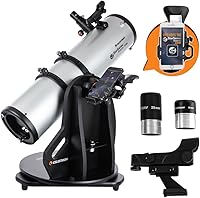
The Heritage 130mm combines its base and optical tube in a tabletop package. That can simplify carrying and storage, but you'll need a sturdy table or other support at a comfortable viewing height.
Its phone-guided system can help you locate targets, while the tabletop format may suit travel better than a large floor-standing Dobsonian. It still needs a stable surface for observing.
This tripod-mounted option may suit observers who do not have a table for a tabletop Dobsonian. Its 114mm reflector is smaller than a 12-inch telescope, so consider it as an easier-to-carry alternative.
How do you decide if a 12-inch Dobsonian is right for you?
A 12-inch Dobsonian makes sense if you can move it safely, store it well and reach a suitable observing spot. Choose the tube style around your vehicle and storage, then decide whether manual aiming meets your needs.
Pick a solid tube when enclosure and simple setup matter more than packed size. Pick a collapsible tube when transport space is tight and you are willing to set it up carefully.
If you are new to this style of telescope, read whether a Dobsonian telescope is good for beginners before settling on a large model. Choose a smaller Dobsonian if it is more likely to make it outside on a clear night.
Frequently asked questions
Is a 12-inch Dobsonian too big for a beginner?
A 12-inch Dobsonian can suit a beginner who has room to store it and a practical way to move it. Its size and weight can make setup harder than with a smaller scope, so consider your stairs, vehicle and observing spot before choosing.
A smaller Dobsonian may be easier to use often.
Is a solid tube or collapsible Dobsonian better?
A solid tube keeps the optical tube enclosed, while a collapsible design shortens for storage and transport. The collapsible style still needs careful handling and may need a shroud to block stray light.
Choose based on your storage space, vehicle and willingness to set up the open tube.
Does a 12-inch Dobsonian track objects automatically?
A standard manual Dobsonian does not track objects automatically. You move it by hand as objects drift across the sky.
Some models can be paired with tracking or computerized systems, but the exact mount and included features vary, so check the configuration before you buy.
Can I use a 12-inch Dobsonian from a city?
You can observe the Moon and planets from a city, but bright skies make faint galaxies and nebulae harder to see. A 12-inch mirror gathers more light, yet it cannot remove skyglow.
For deep-sky targets, a darker site and a transport plan can matter as much as aperture.