Reflector vs Refractor Telescope: Which Should You Choose? (October 2026)
Choose a refractor for low-maintenance lunar and planetary viewing or a reflector for more aperture per dollar and deep-sky observing. The right design depends on your targets, storage space and willingness to keep the optics aligned.
On this page (8 sections)
- Reflector vs Refractor Telescope: Which Should You Choose?
- Reflecting vs refracting telescope: how do the designs differ?
- Which design gives you more detail?
- Which telescope is easier to maintain?
- Which is easier to carry and set up?
- Which telescope suits your favorite targets?
- What products fit these telescope preferences?
- How should you make the final choice?
Reflector vs Refractor Telescope: Which Should You Choose?
Choose a refractor for quick, low-maintenance viewing or a reflector for more aperture at a given budget. In a reflecting vs refracting telescope comparison, your observing targets, storage space and appetite for alignment matter more than the design name.
A refractor bends light through a lens at the front of its tube. A reflector uses a primary mirror to gather and focus light, often with a secondary mirror directing it toward the eyepiece.
Both designs can show the Moon, planets and deep-sky objects. Their differences affect how much light they gather, how they handle, and what care they need.
 Best for travel and quick setup
Celestron Travel Scope 70mm Beginner Portable Telescope
Reflecting vs refracting telescope: how do the designs differ?
A refractor focuses light with lenses, while a reflector focuses light with mirrors. Each approach has strengths, so there isn't one best telescope for every observer.
In a refractor, the objective lens at the front bends incoming light toward the eyepiece. The sealed tube protects the optical path from dust and reduces the need for regular alignment.
In a reflector, a large primary mirror at the back of the tube sends light toward a smaller secondary mirror. In a common Newtonian layout, the secondary redirects the light to an eyepiece near the front side of the tube.
For an overview of different types of optical telescopes, compare these designs with catadioptric telescopes, which combine lenses and mirrors. To understand the basic job either design performs, start with what an astronomical telescope is.
Where does a reflector's focal point sit?
In a Newtonian reflector, the secondary mirror sends the primary mirror's focused light to an eyepiece near the tube's side. That placement makes it easy to look into the eyepiece while the tube points upward.
The layout can feel unfamiliar if you've only used a refractor, where you typically look through an eyepiece at the back of the tube. See where the focal point of a reflector telescope sits before deciding whether that viewing position suits you.
Which design gives you more detail?
Aperture is a major factor in the detail and faint objects a telescope can show. Reflectors often offer a larger aperture for the budget, while refractors can deliver sharp views in a smaller, simpler package.
A larger aperture collects more light, which helps reveal dimmer targets and finer details when viewing conditions are good. For this reason, observers often choose reflectors for galaxies and nebulae.
Refractors can show crisp views of the Moon and planets, especially in smaller sizes that are quick to set up. Some refractors can show colored fringes around bright objects, a form of chromatic aberration that depends on the lens design.
A reflector can also show planetary detail. Its performance depends on mirror quality, alignment, thermal conditions and the steadiness of the air.
The Newtonian telescope vs refractor comparison looks more closely at those two common designs. Professional observatories use many kinds of equipment, so read what telescopes astronomers use for context on how research instruments differ from backyard scopes.
Which telescope is easier to maintain?
A refractor usually needs less routine optical alignment, while a reflector may need occasional mirror collimation. Neither design is maintenance-free, but the care involved differs.
A refractor's lenses are held in place at the front of a sealed tube. Keep the lens cap on when the scope is stored, and clean the glass only when needed using a method suitable for telescope optics.
Reflector mirrors sit inside the tube, where dust can settle. A dusty mirror doesn't automatically need cleaning, since frequent cleaning can damage its coating; collimation is the more common adjustment to learn.
Collimation aligns the mirrors so light reaches the eyepiece correctly. A reflector can show soft or uneven views when the mirrors are out of alignment, so check alignment as the telescope's instructions recommend.
Both designs need time to adjust to outdoor temperatures for stable views. Avoid storing either instrument in damp conditions, and follow its manual for safe care.
Which is easier to carry and set up?
Small refractors are often simpler to transport and set up, while reflectors can become bulky as their aperture grows. Consider the whole setup, including the mount and tripod.
A short refractor tube can fit into a backpack or carry bag. The Celestron Travel Scope 70mm Beginner Portable Telescope has a 70mm aperture, a backpack and no-tool setup, which can suit quick trips and daytime scenery as well as night viewing.
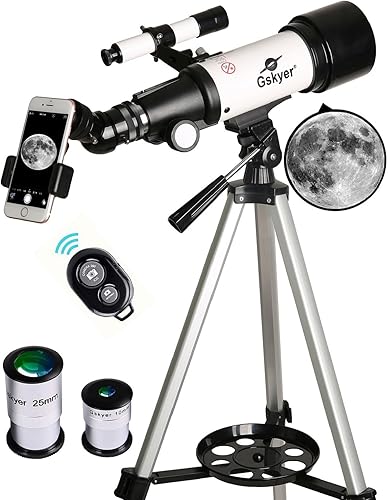
The Gskyer Telescope also has a 70mm aperture and comes with a carry bag, adjustable tripod, phone adapter and wireless remote. Its compact setup may suit a beginner who wants to bring a telescope to a campsite or dark-sky location.
A larger reflector gathers more light, but its tube and mount may take up more room in a car or closet. Some reflector designs fold or break down, so compare packed dimensions and setup steps for the particular model.
Is a refractor good for a beginner?
A refractor can be a good beginner telescope if ease of setup and low routine alignment are priorities. Its simpler upkeep can leave more time for learning the sky.
A beginner may prefer a refractor for the Moon, bright planets and occasional daytime use. For more context on that choice, see [Is a Refractor Good for a Beginner?
What to Know](/is-a-refractor-good-for-a-beginner/).
A reflector may be a better first scope if your main goal is seeing faint objects and you have room to store it. Learn to collimate it and check that the mount is steady enough for the telescope's size.
If you're still weighing telescope styles, how to know what telescope to choose can help you match a design to your observing plans.
Which telescope suits your favorite targets?
Choose by the objects you most want to observe, then consider aperture and setup. Both reflecting and refracting telescopes can handle more than one kind of target.
- Moon: Either design works well. A refractor is convenient for quick sessions, and a larger reflector can reveal fine surface detail.
- Planets: Both can show bright planets. A larger, well-aligned telescope may reveal more detail when the air is steady.
- Galaxies and nebulae: A reflector's larger aperture for the budget often makes it the practical choice for faint deep-sky targets.
- Daytime scenery: A refractor with an erect-image diagonal can be used for terrestrial viewing. Check that the exact telescope includes one.
- Wide star fields: A short focal length and low-power eyepiece can show a broad area of sky. Compare the telescope's field of view and eyepieces rather than choosing only by optical design.
A telescope doesn't make every target equally easy. Dark skies, a stable mount and realistic expectations matter alongside the optics.
What products fit these telescope preferences?
A portable refractor suits quick setup, while an 8-inch Schmidt-Cassegrain suits guided viewing with a larger aperture. The examples below illustrate different priorities rather than making one design right for every observer.
The Koolpte Telescope for Adults is an 80mm refractor with a 600mm focal length, two eyepieces, a Barlow lens, phone adapter and carry bag. Its larger lens aperture than a 70mm model may appeal if you want a portable refractor with more light gathering.
The Celestron NexStar 8SE Computerized Telescope uses 8-inch Schmidt-Cassegrain optics and a computerized GoTo mount. It's a catadioptric design rather than a simple reflector or refractor, but it may interest observers who want a larger aperture and help locating objects.
Scores weigh product features against the needs of this comparison.
How should you make the final choice?
Pick a refractor if you value easy setup and low routine alignment; pick a reflector if aperture and faint targets are your priorities. Check the size of the complete setup and the care you'll need to keep the optics in shape.
Choose a refractor for a compact telescope you can carry out for short sessions, especially if the Moon, planets or daytime scenery are your main targets. Choose a reflector when you have room for a larger tube and want more aperture for deep-sky observing.
If your priorities include both portability and substantial aperture, a catadioptric telescope may offer a useful middle ground. Compare its setup, mount and cost with simple optical designs before you decide.
For many beginners, the best choice is the telescope they'll use often and can store safely. Start with your targets and observing space, then use how a refractor telescope works to learn what happens to the light before it reaches your eyepiece.
Frequently asked questions
Is a reflecting or refracting telescope better for beginners?
Either can suit a beginner. A refractor usually needs less routine optical alignment and can be easier to store in a small size, while a reflector can provide more aperture for the money.
Choose based on your storage space, target interests and comfort with occasional collimation.
Which telescope is better for planets?
Both designs can show planets when their optics are well aligned and the atmosphere is steady. A refractor is convenient for quick viewing, while a larger reflector can gather more light and resolve finer details if its mirror is aligned and cooled to outdoor conditions.
Do reflecting telescopes need more maintenance?
Reflectors generally need occasional mirror alignment, called collimation, and their open tubes can collect dust. Refractors are sealed around the objective lens and usually need less routine alignment, though their lenses still need careful handling and cleaning when necessary.
Are refracting telescopes easier to carry?
Small refractors are often easy to carry because their tubes are compact and can fit in a bag. A reflector's tube may be bulkier, though some designs fold or use a short tube.
Compare the full telescope and mount, since the mount can add substantial bulk.
Can I use a refractor for deep-sky objects?
Yes, a refractor can show brighter deep-sky objects, especially from a dark location. Aperture matters because faint galaxies and nebulae need light gathering, so a larger reflector often suits deep-sky viewing better at a similar budget.
Neither design can make light pollution disappear.