What Is Red Light on a Flashlight or Headlamp For?
A red flashlight gives you just enough light to read charts and handle gear without washing out your night vision. Red light affects dark-adapted eyes far less than white light, so you can keep seeing faint stars after you look away.
On this page (9 sections)
- What does a red flashlight do for night vision?
- What is red light on a flashlight for at a star party?
- How does red light help with charts and setup?
- What is a red flashlight good for beyond astronomy?
- How should you use a red light without losing night vision?
- Red flashlight or red headlamp: which should you pick?
- What should you check before you buy a red light?
- Are there limits to what red light can do?
- Final take on what a red flashlight does
A red flashlight gives you light you can use at night with far less harm to your dark-adapted eyes. That is what does a red flashlight do in one sentence: it helps you see the task without losing the faint sky.
Your eyes need about 20 to 30 minutes to fully adapt to darkness. White light resets that process in seconds.
Red light slows it down a lot, which is why astronomers treat a red light as standard kit, not a luxury.
What does a red flashlight do for night vision?
Red light protects night vision because rod cells, which handle dim light, respond weakly to long red wavelengths. You can still read fine detail, but your eyes stay ready for faint stars.
That effect is not magic. It depends on brightness, distance, and time.
A faint red glow on a chart is fine. A bright red beam in your face is not.
Think of red light as a compromise. You trade full color and bright detail for a view of the sky that stays intact.
For a telescope session, that trade is worth it.
What is red light on a flashlight for at a star party?
At a star party, red light is for considerate observing sessions. It keeps your own eyes dark-adapted, and it keeps other people's eyes dark-adapted too.
White light from one person can spoil the view for everyone nearby. Red light, kept low and pointed down, is much less intrusive.
That social benefit matters in a shared field.
Use red light for reading charts, finding eyepieces, checking a finder, and packing up. Save white light for a real safety issue, like a trip hazard on the ground.
How does red light help with charts and setup?
Red light helps with charts because print stays readable under a dim red beam. You can line up a star chart with the sky, check coordinates, and mark a target without a bright flash.
It also helps during setup. You can read mount labels, level a tripod, and fit an eyepiece while your eyes begin to adapt.
The key is to work slowly and let the red light do small jobs.
Brightness control matters here. If your light has only one bright red mode, hold it farther from the chart or shield it with your hand.
If it has adjustable levels, start low.
What is a red flashlight good for beyond astronomy?
A red flashlight is good for any task where night vision matters. That includes night photography, wildlife watching, aviation, boating, and work near sleeping people.
Hunters and anglers use red light to spot things at a distance without spooking animals as easily as white light would. Photographers use it to check a camera and focus without ruining a long exposure setup.
For hiking, red light can help you read a map while keeping some ability to see the trail. It is not a replacement for a white light when safety comes first.
How should you use a red light without losing night vision?
Use red light in short, dim, and shielded bursts. That rule covers most mistakes people make on their first night out.
Point the beam at the chart, not at another person. Keep it low to the ground.
Turn it off between tasks, and give your eyes a minute to recover if you used it too brightly.
Cover a bright lens with a piece of red tape only if you understand the trade-off. Tape can dim a light, but it can also create hot spots and uneven color.
A light with true brightness control is a cleaner choice.
If you need to walk far, a dim red light may not show every root and rock. Slow down, use a faint white light if safety demands it, then switch back to red once you stop moving.
Red flashlight or red headlamp: which should you pick?
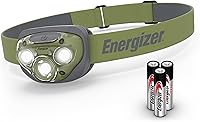
A red flashlight is a handheld light you aim where you need it. A red headlamp keeps both hands free and stays pointed where you look.
Most observers pick based on the task, not on brand loyalty.
Headlamps suit setup work, chart reading, and packing up. You can keep your hands on the telescope while the light stays on the chart.
Look at best red light headlamps for astronomy if hands-free use is your priority.
Handheld flashlights suit aiming a beam at a chart, a distant object, or a piece of gear across the field. They are also easy to share.
Our guide to the best red light flashlight for astronomy covers that style in more detail.
AuKvi 2 Pcs Powerful Red LED Flashlight
DanForce Headlamp. USB Rechargeable LED Head Lamp.
The AuKvi set includes 2 handheld lights, each 5.67 x 1.5 x 0.87 inches and 130 g. The body is aluminum with a brushed finish, and the light source is LED at 10 watts.
AuKvi says the beam reaches 200 meters and outputs up to 500 lumens. The focus is adjustable, so you can narrow the beam for distant work or widen it for a chart.
It runs on 1 18650 lithium-ion battery or 3 AAA batteries, neither included.
This shape suits observers who want a light they can point, not wear. The single mode keeps operation simple, which is a plus when you are tired and it is cold.
The trade-off is less brightness control than a lamp with several levels.
The DanForce headlamp is a USB rechargeable LED headlamp with a secondary red light, 4 light modes, and a zoomable beam. It weighs 8.8 ounces and uses a lithium-ion battery that is included.
DanForce says the headlamp outputs up to 1080 lumens in white light, with a 90 degree beam angle. The package includes the headlamp, headband, carry bag, and Type-C cable.
The body is aluminum and the design is water-resistant.
This shape suits observers who want both hands free. The red mode handles night tasks, and the white modes handle setup and travel.
The trade-off is weight on the forehead, so fit and balance matter for long sessions.
What should you check before you buy a red light?
Check the red mode first, not the white light specs. A lamp can list high white lumens and still have a red mode that is too bright for astronomy.
Look for adjustable brightness, a simple switch you can use with gloves, and a beam you can shield. Also check battery type, runtime, charging method, and weight.
Small details matter when the light is in use all night.
Our roundup of the best red lights for astronomy compares these features across models. If you are comparing red and green modes, green vs red light headlamp explains the trade-offs.
It also helps to check how the light fits with the rest of your kit. A good red light pairs well with telescope parts and accessories you already own, like a finder, a chart holder, or a carry case.
Are there limits to what red light can do?
Red light cannot replace a white light for safety. It cannot show true color, and it cannot make a faint object brighter in your eyepiece.
It only protects the vision you already have.
Red light also cannot fix light pollution. If the sky is washed out by streetlights, a red flashlight will not bring back faint stars.
It only stops you from making the problem worse at your own scope.
Some people use red dot finders, best red dot finder for telescope guides, and other red lights for different jobs. Do not confuse a finder with a general red light.
A finder aims the telescope. A red flashlight lights the task.
Brand-specific lamps can be useful too. If you already use one brand, check models such as the best Black Diamond headlamp red light and the best Petzl red light headlamp to see how red modes and brightness controls differ.
Final take on what a red flashlight does
A red flashlight does one core job: it lets you read, adjust, and pack up at night while keeping your eyes ready for the sky. That is why it belongs in every observing bag, next to your charts and eyepieces.
Pick a headlamp if you want hands-free use for setup and charts. Pick a handheld flashlight if you want to aim a focused red beam at a target.
If you are unsure, a light with adjustable red brightness gives you the most useful range.
Whichever style you choose, use it dim, brief, and pointed down. That habit protects your night vision, respects other observers, and keeps the faint stars in view longer.
Frequently asked questions
What does a red flashlight do for astronomy?
It lets you read star charts, adjustment labels, and gear controls while protecting dark-adapted vision. Red light is far less disruptive to rod cells than white light, so your eyes stay tuned for faint objects.
Keep the beam dim, brief, and pointed at the chart, not at the sky.
Does red light ruin night vision at all?
Very bright or prolonged red light can still reduce night vision, especially at close range. Use the lowest useful brightness, shield the beam, and switch it off when you do not need it.
A dim red light used for seconds is much safer than a bright one left on.
Is a red headlamp better than a handheld red flashlight?
It depends on the task. A headlamp keeps both hands free for setup and chart work.
A handheld flashlight is easier to aim at a chart, a telescope, or a distant target.
Many observers carry one of each and use the headlamp most of the night.
Why do some headlamps have both red and white light?
White light is best for safety, travel, and setup before it gets fully dark. Red light is best once your eyes are dark-adapted and you are observing.
A lamp with both modes lets you switch without carrying two separate lights.