9 Best Intermediate Telescopes for Adults (November 2026)
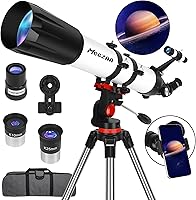
The best intermediate telescopes for adults include the Gskyer Telescope for portable lunar viewing, the Dianfan Telescope for high magnification, and the MEEZAA Telescope for complete starter kits.
On this page (9 sections)
- How we compared these intermediate telescopes
- Best intermediate telescopes for adults, compared by use
- What aperture should an adult choose for an intermediate telescope?
- Should you choose a refractor or a reflector?
- What mount type is easiest for adults to learn?
- How much magnification do you really need?
- What features help adults find targets faster?
- How should you set up and care for an intermediate telescope?
- Which telescope is the best intermediate telescope for adults for your goals?
The best intermediate telescope for adults depends on your main targets. The Gskyer is the most portable choice, the Dianfan and MEEZAA give stronger high-power views, and the Celestron 130EQ gives the most light for deep-sky objects.
An intermediate telescope for adults should feel like a real upgrade, not a slightly larger starter scope. You want more aperture, a steadier mount, better focus control and eyepieces that make familiar targets easier to enjoy.
Our score weighs specs, features and buyer feedback against what you are shopping for. We checked the aperture, focal length, mount type, included eyepieces and portability for each model.
Our picks at a glance
-
1
-
2

-
3

- 4
 Check it
Celestron StarSense Explorer LT 114AZ Newtonian Smartphone
Best for phone-guided finding - 5
 Check it
Celestron AstroMaster 130EQ Telescope for Deep-Sky Beginners
Best for deep-sky beginners - 6
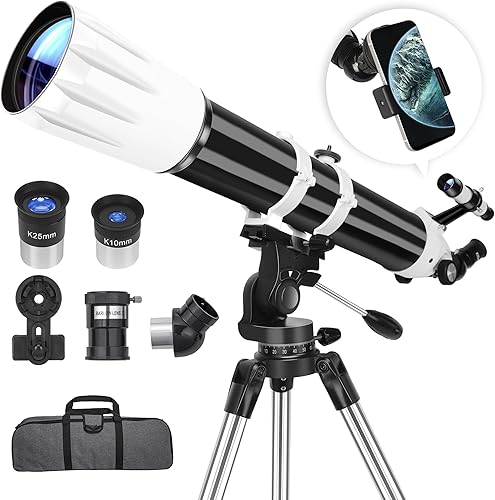 Check it
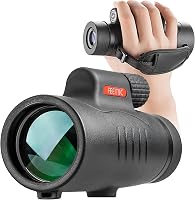
Hawkko 90mm Aperture 900mm Telescope for Adults
Best for balanced power and travel - 7
 Best for maximum magnification rangeCheck it
- 8
 Check it
SVBONY SV503 Telescope for Adults High Powered
Best for ED optics and imaging - 9
 Check it
SOLOMARK Telescope 130EQ Newtonian Reflector Telescopes
Best for 130mm value with accessories
How we compared these intermediate telescopes
We compared aperture first because aperture controls brightness and detail. We then checked focal length, mount style, eyepiece range and how much setup each model needs.
A 130mm reflector gathers about twice as much light as a 90mm refractor in simple area terms. That difference matters for galaxies, nebulae and faint star clusters, especially under dark skies.
Focal length controls magnification with a given eyepiece. A 1000mm tube gives more close-up power than a 650mm tube, but it also narrows the field and makes finding targets harder.
Mount style matters as much as optics. Altazimuth mounts are simpler for casual use, while equatorial mounts can track the sky more naturally once aligned.
We also looked at weight and included accessories. A telescope you can carry to a dark site will get more use than a stronger model that stays in a garage.
| Product | Best for | Aperture | Focal Length | Mount | Our score |
|---|---|---|---|---|---|
| Gskyer Telescope | portable lunar viewing | 70mm | 400mm | Altazimuth | 9.7 |
| Dianfan Telescope | high magnification | 90mm | 800mm | Altazimuth | 9.7 |
| MEEZAA Telescope | complete starter kits | 90mm | 800mm | Altazimuth | 9.6 |
| Celestron StarSense Explorer LT 114AZ Newtonian Smartphone | phone-guided finding | 114mm | 1000mm | Altazimuth | 9.5 |
| Celestron AstroMaster 130EQ Telescope for Deep-Sky Beginners | deep-sky beginners | 130mm | 650mm | Equatorial | 9.3 |
| Hawkko 90mm Aperture 900mm Telescope for Adults | balanced power and travel | 90mm | 900mm | Altazimuth | 9.0 |
| HE1TEKAN 90mm Aperture 1000mm | maximum magnification range | 90mm | 1000mm | Altazimuth | 8.7 |
| SVBONY SV503 Telescope for Adults High Powered | ED optics and imaging | 102mm | 714mm | Tripod Mount | 8.1 |
| SOLOMARK Telescope 130EQ Newtonian Reflector Telescopes | 130mm value with accessories | 130mm | 650mm | Equatorial | 7.9 |
Best intermediate telescopes for adults, compared by use
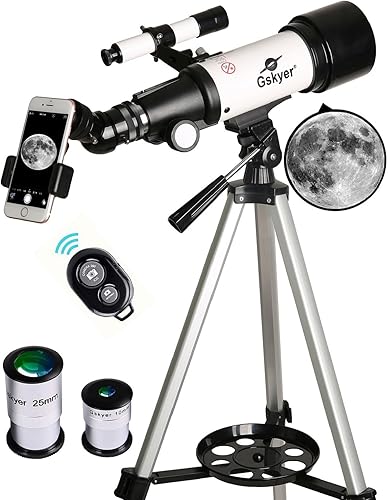
Gskyer Telescope: Best for portable lunar viewing
- 70mm aperture
- 400mm focal length
- Altazimuth mount
- Phone adapter and wireless remote
- Carry bag
A compact 70mm refractor for adults who want easy travel and simple lunar or planetary views.
Pros
- Compact and portable
- Phone adapter included
- Adjustable tripod
Cons
- Smaller aperture than 90mm and 130mm picks
- Shorter focal length limits close-up detail
The Gskyer suits adults who want a light, travel-friendly scope for the Moon, bright planets and easy terrestrial viewing. Its 70mm aperture and 400mm focal length keep the tube compact and the field wide for finding targets.
It comes with two eyepieces, a 3x Barlow lens, a 5x24 finder scope, a phone adapter and a wireless remote. Those extras help a new intermediate user learn the sky without buying more gear at first.
With a 25mm eyepiece you get about 16x, and with a 10mm eyepiece plus the Barlow you can reach up to 120x for closer lunar views. The 40cm tube and 5.7 pound weight pack into the carry bag for car trips or campsite use.
The fully coated optics and BAK4 prism help keep images clear, while the adjustable aluminum tripod gives flexible viewing height. That mix suits families and beginners who value simple setup.
The trade-off is light gathering. A 70mm lens cannot match a 90mm or 130mm model on faint deep-sky objects.
Choose it for portability and ease, not for maximum brightness.
Dianfan Telescope: Best for high magnification
- 90mm aperture
- 800mm focal length
- 32x to 240x magnification
- Stainless steel tripod
- Phone adapter and carry bag
A 90mm refractor with a long focal length for detailed Moon views and higher magnification.
Pros
- Large 90mm aperture
- Wide magnification range
- Portable tripod and bag
Cons
- Longer tube is less compact
- High magnification is sensitive to wind
The Dianfan suits adults who want a clear step up in magnification for lunar detail and bright planets. Its 90mm aperture and 800mm focal length produce 32x to 240x with the included eyepieces and 3x Barlow lens.
The stainless steel tripod, phone adapter and carry bag make it easier to move from backyard to a local dark site. The 45 degree zenith mirror also helps with upright terrestrial viewing.
The Dawes limit of 1.29 arc seconds and 1.56 degree field of view show its design focus. You get tighter planetary detail than a 400mm tube, while low power still offers a workable search field.
Setup takes about 15 minutes with clear instructions, and the 4.7 kg weight keeps it portable for adults. Manual focus is simple once you learn to make small, steady adjustments.
The trade-off is size and vibration. A longer tube is harder to carry and steadier setup matters more at high power.
It is a strong choice when planetary and lunar detail is your main goal.
MEEZAA Telescope: Best for complete starter kits
- 90mm aperture
- 800mm focal length
- 32x to 240x magnification
- Adjustable stainless steel tripod
- Phone adapter and carry bag
A 90mm refractor with a full accessory set for adults moving beyond a basic starter scope.
Pros
- Complete accessory kit
- Adjustable tripod
- Strong lunar magnification
Cons
- Similar optics to the Dianfan
- Long tube needs storage space
The MEEZAA suits adults who want a complete 90mm kit with a strong high-power range. Its 90mm aperture and 800mm focal length match the Dianfan, with 32x to 240x magnification from two eyepieces and a 3x Barlow lens.
The kit includes a finder scope, zenith mirror, accessory tray, adjustable stainless steel tripod and carry bag. That full set reduces the need for separate purchases after the first clear night.
The 10mm and 25mm Kellner eyepieces cover both close-up and wide views, and the 3x Barlow triples each one. The tripod adjusts from 28 to 46 inches, so seated and standing observers can both find a comfortable height.
Fully multi-coated glass helps improve brightness and clarity for the Moon and planets. The phone adapter also lets you capture photos and videos for sharing with family.
The trade-off is portability. The 80cm tube and tripod take more storage space than the Gskyer.
Choose it if a complete package matters more than the smallest possible footprint.
Celestron StarSense Explorer LT 114AZ Newtonian Smartphone: Best for phone-guided finding
- 114mm Newtonian reflector
- 1000mm focal length
- Smartphone sky recognition
- Altazimuth mount
- 25mm and 10mm eyepieces
A 114mm reflector that uses phone sky recognition to help you find planets, nebulae and galaxies.
Pros
- Phone-guided target finding
- 114mm light gathering
- Curated target list
Cons
- Requires a compatible smartphone
- Manual tracking at high power
The Celestron StarSense Explorer suits adults who struggle to find targets with a finder scope alone. Its 114mm Newtonian reflector gathers more light than the 90mm refractors, while the phone app points you toward planets, nebulae and galaxies.
The app builds a list of targets for your time and location, then shows on-screen arrows as you move the telescope. When the bullseye turns green, the target should be in the eyepiece.
Sky recognition technology analyzes star patterns overhead to pinpoint position, rather than relying only on gyroscope data. That makes the first sessions feel guided instead of guesswork.
The 1000mm focal length, 25mm and 10mm eyepieces, 2x Barlow lens and red dot style finder scope support both visual use and learning. The preassembled tripod and manual altazimuth mount keep setup straightforward.
The trade-off is phone dependence and manual tracking. You still need to follow objects by hand, and high magnification can make that work more demanding.
It is best for guided discovery.
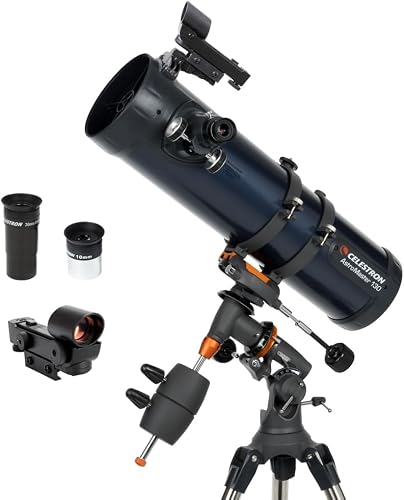
Celestron AstroMaster 130EQ Telescope for Deep-Sky Beginners: Best for deep-sky beginners
- 130mm Newtonian reflector
- 650mm focal length
- German equatorial mount
- 20mm and 10mm eyepieces
- Red dot finderscope
A 130mm reflector on an equatorial mount for brighter deep-sky views and precise manual pointing.
Pros
- Largest aperture here
- Slow-motion mount controls
- Strong deep-sky potential
Cons
- Heavier at 17 lb
- Equatorial setup takes more practice
The Celestron AstroMaster 130EQ suits adults who want the brightest deep-sky views in this group. Its 130mm reflector and 650mm focal length give a wide field for star clusters, nebulae and bright galaxies.
The German equatorial mount has slow-motion controls for right ascension and declination. Those controls help you center a target and follow it more smoothly than a simple altazimuth mount.
The 20mm eyepiece with erect image corrector gives about 33x for terrestrial and wide sky views, while the 10mm eyepiece gives about 65x for planets and the Moon. The StarPointer finderscope helps you aim quickly.
Aluminum and SiO2 coatings boost brightness and contrast, and the Dawes limit of 0.89 arc seconds reflects strong resolution for this class. Setup needs no tools and the tripod height adjusts for adults or kids.
The trade-off is weight and learning curve. At 17 lb fully assembled, it is less travel-friendly than the refractors.
Equatorial alignment also takes practice before it feels natural.
Hawkko 90mm Aperture 900mm Telescope for Adults: Best for balanced power and travel
- 90mm aperture
- 900mm focal length
- 36x to 270x magnification
- Stainless steel AZ tripod
- Phone adapter and carry bag
A 90mm refractor with 900mm focal length for strong planetary detail in a portable package.
Pros
- High magnification range
- Adjustable tripod
- Complete portable kit
Cons
- Longer than 800mm models
- High power needs steady conditions
The Hawkko suits adults who want more focal length than an 800mm model without moving to a reflector. Its 90mm aperture and 900mm focal length give 36x to 270x magnification for lunar and planetary detail.
The stainless steel AZ tripod adjusts from 28 to 46 inches, and the kit includes a finder scope, zenith mirror, two eyepieces, a 3x Barlow lens and a phone adapter. That mix supports both visual use and simple phone photos.
Full multi-layer coating improves light transmission for clearer and sharper images, and the 1.39 degree field of view balances search width with close-up power. The 90cm tube is long, but the carry bag and accessory tray keep the kit organized.
Assembly follows step by step instructions in about 15 minutes, which suits adults new to intermediate gear. The 5 kg weight is higher than some 800mm models, yet still manageable for backyard to car transport.
The trade-off is a longer 90cm tube and more sensitivity to wind at high power. It sits between the 800mm refractors and the 1000mm HETEKAN in size and power.
HE1TEKAN 90mm Aperture 1000mm: Best for maximum magnification range
- 90mm aperture
- 1000mm focal length
- 40x to 500x magnification
- Three eyepieces plus Barlow lens
- Adjustable AZ tripod
A 90mm refractor with the longest focal length here for wide-field search and detailed close-ups.
Pros
- Very wide magnification range
- Three eyepieces included
- Adjustable tripod
Cons
- 500x is often too high for normal seeing
- Longest tube in this group
The HETEKAN suits adults who want the widest magnification range in this group. Its 90mm aperture and 1000mm focal length pair with 25mm, 10mm and 6mm eyepieces plus a 3x Barlow lens for 40x to 500x.
The three eyepieces let you move from wide-field search to close-up views without changing the Barlow every time. The tripod adjusts from about 29 to 46 inches for seated or standing use.
Fully multi-coated optics reduce glare and enhance clarity, and the 90mm aperture gathers more light than 70mm and 80mm models. Dual phone mount options include a standard adapter and a tube mounted holder for alignment and tracking.
The 100cm tube and 5.95 kg weight make this the longest package here, so storage and transport need plan. Setup is reported to take under 10 minutes for many users without tools.
The trade-off is that 500x often exceeds what normal air conditions can support. Longer focal length also means a narrower field, so low-power finding skills matter more.
Choose it for range, not for constant high power.
SVBONY SV503 Telescope for Adults High Powered: Best for ED optics and imaging
- 102mm aperture
- 714mm focal length
- S-FPL51 ED glass
- Dual-speed focuser
- 360 degree field rotator
A 102mm ED refractor for adults who care about color control, precise focus and camera use.
Pros
- ED glass reduces color fringing
- Dual-speed focuser
- Strong imaging features
Cons
- Optical tube only for the listed kit
- Needs a suitable mount and diagonal
The SVBONY SV503 suits adults who care about image quality and possible camera use. Its 102mm aperture, 714mm focal length and S-FPL51 ED glass help control color fringing for sharper planetary and deep-sky views.
The dual-speed focuser and 360 degree field rotator make fine focus and camera alignment easier. The 90mm focus travel also leaves room for some imaging accessories.
Fully multi-coated optics improve light transmission and reduce internal reflections for higher contrast. The 133mm hexagonal retractable hood in the full design blocks stray light and helps limit dew on the objective.
This is an optical tube only package at 3.95 kg, with dovetail plate, tube rings, lens cover and a 2 inch to 1.25 inch adapter included. That format suits adults who already own a suitable mount, diagonal and eyepieces.
The trade-off is that you must pair it with a suitable mount and diagonal for visual use. It is a more specialist choice than the complete kits above.
SOLOMARK Telescope 130EQ Newtonian Reflector Telescopes: Best for 130mm value with accessories
- 130mm aperture
- 650mm focal length
- German equatorial mount
- 1.5x Barlow lens
- Moon filter and phone adapter
A 130mm Newtonian reflector with equatorial mount and accessories for deep-sky and lunar viewing.
Pros
- 130mm aperture
- Moon filter included
- Equatorial mount
Cons
- Large and heavier in use
- Equatorial alignment adds setup time
The SOLOMARK suits adults who want a 130mm reflector with a useful accessory set. Its 130mm aperture and 650mm focal length match the Celestron 130EQ for light gathering and wide-field deep-sky viewing.
The German equatorial mount, adjustable aluminum tripod and accessory tray support steady manual tracking. It also includes two eyepieces, a 1.5x Barlow lens, a moon filter and a phone adapter.
Fully coated glass optics help you observe brighter and more detailed planets, while the carbon fiber covered tube surface keeps the structure light for its size. The 1.3 degree field of view suits large clusters and nebulae.
The straight through finder scope helps with initial aiming, and the tray gives a place for eyepieces and small parts during a session. That completeness reduces early extra purchases.
The trade-off is bulk and setup effort. A 130mm Newtonian on an equatorial mount is larger and heavier in daily use than the 90mm refractors.
Choose it for aperture and accessories over easy travel.
What aperture should an adult choose for an intermediate telescope?
Choose 90mm for a balanced upgrade, 114mm to 130mm for brighter deep-sky views, and 70mm only for easy travel. Aperture is the main reason to move beyond a starter scope.
A 90mm refractor is a sweet spot for adults who mainly watch the Moon, planets and bright open clusters. It is easier to carry than a 130mm reflector and still gives a clear improvement over 70mm.
A 114mm or 130mm reflector gathers more light for nebulae, galaxies and faint clusters. That extra light helps most when you observe from a dark site away from city lights.
How aperture affects what you see
More aperture means brighter images and more detail. It also means a larger, heavier telescope in most designs.
For planets, aperture helps reveal more detail, but steady air matters just as much. A 90mm refractor on a calm night can show satisfying lunar detail and planetary features.
For deep-sky objects, aperture is the main limiting factor. A 130mm reflector will show more than a 90mm refractor, especially for faint objects.
When a smaller telescope is the better choice
A smaller telescope wins when you will carry it often. A 70mm refractor that goes to a dark site beats a large reflector that stays indoors.
Storage space also matters. Long tubes and equatorial mounts need room for both the telescope and the tripod.
How to judge aperture in daily use
Think about where you will observe most nights. A balcony, a small yard or a car trunk all favor a smaller tube.
Think about how far you will carry it. A 17 pound reflector is fine for a backyard, but it is a different commitment for regular travel.
Think about your main targets. The Moon and bright planets reward magnification and focus, while galaxies reward raw light gathering.
Should you choose a refractor or a reflector?
Choose a refractor for simple setup and low maintenance, and choose a reflector for more aperture per size. Both types can serve intermediate adults well.
Refractors in this group range from 70mm to 102mm and are easy to learn. They have no mirror alignment to worry about and often give crisp views of the Moon and planets.
Reflectors from 114mm to 130mm gather more light for deep-sky targets. They need more care for mirrors and dew, and the larger tubes are harder to store.
Refractor strengths for intermediate use
Refractors work well for adults who want quick setup and reliable focus. The 90mm models here give strong lunar and planetary views with simple altazimuth mounts.
The SVBONY ED refractor adds color control for users who want cleaner images. That matters more for bright planets and future camera use.
Reflector strengths for deep-sky viewing
Reflectors give more aperture for galaxies, nebulae and star clusters. The Celestron 114mm and 130mm models show why many adults choose a reflector after a starter refractor.
A reflector also tends to offer a shorter focal ratio for wide fields. That helps when you want to find large clusters and nebulae.
What mount type is easiest for adults to learn?
Choose an altazimuth mount for simple pointing, and choose an equatorial mount for smoother tracking. The best mount is the one you will set up without delay.
Altazimuth mounts move up and down and side to side. That motion matches how most people expect a telescope to move, so first sessions feel intuitive.
Equatorial mounts move along the sky's rotation. With slow-motion controls, they can follow planets and deep-sky objects more smoothly at higher magnification.
Altazimuth use in this group
Most refractors here use altazimuth mounts with adjustable tripods. They are fast to set up and easy to use for casual backyard sessions.
At high magnification, you will need to nudge the telescope often to keep a planet centered. A steady tripod on firm ground helps reduce that work.
Equatorial use and its learning curve
The 130EQ models use German equatorial mounts with slow-motion knobs. Those controls help with precise centering and tracking once you learn the setup.
You must align the mount with the celestial pole for best tracking. That takes a little practice, but it becomes routine after a few sessions.
How much magnification do you really need?
Use low magnification to find targets and moderate magnification for planets and the Moon. More magnification is not always better.
Low power gives a wider field, so targets are easier to find and follow. It also gives brighter, more comfortable images for scanning star fields.
Moderate power reveals lunar craters and planetary bands. Very high power often makes the image dim, shaky and blurry.
Matching eyepieces to focal length
A 25mm eyepiece in an 800mm telescope gives about 32x magnification. A 10mm eyepiece in the same telescope gives about 80x.
A Barlow lens multiplies that power. A 3x Barlow with a 10mm eyepiece in an 800mm telescope gives about 240x.
When high magnification helps
High magnification helps on calm nights with good seeing. The Moon and bright planets are the best targets for pushing power.
It helps less for faint nebulae and galaxies. Those objects usually look better at low or moderate power with a wide field.
What features help adults find targets faster?
A finder scope, a phone app and a good target list help more than extra magnification. Finding the object is the first skill to build.
A finder scope shows a wide view that helps you aim the main telescope. A red dot finder is simple, while a cross-hair finder scope gives a more precise reference.
Phone-guided finding helps even more at first. The Celestron StarSense app analyzes the sky and tells you which way to move.
Setup habits that save time
Set up the tripod first and make the legs firm on flat ground. Then attach the tube and align the finder scope in daylight.
Let the telescope reach outdoor temperature before you observe. That reduces focus drift caused by temperature changes.
Using a phone adapter well
A phone adapter lets you take photos and share what you see. It is best for the Moon and bright planets, where the image is bright enough for a phone.
Keep exposures short and adjust focus carefully. Phone photos are a learning tool, not a replacement for visual observing.
How should you set up and care for an intermediate telescope?
Set up on firm, flat ground, allow the optics to reach outdoor temperature, and store the telescope dry and covered. Good habits protect your views and your investment.
Start by placing the tripod legs wide and firm. Tighten all knobs before you lift the tube into place.
Aim the finder scope at a distant landmark in daylight. Align it so the main view and finder view center the same target.
Care for lenses and mirrors
Never look at the sun with a telescope. Even a brief glance can cause serious eye damage.
Wipe lenses only with a soft lens cloth and gentle strokes. Dust is usually less harmful than repeated wiping with a rough cloth.
Storage and transport
Use the carry bag or case when moving the telescope. Keep eyepieces and small parts in a tray or box so they do not roll or scratch.
Store the telescope in a dry place away from large temperature swings. Condensation can form when a cold telescope enters a warm room.
Which telescope is the best intermediate telescope for adults for your goals?
Pick the Gskyer for travel, the Dianfan or MEEZAA for high-power lunar views, the StarSense for guided finding, and a 130EQ model for deep-sky brightness. Your main target should make the choice.
If you want the easiest upgrade, start with a 90mm refractor. It gives more light and magnification than a 70mm starter scope without the size of a 130mm reflector.
If you care about faint galaxies and nebulae, choose a 114mm or 130mm reflector. The extra aperture will matter more than a long list of accessories.
If you want to learn the sky fast, phone-guided finding is a real advantage. The StarSense model helps you spend more time looking and less time searching.
For a balanced all-around pick, the Dianfan and MEEZAA offer strong magnification, complete kits and portable tripods. Compare them with our best telescope for visual astronomy guide if visual use is your priority.
If you are ready to step up again later, browse our best telescope for professionals picks and our guide to professional telescopes for astronomy. For a high-power comparison, see our best high powered telescope roundup.
Before your first night, read How to Use a Telescope for Beginners: A Beginner’s Guide so setup feels familiar. Then pick the telescope that matches your targets, your storage space and how often you will carry it to a dark sky.
Our top 3 picks at a glance
-
1
-
2
-
3
Frequently asked questions
What makes a telescope intermediate rather than beginner?
A larger aperture, a steadier mount, better eyepieces and more precise controls move a telescope into intermediate territory. You get brighter views and smoother tracking, but setup and care still suit a new adult observer.
Is 90mm enough for an intermediate telescope for adults?
Yes, 90mm is a practical step up from 70mm starter scopes. It gathers more light for the Moon and bright planets, and pairs well with a long focal length for detail.
Should adults choose a refractor or a reflector?
Choose a refractor for compact setup, low maintenance and crisp planetary views. Choose a reflector for more aperture and brighter deep-sky images for the price, accepting larger size and mirror care.
What magnification should you use most nights?
Use low power to find targets and moderate power for planets and the Moon. Very high magnification often looks worse because air movement and vibration blur the image.
Do you need a phone adapter in an intermediate telescope?
No, but it helps you share views and learn targets. A finder scope and a phone app can make early sessions more successful than extra magnification.