7 Best Smart Telescopes for Deep Sky Imaging (October 2026)
The best smart telescopes for deep sky imaging include the Celestron StarSense Explorer DX 130AZ Smartphone Guided for guided visual deep sky observing, the DWARFLAB Dwarf Mini Smart Telescope for portable long exposures, and the Celestron StarSense Explorer LT 114AZ Newtonian Smartphone for budget guided sky tours.
On this page (4 sections)
The best smart telescope for deep sky imaging for most beginners is the ZWO Seestar S30 Pro, with automatic targeting and tracking, built-in light pollution filters and one-tap imaging. For longer single exposures in a portable package, consider the DWARF Mini; for app-based live viewing, compare the UNISTELLAR Odyssey models.
These picks include true automated imaging telescopes and smartphone-guided visual telescopes. The distinction matters: a phone guide helps you locate a target, while an imaging telescope tracks it and captures an image.
If you're choosing between automated systems, start with our smart telescope comparison for a broader look at how the main types differ. For a focus on image capture, see best smart telescopes for astrophotography.
Our picks at a glance
-
1
 Best for guided visual deep sky observing
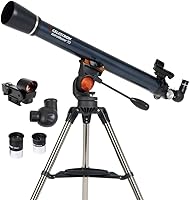
Celestron StarSense Explorer DX 130AZ Smartphone Guided
9.6/10 our score
See it on Amazon -
2
 Best for portable long exposures
DWARFLAB Dwarf Mini Smart Telescope
9.5/10 our score
See it on Amazon -
3
 Best for budget guided sky tours
Celestron StarSense Explorer LT 114AZ Newtonian Smartphone
9.5/10 our score
See it on Amazon
- 4
 Check it
ZWO Seestar S30 Pro Smart Telescope
Best for one-tap deep sky imaging - 5
 Check it
DWARFLAB Dwarf 3 Smart Telescope
Best for day and night imaging - 6
 Check it
UNISTELLAR Odyssey PRO Smart Telescope
Best for viewing through an electronic eyepiece - 7
 Check it
UNISTELLAR Odyssey Smart Telescope
Best for app-based live viewing
How we chose a smart telescope for deep sky imaging
The best smart telescope for deep sky imaging should automate target finding and tracking, then make image capture practical for the way you observe. We compared the listed features, focusing on exposure options, tracking, image processing, portability and whether a model is for imaging or visual use.
The Seestar S30 Pro ranks first among the dedicated imaging options because it combines automatic tracking with one-tap capture, processing and built-in light pollution filters. The DWARF Mini follows closely with equatorial mode and single-frame exposures up to 90 seconds.
The two Celestron StarSense Explorer models rank highest by score, but they are not automated imaging telescopes. Their smartphone sky recognition guides manual eyepiece observing, so we include them for readers who may mean a phone-guided telescope when searching for a smart stargazing telescope.
Our score weighs specs and features against what you're shopping for.
| Product | Best for | Optics | Target guidance | Mount | Our score |
|---|---|---|---|---|---|
| Celestron StarSense Explorer DX 130AZ Smartphone Guided | guided visual deep sky observing | 130 mm Newtonian reflector | Smartphone sky recognition and on-screen arrows | Manual altazimuth with dual-axis slow-motion controls | 9.6 |
| DWARFLAB Dwarf Mini Smart Telescope | portable long exposures | 9.5 | |||
| Celestron StarSense Explorer LT 114AZ Newtonian Smartphone | budget guided sky tours | 114 mm Newtonian reflector | Smartphone sky recognition and on-screen arrows | Manual altazimuth with altitude slow-motion adjustment | 9.5 |
| ZWO Seestar S30 Pro Smart Telescope | one-tap deep sky imaging | Alt-azimuth with equatorial mode support | 9.3 | ||
| DWARFLAB Dwarf 3 Smart Telescope | day and night imaging | 9.1 | |||
| UNISTELLAR Odyssey PRO Smart Telescope | viewing through an electronic eyepiece | 85 mm; 320 mm focal length | 9.0 | ||
| UNISTELLAR Odyssey Smart Telescope | app-based live viewing | 85 mm; 320 mm focal length | 8.3 |
The best smart telescopes for deep sky imaging
The right pick depends on whether you want automated image capture, portable long exposures or a guided view through an eyepiece. These options cover different ways to explore galaxies and nebulae.
1. Celestron StarSense Explorer DX 130AZ Smartphone Guided: Best for guided visual deep sky observing
Celestron StarSense Explorer DX 130AZ Smartphone Guided: Best for guided visual deep sky observing
- 130 mm Newtonian reflector
- Sky recognition through a smartphone
- Manual altazimuth mount with slow-motion controls
This is a guided visual telescope rather than an automated imaging scope. Its 130 mm reflector and app-guided target finding suit beginners who want to locate bright galaxies and nebulae by eye.
Pros
- 130 mm reflector
- App identifies targets using sky patterns
- Includes 25 mm and 10 mm eyepieces
Cons
- Manual mount does not automatically track targets
- Captures views through the eyepiece rather than app-based deep-sky imaging
The StarSense Explorer DX 130AZ is a 130 mm Newtonian reflector that uses a smartphone app to identify star patterns and guide you toward targets. It offers a helpful route into visual deep-sky observing, especially if you want to find objects such as the Orion Nebula or Andromeda Galaxy through an eyepiece.
Its manual altazimuth mount has dual-axis slow-motion controls. The app provides on-screen arrows, and the bullseye turns green when you're on target.
This is a visual telescope with smartphone guidance, not a camera-based smart scope. It does not automatically track a target for long exposures, so choose an imaging telescope if saving stacked deep-sky photos is your goal.
Our guide to imaging Newtonian telescopes covers another camera-focused option.
For a new observer who wants help finding objects, the app's curated list of targets is useful. Our best smart telescopes for beginners guide compares more approachable options.
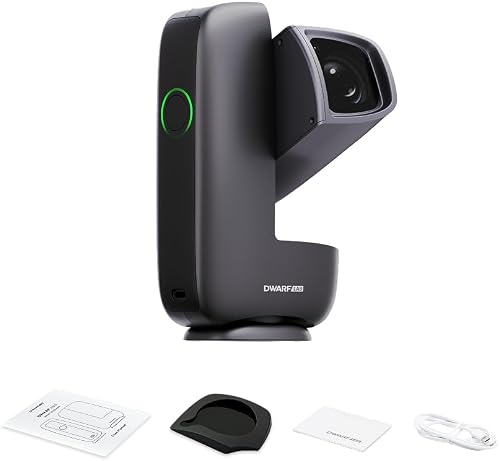
2. DWARFLAB Dwarf Mini Smart Telescope: Best for portable long exposures
DWARFLAB Dwarf Mini Smart Telescope: Best for portable long exposures
- 1.85 lb compact design
- Auto GOTO and tracking
- Equatorial mode with exposures up to 90 seconds
This compact smart telescope pairs automated target finding with equatorial mode and long exposures. Its built-in filters and cloud processing also fit a beginner who wants imaging tools in a travel-sized setup.
Pros
- Lightweight for carrying to darker locations
- Supports exposures up to 90 seconds
- Includes built-in light pollution filters
Cons
- Battery powered
- Its small format may not suit buyers seeking a larger observing instrument
The DWARFLAB Dwarf Mini combines app control, automatic target finding and tracking with an equatorial mode for deep-space imaging. It weighs 1.85 lb, a practical advantage when you plan to carry a compact setup to a darker location.
Its single-frame exposures can run up to 90 seconds. The unit also includes built-in light pollution filters and cloud processing, giving you several imaging tools without needing a separate computer in the field.
The 30 mm objective and compact body make this an especially portable choice, though buyers wanting an eyepiece view should look elsewhere. It is designed around app-controlled image capture, with a star map for choosing targets.
For a closer look at another compact model, read our DWARF Mini smart telescope review. To compare it with another small imaging system, see the ZWO Seestar S30 Pro review.
3. Celestron StarSense Explorer LT 114AZ Newtonian Smartphone: Best for budget guided sky tours
Celestron StarSense Explorer LT 114AZ Newtonian Smartphone: Best for budget guided sky tours
- 114 mm Newtonian reflector
- Smartphone sky recognition
- Manual altazimuth mount
The LT 114AZ is a visual telescope with smartphone guidance, not an automated imaging system. It helps newcomers find bright deep-sky objects and includes two eyepieces plus a 2x Barlow lens.
Pros
- 114 mm reflector for visual observing
- App offers a curated target list
- Includes 25 mm and 10 mm eyepieces
Cons
- Manual mount does not track automatically
- Not designed for app-based deep-sky image capture
The StarSense Explorer LT 114AZ is another phone-guided visual telescope. Its 114 mm Newtonian reflector and sky-recognition app can help you find bright nebulae, galaxies and star clusters, then view them through the eyepiece.
The manual altazimuth mount uses an altitude slow-motion adjustment with a sliding rod. It includes 25 mm and 10 mm eyepieces as well as a 2x Barlow lens.
Like the DX 130AZ, this is not an automatic deep-sky imaging system. It suits a beginner who values app-assisted target finding and a traditional eyepiece view over automated capture and stacking.
4. ZWO Seestar S30 Pro Smart Telescope: Best for one-tap deep sky imaging
ZWO Seestar S30 Pro Smart Telescope: Best for one-tap deep sky imaging
- Automatic GOTO targeting and tracking
- Built-in light pollution filters
- One-tap imaging and processing
The S30 Pro is designed for deep-sky imaging and automates targeting, tracking and image processing. It also supports wide-field imaging with automatic mosaic stitching.
Pros
- Automatic target finding and tracking
- Built-in light pollution filters
- One-tap capture and AI noise reduction
Cons
- Not intended for planetary observation
- Deep-sky imaging calls for a stable, stationary setup
The Seestar S30 Pro is designed for deep-sky objects, with automatic GOTO targeting and tracking, app viewing and one-tap image capture. Its built-in light pollution filters and AI noise reduction support a streamlined imaging workflow, including from brighter locations.
The telescope also offers dual-camera 4K imaging and automatic mosaic stitching for wider views. Keep it stationary during deep-sky sessions so tracking can remain stable.
It is a focused choice for a buyer who wants to image galaxies, nebulae and the Milky Way without managing a traditional camera setup. The Seestar is not intended for planetary observation, so choose another model if planets are the priority.
5. DWARFLAB Dwarf 3 Smart Telescope: Best for day and night imaging
DWARFLAB Dwarf 3 Smart Telescope: Best for day and night imaging
- 3 lb portable design
- Dual telephoto and wide-angle imaging system
- Automatic tracking and equatorial mode
The Dwarf 3 combines a telephoto lens for deep-sky objects with a wide-angle camera for Milky Way views and star trails. Its app offers one-touch processing, and the compact body is made for travel.
Pros
- Dual imaging system supports deep space and wide views
- Automatic tracking
- Portable 3 lb design
Cons
- A dual-purpose setup may be more than you need for deep-sky imaging alone
- Cloud-powered processing uses the DWARFLAB app
The DWARFLAB Dwarf 3 has separate telephoto and wide-angle imaging roles. Its telephoto lens is intended for deep-space objects, while the wide-angle camera captures Milky Way scenes and star trails.
Automatic tracking and equatorial mode support night imaging, while the app provides one-touch cloud processing. At 3 lb, the telescope is portable enough for travel and outdoor use.
Choose it if you want one compact system for deep-sky targets and wide sky views. If deep-sky imaging is your only goal, the Seestar S30 Pro or Dwarf Mini may be a more direct match.
6. UNISTELLAR Odyssey PRO Smart Telescope: Best for viewing through an electronic eyepiece
UNISTELLAR Odyssey PRO Smart Telescope: Best for viewing through an electronic eyepiece
- 85 mm optics and 320 mm focal length
- Nikon electronic eyepiece
- Smart Star Finder and motorized tracking
The Odyssey PRO pairs live image stacking with a Nikon electronic eyepiece, so you can view enhanced images through the eyepiece or share them on a phone or tablet. It automates target finding and focus.
Pros
- Electronic eyepiece plus app viewing
- Live image stacking
- Automatic focus and tracking
Cons
- Heavier than the compact DWARFLAB options
- Requires the UNISTELLAR app for operation
The UNISTELLAR Odyssey PRO is a smart telescope for stargazing that combines live image stacking with an electronic eyepiece. You can view an enhanced image through the Nikon eyepiece or share the view on a compatible phone or tablet.
It has 85 mm optics, autofocus, a Smart Star Finder and motorized tracking. The brand's Deep Dark Technology is designed to reduce the effects of light pollution, while Multi-Depth Technology supports viewing nearby planets and distant galaxies in the same session.
This model best fits someone who wants an assisted observing experience and a view shared through the eyepiece. For a broader imaging-focused comparison, see our smart telescopes for astrophotography guide.
7. UNISTELLAR Odyssey Smart Telescope: Best for app-based live viewing
UNISTELLAR Odyssey Smart Telescope: Best for app-based live viewing
- 85 mm optics and 320 mm focal length
- Live image stacking
- Smart Star Finder and motorized tracking
The Odyssey builds deep-sky images during observation with live stacking, autofocus and automated target finding. It suits users who prefer app viewing and do not need the PRO model's electronic eyepiece.
Pros
- Live image stacking
- Automatic focus and target tracking
- App works over telescope Wi-Fi without internet after download
Cons
- No eyepiece for direct viewing
- Images depend on target, sky conditions and time spent collecting light
The UNISTELLAR Odyssey uses 85 mm optics, autofocus, automatic target finding and motorized tracking to support app-based observing. Live image stacking builds the view as you spend time on a target.
Unlike the PRO, this version has no eyepiece, so viewing takes place through a compatible phone or tablet. The telescope connects over its own Wi-Fi after you've downloaded the UNISTELLAR app, and it can work without an internet connection.
Its Deep Dark Technology is intended to reduce the effect of light pollution. Image results still depend on the target, sky conditions and collection time, so allow a session to build the view.
What should you compare before choosing?
Compare the imaging method, tracking, exposure controls and viewing style before settling on a smart telescope. The label "smart" can describe both automated imaging systems and scopes that only use a phone to guide visual observing.
Does the telescope capture images or guide your phone?
Automated imaging models find and track a target, then collect or process images through a phone app. The Seestar S30 Pro, DWARF Mini, DWARF 3 and UNISTELLAR Odyssey models fit this use.
The StarSense Explorer DX 130AZ and LT 114AZ use sky recognition to point you toward a target. You still look through the eyepiece, and the mount is manual.
If you want to record galaxies and nebulae, favor automated tracking and imaging tools. If your main goal is finding an object to view by eye, a guided reflector may suit you better.
Why do tracking and exposure options matter?
Tracking keeps a celestial object in view as the sky appears to move, which supports longer image capture. The DWARF Mini specifically offers equatorial mode and exposures up to 90 seconds per frame.
Other systems in this group describe automatic tracking and image stacking, but don't give the same single-frame exposure detail. Compare the available controls in the app if you want to shape how a session collects light.
Do built-in filters help from city skies?
Built-in light pollution filters can help imaging in brighter areas, but they don't make every target equally easy. The DWARF Mini and Seestar S30 Pro include such filters, and UNISTELLAR describes Deep Dark Technology as reducing light pollution effects.
A darker site may still improve your options for faint objects. Our guide to whether you need a dark sky to use a telescope explains what location can change.
Is an eyepiece useful on a smart telescope?
An eyepiece matters if you want to share an electronic view with people standing around the telescope. The UNISTELLAR Odyssey PRO includes a Nikon electronic eyepiece, while the Odyssey model relies on a phone or tablet.
Imaging scopes like the Seestar and DWARF models are designed around app control and captured images. For planets, where viewing priorities differ, check our guide to which smart telescope is best for planets.
Which smart telescope is the right pick?
Choose the Seestar S30 Pro if you want an imaging-focused telescope with automated tracking, one-tap capture and built-in filters. Pick the DWARF Mini if portability and exposures up to 90 seconds matter most.
Choose the UNISTELLAR Odyssey PRO for live stacking with an electronic eyepiece, or the standard Odyssey for app-only viewing. If you want a phone to guide your visual observing instead of capturing images, the Celestron DX 130AZ is the stronger guided reflector; the LT 114AZ offers a smaller reflector with similar app guidance.
For a first-time observer who is still choosing a style, start with Stargazing for Beginners: A Beginner’s Guide. For a closer view of an imaging option, read the ZWO Seestar S30 Pro review.
Our top 3 picks at a glance
-
1
Best for guided visual deep sky observing
Celestron StarSense Explorer DX 130AZ Smartphone Guided
9.6/10 our score
See it on Amazon -
2
Best for portable long exposures
DWARFLAB Dwarf Mini Smart Telescope
9.5/10 our score
See it on Amazon -
3
Best for budget guided sky tours
Celestron StarSense Explorer LT 114AZ Newtonian Smartphone
9.5/10 our score
See it on Amazon
Frequently asked questions
What makes a smart telescope suitable for deep sky imaging?
A suitable smart telescope can find and track a target, collect light over time and display or save the resulting image. Automated tracking, image stacking, longer exposures and light pollution filters can help with faint galaxies and nebulae.
Check whether a model is built for imaging or mainly guides visual observing.
Can a smart telescope capture galaxies from a city?
Yes, some smart telescopes include light pollution filters or image processing that can help when observing from a city. The DWARF Mini and Seestar S30 Pro include built-in light pollution filters, while UNISTELLAR says Deep Dark Technology reduces the effect of light pollution.
Results still depend on the target, sky and time spent collecting light.
Does a smart telescope need a dark sky?
No, a dark sky is not required to use a smart telescope, but darker surroundings can make faint targets easier to image. A built-in filter may help with light pollution, though it cannot remove every effect of city glow.
See our guide on whether you need a dark sky to use a telescope for more on site choice.
Can a smartphone-guided telescope take deep sky photos?
Smartphone-guided telescopes such as the Celestron StarSense Explorer DX 130AZ and LT 114AZ use a phone to help locate targets, then you observe through an eyepiece. They are different from smart imaging telescopes that automatically track and capture images through an app.
Choose based on whether you want visual observing or automated imaging.
Is a smart telescope good for stargazing as well as imaging?
Yes. Imaging-focused models can also make stargazing easier by finding targets and showing images on a phone or tablet.
The UNISTELLAR Odyssey PRO adds an electronic eyepiece, while the Seestar S30 Pro is designed for capturing deep-sky images.
If planets are your main target, compare models in our smart telescope guide for planets.