How to Choose a 150mm Refractor Telescope
A 150mm refractor telescope needs a sturdy mount and a clear observing purpose. Compare achromats with apochromats, then weigh the larger aperture against the telescope’s size, weight and cost.
On this page (7 sections)
- What makes a 150mm refractor telescope different?
- Should you choose an achromat or apochromat?
- What should you plan for with the mount?
- Which observing priorities fit a 150mm refractor?
- Is a 150mm refractor the best value?
- What alternatives help you judge the size?
- How do you choose a 150mm refractor telescope?
A 150mm refractor telescope can gather substantial light and give detailed views, but its large objective and long tube call for a steady mount and enough storage space. Choose between an achromat and an apochromat based on how much color correction matters to you, then match the scope to the targets you plan to observe.
The phrase “best 150mm refractor telescope” does not point to one fit for every observer. A planetary observer, a deep-sky viewer and someone who needs a portable setup may make different choices.
This guide explains the optical trade-offs, mount needs and observing priorities to check before you buy. If you are still comparing designs, start with how to choose a telescope.
What makes a 150mm refractor telescope different?
A 150mm refractor has a 150mm objective lens at the front of the tube. Its aperture is a key part of its light-gathering ability and resolving potential, while the tube’s length and weight affect how easy the telescope is to mount and handle.
Aperture alone does not tell you the whole story. Optical design, lens quality, mount stability, eyepiece choice, target and sky conditions all influence what you see.
A 6 inch refractor telescope is the same general aperture class as a 150mm model, since 6 in is close to 152mm. Product names may use rounded measurements, so compare the actual objective diameter when you assess two scopes.
The larger lens also means a larger, heavier instrument than a small refractor. Plan for the mount, tripod, accessories, transport and storage as part of the telescope, rather than judging the tube by itself.
Should you choose an achromat or apochromat?
Choose an apochromat if controlling color fringing on bright objects is a high priority and your budget can support it. Choose an achromat if lower cost matters more and you can accept some color around bright targets.
An achromatic lens brings different wavelengths of light to focus less precisely than an apochromatic design. This can create a purple or blue fringe around high-contrast objects such as the Moon, Jupiter or Venus.
Apochromatic designs use more advanced optical correction to reduce that color error. That correction often comes with a much higher price, especially as aperture grows, so a 150mm apochromat may be a major investment.
The trade-off is not simply “bad” versus “good.” Some observers find an achromat’s color fringing acceptable, while others want a cleaner view of bright targets and prefer to pay for better correction.
For an overview of the lower-cost design, compare the best achromatic refractor telescope options. If you are also considering a smaller model, our SVBONY SV48P 102mm telescope review offers a reference point at 102mm aperture.
What should you plan for with the mount?
A sturdy mount is essential because a 150mm refractor’s tube can be long and heavy. A mount that is undersized for the telescope may shake after you touch the focuser or adjust the aim, making careful viewing harder.
Check the mount’s load rating against the fully equipped setup, including the optical tube, finder, diagonal and eyepiece. Leave some capacity in reserve rather than assuming a mount will perform well at its maximum stated load.
The tube’s length also affects leverage. A breeze or a small bump can move a long telescope more than a compact one, so tripod stiffness and mount construction matter alongside the weight rating.
An equatorial mount can help you track objects with one main motion after polar alignment. An alt-azimuth mount moves up, down and side to side, which is simpler to understand but requires adjustments on both axes as an object crosses the sky.
Consider how you will move the assembled parts. If you need to carry the telescope down stairs, load it into a car or observe away from home, a large refractor may take more effort than its aperture suggests.
Which observing priorities fit a 150mm refractor?
A 150mm refractor can suit observers who want a large lens and value refractor viewing, but the best fit depends on what you want to see and where you observe. Bright planets, the Moon, double stars and deep-sky objects place different demands on the telescope and your sky.
For the Moon and planets, optical correction can be especially noticeable because these targets are bright and detailed. An apochromat can reduce color fringing, while an achromat may be a better value if that effect does not bother you.
For star clusters and nebulae, dark skies and a suitable field of view matter. A large aperture can help, but a long focal length may limit how much of an extended object fits in the view.
For casual observing from a yard, prioritize a mount that is straightforward to set up and a storage plan that keeps the telescope ready to use. A scope that is too difficult to move may get used less often, even if its aperture looks attractive on paper.
If portability or a lower entry cost matters more than aperture, consider a best 90mm refractor telescope guide. If you want an adult-focused comparison of refractor styles, see our best refractor telescope for adults.
Is a 150mm refractor the best value?
A 150mm refractor can be a high-cost way to reach a large aperture, particularly when you want apochromatic color correction. Compare it with reflectors and smaller refractors to see whether the optical design and viewing experience justify the added size and expense.
A reflector uses mirrors rather than a large refractor objective lens. It may offer more aperture for a given budget, though it requires different setup and upkeep, and its tube and mount have their own space demands.
A smaller refractor trades light gathering for easier handling and often a simpler mount. That can be a better fit if you observe from a balcony, travel to dark skies or want a quick setup.
Our best refractor telescope for the money guide can help compare value across apertures and designs. For a broader design comparison, see the GeoSafari Omega reflector telescope review.
What alternatives help you judge the size?
These examples are smaller refractors or a reflector, so they are not substitutes with the same aperture. They help you compare portability, setup style and design before deciding whether a 150mm refractor is the right step.
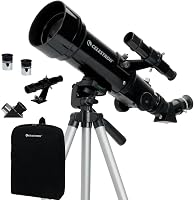
The Celestron AstroMaster 70AZ has a 70mm fully coated achromatic objective and a manual alt-azimuth mount with a panhandle. It is designed for night and daytime viewing, and includes 20mm and 10mm eyepieces, an erect image diagonal and a red dot finderscope.
The Celestron PowerSeeker 127EQ is a Newtonian reflector with a manual German equatorial mount. It includes 20mm and 4mm eyepieces and a 3x Barlow lens, making it a useful reflector comparison when weighing aperture against refractor design.
The Gskyer AZ90600 has a 90mm aperture, a 600mm focal length, an alt-azimuth mount and an adjustable tripod. For another refractor option, see the SVBONY SV520 telescope review.
Its included eyepieces are listed for 24x, 60x and 120x magnification, with a 3x Barlow lens also included.
How do you choose a 150mm refractor telescope?
Choose a 150mm refractor telescope if you have a stable mount, enough room to store it and a clear reason to prefer a large refractor. Pick an achromat when price matters most and some color fringing is acceptable; consider an apochromat when cleaner bright-object views justify the higher cost.
If portability is your main concern, compare a smaller refractor before committing to a 6 inch tube. If you want more aperture per dollar, weigh a reflector’s different setup and maintenance needs against the refractor’s optical design.
Frequently asked questions
Is a 150mm refractor telescope good for beginners?
A 150mm refractor can be a rewarding choice if you have room for a large telescope and a mount that can support it steadily. Beginners should also compare setup weight, storage space, and the added color correction cost of an apochromat.
A smaller refractor may be easier to carry and use often.
Is an achromatic or apochromatic 150mm refractor better?
An apochromatic refractor corrects color fringing better, which can matter on bright targets such as the Moon and planets, but it usually costs more. An achromat is the more affordable route, though bright objects may show a colored fringe.
Choose based on your budget and tolerance for that effect.
What mount does a 150mm refractor need?
A 150mm refractor needs a mount that can carry the telescope and accessories without excessive shaking. The long tube can make balance and leverage more demanding, so check the mount’s rated capacity and tripod stability.
If possible, compare the complete setup weight and how you will transport it.
Can a 150mm refractor show deep-sky objects?
A 150mm refractor can show many deep-sky objects, especially from a dark site, but the view depends on the target, sky conditions, optical design and magnification. Large, faint objects often benefit from low-power eyepieces and a wide field.
Bright planets and the Moon are different observing priorities.
What is a good alternative to a 150mm refractor?
A smaller refractor can be easier to mount and carry, while a reflector may offer more aperture for the money. Decide whether portability, refractor simplicity, color correction or light gathering matters most.
Compare a 90mm refractor or a reflector before committing to the size and mount demands of a 150mm scope.