6 Best Telescopes for Kids Ages 10–15 (October 2026)
The best telescopes for kids ages 10–15 include the Gskyer Telescope for a versatile first scope, the Luzsco Telescope for Kids for manual Moon learning, and the Blue Marble NASA Lunar Telescope for Kids Ages for Moon-focused sessions.
On this page (5 sections)
The best telescope for kids age 10-15 is a stable, easy-to-focus beginner scope that matches what they want to observe. The Gskyer is the most versatile pick here, while the Blue Marble and Luzsco focus more directly on Moon viewing and learning.
A teen who enjoys setting up gear may want interchangeable eyepieces and a phone adapter. Pair telescope shopping with astronomy facts for kids to build background knowledge.
A younger or less patient beginner may be happier with a simpler Moon-first kit and an adult helping with the initial aiming.
For more help matching a telescope to a child’s experience, read How Do I Pick a Telescope for My Kid? What to Know.
If you're comparing age groups, see our guides to telescopes for kids ages 8–12 and telescopes for kids ages 5–10.
Our picks at a glance
-
1
-
2

-
3
 Best for Moon-focused sessions
Blue Marble NASA Lunar Telescope for Kids Ages
9.4/10 our score
See it on Amazon
- 4
 Best for longer focal lengthCheck it
- 5
 Check it
Fuoibl Telescope for Kids and Adults
Best for a shorter tube - 6
 Best for simple magnification choicesCheck it
Which telescopes suit kids ages 10–15?
The Gskyer is the strongest all-around fit for older beginners, while the other choices suit more focused needs such as Moon learning, compact travel or straightforward magnification. A teenager’s interest and willingness to practice matter as much as the accessory count.
Gskyer Telescope: Best for a versatile first scope
- 70mm aperture
- 400mm focal length
- Two eyepieces and 3x Barlow lens
- Adjustable tripod, carry bag and phone adapter
A 70mm refractor with two eyepieces and a 3x Barlow lens gives older beginners several ways to explore the Moon and bright targets. The adjustable tripod and carry bag suit backyard sessions and trips.
Pros
- 70mm aperture
- Two eyepieces and 3x Barlow lens
- Adjustable tripod and carry bag
Cons
- Manual focus takes practice
- The 3x Barlow does not guarantee a sharp view at every magnification
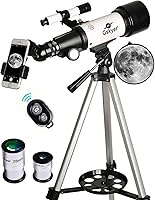
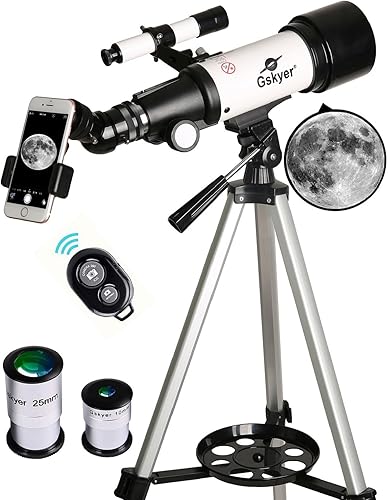
The Gskyer pairs a 70mm aperture with a 400mm focal length in a refractor design. It comes with two eyepieces, a 3x Barlow lens and a 5x24 finder scope, so a young observer can start with a wider view before trying more magnification.
Its adjustable aluminum tripod and carry bag make it easier to move between a backyard and a darker observing spot. The phone adapter and wireless remote can help a teen try basic phone photography, though centering a target in a phone camera takes patience.
Begin with the lower-power eyepiece and learn how the focus wheel changes the view. The Barlow lens increases magnification, but higher power also makes tracking and focusing more demanding.
Choose it for a teen who wants one adaptable starter kit for the Moon, bright planets and daytime scenery. It has enough parts to keep an interested beginner learning, but an adult may need to help with alignment at first.
Luzsco Telescope for Kids: Best for manual Moon learning
- Two eyepieces
- Finderscope and Barlow lens
- Moon filter
- 30-page Moon Observation e-manual
This kit focuses on guided Moon learning, with several accessories to assemble and a Moon observation guide. Its age guidance centers on younger children, so older kids should choose it if they want a simple Moon activity.
Pros
- Includes Moon filter and observation guide
- Two eyepieces and finderscope
- Portable carrying case
Cons
- Designed and marketed for ages 6–12
- Fixed mount
Luzsco is built around guided Moon learning, with two eyepieces, a finderscope, a Barlow lens, a Moon filter and a 30-page Moon Observation e-manual. The kit also includes a carrying case for taking it on a family trip or camping outing.
The maker describes it as a STEM telescope toy for ages 6–12, so it may feel basic to an experienced 13- to 15-year-old. For a younger child in this age range, or a teen who wants a guided lunar activity, the accessories and manual give the first sessions a clear focus.
Use the lower-power eyepiece to find the Moon, then switch eyepieces only after the target is centered. Take time to understand how the fixed mount moves before expecting smooth tracking across the sky.
Pick it for structured Moon sessions and shared learning, especially when a child enjoys assembling and trying accessories. Consider a more adaptable telescope if the young observer wants broader astronomy beyond the Moon.
Blue Marble NASA Lunar Telescope for Kids Ages: Best for Moon-focused sessions
- Low- and high-power eyepieces
- Finder scope
- Tabletop tripod
- Learning guide
The NASA-branded lunar scope keeps the activity centered on finding and viewing the Moon. A tabletop tripod and learning guide make it a straightforward family introduction to lunar features.
Pros
- Moon-focused setup
- Includes two eyepieces and finder scope
- Tabletop tripod and learning guide
Cons
- Narrower use case than a general astronomy telescope
- Tabletop height may not suit every observing spot
Blue Marble’s NASA Lunar Telescope is the most focused choice here: it is designed around finding and viewing the Moon. It includes a finder scope, low- and high-power eyepieces, a tabletop tripod and a learning guide.
The tabletop setup gives the scope a compact observing station, but it needs a firm surface at a comfortable height. Its simple purpose may suit a child who wants lunar details without a larger kit of accessories to manage.
Start with the low-power eyepiece to find the Moon, then move to the higher-power one for a closer view. A finder helps aim the telescope, but it still takes practice to keep the Moon centered at higher magnification.
Choose this model when Moon viewing is the main goal and a tabletop format fits your observing space. For broader telescope advice, our guide explains what age a telescope is good for.
Koolpte Telescope for Kids: Best for longer focal length
- 70mm aperture
- 500mm focal length
- Two eyepieces and 3x Barlow lens
- Phone adapter, remote and carry case
The 70mm aperture and 500mm focal length suit a beginner comparing Moon and daytime viewing. Its phone adapter, remote and carry case add options for documenting sessions and traveling.
Pros
- 70mm aperture
- 500mm focal length
- Phone adapter and wireless remote
Cons
- Manual focus requires adjustment
- A Barlow lens can make targets harder to keep centered
Koolpte offers a 70mm aperture and 500mm focal length, along with two eyepieces, a 3x Barlow lens and a 5x24 finder scope. The longer focal length than the Gskyer gives this kit a different starting point for viewing the Moon and daytime subjects.
An adjustable aluminum tripod, phone adapter, wireless remote and carrying case round out the set. Those extras may appeal to a teen who wants to take the telescope outdoors or experiment with phone images.
As with any beginner telescope, start with lower magnification and practice focusing before attaching a phone. Smartphone alignment takes small adjustments, and a phone adapter does not remove the need to find and center the target first.
Consider it for a teen who wants a 70mm scope with a longer focal length and photo accessories. The manual focus and several add-ons mean an adult may need to help during setup.
Fuoibl Telescope for Kids and Adults: Best for a shorter tube
- 70mm aperture
- 300mm focal length
- Two eyepieces and 3x Barlow lens
- Phone adapter and adjustable tripod
A 300mm focal length and 70mm aperture make this a compact refractor for beginners interested in the Moon and daytime scenery. The phone adapter and adjustable tripod add flexibility to family observing.
Pros
- 70mm aperture
- Phone adapter and wireless remote
- Maker describes tool-free setup
Cons
- Manual focusing takes patience
- The stated 150x maximum may be difficult to use steadily
Fuoibl combines a 70mm aperture with a 300mm focal length. It includes two eyepieces, a 3x Barlow lens, a 5x24 finderscope, a phone adapter and a wireless remote.
The maker describes tool-free setup and an adjustable tripod that extends up to 45 inches. That can help families set it at a comfortable height, while the phone adapter gives older children a way to try capturing a view.
The stated magnification range runs from 15x to 150x. Treat the top end as an option to experiment with, not the best place to start: lower magnification is easier for finding and centering a target.
Choose Fuoibl if a compact refractor and phone accessories fit your plans. Give the young observer time to learn focus and aiming before expecting clear views at higher power.
EACONN Telescopes: Best for simple magnification choices
- 70mm aperture
- 400mm focal length
- Two eyepieces
- Adjustable tripod and phone adapter
This 70mm refractor comes with two eyepieces and an adjustable aluminum tripod. Its stated 20x–32x magnification range offers a modest set of choices for younger teens starting with the Moon.
Pros
- 70mm aperture
- Adjustable tripod
- Phone adapter
Cons
- Only two eyepieces are included
- Manual focus needs careful adjustment
EACONN is a 70mm, 400mm refractor with two eyepieces, a 5x24 finder and an adjustable aluminum tripod. Its stated magnification range is 20x–32x, giving a beginner a modest choice between the included eyepieces.
The phone adapter offers an option for experimenting with simple photos. EACONN says the tripod adjusts from 12 to 38 inches, which may work for different observing positions, though you’ll still want a steady place to use it.
The straightforward set can suit a young teen who wants to focus on learning to aim and focus rather than handling a long accessory list. Start with the lower magnification, then move up once the target is clear and centered.
Pick it for a simple first setup with a 70mm aperture and adjustable tripod. It offers fewer included observing options than some other picks, so check whether that fits the teen’s plans.
How should you choose a telescope for a teenager?
Choose based on the targets your teen wants to view, how much setup they can handle and where the telescope will be used. For most beginners, a steady mount and useful low-power view matter more than a high maximum magnification.
What matters most in a telescope for kids age 10-15?
Aperture describes the diameter of the telescope’s main lens and affects how much light it can collect. The 70mm options here have more aperture than the Blue Marble’s 25mm objective lens, while the smaller scope centers its purpose on Moon viewing.
Focal length and eyepiece choice affect magnification and the size of the view. A Barlow lens can increase magnification, but it also makes accurate focusing and tracking more demanding.
Should you choose a refractor or a simple Moon scope?
A refractor uses a lens at the front of the tube, and the Gskyer, Koolpte, Fuoibl and EACONN are refractors. These models offer a more general beginner setup for the Moon and daytime scenery.
The Blue Marble lunar scope narrows the activity to the Moon and includes a tabletop tripod and learning guide. That focused approach can be a good fit when the child wants an accessible first look rather than a broader set of targets.
What accessories help a young observer?
A finder scope helps locate a target before you look through the main eyepiece. Two eyepieces offer different viewing options, while a tripod gives the telescope support during aiming.
A phone adapter can be fun for experimentation, but it adds another alignment step. Choose a model with accessories the teen will actually use, and keep the first observing session simple.
What can kids ages 10–15 expect to see?
The Moon is the best first target because it is bright, easy to find and has visible surface features. With a steady setup and clear conditions, a beginner can also try bright planets when they are visible in the evening sky.
Expect stars to look like points of light rather than colorful disks. Faint galaxies and nebulae need dark skies and careful viewing, and a beginner telescope may show them as dim smudges rather than detailed pictures.
Start at low magnification, focus slowly and let your eyes adjust to the dark. Avoid aiming a telescope at or near the Sun, since looking at the Sun through a telescope can cause permanent eye damage.
How can you make a first telescope session easier?
Set up in daylight and practice focusing on a distant building or tree before going outside at night. This helps a beginner learn the focus control without also trying to find a dim target in the dark.
At night, begin with the Moon and the lowest-power eyepiece. An adult can help align the finder scope and steady the tripod, then let the young observer take over once the target is centered.
Keep each early session short and choose one or two targets. A few successful minutes at the eyepiece can be more rewarding than struggling to find many objects in one night.
Which telescope should you choose for a child ages 10–15?
Choose the Gskyer for the broadest beginner setup, the Blue Marble for a focused Moon activity, or the Luzsco for guided learning and a kit aimed at younger children. If your teen wants a shorter focal length and phone adapter, the Fuoibl is another option.
The right first scope is one your child will use and can learn to aim. Match its accessories to their interests, start with low magnification, and let skill grow through practice.
Our top 3 picks at a glance
-
1
-
2
-
3
Best for Moon-focused sessions
Blue Marble NASA Lunar Telescope for Kids Ages
9.4/10 our score
See it on Amazon
Frequently asked questions
What is the best telescope for kids age 10-15?
A good first telescope for ages 10–15 should be steady enough to aim, simple to focus and suited to the child’s main targets. The Gskyer has a 70mm aperture, two eyepieces and an adjustable tripod, making it a flexible starting point for Moon and bright-object viewing.
Match the setup to the child’s patience and interest.
Can a 10-year-old use a real telescope?
Yes. Many 10-year-olds can use a beginner telescope with an adult nearby to help assemble it, align the finder and focus on a bright target.
Start with the Moon and a low-power eyepiece.
A stable tripod and short observing sessions can make aiming less frustrating.
What can a beginner telescope show a teenager?
A beginner telescope can show lunar craters and, under suitable conditions, bright planets. What you see depends on the telescope, the sky, the target’s position and how steadily you aim.
Stars usually remain points of light, and faint deep-sky objects need dark skies and realistic expectations.
Is higher magnification always better for kids?
No. Higher magnification makes the view narrower and can make a target harder to locate and keep in view.
Start with the lower-power eyepiece, then try more magnification when the target is centered and the image looks clear.
A telescope’s maximum magnification is not a promise of a useful view.