5 Best Telescopes for Kids Ages 8–12 (October 2026)
The best telescopes for kids ages 8–12 include the Gskyer Telescope for family stargazing, the Blue Marble NASA Lunar Telescope for Kids Ages for moon-first beginners, and the Koolpte Telescope for Kids for a portable 70 mm setup.
On this page (5 sections)
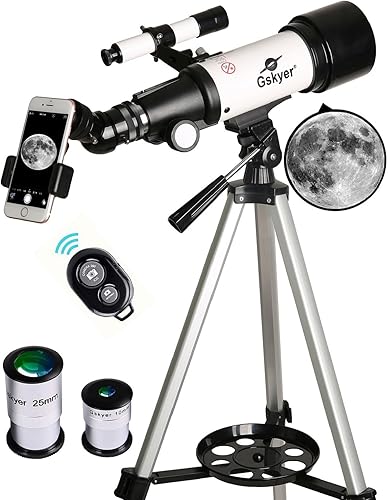
The Gskyer Telescope is the best telescope for most kids ages 8–12, with a 70 mm aperture, two eyepieces, a finder scope and a carry bag. For age-specific recommendations, see telescopes for 8-year-olds.
For a 10-year-old who mainly wants to explore the Moon, the Blue Marble NASA Lunar Telescope keeps the setup focused on lunar viewing. For older children, see our guide to telescopes for ages 10–15.
A telescope for a child should be steady enough to aim, simple enough to learn and interesting enough to use again. For kid-friendly astronomy basics, browse telescope facts for kids.
These picks include child-focused or beginner features, such as finder scopes, tabletop or adjustable tripods, learning material and carrying bags.
For play-first options, see toy telescopes for kids.
If you're choosing by maturity and interest as well as age, read what age is a telescope good for?. For a wider set of age-based suggestions, see our guides to telescopes for 7-year-olds and telescopes for kids ages 5–10.
Our picks at a glance
-
1
-
2
 Best for moon-first beginners
Blue Marble NASA Lunar Telescope for Kids Ages
9.4/10 our score
See it on Amazon -
3

- 4
 Check it
MEEZAA Telescope for Adults & Kids
Best for an 80 mm family scope - 5
 Check it
Hawkko Portable Telescope for Kids & Beginners
Best for a decorate-and-go kit
Which telescopes work well for kids ages 8–12?
The Gskyer is the most flexible pick for family use, while the Blue Marble is a focused option for a child starting with the Moon. The remaining choices add portable gear or a larger aperture for shared observing.
We compared the included optics, eyepieces, finder scopes, mounts and carry options against what school-age children and their families may need. Our score weighs specs and features against the needs of a young beginner.
| Product | Best for | Aperture | Focal length | Mount | Our score |
|---|---|---|---|---|---|
| Gskyer Telescope | family stargazing | 70 mm | 400 mm | Altazimuth | 9.7 |
| Blue Marble NASA Lunar Telescope for Kids Ages | moon-first beginners | 9.4 | |||
| Koolpte Telescope for Kids | a portable 70 mm setup | 70 mm | 500 mm | Altazimuth | 9.3 |
| MEEZAA Telescope for Adults & Kids | an 80 mm family scope | 80 mm | 500 mm | Altazimuth | 8.8 |
| Hawkko Portable Telescope for Kids & Beginners | a decorate-and-go kit | 80 mm | 500 mm | Altazimuth | 8.6 |
Best telescopes for kids ages 8–12
The best telescope for a 10-year-old depends on whether the child wants a simple Moon setup or a more complete family kit. Each option below has a distinct fit, so consider where you'll observe and how much help the child wants.
Gskyer Telescope: Best for family stargazing
- 70 mm aperture
- 400 mm focal length
- Two eyepieces and a 3x Barlow lens
- 5x24 finder scope
- Phone adapter, wireless remote and carry bag
Two eyepieces and a finder scope give a young observer a straightforward starting setup. The carry bag, phone adapter and wireless remote add options for family trips and sharing views.
Pros
- Finder scope helps locate targets
- Includes two eyepieces and a Barlow lens
- Carry bag and adjustable tripod
Cons
- Adults may need to help with setup and aiming
- Never aim it at the Sun
The Gskyer Telescope is a versatile starting point for a child who wants to look at the Moon and share observing with family. It has a 70 mm aperture and 400 mm focal length, with two replaceable eyepieces and a 3x Barlow lens.
The included 5x24 finder scope has crosshair lines to help locate an object before looking through the main telescope. Its adjustable tripod supports different viewing positions, and the carry bag holds the telescope and tripod for storage or travel.
A smartphone adapter and wireless camera remote add a way to take pictures through a phone. An adult can help with focus and aiming while a child learns how the finder scope and eyepieces work.
This is a strong all-around choice if the family wants a portable refractor with several included accessories. Never point it at the Sun.
Blue Marble NASA Lunar Telescope for Kids Ages: Best for moon-first beginners
- Designed for ages 8 and up
- Low- and high-power eyepieces
- Finder scope
- Tabletop tripod
- Learning guide
This child-focused set centers on finding and viewing the Moon, with two eyepieces and a learning guide. The tabletop tripod keeps the setup compact for a table or steady outdoor surface.
Pros
- Moon-focused design and learning guide
- Tabletop tripod is compact
- Includes low- and high-power eyepieces
Cons
- Most focused on lunar observing
- Tabletop tripod needs a suitable surface
The Blue Marble NASA Lunar Telescope is a good fit for a child ages 8 and up whose first target is the Moon. Its kit includes a finder scope, low- and high-power eyepieces, a tabletop tripod and a learning guide.
The compact tripod and smooth mount system are designed for scanning across the lunar surface. Blue Marble describes the scope as easy to assemble and use, and a parent can help a child place it on a firm surface and learn the controls.
This is the most focused option in the group. Choose it when a child wants a Moon-focused introduction; consider a longer focal length and adjustable tripod if your family wants a more general setup.
For other starter accessories, compare our best telescope kits for kids. If you are also choosing between a tabletop or a longer tripod setup, the child's reach and observing spot can help settle the decision.
Koolpte Telescope for Kids: Best for a portable 70 mm setup
- 70 mm aperture
- 500 mm focal length
- Two eyepieces and a 3x Barlow lens
- Phone adapter, wireless remote and carrying case
Koolpte pairs a 70 mm aperture with a 500 mm focal length, two eyepieces and a 5x24 finder scope. Its carrying case, adjustable tripod and phone adapter suit families who want a portable set.
Pros
- Two eyepieces and a Barlow lens
- Includes a phone adapter and wireless remote
- Carrying case supports travel
Cons
- Adults may need to help a child aim and focus
- A phone adapter adds setup steps
The Koolpte Telescope for Kids is a portable 70 mm refractor with a 500 mm focal length. It includes two eyepieces, a 3x Barlow lens and a 5x24 finder scope, giving a beginner a few basic tools for locating and viewing targets.
Its adjustable aluminum tripod, carrying case, phone adapter and wireless remote make it a travel-friendly set. The phone accessories may appeal to families who want to try capturing a view, though they add steps to setup.
An adult can first help the child secure the telescope and practice using the finder scope at low magnification. That practice makes it easier to find the Moon before switching eyepieces.
Choose Koolpte if the carrying case and phone accessories matter to your family. It offers a longer focal length than the Gskyer while keeping the same stated 70 mm aperture.
MEEZAA Telescope for Adults & Kids: Best for an 80 mm family scope
- 80 mm aperture
- 500 mm focal length
- Two eyepieces and a 3x Barlow lens
- 45° zenith mirror
- Phone adapter and waterproof backpack
The 80 mm aperture and 500 mm focal length make this a larger family option, while two eyepieces and a finder scope cover basic observing needs. It includes a phone adapter, stickers and a waterproof backpack.
Pros
- 80 mm aperture
- Adjustable aluminum tripod
- Backpack and phone adapter included
Cons
- More included parts can mean more setup steps
- Check that the tripod height works for the child
The MEEZAA Telescope for Adults & Kids offers an 80 mm aperture and a 500 mm focal length. It comes with two eyepieces, a 3x Barlow lens, a finder scope, a 45° zenith mirror, a phone adapter and a waterproof backpack.
MEEZAA describes it for children ages 8–12 and beginner family astronomy. Its adjustable aluminum tripod spans 16.92 to 44.48 inches, so check whether the viewing height feels comfortable for the child and the adults who may share it.
A backpack helps keep the kit together for trips, and the included stickers give a child a way to personalize the setup. The extra pieces also mean there is more to sort and store than with a simpler Moon-focused telescope.
Consider MEEZAA if the family wants an 80 mm refractor with travel storage and a phone adapter. Set it up together before the first night of observing.
Hawkko Portable Telescope for Kids & Beginners: Best for a decorate-and-go kit
- 80 mm aperture
- 500 mm focal length
- Two eyepieces and a 3x Barlow lens
- Phone adapter and stickers
- Backpack and four-stage adjustable tripod
Hawkko combines an 80 mm aperture with a backpack, phone adapter and decorative stickers. Its adjustable tripod and two eyepieces give families several ways to set up and explore.
Pros
- Includes a backpack and phone adapter
- Four-stage adjustable tripod
- Stickers let kids personalize the scope
Cons
- The included contents are not fully specified
- Adults may need to guide setup and focusing
The Hawkko Portable Telescope for Kids & Beginners has an 80 mm objective lens and a 500 mm focal length. The product description also specifies two eyepieces and a 3x Barlow lens, while the phone adapter, backpack and decorative stickers add options for family outings.
The product description mentions an adjustable aluminum tripod, but does not specify its height range. Families can help a child learn where each part goes, then practice focusing on a distant daytime target before observing at night.
Hawkko describes the setup as simple, but children may still benefit from adult guidance when adjusting the tripod or aiming at the sky. The backpack is useful for keeping the telescope and accessories together between sessions.
Pick Hawkko if the adjustable tripod, stickers and portable storage match how your child likes to learn. Compare the included gear with the MEEZAA if you are deciding between two 80 mm family scopes.
What should you compare before choosing a telescope for a 10-year-old?
For a 10-year-old, prioritize a steady mount, a finder scope and a setup the child can learn with an adult. Aperture and included eyepieces matter, but ease of aiming can shape how often a young observer uses the telescope.
Is a 70 mm or 80 mm aperture enough for a child?
A 70 mm aperture appears in the Gskyer and Koolpte, while MEEZAA and Hawkko list 80 mm apertures. A larger aperture can gather more light, but it does not make setup or aiming easier by itself.
For a first telescope for a 10-year-old, balance aperture with tripod comfort, storage and the child's patience for learning. A family member who helps during early sessions can make the first few nights more productive.
Why do a finder scope and low-power eyepiece help?
A finder scope gives the child a wider, easier-to-use reference for pointing the telescope toward a target. Start with the low-power eyepiece when finding the Moon, then switch to higher power after the target is centered.
Practice alignment during the day on a distant object, with adult supervision and a safe target. Never use the telescope to view the Sun.
Does a child need a tripod or tabletop mount?
A tabletop tripod can work well when you have a sturdy, level surface and want a compact Moon-viewing kit. An adjustable tripod offers more placement options, but check its height range and make sure it stands firmly before a child observes.
Choose according to the place you will use the telescope most. A backyard setup and a table-based setup have different space and comfort needs.
Should you buy a phone adapter for a child?
A phone adapter can let families try photographing a view through the eyepiece, but it adds alignment and setup steps. Treat it as an extra activity after the child has learned to find and focus on the target by eye.
A telescope does not automatically make phone astrophotography simple. For a first session, focus on seeing the Moon clearly rather than getting a photo.
How can you help a child get a first clear view?
Help your child get a first clear view by practicing focus and aiming before nightfall, then starting with the Moon and the lowest-power eyepiece. A steady surface and a patient pace make the controls easier to learn.
Set the telescope outdoors on level ground and give it time to adjust to the outdoor temperature. Use the finder scope to bring the Moon into view, then turn the focus control slowly until the image sharpens.
Keep expectations realistic: a telescope can show the Moon's surface in more detail, while planets may appear small. Cloud cover, wind, light pollution and the child's familiarity with the controls all affect the session.
Store small parts together and keep lens caps on when the telescope is not in use. A simple observing routine can help a child remember how to set up without rushing.
Which is the best telescope for kids ages 8–12?
Choose the Gskyer Telescope for a portable all-around family setup with a finder scope, two eyepieces and a carry bag. Choose the Blue Marble NASA Lunar Telescope if the child wants a compact, Moon-first introduction with a learning guide.
For an 80 mm family scope with travel storage, compare MEEZAA and Hawkko by tripod fit and included accessories. The best choice is the one your child can set up with your help and will want to use again.
Our top 3 picks at a glance
-
1
-
2
Best for moon-first beginners
Blue Marble NASA Lunar Telescope for Kids Ages
9.4/10 our score
See it on Amazon -
3
Frequently asked questions
What is a good first telescope for a 10-year-old?
A good first telescope for a 10-year-old should be manageable to set up and have a finder scope that helps locate the Moon. The Blue Marble NASA Lunar Telescope is designed for ages 8 and up and includes a learning guide.
A larger 70 mm or 80 mm refractor can suit family observing with adult help.
Plan to practice aiming together before expecting a child to find targets alone.
Can kids ages 8–12 use a telescope by themselves?
Some children can use a simple telescope with practice, but setup and aiming may still take adult help. Begin with a low-power eyepiece, a steady tripod and a bright target such as the Moon.
Never point a telescope at the Sun.
What can a child see with a beginner telescope?
The Moon is a rewarding first target because its bright surface is easy to locate and has visible craters. A beginner telescope can also show bright planets as small disks, though the view depends on the telescope, conditions and the observer's patience.
Avoid promising detailed color or close-up views of deep-sky objects.
Is a larger aperture always better for a child?
A larger aperture can gather more light, but the whole setup still needs to feel manageable. Compare the tripod, storage bag, assembly and how much adult help your child will need.
A child who can use a smaller scope confidently may get more observing time than with a harder-to-manage setup.
How should a child start using a new telescope?
Start by identifying the parts and practicing focus on a distant object outdoors. Then set the telescope on firm ground, align the finder scope with adult supervision, and begin nighttime viewing with the lowest-power eyepiece.
Never use the telescope to look at the Sun.