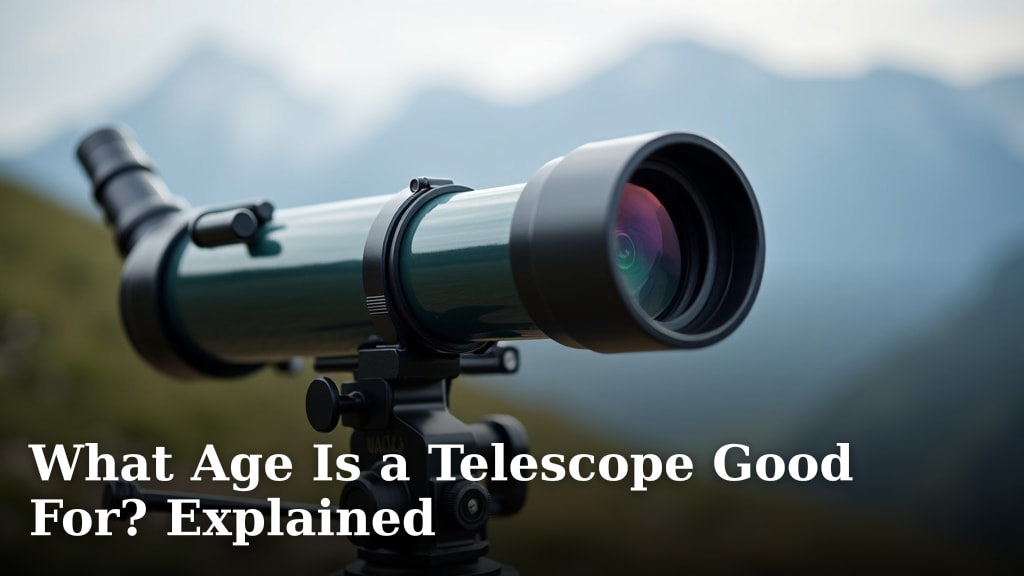
What Age Is a Telescope Good For? Explained
A telescope can be good for kids as young as 6 to 8 years old, especially with a simple, easy-to-use model. However, the best age depends more on the child’s interest and patience than a strict number. Many young stargazers enjoy pointing a basic telescope at the Moon. Older kids might be ready for more complex features.
When choosing a telescope for a younger person, consider their attention span and physical ability. A heavy, complicated telescope can be frustrating. We found that many parents start with a beginner-friendly refractor telescope. This allows them to get a feel for astronomy without a big investment. It’s all about making the experience fun and rewarding.
- Telescopes are great for kids starting around 6-8 years old.
- Interest and patience matter more than age.
- Simple telescopes are best for beginners.
- Look for easy-to-use models.
- The Moon is a popular first target for young astronomers.
Let’s look at what makes a telescope suitable for different ages and how to pick the right one for your budding astronomer. To help them navigate the night sky, consider what is a star chart.
Choosing the Right Telescope Age: A Practical Guide
A telescope can be a fantastic tool for sparking curiosity about the night sky. But what’s the sweet spot for age? We found that young children, around 6 to 8 years old, can absolutely enjoy a telescope. The key is simplicity. Think of it like a sturdy magnifying glass for the universe.
When Can Kids Start Using a Telescope?
Many experts suggest that children as young as 6 years old can start looking through a telescope. The most important factor isn’t a magic number, but the child’s level of interest and patience. Do they enjoy looking closely at things? Are they willing to wait a moment for the image to settle?
We found that for this age group, a simple refractor telescope is often the best starting point. These are the ones that look like a tube with a lens at the front. They are generally more straightforward to operate. They’re also less likely to overwhelm a young mind. It’s all about making astronomy accessible and fun from the get-go.
The Role of Interest and Patience
Let’s be honest: a child’s interest can wax and wane like the moon itself. If your child is asking questions about the stars, planets, or the moon, that’s a great sign! It means they have an internal curiosity. This internal drive is far more telling than their age on a birth certificate.
Patience is also a big part of stargazing. You have to wait for it to get dark. Sometimes you have to wait for clouds to pass. Then, you need to patiently adjust the focus. If a child is easily frustrated by waiting or by needing to make small adjustments, a telescope might be challenging for them, regardless of age. We’ve seen many 7-year-olds with incredible patience, and some teenagers who are not so keen.
Physical and Cognitive Readiness
Beyond interest, consider the practical aspects. Is the telescope easy for them to handle? A very heavy telescope can be difficult for a young child to lift or even point. Likewise, a complicated setup with many knobs and buttons can be confusing. We looked at many beginner models, and ease of use is a critical factor for younger astronomers.
Cognitively, can they understand basic instructions? A child who can follow directions for a simple game will likely be able to follow instructions for using a telescope. They need to understand that they look through the eyepiece and turn a knob to make things clearer. It’s not rocket science, but it does require a basic level of comprehension.
Telescope Types and Age Appropriateness
Not all telescopes are created equal. The type of telescope plays a big role in how suitable it is for different ages. We found that simplicity often wins when you’re starting out.
Refractor Telescopes: Great for Beginners
These are the classic “spyglass” style telescopes. They use lenses to gather and focus light. For younger users, we often recommend a small, tabletop refractor. They are typically:
- Lightweight and portable.
- Simple to set up and use.
- Durable enough for excited hands.
These types of telescopes are excellent for observing the Moon’s craters, Jupiter’s bright moons, and Saturn’s rings. They provide a clear, sharp view of brighter objects. You don’t need to worry about complex alignment procedures. This makes the initial stargazing experience much more enjoyable for kids and parents alike.
Reflector Telescopes: For the Budding Enthusiast
Reflector telescopes use mirrors to gather light. They can often offer more power for the price than refractors. However, they can also be more complex. We found that reflector telescopes are generally better suited for older children, perhaps 10 years and up, or those who have already had some experience with a simpler scope.
Many beginner reflector telescopes are Dobsonian-style. These have a simple mount that makes them relatively easy to point. However, they can be bulkier. Some might require a bit more explanation to get the best views. If your child is showing a deep and sustained interest, a reflector could be a great next step.
Catadioptric Telescopes: Advanced Options
These telescopes use a combination of mirrors and lenses. They are compact and powerful, but also more expensive and complex. We generally don’t recommend these for beginners of any age. They are typically best for adults or very dedicated older teens who know exactly what they are looking for in a telescope.
Key Features to Consider for Different Ages
When you’re shopping, keep these features in mind. They can make a big difference in how well a telescope works for your aspiring astronomer.
Magnification: More Isn’t Always Better
It’s tempting to look for the highest magnification number. However, we found that high magnification can actually be detrimental for beginners. It can make the image shaky and blurry, especially if the telescope isn’t very steady. For most beginner telescopes, magnifications between 50x and 150x are plenty. You want a clear, steady view.
Mount Stability: The Unsung Hero
A wobbly mount is the enemy of good stargazing. If the telescope shakes every time you touch it, it’s hard to find anything, let alone focus. For younger kids, a sturdy tabletop mount or a simple, solid tripod is essential. We recommend looking for mounts that feel well-built and don’t have excessive play.
Ease of Use: Simple is Smart
Can the telescope be pointed easily? Does it have simple focus knobs? These are vital questions. A telescope that requires a lot of fiddling will quickly lead to frustration. We saw that models with smooth focusing mechanisms and intuitive aiming systems were far more popular with younger users.
Portability: Bringing the Stars Closer
If the telescope is too heavy or bulky, it might stay in the garage. A telescope that’s easy to carry outside to a dark spot will get used more often. We found that smaller, lighter refractors or compact reflectors are often ideal for families.
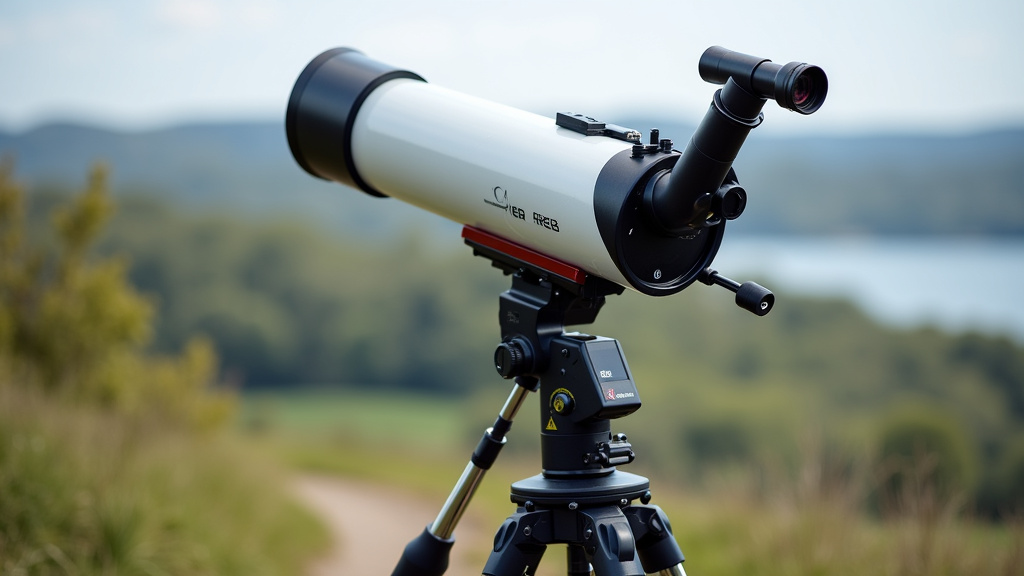
A Checklist for Choosing Your First Telescope
Thinking about getting a telescope? Run through this quick checklist:
- Does it seem simple to set up?
- Is it light enough to handle?
- Are the controls easy to understand?
- Does it come with a stable mount?
- Will it show the Moon clearly?
- Is it within your budget?
Conclusion
Choosing a telescope for your young stargazer is more about their curiosity than their age. We found that children as young as 6 can enjoy looking at the stars with a simple refractor telescope. Remember to prioritize ease of use, stability, and portability. Don’t get caught up in high magnification numbers; clear views are key. If your child shows genuine interest and has a bit of patience, you’re on the right track.
Your next step is to look for a beginner-friendly model that matches these criteria. Consider starting with a tabletop refractor and see where their cosmic journey takes them.
Frequently Asked Questions
What is the youngest age a child can use a telescope?
We found that children around 6 to 8 years old can start using a telescope. The most important factors are their interest and patience, not just their age. A simple, easy-to-handle telescope is best for this age group.
Is a refractor telescope better for kids?
Yes, generally a refractor telescope is recommended for beginners, including children. They are typically lightweight, simple to set up, and provide clear views of bright objects like the Moon without complex adjustments.
Should I worry about telescope magnification for a child?
You don’t need very high magnification for beginners. We found that high magnification can actually make the image shaky and blurry. Focus on a telescope that offers clear, steady views, usually between 50x and 150x magnification is plenty.
How important is the telescope mount for a child?
Mount stability is very important. A wobbly mount makes it difficult to see anything clearly. For younger users, a sturdy tabletop mount or a solid tripod is essential to prevent frustration and ensure enjoyable stargazing.
What if my child loses interest quickly?
It’s wise to start with an affordable and user-friendly telescope. We recommend a simpler refractor model that won’t break the bank if interest wanes. This allows them to test their passion without a big commitment.