What Is a Good Starter Telescope for Kids?
On this page (8 sections)
- Finding the Right First Telescope for Young Stargazers
- Key Features to Look For in a Kid’s Telescope
- Types of Beginner Telescopes Explained
- What Can You Actually See? Setting Realistic Expectations
- Budget Considerations: What to Expect for Your Money
- Checklist for Choosing Your Child’s First Telescope
- Conclusion
- Frequently Asked Questions
A good starter telescope for kids is one that’s easy to use and shows clear views of the Moon and bright planets. Look for models that are simple to set up and don’t require complicated adjustments. These scopes offer a fun introduction to the night sky without overwhelming young stargazers.
Choosing the right telescope makes a big difference in keeping a child’s interest. Our guide to choosing a telescope for a child can help narrow the options. We found that many affordable telescopes are designed with beginners in mind. They balance features for learning with durability for active use. The goal is to spark curiosity, not frustration.
- Focus on ease of use for young astronomers.
- Look for clear views of the Moon and planets.
- Simple setup is key to a positive first experience.
- Durability ensures the telescope can withstand handling.
- Affordable options can provide a great introduction to stargazing.
Let’s walk through what makes a telescope a great first choice for kids and what to look for.
Finding the Right First Telescope for Young Stargazers
When you’re looking for a telescope for a child, the goal is to make their first experience with the night sky exciting and educational. A good starter telescope should be easy to set up and use. It needs to show clear, bright images of celestial objects. This helps keep their curiosity alive. We found that many telescopes designed for beginners strike a good balance between affordability and functionality.
Key Features to Look For in a Kid’s Telescope
What makes a telescope “good” for a child is different from what an adult might seek. For kids, simplicity and ease of use are top priorities. They need a telescope they can handle themselves without much frustration. The optics should be good enough to provide clear views. This means avoiding telescopes that promise too much but deliver blurry images.
Optics: Seeing is Believing
The most important part of any telescope is its optics – the lenses and mirrors. For a starter telescope, you want optics that provide sharp, clear views. This doesn’t mean you need the most powerful telescope on the market. Instead, focus on quality. A good starter telescope can show you detailed views of the Moon’s craters. It can also reveal the rings of Saturn and the moons of Jupiter. These are often the first objects new stargazers want to see.
We found that many entry-level telescopes use an achromatic refractor design. These are good for beginners. They use two lenses to correct for color fringing, which can make images look a bit rainbow-like. For observing planets and the Moon, these types of telescopes perform very well. They offer bright, crisp images that are perfect for young eyes.
Mount and Tripod: Stability Matters
A telescope’s mount and tripod are just as important as its optics. A shaky mount makes it impossible to get a steady view. Imagine trying to watch a bird through binoculars that are constantly bouncing around! The same applies to telescopes. A stable tripod is essential. It keeps the telescope steady so you can focus on the view. For kids, a lightweight but sturdy tripod is ideal. This makes it easy for them to move the telescope and set it up themselves.
There are a few common types of mounts for starter telescopes. Alt-azimuth mounts are very simple. You move them up, down, left, and right, much like a camera tripod. They are intuitive and easy to learn. Dobsonian mounts are also excellent for beginners. They sit on the ground and offer very stable views, especially for larger telescopes. We found that alt-azimuth mounts are generally easier for younger children to grasp initially.
Ease of Assembly and Portability
Nobody wants to spend an hour putting a telescope together. For a child’s first telescope, quick and easy setup is a must. Many good starter telescopes can be assembled in under 15 minutes. Some even come pre-assembled. This means more time for stargazing and less time fiddling with screws. You also want a telescope that’s easy to move around. A telescope that’s too heavy or bulky might end up sitting in the garage.
Consider where you’ll be using the telescope. If you plan to take it to dark sky sites, portability is key. If it’s just for backyard viewing, weight might be less of a concern. We found that telescopes weighing between 5 and 15 pounds are generally a good sweet spot for kids. They are light enough to carry but heavy enough to feel stable.
Types of Beginner Telescopes Explained
There are three main types of telescopes suitable for beginners: refractors, reflectors, and catadioptric telescopes. Each has its pros and cons for young stargazers.
Refracting Telescopes
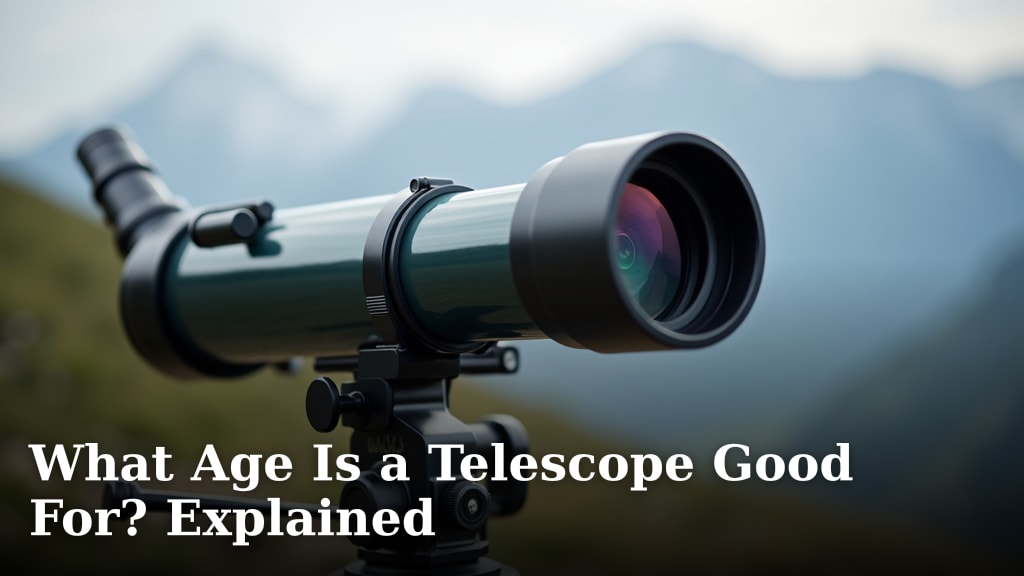
Refracting telescopes use lenses to gather and focus light. They are often the most straightforward to use. They typically have a long, tube-like shape. Because they use lenses, they are generally sealed systems. This means they don’t get as much dust inside. They are also very durable. Many experts suggest refractors for children due to their simplicity (Sky & Telescope Magazine).
Refractors are great for viewing the Moon and planets. They offer high-contrast images. However, larger refractors can become quite long and heavy. They can also be more expensive for their aperture size compared to reflectors. We found that smaller refractors, around 60-80mm in aperture, are excellent starter options.
Reflecting Telescopes (Newtonian)
Reflecting telescopes use mirrors to gather and focus light. The most common type for beginners is the Newtonian reflector. These often come in Dobsonian configurations, which sit on a simple, sturdy base. They offer more light-gathering power for their price compared to refractors. This means you can see fainter objects with them.
Reflectors are fantastic for viewing deep-sky objects like galaxies and nebulae, though these appear faint. For planets and the Moon, they also provide excellent views. The main drawback is that they can require more maintenance. Mirrors need occasional cleaning and alignment (collimation). For a child, this might be too much to handle. However, some simplified reflector designs are quite user-friendly. We found that 4.5-inch or 6-inch Dobsonian reflectors are popular and effective.
Catadioptric Telescopes (Schmidt-Cassegrain, Maksutov-Cassegrain)
These are often called “compound” telescopes because they use both mirrors and lenses. They are very compact for their aperture size. This makes them highly portable. They have a sealed tube, reducing dust issues. They offer excellent image quality. However, they are usually more expensive than refractors or reflectors of similar aperture.
For a starter telescope for a child, these might be overkill and too pricey. While they are powerful and portable, the complexity and cost make them less ideal for a first purchase. We found that most parents find refractors or reflectors to be a better entry point.
What Can You Actually See? Setting Realistic Expectations
It’s important to have realistic expectations about what a beginner telescope can show you. The sky is vast and beautiful, but not everything is easy to see, especially from light-polluted areas. The Moon and bright planets are your best friends when starting out.
The Moon: Your First Great View
The Moon is often the most impressive object to view through a small telescope. You can see craters, mountains, and the maria (dark plains). The phases of the Moon are also fascinating to track. A good starter telescope will show you incredible detail. You can see the terminator – the line between day and night on the Moon – with stunning clarity. This is always a hit with kids.
Planets: Tiny Worlds in Our Solar System
With a starter telescope, you can see several planets in our solar system. Jupiter will appear as a bright disc, and you might be able to spot its four largest moons. They look like tiny dots lined up next to the planet. Saturn is another highlight. You can usually see its rings! They might appear as separate from the planet itself.
Mars can show polar ice caps when it’s close to Earth. Venus will show phases, similar to our Moon. You might also see the cloud bands on Uranus and Neptune as tiny, pale discs. However, these outer planets are much harder to observe. They require darker skies and patience. We found that seeing Jupiter’s moons and Saturn’s rings are usually the most exciting planet views for kids.
Beyond Planets: Star Clusters and Nebulae
You can also see some other interesting objects. Bright star clusters, like the Pleiades, are beautiful. You might be able to see the fuzzy shape of the Orion Nebula on a clear night. These are deep-sky objects that offer a glimpse into our galaxy. However, they appear much fainter than planets. You’ll need to be in a location with low light pollution to see them well.
Remember, these objects won’t look like the stunning images you see in books or online. They will appear as faint smudges of light. This is normal! Even seeing these faint wonders is a thrilling experience. It opens up a whole new universe. Many astronomy clubs offer observing nights where you can see these objects through larger telescopes.
Budget Considerations: What to Expect for Your Money
Telescopes can range from very cheap to incredibly expensive. For a starter telescope for a child, you don’t need to break the bank. We found that you can get a good, functional telescope for anywhere between $100 and $300. This price range usually offers decent optics and a stable mount.
The “Toy” Telescope Trap
Be wary of telescopes that are extremely cheap, often under $50. These are usually more like toys than real astronomical instruments. They often have very poor optics and flimsy construction. They can be more frustrating than fun. You might see them advertised with high magnification numbers, like “300x” or “500x”. This is misleading. High magnification requires good optics and a stable mount, which these telescopes lack.
We found that these low-quality telescopes can actually discourage a child from pursuing astronomy. They don’t show clear images, leading to disappointment. It’s better to invest a bit more in a telescope that will provide a positive and rewarding experience.
Investing in Quality for a Better Experience
A telescope in the $100-$300 range is a solid investment. It will provide clear views of the Moon and planets. It will also be sturdy enough for regular use. Many reputable brands offer excellent starter telescopes in this bracket. Look for brands known for their optical quality and customer support.
Consider what your child is most interested in. If they are fascinated by planets, a refractor might be ideal. If they are curious about seeing as much of the sky as possible, a small Dobsonian reflector could be a great choice. We found that by setting a clear budget, you can easily find a great starter telescope that sparks a lifelong interest in the stars.
Checklist for Choosing Your Child’s First Telescope
Here’s a quick checklist to help you pick the perfect starter telescope:
- Easy to Set Up: Can it be assembled in under 20 minutes?
- Stable Mount: Does it have a sturdy tripod that won’t wobble?
- Clear Optics: Will it show good views of the Moon and bright planets?
- Appropriate Size: Is it portable enough for you to handle easily?
- Good Value: Does it offer decent quality for its price point (aim for $100-$300)?
- Kid-Friendly Controls: Are the focus and aim controls simple to operate?
Conclusion
You’re ready to help your young stargazer discover the wonders of the night sky! Remember, a great starter telescope for kids is about simplicity and clear views, not overwhelming power. We found that focusing on easy setup, a stable mount, and good optics for the Moon and planets will set you up for success. An investment in a quality, user-friendly telescope within the $100-$300 range can spark a lifelong passion. Your next step is to choose a telescope that matches your child’s curiosity and take it outside on a clear night!
Frequently Asked Questions
What magnification should I look for in a kid’s telescope?
Don’t get caught up in high magnification numbers on cheap telescopes. We found that a telescope with around 50x to 100x magnification is usually plenty for seeing the Moon and bright planets clearly. Focus more on the quality of the optics and the stability of the mount instead.
Can a child really set up a telescope by themselves?
Yes, a good starter telescope should be easy enough for a child to set up with minimal adult help. We researched models that prioritize quick assembly, often taking less than 15 minutes. Look for clear instructions and simple attachment points for the tripod and telescope tube.
Is it worth buying a very cheap telescope that’s under $50?
Based on our research, we advise against very cheap telescopes. While tempting, they often have poor optics and flimsy construction that leads to frustration. It’s better to save a bit more for a telescope in the $100-$300 range that will provide enjoyable views and last longer.
What’s the difference between a refractor and a reflector telescope for kids?
Refracting telescopes use lenses and are generally sealed, making them low maintenance and great for planets. Reflectors use mirrors and often come in Dobsonian mounts, offering more aperture for the price and better for fainter objects. We found refractors are often the simplest for young beginners.
How dark does it need to be to see anything interesting?
You can see the Moon and bright planets like Jupiter and Saturn even from your backyard with some light pollution. For fainter objects like nebulae or galaxies, darker skies away from city lights will be much more beneficial. We found that even a slightly darker location can make a big difference.