9 Best Telescopes for Moon Photography (October 2026)
The best telescopes for moon photography include the Gskyer Telescope for first smartphone lunar photos, the Celestron AstroMaster 70AZ Refractor Telescope for Moon for simple lunar viewing and imaging, and the DWARFLAB Dwarf Mini Smart Telescope for compact app-controlled captures.
On this page (4 sections)
The best telescope for moon photography for most beginners is the Gskyer Telescope, which combines a 70 mm aperture, 400 mm focal length, smartphone adapter, and wireless remote. For a more camera-focused optical tube, consider SVBONY; for automated capture, compare the Seestar or DWARF smart scopes.
Moon photography is a useful first step into astrophotography because the target is bright and easy to find. The best setup depends on whether you want wide full-disk views, close surface detail, or a simple phone image to share.
For broader sky imaging beyond the Moon, see our guide to the best telescope for astrophotography. If you want to compare a simpler optical setup, our best budget monocular telescope guide explains where a compact monocular fits.
Our picks at a glance
-
1
-
2
 Best for simple lunar viewing and imaging
Celestron AstroMaster 70AZ Refractor Telescope for Moon
9.7/10 our score
See it on Amazon -
3
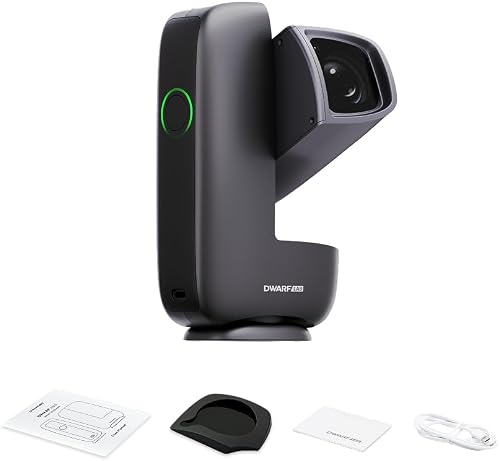 Best for compact app-controlled captures
DWARFLAB Dwarf Mini Smart Telescope
9.5/10 our score
See it on Amazon
- 4
 Best for longer smartphone framingCheck it
- 5
 Check it
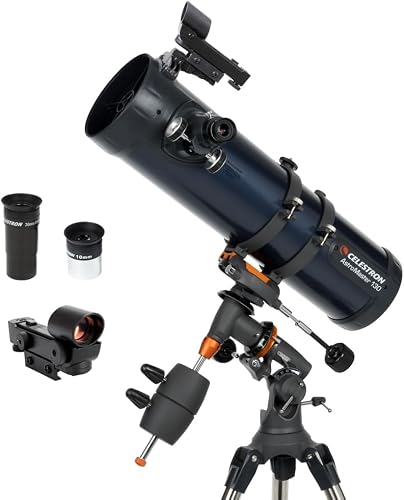
Celestron AstroMaster 130EQ Telescope for Deep-Sky Beginners
Best for a larger aperture and tracking practice - 6
 Check it
ZWO Seestar S30 Pro Smart Telescope
Best for one-tap Moon imaging - 7
 Check it
ToyerBee Telescope for Adults & Kids
Best for family phone photography - 8
 Check it
Fuoibl Telescope for Kids and Adults
Best for a starter scope with phone adapter - 9
 Check it
SVBONY SV503 Telescope for Adults High Powered
Best for a dedicated camera setup
How we chose telescopes for Moon photography
The strongest lunar picks balance a useful focal length with a stable way to aim and a practical camera connection. We compared the stated optics, mount or control approach, and included phone or camera support for this specific use.
A longer focal length can make the Moon appear larger in the camera frame, but it also makes accurate framing more sensitive to movement. A phone adapter is convenient for casual captures, while a dedicated camera setup needs a compatible focuser, mount, and adapter.
Our score weighs specs, features, and buyer feedback against what you're shopping for. These picks include traditional refractors, a Newtonian reflector, and smart telescopes because each supports a different way to capture the Moon.
For camera-focused reflectors, see imaging Newtonian telescopes.
| Product | Best for | Aperture | Focal length | Camera support | Our score |
|---|---|---|---|---|---|
| Gskyer Telescope | first smartphone lunar photos | 70 mm | 400 mm | Smartphone adapter and wireless remote | 9.7 |
| Celestron AstroMaster 70AZ Refractor Telescope for Moon | simple lunar viewing and imaging | 70 mm | 900 mm | 9.7 | |
| DWARFLAB Dwarf Mini Smart Telescope | compact app-controlled captures | 150 mm | 9.5 | ||
| HUGERSTAR Telescope | longer smartphone framing | 90 mm | 800 mm | Smartphone adapter included | 9.4 |
| Celestron AstroMaster 130EQ Telescope for Deep-Sky Beginners | a larger aperture and tracking practice | 130 mm | 650 mm | 9.3 | |
| ZWO Seestar S30 Pro Smart Telescope | one-tap Moon imaging | 160 mm | 9.3 | ||
| ToyerBee Telescope for Adults & Kids | family phone photography | 70 mm | 300 mm | Phone adapter and wireless remote | 9.1 |
| Fuoibl Telescope for Kids and Adults | a starter scope with phone adapter | 70 mm | 300 mm | Phone adapter and wireless remote | 8.9 |
| SVBONY SV503 Telescope for Adults High Powered | a dedicated camera setup | 102 mm | 714 mm | Camera compatible; focuser and field rotator | 8.1 |
Which telescopes make Moon photography easier?
The best telescope for moon photography depends on how you plan to frame and capture the Moon. A phone adapter favors simple setup, while a longer focal length or camera-ready focuser can support a more deliberate imaging rig.
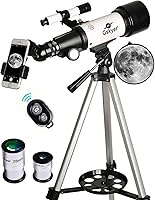
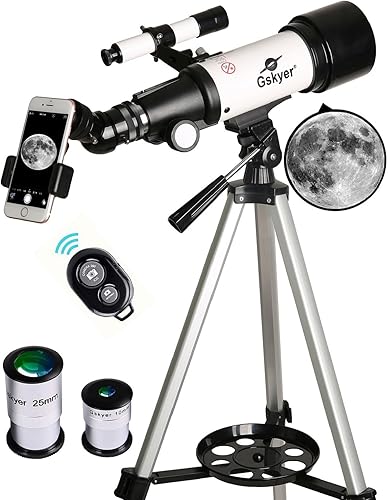
Gskyer Telescope: Best for first smartphone lunar photos
- 70 mm aperture
- 400 mm focal length
- Smartphone adapter
- Wireless camera remote
A short 400 mm focal length and included smartphone adapter make this a straightforward entry point for framing the Moon. Its adjustable tripod and carry bag also suit a portable setup.
Pros
- Smartphone adapter included
- Wireless camera remote included
- Compact refractor with carry bag
Cons
- Shorter focal length than the 800 mm refractor
- No dedicated astronomy camera included
The Gskyer Telescope is a practical starting point if you want to use a smartphone rather than buy a separate astronomy camera. Its 70 mm aperture and 400 mm focal length provide a balanced beginner setup for broad lunar views.
The included phone adapter and wireless camera remote address two common hurdles: holding the camera over the eyepiece and triggering a shot without touching the phone. The 3× Barlow can increase magnification, though extra magnification also makes focus and steadiness more important.
Its alt-azimuth mount is straightforward to point across the sky. The adjustable tripod and carry bag help if you want to take the scope to a darker or more open location.
Choose it for casual phone captures and visual Moon sessions. If your main goal is detailed crater crops, a longer focal length can make more sense.
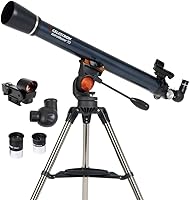
Celestron AstroMaster 70AZ Refractor Telescope for Moon: Best for simple lunar viewing and imaging
- 70 mm achromatic refractor
- 900 mm focal length
- Manual alt-azimuth mount
- Two eyepieces
The 900 mm focal length gives a longer optical reach than the compact starter scopes. Its simple manual alt-azimuth controls and 70 mm refractor design suit beginners learning to point and frame lunar views.
Pros
- Longer focal length for a 70 mm refractor
- Simple manual pointing
- Two eyepieces included
Cons
- No smartphone adapter listed among included accessories
- Manual tracking needs frequent adjustment
The Celestron AstroMaster 70AZ Refractor Telescope for Moon uses a 900 mm focal length with a 70 mm achromatic refractor. That longer focal length can frame the Moon larger than the compact 300–400 mm scopes in this group.
Its manual alt-azimuth mount uses a panhandle for moving up, down, and side to side. Two eyepieces are included, but a smartphone adapter is not among the specified accessories, so plan on sourcing a compatible adapter if phone imaging is your goal.
This scope fits a beginner who wants an uncomplicated viewing setup and may add a camera connection later. For lunar photography, a stable tripod and careful focus matter as much as magnification.
Choose the AstroMaster if you value the longer optical reach and simple manual controls. Consider a phone-ready kit if you want to begin capturing images without another accessory purchase.
DWARFLAB Dwarf Mini Smart Telescope: Best for compact app-controlled captures
- App control and auto GOTO
- 150 mm focal length
- 360° pivot
- Smartphone compatible
This compact smart telescope pairs app control with automated pointing and tracking. Its short 150 mm focal length is better suited to wide lunar scenes or eclipse sequences than close crater framing.
Pros
- Very light and portable
- Auto GOTO and tracking
- App control and image processing
Cons
- Short focal length limits close lunar framing
- Digital workflow differs from a traditional telescope
The DWARFLAB Dwarf Mini Smart Telescope is built around app control, auto GOTO, and automated tracking. Its 150 mm focal length makes it a better fit for wide lunar scenes and eclipse sequences than tight close-ups of individual craters.
The compact body weighs 1.85 lb and can pivot through 360 degrees. The app provides target selection and image processing, which reduces the need to align a separate phone camera with an eyepiece.
Its workflow differs from a traditional telescope: you select a target in the app and use the built-in imaging system. That convenience is useful for quick captures, but the short focal length sets a limit on how large the Moon appears in each frame.
Choose it if portability and app-guided capture matter most. For larger lunar surface detail, compare the longer focal length refractors below.
HUGERSTAR Telescope: Best for longer smartphone framing
- 90 mm aperture
- 800 mm focal length
- Smartphone adapter
- Moon filter included
The 800 mm refractor gives the Moon a larger image scale than short travel scopes, and the included phone adapter supports basic smartphone capture. A supplied Moon filter is intended to reduce glare during visual observation.
Pros
- Longer focal length
- Phone adapter included
- Moon filter included
Cons
- Manual alt-azimuth mount
- No dedicated camera connection described
The HUGERSTAR Telescope pairs a 90 mm aperture with an 800 mm focal length, offering a longer reach than the compact beginner scopes. Its included smartphone adapter provides a direct path to basic phone photography.
A 3× Barlow is also included, but high magnification can make a target harder to keep centered and focus. Start with the lower-power eyepiece and add magnification only when the image remains steady and clear.
The alt-azimuth mount keeps pointing simple, while the included Moon filter can reduce glare for visual observing. A filter used at the eyepiece is not a substitute for a camera filter chosen for a specific imaging workflow.
This is a good fit if you want a longer focal length and phone adapter in one package. Keep expectations realistic about manual tracking and phone alignment.
Celestron AstroMaster 130EQ Telescope for Deep-Sky Beginners: Best for a larger aperture and tracking practice
- 130 mm Newtonian reflector
- 650 mm focal length
- Equatorial mount
- Slow-motion controls
The 130 mm aperture gathers more light than the smaller refractors here, while the equatorial mount's slow-motion controls help you follow a target manually. A camera adapter is not among the stated accessories.
Pros
- Largest aperture among the traditional beginner models here
- Slow-motion controls
- Equatorial mount
Cons
- Camera adapter not specified
- Requires learning equatorial alignment
The Celestron AstroMaster 130EQ Telescope for Deep-Sky Beginners has a 130 mm aperture and 650 mm focal length, giving it more light-gathering area than the 70 mm refractors. Its equatorial mount includes slow-motion controls for making careful adjustments as the Moon moves.
The larger aperture is useful for visual lunar detail, and a separate camera can be attached if you have the right accessories. For camera setup ideas, see planetary astrophotography telescopes.
The specified included items do not name a phone adapter, so check the connection needed for your camera before choosing this setup for imaging.
An equatorial mount takes more setup than a basic alt-azimuth tripod because it needs alignment with Earth's axis. Once familiar with that process, the slow-motion controls can help keep the lunar target in view.
Choose it if you want one telescope for Moon viewing and broader astronomy, and are willing to learn the mount. For a planetary target, see telescopes for Saturn’s rings.
For quick phone photography, an adapter-ready refractor is simpler.
ZWO Seestar S30 Pro Smart Telescope: Best for one-tap Moon imaging
- App-controlled imaging
- Auto GOTO and tracking
- 160 mm focal length
- Moon imaging mode
The Seestar handles capture through its app, with automatic targeting and a specific Moon imaging mode. Its 160 mm focal length suits full-disk scenes more naturally than close-ups of small lunar features.
Pros
- Automated targeting and tracking
- Moon capture mode
- No separate camera adapter required
Cons
- Designed for deep-sky imaging, not planetary observation
- Short focal length limits close-up lunar detail
The ZWO Seestar S30 Pro Smart Telescope offers app-controlled imaging with automatic GOTO and tracking. It includes a Moon capture mode, so you can capture lunar scenes without aligning a phone camera over an eyepiece.
Its 160 mm focal length is short compared with traditional lunar refractors. That suits a wider view of the Moon, but the model is described as designed for deep-sky imaging and not intended for planetary observation, so it is not the right choice for close crater studies.
The built-in imaging system handles capture and processing through the app. This is appealing if you want a compact, automated setup and plan to photograph more than the Moon.
Choose the Seestar for convenience and one-tap lunar scenes. Choose a longer focal length telescope if close lunar detail is the main goal.
ToyerBee Telescope for Adults & Kids: Best for family phone photography
- 70 mm aperture
- 300 mm focal length
- Phone adapter
- Wireless camera remote
The included phone adapter and remote make it easy to try simple lunar snapshots without buying a separate camera first. Its 300 mm focal length favors a broader Moon view over tight crater crops.
Pros
- Phone adapter and remote included
- 70 mm aperture
- Portable refractor setup
Cons
- Short focal length for detailed lunar close-ups
- Manual focus and pointing
The ToyerBee Telescope for Adults & Kids has a 70 mm aperture and 300 mm focal length, plus a phone adapter and wireless remote. Those accessories make it accessible for family Moon photography without a separate camera.
At 300 mm, the scope is better suited to a full lunar disk or a scene that includes surrounding sky than a tight crop of small craters. Its 15×–150× magnification range comes from the eyepieces and Barlow, but the maximum figure alone does not determine usable photo detail.
The supplied tripod and finder help with basic setup and target location. Use a stable surface and a low-power eyepiece first, then adjust the phone position and focus before trying higher magnification.
Choose ToyerBee for a family-friendly phone imaging kit. For stronger close-up framing, look at the 714–900 mm options.
Fuoibl Telescope for Kids and Adults: Best for a starter scope with phone adapter
- 70 mm aperture
- 300 mm focal length
- Phone adapter
- Wireless remote
This 70 mm refractor includes a phone holder and wireless remote for getting started with lunar photos. Its 300 mm focal length makes framing the full Moon easier than aiming for very close surface detail.
Pros
- Phone adapter included
- Wireless remote included
- Fully multi-coated optics
Cons
- Short focal length for close lunar detail
- No camera tracking system
The Fuoibl Telescope for Kids and Adults is another 70 mm refractor with a 300 mm focal length. Its phone adapter and wireless remote cover the basic accessories needed to try lunar snapshots.
The short focal length makes it easier to fit the full Moon in a frame, while the included 6 mm and 20 mm eyepieces provide different views. Start at lower power to center the Moon and focus, then try the higher-power eyepiece if the image remains steady.
The alt-azimuth mount supports manual pointing, so you'll need to adjust it as the Moon drifts. That is a normal part of using a manual mount for a moving target.
Choose Fuoibl if you want a basic phone-ready telescope with a 70 mm aperture. If tighter framing is your priority, the longer focal length models are a better match.
SVBONY SV503 Telescope for Adults High Powered: Best for a dedicated camera setup
- 102 mm aperture
- 714 mm focal length
- S-FPL51 ED glass
- Dual-speed focuser and field rotator
The 714 mm optical tube, dual-speed focuser, and 360° field rotator are useful when pairing the scope with a separate camera and accessories. It is an optical tube, so plan for a compatible mount and camera.
Pros
- 102 mm aperture
- Dual-speed focuser
- Field rotator helps align a camera
Cons
- No mount included in the stated package
- Separate camera and support setup required
The SVBONY SV503 Telescope for Adults High Powered is the most camera-focused optical tube in this roundup. Its 102 mm aperture, 714 mm focal length, dual-speed focuser, and 360° field rotator support precise focus and camera alignment.
This model is listed as compatible with cameras, filters, and telescope eyepieces, but it does not include a mount in the stated package. You'll need to pair it with a suitable mount, camera, and any adapters required by your imaging setup.
The S-FPL51 ED glass is intended to reduce color fringing, which can help keep lunar edges cleaner in images. The dual-speed focuser offers finer control when bringing the Moon into focus.
Choose this tube if you already have a camera imaging setup or want to build one. For a simpler first session, a phone adapter and complete tripod kit may be easier.
What should you check before buying a Moon imaging telescope?
Start with the camera connection and focal length, since those determine whether the scope works with your camera and how much of the Moon fits in the frame. Then consider mount stability and how you'll keep the target centered.
How does focal length affect Moon photos?
Longer focal lengths make the Moon appear larger in the frame, which can help with surface detail. Shorter focal lengths make it easier to capture the full disk and leave room around it.
Your camera sensor size also changes the field of view. If you already own a camera, check its sensor dimensions and the telescope's camera connection before deciding which focal length is suitable.
Is a phone adapter enough for lunar photography?
A phone adapter is enough to try basic eyepiece photography, especially when paired with a wireless shutter remote. It does not give the same direct connection or control as a dedicated astronomy camera.
For phone capture, begin with a low-power eyepiece and align the camera lens carefully. Small shifts can create dark edges or uneven brightness, so a steady adapter and tripod matter.
Does a Moon filter help with photos?
A Moon filter can reduce glare for visual observing, especially when the lunar surface looks bright through an eyepiece. It may not be needed for camera exposure because the Moon is bright and camera settings can control exposure.
Check how the filter attaches before using it with a camera. A filter that fits an eyepiece may not fit a camera adapter or imaging train.
Should you choose a smart telescope or a traditional scope?
Choose a smart telescope if app control, automatic pointing, and built-in imaging are your priorities. Choose a traditional telescope if you want to select a separate camera, change eyepieces, or build a system around a longer focal length.
Smart models here have short focal lengths that favor broad scenes. Traditional refractors provide more direct choices for close lunar framing, but require manual aim and camera alignment.
For more advanced camera planning, compare our best budget telescope for astrophotography and best beginner telescope for astrophotography guides. A larger reflector may suit a broader mix of targets, as covered in our best 8 inch telescope for astrophotography guide.
Which telescope should you choose for Moon photography?
Choose the Gskyer if you want a simple phone setup with an adapter and remote, and choose HUGERSTAR if you prefer a longer 800 mm focal length with phone support. For an automated wide lunar capture, pick the Seestar or DWARF, while the SVBONY suits a separate camera rig with a compatible mount.
The best telescope for moon photography is the one that matches your camera and desired framing. Pick short focal length for full-disk views, longer focal length for a larger lunar image, and a stable mount for easier focusing and capture.
Our top 3 picks at a glance
-
1
-
2
Best for simple lunar viewing and imaging
Celestron AstroMaster 70AZ Refractor Telescope for Moon
9.7/10 our score
See it on Amazon -
3
Best for compact app-controlled captures
DWARFLAB Dwarf Mini Smart Telescope
9.5/10 our score
See it on Amazon
Frequently asked questions
What focal length is good for Moon photography?
A shorter focal length can fit the whole Moon in a camera frame, while a longer focal length enlarges lunar features and makes framing more demanding. Scopes around 300–400 mm can suit broad views, and options around 700–900 mm give a tighter image scale.
Your camera sensor size and adapter also affect the framing.
Can I photograph the Moon with a phone through a telescope?
Yes. A phone adapter holds the phone camera over the eyepiece, and a wireless remote can reduce movement when you take the picture.
Start with a low-power eyepiece, center the Moon, and adjust the phone position until the camera sees a bright, even circle.
Keep the telescope capped when it's not in use.
Do I need a tracking mount for Moon photos?
No. The Moon is bright enough for short exposures, so you can start with a stable manual mount and adjust the telescope as the Moon drifts across the view.
Tracking helps keep the target centered and is more useful as magnification or capture time increases.
Is a smart telescope good for lunar photography?
A smart telescope can simplify lunar capture by combining a camera, app control, and automatic pointing. Its focal length matters: compact models with short focal lengths are better for wide lunar scenes than close crater detail.
Check whether the model supports a Moon capture mode.
Can a telescope photograph the flag on the Moon?
No backyard telescope can resolve the Apollo flags as separate objects. The flags are far smaller than the detail that amateur telescope optics can distinguish at the Moon's distance.
Our guide explains whether a telescope can see the flag on the Moon.