9 Best Telescopes for Planets and Galaxies (October 2026)
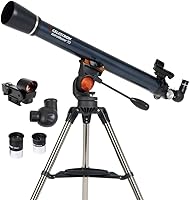
The best telescopes for planets and galaxies include the Gskyer Telescope for portable lunar and planet viewing, the MEEZAA Telescope for a larger refractor aperture, and the Celestron StarSense Explorer LT 114AZ Newtonian Smartphone for guided target finding.
On this page (5 sections)
The best telescope for planets and galaxies is a reflector with enough aperture for brighter deep-sky targets and a mount you can point steadily. The Celestron AstroMaster 130EQ is the most balanced pick here, while the StarSense Explorer LT 114AZ helps beginners locate objects with phone guidance.
Planets show compact details, such as Jupiter's bands or Saturn's rings, when the air is steady and the telescope is focused. Galaxies are much fainter, so aperture and a dark observing site matter more than high magnification.
This roundup compares reflectors and refractors by aperture, focal length, mount and included finding aids. Our score weighs specs, features and buyer feedback against what you're shopping for.
Our picks at a glance
-
1
-
2

-
3
 Best for guided target finding
Celestron StarSense Explorer LT 114AZ Newtonian Smartphone
9.5/10 our score
See it on Amazon
- 4
 Check it
Blue Marble NASA Lunar Telescope for Kids Ages
Best for a child focused on the Moon - 5
 Check it
Celestron AstroMaster 130EQ Telescope for Deep-Sky Beginners
Best for balanced planetary and galaxy observing - 6
 Check it
ToyerBee Telescope for Adults & Kids
Best for casual travel and Moon viewing - 7
 Check it
Fuoibl Telescope for Kids and Adults
Best for a simple starter refractor - 8
 Check it
SVBONY SV503 Telescope for Adults High Powered
Best for color control in a refractor - 9
 Check it
HSL 150EQ Astronomical Reflector Telescope for Adults
Best for the largest stated aperture
Which telescope best balances planets and galaxies?
A reflector around 130 mm is a strong starting point for a single telescope aimed at planets and brighter galaxies. The AstroMaster 130EQ has that aperture and slow-motion controls, while the 114 mm StarSense model trades some aperture for guided target finding.
| Product | Best for | Aperture | Focal length | Mount | Our score |
|---|---|---|---|---|---|
| Gskyer Telescope | portable lunar and planet viewing | 70 mm | 400 mm | Altazimuth | 9.7 |
| MEEZAA Telescope | a larger refractor aperture | 90 mm | 800 mm | Altazimuth | 9.6 |
| Celestron StarSense Explorer LT 114AZ Newtonian Smartphone | guided target finding | 114 mm | 1000 mm | Altazimuth | 9.5 |
| Blue Marble NASA Lunar Telescope for Kids Ages | a child focused on the Moon | 9.4 | |||
| Celestron AstroMaster 130EQ Telescope for Deep-Sky Beginners | balanced planetary and galaxy observing | 130 mm | 650 mm | Equatorial | 9.3 |
| ToyerBee Telescope for Adults & Kids | casual travel and Moon viewing | 70 mm | 300 mm | Tripod included | 9.1 |
| Fuoibl Telescope for Kids and Adults | a simple starter refractor | 70 mm | 300 mm | Altazimuth | 8.9 |
| SVBONY SV503 Telescope for Adults High Powered | color control in a refractor | 102 mm | 714 mm | 8.1 | |
| HSL 150EQ Astronomical Reflector Telescope for Adults | the largest stated aperture | 150 mm | 700 mm in specifications | Equatorial | 7.8 |
Best telescopes for planets and galaxies
These picks range from compact lunar refractors to larger reflectors and an ED refractor optical tube. Product descriptions set useful expectations, but galaxy views still depend on sky darkness, observer experience and atmospheric conditions.
Gskyer Telescope: Best for portable lunar and planet viewing
- 70 mm aperture
- 400 mm focal length
- Altazimuth mount
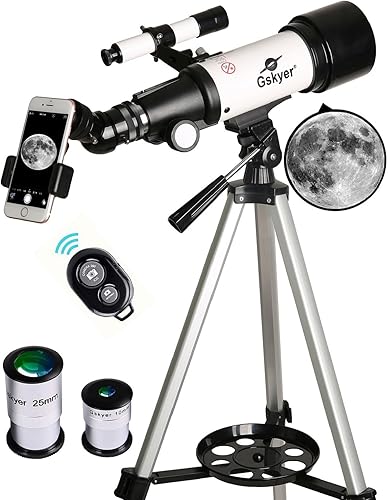
- Carry bag, phone adapter and wireless remote
A compact refractor with a carry bag and phone accessories, best suited to bright targets such as the Moon and planets. Its 70 mm aperture is a modest choice for faint galaxies.
Pros
- Carry bag for travel
- Phone adapter and remote included
- Two eyepieces and a 3x Barlow
Cons
- 70 mm aperture gathers less light than the larger reflectors here
- Short 400 mm focal length
The Gskyer Telescope is a compact refractor with a 70 mm aperture and a 400 mm focal length. Its carry bag, adjustable tripod, phone adapter and wireless remote make it easy to take along for bright targets.
Two eyepieces and a 3x Barlow provide several magnification combinations. The short focal length and modest aperture make this a better fit for the Moon and planets than faint galaxies.
Choose it when portability and simple lunar observing matter most. If galaxies are the main goal, consider the larger-aperture reflector options below.
MEEZAA Telescope: Best for a larger refractor aperture
- 90 mm aperture
- 800 mm focal length
- Fully multi-coated optics
- Carry bag and phone adapter
The 90 mm refractor has a longer focal length than the small travel scopes, with two eyepieces and a 3x Barlow. It offers a middle ground for bright planetary targets and some brighter deep-sky objects.
Pros
- 90 mm aperture
- Fully multi-coated optical glass
- Two eyepieces and a 3x Barlow
Cons
- Altazimuth mount
- Galaxy views remain limited by aperture and sky conditions
The MEEZAA Telescope has a 90 mm aperture and 800 mm focal length, with fully multi-coated optics. Its two eyepieces and 3x Barlow give you different views without adding accessories at the start.
The included altazimuth mount, adjustable tripod and carry bag suit backyard or travel use. At 90 mm, it sits between the small refractors and the reflectors with wider mirrors, so expect brighter deep-sky targets to be the more practical galaxy targets.
Choose it for a larger refractor aperture and a longer focal length than the travel scopes. For a more direct balance of planet and galaxy viewing, compare it with the 114 mm and 130 mm reflectors.
Celestron StarSense Explorer LT 114AZ Newtonian Smartphone: Best for guided target finding
- 114 mm Newtonian reflector
- StarSense phone guidance
- Manual altazimuth mount
- 25 mm and 10 mm eyepieces
StarSense uses a phone app to guide you toward targets, while the 114 mm reflector is described for planets and deep-sky objects. This balances easier finding with more aperture than the small refractors.
Pros
- Phone-guided target finding
- 114 mm reflector
- Slow-motion altitude adjustment
Cons
- Manual altazimuth mount
- Requires a compatible smartphone
The Celestron StarSense Explorer LT 114AZ pairs a 114 mm Newtonian reflector with smartphone guidance. Its app uses sky recognition to help point the telescope at targets, including planets, nebulae and galaxies.
The manual altazimuth mount includes slow-motion altitude adjustment, and the scope comes with 25 mm and 10 mm eyepieces. Beginners who find target locating difficult may value that guidance, while the 114 mm aperture offers more light gathering than the small refractors here.
Choose this model if guided finding is a priority. Check that your phone is compatible with StarSense Explorer before choosing it.
Blue Marble NASA Lunar Telescope for Kids Ages: Best for a child focused on the Moon
- Low- and high-power eyepieces
- Finder scope
- Tabletop tripod
- Learning guide
This beginner scope is built around finding and viewing the Moon, so it is a poor match for someone prioritizing galaxies. Its tabletop form and learning guide suit shared lunar observing with a child.
Pros
- Finder scope included
- Two eyepieces
- Tabletop tripod and learning guide
Cons
- Designed mainly for lunar viewing
- Not a balanced planets-and-galaxies choice
The Blue Marble NASA Lunar Telescope is designed for children ages 8 and up and focuses on the Moon. It includes a finder scope, low- and high-power eyepieces, a tabletop tripod and a learning guide.
That focus makes it a less suitable match for someone who wants one telescope for galaxies and planets. The small tabletop setup can work well for shared lunar viewing, where finding craters is the main goal.
Choose it as a first astronomy activity for a child who is curious about the Moon. For a wider range of night-sky targets, look at the reflector picks instead.
Celestron AstroMaster 130EQ Telescope for Deep-Sky Beginners: Best for balanced planetary and galaxy observing
- 130 mm Newtonian reflector
- 650 mm focal length
- Equatorial mount with slow-motion controls
- 20 mm and 10 mm eyepieces
A 130 mm reflector with slow-motion equatorial controls fits buyers who want one scope for planets and brighter galaxies. It includes two eyepieces and a red-dot finder.
Pros
- 130 mm reflector
- Slow-motion controls for tracking
- Two eyepieces and red-dot finder
Cons
- Equatorial mount has a learning curve
- Manual pointing and tracking
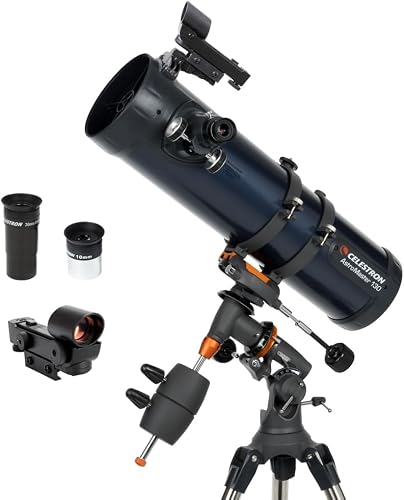
The Celestron AstroMaster 130EQ is the best balance for planets and brighter galaxies in this roundup. Its 130 mm Newtonian reflector gathers more light than the smaller scopes, and the German equatorial mount has slow-motion controls for right ascension and declination.
A 20 mm eyepiece, 10 mm eyepiece and StarPointer red-dot finder are included. The mount takes practice to set up and use, but its controls help make small manual adjustments as an object moves across the sky.
Choose it if you want one beginner reflector for both planetary and deep-sky observing. For a phone-guided route to targets, the StarSense Explorer LT 114AZ is the simpler alternative.
ToyerBee Telescope for Adults & Kids: Best for casual travel and Moon viewing
- 70 mm aperture
- 300 mm focal length
- Fully multi-coated optics
- Phone adapter and wireless remote
This light refractor includes a phone adapter, remote and star chart for casual trips and bright targets. Its 70 mm aperture is less suited to faint galaxies than a larger reflector.
Pros
- Phone adapter and remote included
- Star chart included
- 70 mm aperture
Cons
- Short 300 mm focal length
- No mount type specified
The ToyerBee Telescope for Adults & Kids is a 70 mm refractor with a 300 mm focal length. It includes two eyepieces, a 3x Barlow, a 5x24 finderscope, a phone adapter, a wireless remote and a star chart.
Those accessories suit casual observing on trips, especially for the Moon and other bright targets. The small aperture limits its appeal for faint galaxies, so treat it as a portable starter scope rather than a deep-sky specialist.
Choose it if travel accessories and family use matter more than galaxy reach. For a larger opening, step up to a reflector with at least 114 mm aperture.
Fuoibl Telescope for Kids and Adults: Best for a simple starter refractor
- 70 mm aperture
- 300 mm focal length
- Fully multi-coated optics
- Adjustable tripod and phone adapter
The 70 mm refractor comes with two eyepieces, a 3x Barlow and an adjustable tripod. It is a starter option for the Moon and bright planets, with limited reach for faint galaxies.
Pros
- Adjustable tripod
- Two eyepieces and a 3x Barlow
- Phone adapter and remote
Cons
- 70 mm aperture
- Short 300 mm focal length
The Fuoibl Telescope for Kids and Adults uses a 70 mm aperture and 300 mm focal length. It comes with two eyepieces, a 3x Barlow, an adjustable tripod, phone adapter, wireless remote and finder scope.
Its altazimuth mount and beginner-focused setup suit basic lunar and bright-planet viewing. Like the other 70 mm refractors here, it is not the strongest choice for faint galaxies.
Choose it for a simple starter refractor with phone accessories. If deep-sky observing is central to your plan, compare the 130 mm AstroMaster or the 150 mm HSL reflector.
SVBONY SV503 Telescope for Adults High Powered: Best for color control in a refractor
- 102 mm aperture
- 714 mm focal length
- S-FPL51 ED glass
- Dual-speed focuser
This 102 mm refractor uses S-FPL51 ED glass to reduce color fringing, and it has a dual-speed focuser. It is an optical tube without a finder, so plan for a compatible mount and target-finding setup.
Pros
- 102 mm aperture
- ED glass helps reduce color fringing
- Dual-speed focuser and field rotator
Cons
- No finder scope
- Mount and eyepieces are not included in the stated contents
The SVBONY SV503 has a 102 mm aperture and S-FPL51 ED glass, which the brand says reduces color fringing. Its dual-speed focuser helps make fine focus adjustments, and a 360-degree field rotator helps align a camera.
This is an optical tube rather than a complete beginner setup: it has no finder scope, and you'll need a compatible mount and eyepieces for visual use. Its aperture can suit bright planetary targets and brighter deep-sky objects, while the ED glass is a specific advantage for controlling color fringing.
Choose it if you already have compatible observing gear or plan a camera setup. For a ready-to-use package, the Celestron reflectors include mounts and eyepieces.
HSL 150EQ Astronomical Reflector Telescope for Adults: Best for the largest stated aperture
- 150 mm aperture
- Manual German equatorial mount
- Slow-motion altitude lever
- Color filters and phone holder
The stated 150 mm aperture gives this reflector the largest light-gathering opening in this group. The focal length differs across its details, so confirm the exact configuration before choosing it.
Pros
- Largest stated aperture here
- Manual equatorial mount
- Color filters and phone holder included
Cons
- Focal length differs across the details
- Accessory and filter counts are described inconsistently
The HSL 150EQ has the largest stated aperture in this group at 150 mm. Its manual German equatorial mount includes a slow-motion altitude lever, and the set includes a phone holder, remote and color filters.
The source details give different focal lengths, so verify the configuration before buying. Its larger stated aperture makes it worth comparing for galaxy hunting, while the equatorial mount and accessories may suit someone willing to learn setup and tracking.
Choose it when aperture is the main priority and you can confirm the telescope configuration. If you want clearer, consistent specifications and beginner guidance, consider the AstroMaster 130EQ or StarSense Explorer LT 114AZ.
What matters most when choosing a telescope for planets and galaxies?
Aperture, mount control and sky conditions shape what you'll see through one telescope. A larger mirror can help with faint galaxies, while stable tracking and suitable magnification help you study bright planets.
How much aperture helps with galaxies and planets?
More aperture collects more light, which can make faint objects easier to see and gives you more room to use magnification on bright targets. A 130 mm or 150 mm reflector is a practical starting point for this mixed use, while 70 mm refractors are better kept to bright objects.
Even with a larger telescope, galaxies usually appear as subtle gray smudges. A darker site often improves contrast more than simply increasing magnification.
If your priority is galaxies, compare our guide to the best telescope for galaxies and the best telescope for deep-sky objects. For more target advice, see Best Telescopes for Galaxies and Nebulae.
Does a longer focal length make a telescope better?
Focal length affects magnification with a given eyepiece, but it does not by itself determine image quality or galaxy visibility. Aperture, optical design, seeing conditions and target brightness all matter.
Use a lower-power eyepiece first to find and center an object, then try higher magnification if the image remains steady. High magnification can make a dim galaxy harder to see.
For a broader mix of distant targets, our best telescope for planets and deep space guide compares other options. You can also review best beginner telescopes for deep space and best budget telescopes for deep space.
Which mount makes observing easier?
A stable mount helps keep a target in view while you focus and observe. Altazimuth mounts move up, down and side to side, while equatorial mounts can track the sky with adjustments along aligned axes.
The StarSense Explorer LT 114AZ adds phone guidance to its manual altazimuth mount. The AstroMaster 130EQ and HSL 150EQ use equatorial mounts, which offer tracking controls but take time to learn.
A wide field can make locating objects easier, particularly at low magnification. See our best wide field of view telescope guide for more on that tradeoff.
Can a beginner use one telescope for both targets?
Yes, a beginner can use one telescope for planets and galaxies by starting with bright, easy targets and learning the mount. The Moon is a useful first target, followed by bright planets and galaxies such as Andromeda under dark skies.
Use the low-power eyepiece to find targets, then increase magnification gradually. Keep expectations realistic: faint galaxies often lack the color and detail shown in long-exposure photographs.
The best telescope for seeing galaxies and nebula guide can help if deep-sky objects become your main interest. For a first setup, the StarSense Explorer's app guidance may reduce the challenge of locating targets.
Which telescope should you choose for planets and galaxies?
Choose the Celestron AstroMaster 130EQ if you want a balanced beginner reflector with a 130 mm aperture and slow-motion controls. Pick the StarSense Explorer LT 114AZ if phone-guided finding is more useful than extra aperture, or the HSL 150EQ if you confirm its configuration and want the largest stated mirror here.
If portability matters most, choose one of the smaller refractors for the Moon and bright planets. For galaxy observing, prioritize aperture, darker skies and patience, then use our guide to the best telescope for galaxies to narrow your options.
Our top 3 picks at a glance
-
1
-
2
-
3
Best for guided target finding
Celestron StarSense Explorer LT 114AZ Newtonian Smartphone
9.5/10 our score
See it on Amazon
Frequently asked questions
Which telescope is best for planets and galaxies?
A reflector around 130 mm or larger is a useful starting point for one telescope that covers planets and brighter galaxies. The Celestron AstroMaster 130EQ pairs a 130 mm mirror with slow-motion equatorial controls.
A larger aperture can help with faint targets, but dark skies and steady air matter too.
Can one telescope show planets and galaxies?
Yes. A telescope can show planets and galaxies, though they place different demands on the view: planets are bright and benefit from useful magnification, while galaxies are faint and benefit from aperture and dark skies.
Expect most galaxies to look like dim patches, not colorful photographs.
Is a refractor or reflector better for planets and galaxies?
A reflector often gives more aperture for its size, which helps when looking for faint galaxies. A refractor can be convenient and needs no mirror alignment, but small apertures are best kept to brighter targets.
Compare aperture, mount stability and ease of finding objects together.
Can I see galaxies from a city?
Some bright galaxies may be visible from a city, but light pollution reduces contrast and makes them harder to see. A dark site can reveal more, especially with a larger aperture.
For expectations and viewing tips, see Can You See Galaxies With a Home Telescope?.
What should beginners learn before using a telescope?
Start with a low-power eyepiece, align the finder, and practice focusing on a distant daytime object before observing at night. Then begin with the Moon, which is easy to locate.
Our How to Use a Telescope for Beginners: A Beginner’s Guide walks through the first setup steps.