9 Best Telescopes to See Saturn's Rings (October 2026)
The best telescopes for seeing Saturn's rings include the Gskyer Telescope for a compact starter setup, the Dianfan Telescope for a 90mm refractor kit, and the Celestron StarSense Explorer 150mm App-Enabled Tabletop Dobsonian for aperture and guided finding.
On this page (5 sections)
The best telescope to see rings of Saturn for most beginners is the Celestron StarSense Explorer 150mm App-Enabled Tabletop Dobsonian. Its 150mm reflector is the largest aperture in this group, and its phone-guided system helps you find targets without relying on a small finder alone.
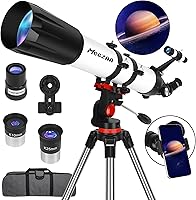
If you want a portable refractor, compare the 90mm Dianfan, MEEZAA and Hawkko models. A compact 70mm telescope can also introduce you to planetary observing, but the view of Saturn will be smaller and show less detail than a larger aperture can support.
The telescope is only part of the choice. A steady base, a sharp focus, clear air and moderate magnification help you see the rings as a distinct shape instead of a blurred point.
Our picks at a glance
-
1
-
2

-
3
 Best for aperture and guided finding
Celestron StarSense Explorer 150mm App-Enabled Tabletop Dobsonian
9.6/10 our score
See it on Amazon
- 4
 Best for a longer focal-length refractorCheck it
- 5
 Check it
CELTICBIRD Telescope for Adults High Powered
Best for a moon-filter bundle - 6
 Check it
Celestron StarSense Explorer LT 114AZ Newtonian Smartphone
Best for guided setup on a tripod - 7
 Check it
ZWO Seestar S30 Pro Smart Telescope
Best for automated sky imaging - 8
 Check it
Hawkko 90mm Aperture 900mm Telescope for Adults
Best for a 900mm refractor - 9
 Check it
SVBONY SV503 Telescope for Adults High Powered
Best for an ED refractor tube
Which telescope is best to see Saturn's rings?
The best fit depends on whether you value aperture, portability or help finding the planet. We compared the stated optical sizes, included eyepieces, mounts and setup features against the goal of seeing Saturn's ring structure.
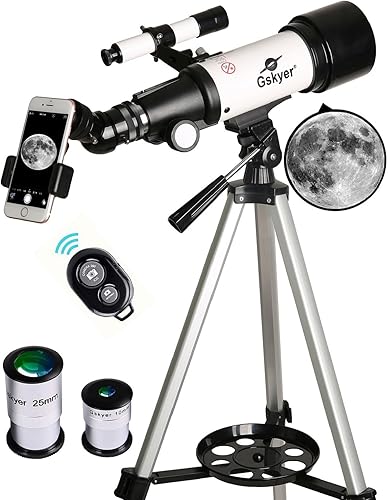
Gskyer Telescope: Best for a compact starter setup
- 70mm aperture
- 400mm focal length
- Two eyepieces and 3x Barlow lens
- Adjustable tripod and carry bag
A portable refractor with a carry bag and included eyepieces. Its 70mm aperture makes it a compact entry point for learning to find and focus on bright planets.
Pros
- Carry bag included
- Phone adapter and wireless remote
- Two eyepieces and Barlow lens
Cons
- Smaller aperture than the other listed telescope setups
- Short 400mm focal length
Dianfan Telescope: Best for a 90mm refractor kit
- 90mm objective lens
- 800mm focal length
- 32x–240x stated magnification range
- Stainless steel tripod and carry bag
A 90mm refractor with two eyepieces and a 3x Barlow lens. The longer focal length and included tripod make it a straightforward kit to compare for planetary viewing.
Pros
- 90mm objective lens
- Two eyepieces and Barlow lens
- Phone adapter and carry bag
Cons
- Tripod stability still depends on firm, level ground
- High magnification is not useful in every viewing condition
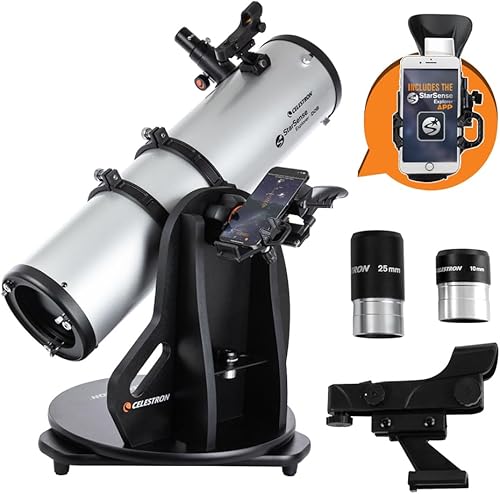
Celestron StarSense Explorer 150mm App-Enabled Tabletop Dobsonian: Best for aperture and guided finding
- 150mm Newtonian reflector
- Smartphone sky-recognition guidance
- Manual tabletop Dobsonian base
- 25mm and 10mm eyepieces
The 150mm reflector combines a larger aperture with phone-guided target finding. Its tabletop base needs a sturdy, level surface at a comfortable viewing height.
Pros
- Largest stated aperture in this roundup
- Phone-guided target finding
- Two eyepieces included
Cons
- Requires a stable table or platform
- Heavier than the smaller refractors
MEEZAA Telescope: Best for a longer focal-length refractor
- 90mm aperture
- 800mm focal length
- Two eyepieces and 3x Barlow lens
- Stainless steel tripod and carry bag
This 90mm refractor has an 800mm focal length and includes a 10mm and 25mm eyepiece. Its included tripod and bag make it a complete portable setup.
Pros
- 90mm aperture
- Phone adapter included
- Two eyepieces and Barlow lens
Cons
- Tripod requires a firm, level spot
- Phone adapter is for capturing images, not improving the view
CELTICBIRD Telescope for Adults High Powered: Best for a moon-filter bundle
- 80mm aperture
- 600mm focal length
- 20mm and 9mm eyepieces
- Moon filter included
An 80mm refractor with a 600mm focal length, adjustable tripod and backpack. Its 20mm and 9mm eyepieces provide two starting magnifications.
Pros
- Backpack and phone adapter included
- Two eyepieces
- Moon filter included
Cons
- Smaller aperture than 90mm and 150mm choices
- The bundled moon filter is not a Saturn filter
Celestron StarSense Explorer LT 114AZ Newtonian Smartphone: Best for guided setup on a tripod
- 114mm Newtonian reflector
- Smartphone sky-recognition guidance
- Full-height tripod
- 25mm and 10mm eyepieces
This 114mm reflector pairs a full-height tripod with phone-guided target finding. Its 1000mm focal length and two included eyepieces suit buyers who want a tripod-based setup.
Pros
- Phone-guided target finding
- Full-height tripod included
- Two eyepieces and 2x Barlow lens
Cons
- Larger setup than a tabletop telescope
- Manual tracking requires following the target
ZWO Seestar S30 Pro Smart Telescope: Best for automated sky imaging
- Automatic GoTo targeting and tracking
- App-controlled imaging
- 30mm objective lens
- Designed for deep-sky imaging, not planetary observation
This smart telescope automates targeting and imaging, but it is explicitly not intended for planetary observation. Choose it for its imaging workflow rather than for seeing Saturn's rings.
Pros
- Automatic targeting and tracking
- Portable at 3.64 lb
- App-controlled imaging
Cons
- Not intended for planetary observation
- Different experience from viewing through a conventional eyepiece
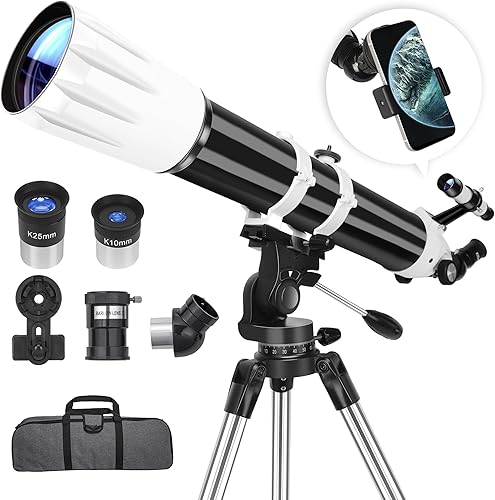
Hawkko 90mm Aperture 900mm Telescope for Adults: Best for a 900mm refractor
- 90mm aperture
- 900mm focal length
- Two eyepieces and 3x Barlow lens
- Stainless steel tripod and carry bag
A 90mm refractor with a 900mm focal length and a kit of eyepieces, Barlow lens and tripod. Compare its longer focal length with the 800mm alternatives.
Pros
- 90mm objective lens
- Phone adapter and carry bag
- Two eyepieces and Barlow lens
Cons
- A steady setup is still needed at higher magnification
- Longer focal length can make the overall setup less compact
SVBONY SV503 Telescope for Adults High Powered: Best for an ED refractor tube
- 102mm aperture
- 714mm focal length
- S-FPL51 ED glass
- Dual-speed focuser
This 102mm ED refractor tube has a dual-speed focuser and S-FPL51 ED glass. It is a more specialized option, and the telescope tube does not include a complete mount and eyepiece setup.
Pros
- 102mm aperture
- Dual-speed focuser
- S-FPL51 ED glass
Cons
- No finderscope specified
- A separate mount and eyepiece are needed for a complete observing setup
Our scores weigh the stated specs and features against this specific observing goal. A higher score means a closer fit for viewing Saturn, not a promise of a particular view in every sky condition.
| Product | Best for | Aperture | Focal length | Mount | Our score |
|---|---|---|---|---|---|
| Gskyer Telescope | a compact starter setup | 70mm | 400mm | Altazimuth | 9.7 |
| Dianfan Telescope | a 90mm refractor kit | 90mm | 800mm | Altazimuth | 9.7 |
| Celestron StarSense Explorer 150mm App-Enabled Tabletop Dobsonian | aperture and guided finding | 150mm | 650mm | Tabletop Dobsonian altazimuth base | 9.6 |
| MEEZAA Telescope | a longer focal-length refractor | 90mm | 800mm | Altazimuth | 9.6 |
| CELTICBIRD Telescope for Adults High Powered | a moon-filter bundle | 80mm | 600mm | Altazimuth | 9.5 |
| Celestron StarSense Explorer LT 114AZ Newtonian Smartphone | guided setup on a tripod | 114mm | 1000mm | Altazimuth | 9.5 |
| ZWO Seestar S30 Pro Smart Telescope | automated sky imaging | 9.3 | |||
| Hawkko 90mm Aperture 900mm Telescope for Adults | a 900mm refractor | 90mm | 900mm | Altazimuth | 9.0 |
| SVBONY SV503 Telescope for Adults High Powered | an ED refractor tube | 102mm | 714mm | Tripod mount | 8.1 |
Best telescope to see rings of Saturn by aperture
Aperture is the diameter of the telescope's main lens or mirror, and a larger aperture can gather more light. For these picks, the 150mm Celestron tabletop Dobsonian has the largest stated aperture, followed by the 114mm Celestron reflector and the 102mm SVBONY refractor.
Gskyer Telescope: Best for a compact starter setup
- 70mm aperture
- 400mm focal length
- Two eyepieces and 3x Barlow lens
- Adjustable tripod and carry bag
A portable refractor with a carry bag and included eyepieces. Its 70mm aperture makes it a compact entry point for learning to find and focus on bright planets.
Pros
- Carry bag included
- Phone adapter and wireless remote
- Two eyepieces and Barlow lens
Cons
- Smaller aperture than the other listed telescope setups
- Short 400mm focal length
The Gskyer is the most compact entry among these picks, with a 70mm aperture and 400mm focal length. It comes with two eyepieces, a 3x Barlow lens, an adjustable tripod and a carry bag, so you have the basic parts for learning how to locate and focus on a planet.
Its short focal length and smaller aperture make it a modest choice for Saturn. Think of it as a portable starter for bright targets, with Saturn's rings as a possible small feature rather than a detailed close-up.
The phone adapter and wireless remote can help you try phone photos through the telescope. They don't add optical detail, so focus on getting a steady visual view before experimenting with images.
Choose it if portability and a compact kit matter most. If Saturn is your main target and you have room for a larger scope, compare the 90mm refractors or the Celestron reflectors below.
Dianfan Telescope: Best for a 90mm refractor kit
- 90mm objective lens
- 800mm focal length
- 32x–240x stated magnification range
- Stainless steel tripod and carry bag
A 90mm refractor with two eyepieces and a 3x Barlow lens. The longer focal length and included tripod make it a straightforward kit to compare for planetary viewing.
Pros
- 90mm objective lens
- Two eyepieces and Barlow lens
- Phone adapter and carry bag
Cons
- Tripod stability still depends on firm, level ground
- High magnification is not useful in every viewing condition
Dianfan's 90mm aperture and 800mm focal length place it in the middle of this roundup by size. It includes two eyepieces and a 3x Barlow lens, plus a stainless steel tripod and carry bag.
Start with the lower-power eyepiece to find Saturn, center it, and focus until the planet looks as small and crisp as possible. Then try the other eyepiece, increasing magnification only if the image remains steady and clear.
The tripod needs flat ground, and a calm night helps reduce shaking and atmospheric blur. The phone adapter is useful for trying a photo, but a phone camera does not determine how much detail your eye can see through the eyepiece.
Choose Dianfan if you want a 90mm refractor with a longer focal length and a carrying kit. It offers a simpler all-in-one purchase than the SVBONY tube, which needs additional observing parts.
Celestron StarSense Explorer 150mm App-Enabled Tabletop Dobsonian: Best for aperture and guided finding
- 150mm Newtonian reflector
- Smartphone sky-recognition guidance
- Manual tabletop Dobsonian base
- 25mm and 10mm eyepieces
The 150mm reflector combines a larger aperture with phone-guided target finding. Its tabletop base needs a sturdy, level surface at a comfortable viewing height.
Pros
- Largest stated aperture in this roundup
- Phone-guided target finding
- Two eyepieces included
Cons
- Requires a stable table or platform
- Heavier than the smaller refractors
Celestron's StarSense Explorer 150mm has the largest stated aperture here, a 150mm Newtonian reflector on a manual tabletop Dobsonian base. Its smartphone guidance analyzes star patterns and points you toward selected targets, which can help if locating Saturn is the part of observing that feels hardest.
The tabletop format makes the base compact to carry, but you need a stable table or platform at the right height. The 25mm and 10mm eyepieces give you two starting views, while the app helps direct the telescope toward planets including Saturn.
A larger aperture does not cancel out poor seeing or a shaky surface. Set the base on firm ground, let the telescope adjust to outdoor conditions, and use the eyepiece that gives the sharpest view that night.
Choose this model if you want the largest aperture in this list and app-assisted finding. For a full-height tripod, consider the StarSense Explorer LT 114AZ.
MEEZAA Telescope: Best for a longer focal-length refractor
- 90mm aperture
- 800mm focal length
- Two eyepieces and 3x Barlow lens
- Stainless steel tripod and carry bag
This 90mm refractor has an 800mm focal length and includes a 10mm and 25mm eyepiece. Its included tripod and bag make it a complete portable setup.
Pros
- 90mm aperture
- Phone adapter included
- Two eyepieces and Barlow lens
Cons
- Tripod requires a firm, level spot
- Phone adapter is for capturing images, not improving the view
MEEZAA also pairs a 90mm aperture with an 800mm focal length, along with a 10mm and 25mm eyepiece and a 3x Barlow lens. Its stainless steel tripod and carry bag make it a portable refractor kit for backyard or travel use.
The two eyepieces offer different starting magnifications. Find and focus on Saturn with the lower-power view first, then try the shorter eyepiece if the planet remains sharp and your tripod is steady.
The included phone adapter is for recording images and video. For visual observing, keep the phone off the telescope until you've centered the planet and confirmed focus through the eyepiece.
Choose MEEZAA if you want the same basic aperture and focal length as the Dianfan with a portable kit. Compare the included parts and setup instructions that suit you best.
CELTICBIRD Telescope for Adults High Powered: Best for a moon-filter bundle
- 80mm aperture
- 600mm focal length
- 20mm and 9mm eyepieces
- Moon filter included
An 80mm refractor with a 600mm focal length, adjustable tripod and backpack. Its 20mm and 9mm eyepieces provide two starting magnifications.
Pros
- Backpack and phone adapter included
- Two eyepieces
- Moon filter included
Cons
- Smaller aperture than 90mm and 150mm choices
- The bundled moon filter is not a Saturn filter
The CELTICBIRD refractor has an 80mm aperture, 600mm focal length and two eyepieces, with a moon filter included. Its backpack and adjustable tripod make it a travel-oriented choice, though the 80mm aperture sits below the 90mm and larger telescope options here.
The two eyepieces offer 30x and 66x magnification according to the product details. Those are useful starting points for practice, but a telescope's sharp view depends on focus, tracking and atmospheric conditions, not magnification alone.
The moon filter is intended for lunar viewing. It is not a special Saturn filter, and you don't need a filter to see the rings.
Choose it if you want a portable 80mm refractor and already plan to observe the Moon as well as planets. For more aperture, step up to a 90mm model or the 114mm reflector.
Celestron StarSense Explorer LT 114AZ Newtonian Smartphone: Best for guided setup on a tripod
- 114mm Newtonian reflector
- Smartphone sky-recognition guidance
- Full-height tripod
- 25mm and 10mm eyepieces
This 114mm reflector pairs a full-height tripod with phone-guided target finding. Its 1000mm focal length and two included eyepieces suit buyers who want a tripod-based setup.
Pros
- Phone-guided target finding
- Full-height tripod included
- Two eyepieces and 2x Barlow lens
Cons
- Larger setup than a tabletop telescope
- Manual tracking requires following the target
The StarSense Explorer LT 114AZ combines a 114mm Newtonian reflector and a full-height tripod with phone-guided target finding. Its 1000mm focal length is the longest among the conventional telescopes listed here, and it includes 25mm and 10mm eyepieces plus a 2x Barlow lens.
StarSense guidance can point you toward Saturn, while the manual altazimuth mount lets you adjust the telescope as the planet moves across the sky. Unlike a tabletop base, the tripod doesn't require a separate table, though it still needs firm ground.
Start with the 25mm eyepiece, find Saturn, and focus carefully. Move to the 10mm eyepiece only if the view remains steady, since extra magnification can make blur more noticeable.
Choose this Celestron if you want a tripod setup and app assistance without moving up to the 150mm tabletop model. For more light gathering and a broad base, compare the 150mm StarSense Explorer.
ZWO Seestar S30 Pro Smart Telescope: Best for automated sky imaging
- Automatic GoTo targeting and tracking
- App-controlled imaging
- 30mm objective lens
- Designed for deep-sky imaging, not planetary observation
This smart telescope automates targeting and imaging, but it is explicitly not intended for planetary observation. Choose it for its imaging workflow rather than for seeing Saturn's rings.
Pros
- Automatic targeting and tracking
- Portable at 3.64 lb
- App-controlled imaging
Cons
- Not intended for planetary observation
- Different experience from viewing through a conventional eyepiece
The ZWO Seestar S30 Pro is a smart imaging instrument, not a strong match for seeing Saturn's rings through an eyepiece. Its maker describes it as designed for deep-sky imaging and explicitly says it is not intended for planetary observation.
Automatic targeting and tracking, app control and portable imaging may appeal if your main interest is capturing deep-sky objects. Those features don't make it the right telescope for the specific goal of observing Saturn's ring structure.
This distinction matters because smart telescopes can work very differently from conventional visual scopes. If you want to look directly through an eyepiece, choose one of the manual refractors or reflectors in this roundup.
Choose the Seestar for automated imaging, not for Saturn. For planets, the conventional optical designs above fit the job better.
Hawkko 90mm Aperture 900mm Telescope for Adults: Best for a 900mm refractor
- 90mm aperture
- 900mm focal length
- Two eyepieces and 3x Barlow lens
- Stainless steel tripod and carry bag
A 90mm refractor with a 900mm focal length and a kit of eyepieces, Barlow lens and tripod. Compare its longer focal length with the 800mm alternatives.
Pros
- 90mm objective lens
- Phone adapter and carry bag
- Two eyepieces and Barlow lens
Cons
- A steady setup is still needed at higher magnification
- Longer focal length can make the overall setup less compact
Hawkko's 90mm refractor has a 900mm focal length, longer than the 800mm Dianfan and MEEZAA options. Its kit includes 10mm and 25mm eyepieces, a 3x Barlow lens, an altazimuth tripod, a phone adapter and a carry bag.
That longer focal length can make it easier to reach useful planetary magnifications with the included eyepieces, though the atmosphere and mount still set practical limits. Begin with the 25mm eyepiece to find the planet, then increase magnification only while the view stays focused.
The phone holder can support image experiments, but the most important first step is a steady view through the eyepiece. Place the tripod on level ground and tighten its adjustments before aiming.
Choose Hawkko if you want a 90mm refractor with a 900mm focal length and a full accessory kit. Compare it with the shorter 800mm alternatives if compactness matters more.
SVBONY SV503 Telescope for Adults High Powered: Best for an ED refractor tube
- 102mm aperture
- 714mm focal length
- S-FPL51 ED glass
- Dual-speed focuser
This 102mm ED refractor tube has a dual-speed focuser and S-FPL51 ED glass. It is a more specialized option, and the telescope tube does not include a complete mount and eyepiece setup.
Pros
- 102mm aperture
- Dual-speed focuser
- S-FPL51 ED glass
Cons
- No finderscope specified
- A separate mount and eyepiece are needed for a complete observing setup
The SVBONY SV503 is a 102mm ED refractor tube with S-FPL51 ED glass, a dual-speed focuser and a 714mm focal length. The finer focuser can help you make small focus adjustments, which is useful when bringing a planet into crisp focus.
This is a more specialized setup than the complete kits above. It does not specify an included finderscope, and you'll need a compatible mount and eyepiece to observe through it.
The 102mm aperture is larger than the 90mm refractors here, but the telescope tube alone is not a ready-to-use package. Factor in the extra parts and setup before choosing it as your first Saturn scope.
Choose it if you already have compatible observing gear or want an ED refractor tube. For a complete beginner kit, the Celestron StarSense models or 90mm refractors are simpler to compare.
What helps you see Saturn's rings clearly?
A stable mount, careful focus and moderate magnification usually matter more than the biggest number printed on an eyepiece. Give the telescope time to adjust to outdoor temperatures, and observe when Saturn is high enough above the horizon to avoid looking through more turbulent air.
Start at low power, center Saturn and adjust focus in small movements. Then increase magnification a step at a time, returning to the lower-power view if the image turns dim, soft or shaky.
The mount controls how easy it is to keep the planet in view. Read our guide to telescope mounts if you're comparing a tabletop Dobsonian base with a tripod setup.
Which telescope can see Saturn rings on a budget?
A budget telescope can show Saturn as a small planet with rings when conditions cooperate, but a lower cost usually means accepting a smaller aperture or simpler mount. The Gskyer is the most compact option here, while the 80mm CELTICBIRD and 90mm refractors offer larger apertures.
Budget shopping should start with realistic expectations about size and steadiness. Our best budget telescopes for planets guide compares more planet-focused options, and our guide to the cost of a telescope to see planets explains what changes as you spend more.
How should beginners choose a telescope for Saturn?
Beginners should choose a setup they can aim steadily and use often, even if it isn't the largest telescope available. Phone guidance can reduce the work of finding Saturn, while a familiar tripod can feel more natural than a tabletop base.
The StarSense Explorer models add app-guided finding, while the 90mm kits include common starter accessories. If you are also deciding between planetary scopes for general use, see our guides to the best telescope for looking at planets and best telescope for beginners to see planets.
For other bright sky targets, our guides explain whether you can see satellites with a telescope and whether a telescope can see the flag on the Moon. Those targets have different size and detail limits from Saturn.
Which telescope should you pick for Saturn's rings?
Pick the Celestron StarSense Explorer 150mm if aperture and guided target finding are your priorities, or the StarSense Explorer LT 114AZ if you prefer a full-height tripod. Choose a 90mm refractor for a portable complete kit, and leave the Seestar S30 Pro for its intended deep-sky imaging role.
Our top 3 picks at a glance
-
1
-
2
-
3
Best for aperture and guided finding
Celestron StarSense Explorer 150mm App-Enabled Tabletop Dobsonian
9.6/10 our score
See it on Amazon
Frequently asked questions
Which telescope can see Saturn's rings?
A telescope with a stable mount and enough magnification to show Saturn as a small, focused disk can reveal its rings. The 114mm and 150mm reflectors here offer larger apertures than the 70mm refractor, while the 90mm refractors provide a portable middle ground.
Clear air and careful focus matter as much as the telescope choice.
What magnification do you need to see Saturn's rings?
You can often distinguish Saturn's ring shape at moderate magnification, but the useful amount changes with the sky and telescope. Start with a lower-power eyepiece to locate and focus the planet, then increase magnification in small steps while the view stays sharp.
A Barlow lens raises magnification, but it cannot restore detail lost to shaky equipment or turbulent air.
Is a 70mm telescope enough to see Saturn's rings?
A 70mm telescope can be a starting point for observing Saturn, though the planet and rings will appear small. A 70mm aperture gathers less light than the 90mm, 114mm and 150mm options in this roundup.
Choose it for portability and learning the basics, and keep expectations modest about fine detail.
Can you see Saturn's rings from a city?
Yes, Saturn is bright enough to observe from many urban locations when it is above the horizon and the sky is clear. City light pollution affects faint objects more than a bright planet, but poor seeing, nearby heat and an unsteady mount can still soften the view.
Give the telescope time to settle and focus carefully.
Is a smart telescope a good choice for Saturn?
Check the intended use before choosing a smart telescope for Saturn. The ZWO Seestar S30 Pro is designed for deep-sky imaging and is not intended for planetary observation, so it is not a good match for this specific goal.
A conventional telescope with an eyepiece is the better fit for viewing the rings directly.