9 Best Telescopes for Galaxies and Nebulae (November 2026)
The best telescopes for seeing galaxies and nebulae include the MEEZAA Telescope for balanced beginner deep-sky viewing, the DWARFLAB Dwarf Mini Smart Telescope for easy galaxy and nebula imaging, and the Celestron StarSense Explorer LT 114AZ Newtonian Smartphone for guided beginner galaxy hunting.
On this page (6 sections)
- Which telescopes are best for galaxies and nebulae?
- The best telescope for seeing galaxies and nebula
- What should you look for in a telescope to see galaxies?
- How can you see more galaxies from home?
- How should you set up a telescope for deep-sky viewing?
- Which is the best telescope for looking at galaxies?
The best telescope for seeing galaxies and nebula is the MEEZAA Telescope for its 90mm aperture, 800mm focal length and beginner-friendly accessories. It suits a first deep-sky setup without jumping to a large reflector or camera system.
Galaxies and nebulae are faint and extended. They rarely look like bright colour images in books, so you need enough light gathering and a scale you can actually find.
Aperture collects light, while focal length sets the view. A shorter focal length shows large nebulae more widely, and a longer one makes a target appear more concentrated.
Choose the DWARFLAB Dwarf Mini for automated imaging, or a 130mm or 150mm reflector for more light. The right pick depends on whether you use an eyepiece, a phone, or software to build an image.
Portability matters in daily use. A scope you can carry, set up easily and pack away often beats a larger model kept indoors.
If you also want planets, compare our guide to the best telescope for planets and galaxies. For deep-sky choices, see the best telescope for galaxies.
Our picks at a glance
-
1

-
2
 Best for easy galaxy and nebula imaging
DWARFLAB Dwarf Mini Smart Telescope
9.5/10 our score
See it on Amazon -
3
 Best for guided beginner galaxy hunting
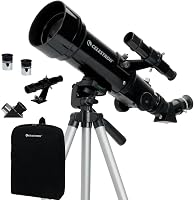
Celestron StarSense Explorer LT 114AZ Newtonian Smartphone
9.5/10 our score
See it on Amazon
- 4
 Check it
Koolpte Telescope for Adults & Beginner Astronomers
Best for simple wide-field beginner sessions - 5
 Check it
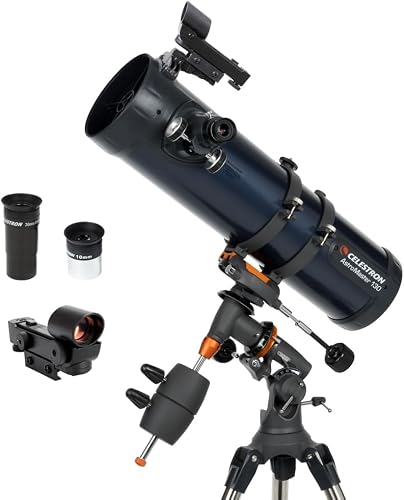
Celestron AstroMaster 130EQ Telescope for Deep-Sky Beginners
Best for maximum beginner reflector light - 6
 Check it
ToyerBee Telescope for Adults & Kids
Best for family stargazing and travel - 7
 Check it
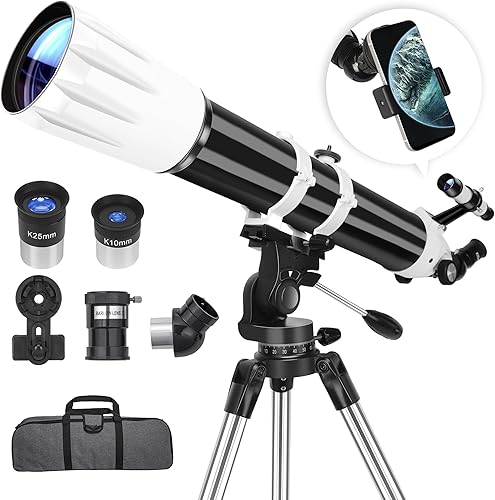
Hawkko 90mm Aperture 900mm Telescope for Adults
Best for long-focus visual observing - 8
 Check it
Dianfan 150EQ Professional Astronomy Telescope for Adults
Best for large-aperture manual observing - 9
 Check it
SVBONY SV503 Telescope for Adults High Powered
Best for deep-sky photography upgrades
Which telescopes are best for galaxies and nebulae?
The best choice depends on whether you want simple visual observing, a larger mirror, or automated image capture. These picks are ordered by score, with the strongest overall fit first.
Our score weighs aperture, optical design, setup, mount type, portability and buyer feedback against the needs of someone searching for the best telescope for seeing galaxies and nebula.
Visual scopes ask you to find, centre and focus a faint patch of light yourself. That can be rewarding, but it also means your sky quality, eyesight and patience shape what you see on any given night.
Smart and guided scopes shift some of that work to an app or a sensor. They can point more precisely and stack exposures, which helps with faint galaxies, but they add battery, phone and processing steps.
Larger reflectors sit in the middle of that trade-off. They offer more aperture for visual work, yet they are heavier and usually need more care with mounts and transport.
Use the order here as a practical shortlist rather than a strict ranking. Start with the balanced beginner option, then compare it with the guided, portable and high aperture alternatives before you decide.
| Product | Best for | Aperture | Focal length | Mount | Our score |
|---|---|---|---|---|---|
| MEEZAA Telescope | balanced beginner deep-sky viewing | 90mm | 800mm | Altazimuth | 9.6 |
| DWARFLAB Dwarf Mini Smart Telescope | easy galaxy and nebula imaging | 150mm | Altazimuth and equatorial | 9.5 | |
| Celestron StarSense Explorer LT 114AZ Newtonian Smartphone | guided beginner galaxy hunting | 114mm | 1000mm | Altazimuth | 9.5 |
| Koolpte Telescope for Adults & Beginner Astronomers | simple wide-field beginner sessions | 80mm | 600mm | Altazimuth | 9.3 |
| Celestron AstroMaster 130EQ Telescope for Deep-Sky Beginners | maximum beginner reflector light | 130mm | 650mm | Equatorial | 9.3 |
| ToyerBee Telescope for Adults & Kids | family stargazing and travel | 70mm | 300mm | 9.1 | |
| Hawkko 90mm Aperture 900mm Telescope for Adults | long-focus visual observing | 90mm | 900mm | Altazimuth | 9.0 |
| Dianfan 150EQ Professional Astronomy Telescope for Adults | large-aperture manual observing | 150mm | 650mm | Equatorial | 8.6 |
| SVBONY SV503 Telescope for Adults High Powered | deep-sky photography upgrades | 102mm | 714mm | Tripod mount | 8.1 |
The best telescope for seeing galaxies and nebula
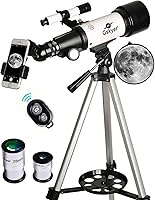
MEEZAA Telescope: Best for balanced beginner deep-sky viewing
- 90mm aperture
- 800mm focal length
- 32X–240X magnification
- Phone adapter and carry bag
The 90mm refractor gives beginners a useful balance of light gathering, reach and simple setup. Its phone adapter, tripod and carry bag make it practical for backyard or travel sessions.
Pros
- 90mm aperture
- Fully multi-coated optics
- Includes tripod and phone adapter
Cons
- Manual focus
- Altazimuth mount
The MEEZAA Telescope is a strong all-around start for visual deep-sky observing. Its 90mm aperture and 800mm focal length gather more light than compact 70mm and 80mm scopes without the size of the largest reflectors.
Fully multi-coated optical glass lenses improve brightness and clarity. That helps with a faint galaxy that only just rises above the sky background.
The 10mm and 25mm eyepieces, plus the 3X Barlow lens, give a stated 32X–240X range. Start with the 25mm when searching, because it shows more surrounding sky.
Its altazimuth mount is familiar. You move the tube up and down and side to side, though you will still nudge it as a target drifts.
The stainless steel tripod adjusts from 28 to 46 in, and the carry bag organizes the telescope, phone adapter and other parts. That range suits standing or seated use and sharing with family.
Choose it for the Moon, brighter nebulae and beginner galaxy searches. Find a target at lower power, centre it, then increase power and keep the optics clean and capped.
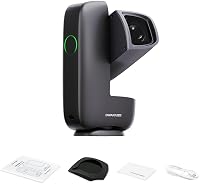
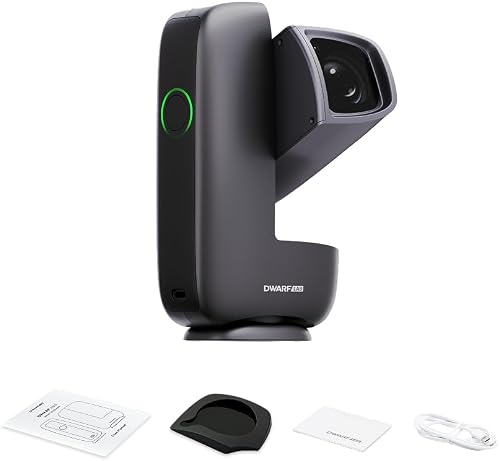
DWARFLAB Dwarf Mini Smart Telescope: Best for easy galaxy and nebula imaging
- 1.85 lb portable design
- Auto GOTO
- 90-second exposures
- Built-in light pollution filters
The DWARFLAB Dwarf Mini uses app control, automated pointing and image processing to make faint deep-sky targets easier to capture. It is the most portable option here.
Pros
- Very light
- Auto GOTO
- EQ mode and smart processing
Cons
- Small 30mm objective lens
- Depends on app-based control
The DWARFLAB Dwarf Mini is the easiest pick for automated deep-sky imaging. It weighs 1.85 lb, uses app control and includes Auto GOTO, a built-in sky atlas, 360-degree pivot freedom and EQ mode.
Its 30mm objective lens is much smaller than the optical openings on the visual telescopes here. That means it is not trying to win on direct visual brightness through an eyepiece.
Its advantage is the integrated Sony IMX662 sensor, automated tracking, light pollution filters, auto-stacking and one-tap processing. A sensor can collect light over time in a way your eye cannot, which is why faint nebulae and galaxies can appear in processed images.
The scope supports single-frame exposures up to 90 seconds. That makes it a different kind of answer to what is the best telescope to see galaxies, because the result is a saved image rather than a live view.
It is designed to capture and process faint targets rather than show them through a conventional eyepiece. If you hoped to put your eye to the scope and see the same detail, this will feel very different.
Choose it for travel, camping or a quick session where app guidance matters. It includes a filter, USB-C to USB-C cable and cleaning cloth, so charge the battery before you leave and keep the lens free of dew and dust.
Celestron StarSense Explorer LT 114AZ Newtonian Smartphone: Best for guided beginner galaxy hunting
- 114mm Newtonian reflector
- StarSense smartphone guidance
- 1000mm focal length
- Manual altazimuth mount
Its 114mm reflector gathers more light than the smaller refractors, while StarSense helps beginners locate galaxies, nebulae and star clusters.
Pros
- 114mm reflector
- Smartphone sky guidance
- Includes 10mm and 25mm eyepieces
Cons
- Manual tracking
- Heavier than compact scopes
The Celestron StarSense Explorer LT 114AZ is a strong choice for beginners who want more aperture and guided target finding. Its 114mm Newtonian reflector has a 1000mm focal length and high-reflectivity coatings.
StarSense uses your smartphone to recognize star patterns and point you toward selected targets. That helps with the main beginner problem, which is often not focus but simply not knowing where to aim in a dark sky.
The app can suggest bright nebulae, galaxies and clusters based on your time and location. You can choose a target, follow the on-screen arrows and stop when the indicator shows you are centred.
The manual altazimuth mount includes altitude slow-motion adjustment. The slow motion helps with small corrections, although you will still need to move the mount by hand as the sky appears to drift.
The 10mm and 25mm eyepieces give you two starting points, while the full-height tripod supports standing or seated viewing. Start with the 25mm for a wider search view, then try the 10mm once a galaxy or nebula is centred.
Choose this model if finding deep-sky objects is the main barrier. It is also a useful bridge between simple manual observing and app-assisted astronomy, but check that your phone meets the stated Android 12 or iOS 18 compatibility requirements before you rely on it.
Koolpte Telescope for Adults & Beginner Astronomers: Best for simple wide-field beginner sessions
- 80mm aperture
- 600mm focal length
- 24X–180X magnification
- No-tool setup
The 80mm optical tube is approachable for first-time observers who want a broad view of brighter galaxies and nebulae. Its phone adapter and carrying bag support casual use.
Pros
- Fully multi-coated optics
- No-tool setup
- Wireless remote included
Cons
- Less light gathering than 90mm and larger scopes
- Manual focus
The Koolpte Telescope suits a beginner who wants a simple, portable refractor with a relatively broad view. Its 80mm aperture and 600mm focal length can support bright galaxies and nebulae while keeping the optical tube manageable.
The two eyepieces provide 24X and 60X magnification, and the 3X Barlow lens raises those combinations to higher power. For faint extended targets, begin with the lower magnification so you can search more easily and keep enough sky around the target.
Its fully multi-coated optics are paired with an altazimuth mount, adjustable aluminum tripod, phone adapter, wireless remote and carrying bag. The wireless remote can help when you use the phone adapter, since it reduces vibration from touching the setup.
No-tool setup reduces the number of early assembly steps. That matters for casual use, because a telescope that is annoying to assemble is less likely to be used on a clear night.
Choose it for casual backyard observing, family use or travel. If your main goal is the faintest possible galaxies, the 114mm, 130mm or 150mm reflectors here offer more aperture, but this scope is easier to move and store.
Keep the eyepieces in their caps and the front lens covered between sessions. A short check of the tripod screws before each outing will keep the view steadier and make setup feel quick rather than fiddly.
Celestron AstroMaster 130EQ Telescope for Deep-Sky Beginners: Best for maximum beginner reflector light
- 130mm Newtonian reflector
- 650mm focal length
- German equatorial mount
- Slow-motion control knobs
The 130mm mirror offers the largest aperture among the beginner-focused picks. Its equatorial mount and slow-motion controls add a learning curve but help with controlled manual tracking.
Pros
- 130mm optics
- Equatorial mount
- Includes 20mm and 10mm eyepieces
Cons
- 17 lb assembled weight
- More involved mount setup
The Celestron AstroMaster 130EQ is the best beginner reflector here for buyers who want substantial aperture. Its 130mm Newtonian mirror gathers more light than the smaller refractors, and its 650mm focal length gives a relatively broad deep-sky view.
The German equatorial mount has slow-motion controls for right ascension and declination. That design takes more practice than an altazimuth mount, but it gives you a controlled way to follow a target manually.
The telescope includes a 20mm eyepiece with a built-in erect image corrector, a standard 10mm eyepiece and a StarPointer red dot finderscope. The red dot finder helps you place a bright star in view first, then move to the target with the main scope.
Its assembled weight is 17 lb, so plan your observing spot before carrying it outside. Store the mount and tripod where you can reach them without lifting over furniture, and plan a firm path to the yard.
Choose it when aperture is more important than the lightest setup. Learn the mount during daytime assembly, then practice centering bright targets before searching for faint galaxies.
A little preparation pays off with an equatorial mount. Set up in daylight, check that the tripod is stable and that the slow-motion knobs move smoothly, and you will spend far less time learning the controls in the dark.
ToyerBee Telescope for Adults & Kids: Best for family stargazing and travel
- 70mm aperture
- 300mm focal length
- 15X–150X magnification
- Phone adapter and tripod
This compact refractor suits families who want a simple scope for the Moon, bright stars and occasional deep-sky targets. Its short 300mm focal length favors a wider view.
Pros
- Lightweight 3.5 lb design
- Quick no-tool setup
- Includes star chart
Cons
- Smallest aperture in this group
- Less suited to faint galaxies
The ToyerBee Telescope is best for family sessions where portability and simple setup matter more than faint-target performance. Its 70mm aperture and 300mm focal length favor bright objects and wider views.
The 20mm and 6mm eyepieces, together with the 3X Barlow lens, support a stated 15X–150X range. For nebulae and galaxy searches, the 20mm eyepiece is the sensible starting point because its lower power gives more sky context.
A 5x24 finderscope, phone adapter, wireless camera remote, tripod and star chart are included. The star chart is useful for families, since it gives children a way to learn bright patterns before they hunt for faint deep-sky targets.
The telescope weighs 3.5 lb, which makes it easier to carry to a campsite or darker observing location. That light weight is a real advantage for travel, because you can set it up on a table height tripod or carry it a short distance from a car.
Choose it for children, families and first Moon sessions. It can show some bright deep-sky targets, but buyers seeking faint galaxies should favor a larger aperture.
The trade-off is clear. You gain simple setup and easy transport, but you give up the light gathering that makes small galaxies and dim nebulae easier to pick out.
Hawkko 90mm Aperture 900mm Telescope for Adults: Best for long-focus visual observing
- 90mm aperture
- 900mm focal length
- 36X–270X magnification
- Stainless steel AZ tripod
The 90mm refractor combines useful aperture with a longer focal length for a narrower, more focused view. It includes the eyepieces, Barlow lens and phone adapter needed to start.
Pros
- 90mm aperture
- 360-degree rotation
- Carry bag included
Cons
- 5 kg weight
- Manual focus and tracking
The Hawkko 90mm Aperture 900mm Telescope is a good fit for a buyer who prefers a longer-focus refractor. Its 90mm aperture matches the MEEZAA in opening size, while the 900mm focal length gives a narrower view.
The telescope offers 36X–270X magnification through its 25mm and 10mm eyepieces plus 3X Barlow lens. For galaxies and nebulae, use the 25mm eyepiece first, then increase power only if the target remains visible and centered.
Its stainless steel altazimuth tripod adjusts from 28 to 46 in and supports 360-degree rotation. The height range helps for standing and seated observing, and the rotation makes it easier to follow a target across the sky.
The kit includes a finderscope, zenith mirror, accessory tray, phone adapter and carry bag. Having the tray and bag in the kit helps, because small eyepieces and adapters are easy to lose in the dark.
Choose it for backyard observing when a longer focal length and complete kit appeal to you. Its 5 kg weight is manageable for planned outings, but it is less compact than the family-sized ToyerBee.
The longer focal length is the main trade-off. It can make a target feel more concentrated, but the narrower field means finding a faint galaxy takes more care, so patience with the finder scope matters.
Dianfan 150EQ Professional Astronomy Telescope for Adults: Best for large-aperture manual observing
- 150mm aperture
- 650mm focal length
- 26X–130X magnification
- German-style equatorial mount
The 150mm aperture has the strongest light-gathering potential here for visual deep-sky work. Its 14 kg carry-bag weight and equatorial mount make it better for planned sessions than quick observing.
Pros
- Largest aperture
- Pre-assembled equatorial mount
- Stainless steel tripod
Cons
- 14 kg carry-bag weight
- 20-minute setup estimate
The Dianfan 150EQ offers the largest aperture in this roundup. Its 150mm aperture gives it the strongest light-gathering potential for visual galaxies, nebulae and star clusters, while the 650mm focal length keeps the view useful for larger targets.
The pre-assembled German-style equatorial mount includes dials and slow-motion control cables. It still needs about 20 minutes of setup, and the 14 kg carry bag weight makes this a planned-session telescope.
Two eyepieces and a 2X Barlow lens produce a stated 26X–130X range. For deep-sky work, the lower end of that range is the better starting point, because it gives you more sky around a faint target.
A red dot finderscope, phone adapter, carry bag and stainless steel tripod are included. The stainless steel tripod adds stability, which matters when you are looking at faint objects that can vanish with a small shake.
Choose it if you have room to store it and want maximum visual aperture from this group. The extra light potential does not remove the need for dark skies, steady support and careful focusing.
Plan for transport before you buy. A scope this size works best when you have a short, clear route from storage to your observing spot, rather than a long carry across damp ground.
SVBONY SV503 Telescope for Adults High Powered: Best for deep-sky photography upgrades
- 102mm aperture
- S-FPL51 ED glass
- Dual-speed focuser
- 360-degree field rotator
The SV503 is an optical tube aimed at observers who may add camera equipment later. Its ED glass, dual-speed focuser and field rotator support careful focus and framing.
Pros
- 102mm aperture
- ED glass
- 90mm focus travel
Cons
- No finderscope
- Tripod mount only
The SVBONY SV503 is the specialist choice for observers who may add camera equipment. Its 102mm aperture, 714mm focal length and S-FPL51 ED glass support both visual observing and deep-sky astrophotography.
The dual-speed focuser provides a 1:10 adjustment, while the 360-degree field rotator helps align a camera without rotating the optical tube. That matters when you want to frame a galaxy or nebula neatly for a photograph.
The 90mm focus travel is useful when accessories such as filter wheels and field flatteners are part of the setup. Extra travel gives you room to reach focus without forcing the focuser to its limit.
This is a telescope tube with a tripod mount, not a complete beginner kit with a finderscope and eyepieces. It includes a 2 in to 1.25 in adapter, dust cover, dovetail plate, lens cover and tube rings.
Choose it when optical control and future camera work matter more than instant setup. For a first visual telescope, the MEEZAA or Celestron options are more complete.
Care is part of the appeal here. Keep the retractable hood in place to limit stray light and dew, store the tube with caps fitted, and allow the optics to settle outside before a session so focus stays steady.
What should you look for in a telescope to see galaxies?
A telescope to see galaxies should have useful aperture, a stable mount and an eyepiece that gives a broad enough view to locate faint targets. Bigger aperture helps, but it also adds weight, cost and setup demands.
Does aperture matter most for faint galaxies?
Aperture is one of the most useful specifications for faint galaxies because it controls how much light the telescope can collect. The 130mm Celestron and 150mm Dianfan have more aperture than the 70mm ToyerBee or 80mm Koolpte.
That difference does not guarantee a dramatic view from a bright city. Light pollution, haze, moonlight, focus and observer experience also affect what you can see.
Is a wide field of view useful for nebulae?
A wide field of view helps with large nebulae and makes star-hopping easier. Shorter focal lengths generally make it easier to frame extended targets, while longer focal lengths can make a target appear more concentrated.
The ToyerBee has a 300mm focal length, while the MEEZAA has 800mm and the Hawkko has 900mm. For more guidance, compare the best wide field of view telescope.
Can a beginner use a large reflector?
A beginner can use a large reflector if they are willing to learn the mount and plan for transport. The Celestron AstroMaster 130EQ uses an equatorial mount, while the Dianfan 150EQ adds more aperture and a 14 kg carry bag weight.
If you want a gentler first step, the best beginner telescope for deep space guide focuses on easier ways to start.
How can you see more galaxies from home?
You can see more galaxies from home by observing on a clear, calm night, reducing nearby light and allowing your eyes time to adjust. A darker location often improves the view more than simply increasing magnification.
Use the lowest useful power first. Find the target, center it, focus slowly and then try a higher-power eyepiece if the image remains steady.
Galaxies often appear as faint gray patches, not bright color photographs. Nebulae can also look subtle through a visual telescope, especially from a city.
Our guide answers Can You See Galaxies With a Home Telescope? in more detail. If you want to record images instead of observing through an eyepiece, compare the best galaxy astrophotography telescope.
Dark adaptation is easy to undo. A phone screen, a porch light or a car headlight can set your eyes back to daylight mode, so shield the eyepiece area and give yourself time before you judge a faint target.
Wind matters as much as thin cloud. Even light gusts can make the tripod tremble, and that tremble spreads a faint galaxy into a blur that magnification will not fix.
Focus slowly and in small steps. A galaxy has no sharp edge to focus on, so look for the moment when the patch becomes most compact and the surrounding stars look tightest.
How should you set up a telescope for deep-sky viewing?
Set the tripod on firm, level ground and tighten the adjustment points before attaching the tube. Let your eyes adapt to darkness and keep white lights away from the eyepiece.
Start with the lower-power eyepiece. Use the finder or app to locate the target, then focus with small adjustments.
Do not judge a telescope by one short session. Clouds, wind, humidity, light pollution and the Moon can all reduce contrast on faint objects.
A telescope can also work for daytime viewing. For that use, see the best telescopes for wildlife viewing.
Allow the tube to cool to outdoor temperature first. A warm tube can show soft images that look like an optics problem.
Check tripod legs and mount screws in daylight. A loose clamp is quick to fix at home but frustrating in the dark.
Find a bright star with the finder or app first. Centre and focus it, then move to a nearby galaxy or nebula.
Keep light low and warm near the eyepiece. Dim red light protects dark adaptation and helps with charts and eyepiece changes.
Which is the best telescope for looking at galaxies?
The MEEZAA Telescope is the best telescope for looking at galaxies for most beginners. It combines a 90mm aperture, 800mm focal length, fully multi-coated optics and a complete accessory kit.
Pick the DWARFLAB Dwarf Mini for app control and processed images. Pick the Celestron StarSense Explorer LT 114AZ for guided target finding.
Choose the AstroMaster 130EQ or Dianfan 150EQ when more visual aperture outweighs the extra mount and transport work.
The best telescope to see galaxies is the one you can set up under a dark sky and use patiently. Start with the MEEZAA, then choose a larger reflector or smart scope as your style becomes clear.
Think about your observing spot before you commit. A small yard, balcony or dark field limits tripod size, tube weight and carrying distance.
Think about what you want from a session. Some readers want the quiet satisfaction of finding a galaxy through an eyepiece, while others want a saved image to share.
A balanced first scope leaves room to learn. It offers enough aperture for brighter galaxies, enough magnification range for focusing practice, and a simple mount.
Dark skies and patience will shape your best views. Use the scope you can set up most often and learn its finder and eyepieces well.
Our top 3 picks at a glance
-
1
-
2
Best for easy galaxy and nebula imaging
DWARFLAB Dwarf Mini Smart Telescope
9.5/10 our score
See it on Amazon -
3
Best for guided beginner galaxy hunting
Celestron StarSense Explorer LT 114AZ Newtonian Smartphone
9.5/10 our score
See it on Amazon
Frequently asked questions
What is the best telescope for seeing galaxies and nebula?
The best telescope for seeing galaxies and nebula balances aperture, focal length and ease of use. The MEEZAA Telescope is the strongest all-around beginner choice here, while the 130mm and 150mm reflectors gather more light.
A smart scope is better if you want automated pointing and image capture.
What telescope can see galaxies from a home?
A home telescope can show brighter galaxies such as Andromeda as pale, extended shapes rather than colorful photographs. Choose a model with useful aperture, then observe from the darkest safe location available.
The Celestron StarSense Explorer LT 114AZ can help you find targets from city skies and dark sites.
Is a refractor or reflector better for galaxies?
A reflector often offers more aperture for deep-sky viewing, which can help with faint galaxies and nebulae. A refractor can be simpler to maintain and easier to use.
Compare the 130mm or 150mm reflectors with the 90mm refractors based on your storage, setup and transport needs.
What magnification is best for galaxies and nebulae?
Moderate magnification is usually the better starting point for galaxies and large nebulae because it keeps more of the target in view and makes it easier to find. Begin with the longer-focal-length eyepiece, then increase power only when the target and sky conditions support it.