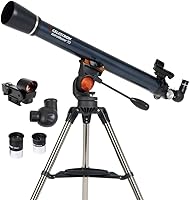
Celestron Travel Scope 80 Telescope Review: Worth It? (November 2026)
The Celestron Travel Scope 80 is a strong beginner travel telescope for families and campers who want an 80mm refractor, simple setup, a backpack and smartphone adapter in one kit.
On this page (9 sections)
- Celestron Travel Scope 80 review: the short answer
- What does the 80mm aperture mean in daily use?
- Eyepieces and viewing options
- Backpack, tripod and setup
- Smartphone adapter and daytime use
- How does the Celestron compare with similar kits?
- What should you know about focusing and stability?
- Care and safe observing
- Is the Celestron Travel Scope 80 worth choosing?
The Celestron Travel Scope 80 is a capable beginner travel telescope for buyers who want an 80mm refractor, simple setup and useful accessories in one portable package.
It suits families and campers who need one kit for the Moon at night and scenery or wildlife during the day.
Its main strengths are the fully coated glass optics, backpack, full-height tripod and included smartphone adapter.
The 80mm aperture means more light gathering than a smaller 50mm travel scope, which helps brighten lunar and daytime views.
The 457mm focal length keeps the tube short enough for travel while still giving a useful closer view of distant targets.
The kit includes 20mm and 10mm eyepieces, so you can start wide to find a target and then switch for more detail.
A 5x24 finderscope and erect image diagonal support both night pointing and upright daytime viewing.
The trade-off is that it still uses manual focus and a portable tripod, so steady ground and patient adjustment matter.
For the most stable views at higher power, careful setup matters as much as the optical tube.
No-tool setup and a preassembled mount make it practical for adults and children sharing the telescope on a trip.
Celestron Travel Scope 80 review: the short answer
The Celestron Travel Scope 80 is best for families, campers and beginners who want one kit for astronomy and daytime viewing. Its 80mm aperture gives it more light-gathering ability than a 50mm travel scope, while the included backpack keeps the complete setup easy to carry.
Celestron Travel Scope 80mm Telescope Kit: Best for complete travel kits

- 80mm aperture
- Fully coated glass lenses
- Backpack
- Smartphone adapter
- 20mm and 10mm eyepieces
A lightweight 80mm refractor with a backpack, smartphone adapter, full-height tripod, 2 eyepieces and a finderscope. It suits beginners who want one portable kit for Moon, planet and daytime viewing.
Pros
- 80mm aperture
- Backpack included
- Smartphone adapter included
- No-tool setup
Cons
- Manual focus
- Tripod stability still matters for high-power viewing
We compared the stated specifications, included accessories and intended use against two similar beginner kits. Our score weighs those details against the needs of someone searching for a celestron travel scope 80 review, not against advanced observatory telescopes.
Who should choose the Celestron Travel Scope 80?
Choose it if you want a portable refractor that can show the Moon at night and daytime scenery during trips. The no-tool setup also makes it practical when more than one person will use the telescope.
It is less suitable if your priority is a heavy mount for very high magnification. The full-height tripod is convenient for travel, but any lightweight setup needs a steady surface and gentle adjustments.
What does the 80mm aperture mean in daily use?
The 80mm aperture is the telescope's light-gathering opening, so it gives the Travel Scope 80 more light-gathering area than smaller travel models. That helps with bright lunar views and makes the telescope more useful when you move between daytime and nighttime targets.
The 457mm focal length keeps the scope in a portable range. Its stated 1.7-degree field of view is useful when you want to locate broad targets or scan a landscape.
Aperture does not guarantee a perfect view in every situation. Haze, light pollution, vibration and focus adjustment can all affect what you see.
For a broader explanation of choosing a portable scope, read What Is a Good Travel Telescope? What to Know.
If compact size is your main concern, compare the best compact telescope for beginners.
Eyepieces and viewing options
The kit includes 20mm and 10mm eyepieces, giving you two viewing options without needing to buy an eyepiece immediately. The 20mm eyepiece is the natural starting point for locating a target, while the 10mm option gives a closer view when the target and conditions support it.
The included star diagonal changes the viewing angle, which can make the telescope more comfortable to use. The erect image diagonal also supports daytime viewing where an upright scene is useful.
Use the lower-power eyepiece first. Once the target is centered and focused, switch to the shorter focal-length eyepiece and make small focus adjustments.
A finder helps you point the main tube at a target. Align it during the day on a distant stationary object, then confirm the alignment before trying to locate faint targets at night.
Backpack, tripod and setup
The backpack is one of the Travel Scope 80's clearest advantages because the optical tube, tripod and accessories are designed to travel together. The scope weighs 4.5 lb, and the stated product dimensions are 22.5 in deep, 12.7 in wide and 5.6 in high.
The mount and tripod are preassembled, and the kit is designed for no-tool setup. That reduces the number of loose parts to manage at a campsite or family outing.
Set the tripod on firm ground and spread its legs fully. Tighten adjustments enough to remove play, but avoid forcing knobs or joints.
Keep the tripod away from foot traffic. A small bump can move the target out of view, especially when using the 10mm eyepiece.
If you are choosing a telescope mainly for outdoor trips, the guide to best telescopes for camping can help you compare portability with setup needs.
Smartphone adapter and daytime use
The included smartphone adapter lets you place a compatible smartphone over the eyepiece for photos and video. Phone alignment takes care, so center the target through the eyepiece before attaching the phone.
Start with the 20mm eyepiece for a wider target area. Secure the phone gently, then adjust its position until the camera sees the image circle clearly.
The adapter is useful for sharing lunar views or recording daytime scenery. It does not remove the need for a steady tripod, manual focus and careful alignment.
The erect image diagonal makes the telescope more practical for terrestrial targets. If you are deciding between an astronomical telescope and a spotting scope, read [What Is a Spotting Scope?
A Simple Guide](/what-is-a-spotting-scope/) before choosing.
How does the Celestron compare with similar kits?
The Celestron Travel Scope 80 stands out for its 80mm aperture, 4.5 lb weight, backpack and 457mm focal length. The two alternatives below change the balance between aperture, focal length and travel accessories.
Celestron Travel Scope 80 vs Gskyer Telescope
The Gskyer has a 70mm aperture and 400mm focal length, compared with the Celestron's 80mm aperture and 457mm focal length. Both are refracting telescopes with fully coated optics and manual focus.
The Gskyer includes a carry bag, phone adapter and wireless camera remote. Its altazimuth mount and adjustable aluminum tripod suit simple up, down, left and right movement.
Pick the Celestron when the larger 80mm aperture and included backpack matter more. Pick the Gskyer when the wireless remote and 70mm travel format are the better match.
For another Celestron option, see our celestron travel 50 telescope review.
Celestron Travel Scope 80 vs Koolpte Telescope
The Koolpte also uses an 80mm aperture, but its 600mm focal length is longer than the Celestron's 457mm. Its stated package includes 2 eyepieces, phone adapter, telescope tube, tripod and wireless remote.
A longer focal length can suit buyers who prefer a narrower view for larger lunar or distant daytime targets. The Celestron's shorter focal length is more travel-oriented and pairs with a backpack and erect image diagonal.
Pick the Koolpte if its longer optical tube and wireless control fit your priorities. Pick the Celestron if the lighter 4.5 lb weight and complete backpack kit matter most.
What should you know about focusing and stability?
The Travel Scope 80 uses manual focus, so you adjust the focus yourself for each target and viewing condition.
Begin with the 20mm eyepiece, center the target and turn the focus slowly until the image becomes clear.
Manual focus suits beginners because the control is simple, but it asks for patience when moving from a bright target to a faint one.
Use a distant daytime target to learn the focus controls before sunset.
A fixed object makes it easier to practice before searching for stars in a dark sky.
During the day, try a building, tree line or ridge so you can judge when the edge looks sharpest.
At night, start with the Moon because its bright surface makes focus changes easy to see.
Once the Moon looks crisp, leave the focus near that setting and make only small changes for other targets.
The tripod should be level and placed on solid ground.
Avoid touching the optical tube while viewing, and wait for vibrations to settle after changing direction.
Keep your hands off the tube once the target is centered, since even a light touch can shift the view.
Higher power makes movement easier to notice, especially with the 10mm eyepiece.
If the image shakes, lower the magnification, reposition the tripod or wait before judging the view.
Wind, soft soil and nearby foot traffic can all add movement that has nothing to do with the optics.
Tighten the tripod adjustments enough to remove play, but avoid forcing knobs or joints.
Check stability again after swapping eyepieces, because handling the telescope can nudge the setup.
A calm sequence works best, with low power first, then focus, then higher power.
That order helps you keep the target in view and avoid chasing a drifting image.
Care and safe observing
Keep the objective lens capped when the telescope is not in use.
Store the tube and accessories in the backpack after checking that the parts are dry and clean.
A cap keeps dust off the front lens and protects the coating during travel and storage.
Pack the eyepieces and smartphone adapter in their own spaces so they do not knock against the tube.
Avoid wiping optical surfaces repeatedly.
Remove loose dust carefully, then use an optics-safe cleaning method when needed.
Repeated wiping can smear dirt across the lens, so a gentle touch is better than frequent cleaning.
Handle lenses by their edges and keep fingers away from the glass where possible.
Allow the telescope to adjust to outdoor conditions before extended observing.
Moisture can form when equipment moves between different temperatures, so keep the scope protected while it acclimates.
A cool night after a warm afternoon can cause dew, so watch for fog on the lens.
If moisture appears, let the telescope dry naturally in a safe spot rather than heating the optics.
Never aim the telescope at the Sun or close to the Sun.
Direct sunlight through optics can cause severe eye injury.
Keep this warning in mind during daytime use, even when you are viewing landscapes or wildlife.
Store the scope upright or secured, with the cap on and the tripod folded neatly.
That simple routine protects the optics and keeps the kit ready for the next outing.
Is the Celestron Travel Scope 80 worth choosing?
The Celestron Travel Scope 80 is worth choosing when portability and a complete beginner kit matter more than advanced mount stability. Its 80mm aperture, fully coated optics, backpack, smartphone adapter and two eyepieces give you a clear starting setup for lunar, planetary and daytime viewing.
Choose the Celestron for a family-friendly travel kit with a 4.5 lb telescope and 457mm focal length. Choose the Gskyer for a 70mm kit with a wireless remote, or the Koolpte for an 80mm telescope with a longer 600mm focal length.
The right decision depends on what you will carry and where you will observe. Compare the tripod, storage bag, focal length and included accessories before deciding, then start with low power and steady ground.
Frequently asked questions
Is the Celestron Travel Scope 80 good for beginners?
Yes. The Celestron Travel Scope 80 combines an 80mm refractor, full-height tripod, 20mm and 10mm eyepieces, finderscope, backpack and smartphone adapter.
Its no-tool setup suits adults and children who want to begin with Moon, planet and daytime viewing.
What comes with the Celestron Travel Scope 80?
The kit includes the optical tube, preassembled mount and tripod, 20mm and 10mm eyepieces, 5x24 finderscope, erect image diagonal, backpack, smartphone adapter, manual and Starry Night software download. The package is designed for portable observing.
Can you use the Celestron Travel Scope 80 during the day?
Yes. Its erect image diagonal and fully coated glass optics support daytime scenery and wildlife viewing as well as nighttime astronomy.
Never aim this telescope at the Sun or near the Sun without proper solar equipment designed for safe solar observation.
How does the Travel Scope 80 compare with the Travel Scope 50?
The Travel Scope 80 has an 80mm aperture, while the Travel Scope 50 has a smaller aperture. The larger objective gathers more light, but the best choice depends on how much portability you need and whether you want a complete backpack kit for family trips.