What Is a Good Travel Telescope? What to Know
On this page (9 sections)
A good travel telescope is one that’s lightweight, compact, and easy to set up. It should offer decent magnification for viewing celestial objects like the Moon and bright planets. You don’t need a massive, heavy scope to enjoy stargazing on the go. Think portability and simplicity.
When you’re looking for a telescope to take on trips, think about how it will fit in your car or luggage. We found that many smaller refractors or tabletop Dobsonians are excellent choices. They provide a good balance of performance and portability for casual stargazers. The key is finding something you’ll actually use, not leave behind.
- Travel telescopes need to be portable.
- Look for models that are lightweight and compact.
- Simplicity in setup is important.
- Consider refractors or small Dobsonians.
- Your scope should be easy to transport.
Below, we’ll break down the key features to consider when choosing your perfect travel telescope. Let’s find a scope that won’t weigh you down!
Choosing Your Ideal Travel Telescope: What to Look For
Finding a travel telescope means balancing capability with portability. You want a telescope that’s fun to use and easy to bring along. It shouldn’t feel like a chore to pack or set up. We’ve looked at what makes a telescope great for trips. It’s all about simplicity and ease of transport.
Key Features for a Portable Telescope
When you’re looking for a telescope to take on vacation, a few things stand out. Portability is the absolute top priority. If it’s too heavy or bulky, it’s likely to stay home. Think about how it will fit in your car or even a suitcase.
Weight and Size Considerations
A good travel telescope should weigh 10 pounds or less. Some are even lighter, closer to 5 pounds. This makes a big difference when you’re carrying it through airports or up a mountain trail. You don’t want to feel like you’re lugging around a gym weight.
Size matters too. Look for telescopes that collapse or break down easily. Many come with compact carrying cases. These cases protect your telescope and make it simple to store. A smaller telescope generally means a lighter telescope, but not always. Some small scopes can be surprisingly heavy due to dense materials.
Ease of Setup and Takedown
Imagine arriving at a dark sky site after a long drive. The last thing you want is to spend 30 minutes wrestling with complicated parts. A good travel telescope sets up in 5 to 10 minutes, maybe less. This means more time for stargazing and less time fiddling.
Many refractors and smaller Dobsonians are designed with quick setup in mind. They often have fewer parts. You might just need to attach the optical tube to the mount and add an eyepiece. Simple is definitely better for on-the-go astronomy.
Types of Telescopes Great for Travel
Not all telescope designs are equally suited for travel. Some are naturally more compact and lightweight. We found that two main types often fit the bill.
Refracting Telescopes (Refractors)
Refracting telescopes use lenses to gather and focus light. They are often called “tube” telescopes. Think of a classic spyglass. Many travel refractors are small and sealed. This means they require less maintenance than other types.
They are also quite robust. Because there are no mirrors to misalign, they hold their view well. This is perfect for bumpy car rides or moving the telescope around. They are often excellent for viewing the Moon, planets, and star clusters.
Aperture and Focal Length in Refractors
When looking at refractors, pay attention to the aperture (the diameter of the main lens). A larger aperture gathers more light, giving brighter and more detailed views. For travel, apertures between 60mm and 90mm are common.
The focal length affects magnification. A longer focal length gives higher magnification. However, longer focal lengths often mean longer, heavier tubes. For travel, a moderate focal length is usually a good compromise. It offers decent magnification without making the scope too unwieldy.
Dobsonian Telescopes (Tabletop Models)
Dobsonian telescopes are known for offering large apertures at a good price. They use a mirror to gather light. A traditional Dobsonian can be quite large. However, tabletop Dobsonian models are designed specifically for portability.
These scopes sit on a small, rotating base. You don’t need a separate tripod. The base is usually made of wood and is quite stable. They are simple to point and move. Many tabletop Dobsonians offer a generous aperture for their size, making them great for fainter objects.
Portability of Tabletop Dobsonians
The main advantage of a tabletop Dobsonian is its simplicity and aperture. You can often carry the tube and base separately. They pack down smaller than many other scopes. While they might not fit in a suitcase, they usually fit easily in the back of a car or a larger duffel bag. We found that many stargazers love them for backyard astronomy and short trips.
Understanding Magnification and Aperture
Magnification is how much larger an object appears. Aperture is the diameter of the telescope’s main light-gathering element (lens or mirror). It’s easy to get caught up in magnification numbers, but aperture is actually more important for image quality.
The Role of Aperture
Aperture determines how much light your telescope can collect. More light means brighter and clearer views. It also allows you to see fainter objects in the night sky. For a travel telescope, a good starting point is an aperture of 70mm or more.
For refractors, look for 70mm to 90mm. For tabletop Dobsonians, you might find 114mm or even 130mm apertures, which offer even better light-gathering. Higher aperture is almost always better, provided the telescope remains portable.
Magnification: What You Really Need
Telescopes come with various eyepieces that change magnification. A common mistake is thinking you need the highest possible magnification. In reality, too much magnification can make images blurry and shaky. This is especially true if the telescope is not very stable.
For travel telescopes, a maximum useful magnification is often around 100x to 150x. You’ll get great views of the Moon’s craters and Jupiter’s moons at much lower powers. Most manufacturers recommend a maximum magnification based on the telescope’s aperture. You can usually find this information in the telescope’s manual.
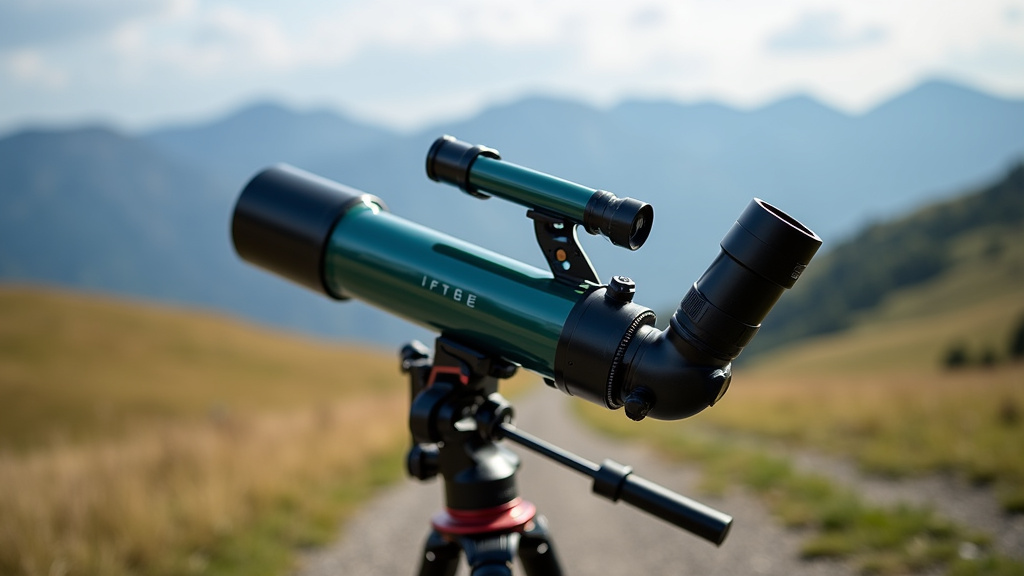
Mounts and Stability: The Unsung Hero
A great telescope with a wobbly mount is frustrating. The mount is what holds your telescope and allows you to point it at the sky. For travel, you need a mount that is stable yet lightweight.
Types of Travel Mounts
Many small refractors come with simple alt-azimuth mounts. These move up/down and left/right. They are easy to use. Some larger refractors or Dobsonians might use a tripod. Look for tripods that are sturdy but also pack down small.
Tabletop Dobsonians have their own integrated base. This base is generally very stable for its size. It allows smooth movement without complex parts. We found that a mount that is easy to adjust is key. You want to make fine movements without jarring the telescope.
Stability Matters for Sharp Views
A stable mount prevents vibrations. When you’re trying to focus on a distant planet, any shake is magnified. Think about a wobbly table at a restaurant. It’s hard to balance a drink on it. A telescope mount is similar.
We recommend looking for mounts that offer smooth motion control. This allows you to make precise adjustments. Even a slightly more expensive mount can be worth it if it provides better stability. Stability is often more important than the highest magnification number.
Accessories to Pack
Beyond the telescope itself, a few accessories can enhance your stargazing experience. You don’t need much for travel, but a few items are very useful.
- Eyepieces: Your telescope will likely come with one or two. Having a couple more with different magnifications can be helpful.
- Red Flashlight: This helps you see your gear without ruining your night vision. A regular white light is too bright for dark-adapted eyes.
- Star Chart or App: Knowing what you’re looking at makes it more fun. A simple planisphere or a smartphone app can guide you.
- Comfortable Chair: Stargazing can involve a lot of standing. A small folding chair makes it much more enjoyable.
Your Travel Telescope Checklist
Here’s a quick rundown of what to keep in mind:
- Weight: Aim for 10 pounds or less.
- Size: Should pack down compactly.
- Setup: Quick and easy (under 10 minutes).
- Mount: Stable and smooth to operate.
- Aperture: 70mm or larger is a good start.
- Durability: Built to withstand travel.
Conclusion
Finding the right travel telescope means focusing on what truly matters for stargazing on the go. You’ve learned that portability, lightweight design, and easy setup are more important than extreme magnification. Whether you choose a compact refractor or a tabletop Dobsonian, prioritize a stable mount and sufficient aperture for clear views. Your next step is to assess your travel style and budget. Then, choose a telescope that fits your needs and brings the wonders of the night sky closer, wherever your adventures take you.
Frequently Asked Questions
What is the most important feature for a travel telescope?
The most important feature for a travel telescope is undoubtedly portability. This means it should be lightweight, compact, and easy to pack and set up quickly. If it’s too cumbersome, you simply won’t use it on your trips.
Can I get good views of planets with a small travel telescope?
Yes, you can get good views of planets like Jupiter and Saturn with a travel telescope. While you won’t see as much detail as with a larger scope, you can observe Jupiter’s moons and Saturn’s rings, especially with apertures of 70mm or more.
How much magnification do I really need for a travel telescope?
For travel telescopes, more magnification isn’t always better. Aim for a useful maximum magnification around 100x to 150x. Higher powers can lead to shaky, blurry images, especially without a very stable mount.
Are tabletop Dobsonian telescopes good for travel?
Yes, tabletop Dobsonians are excellent for travel because they offer a great balance of aperture and portability. They are designed to sit on a flat surface, often require no separate tripod, and break down into manageable pieces.
What kind of accessories should I pack with my travel telescope?
For travel, pack a few essential accessories like extra eyepieces for different views, a red flashlight to preserve night vision, and a star chart or app to identify celestial objects. A small folding chair also adds significant comfort.