Is a 70mm Telescope Good for Beginners? What to Know
On this page (6 sections)
Yes, a 70mm telescope can be good for beginners, especially for viewing brighter objects like the Moon and planets. It offers a step up from smaller binoculars without being too overwhelming. You can expect to see clear details on the Moon and distinguish Jupiter’s largest moons.
While not powerful enough for faint deep-sky objects, a 70mm telescope is a great starting point for learning the night sky. It’s relatively portable and easy to set up, making stargazing accessible. Many beginners find this aperture size to be a satisfying balance of capability and simplicity.
- A 70mm telescope is generally good for beginners.
- It excels at viewing the Moon and bright planets.
- It’s portable and simple to use.
- It provides a good learning experience for new stargazers.
We’ve looked into what makes a telescope suitable for newcomers. Below, we’ll walk you through what you should know about starting your stargazing journey with a 70mm scope.
So, you’re looking to get into stargazing and wondering if a 70mm telescope is the right starting point. It’s a fair question! Lots of beginner scopes fall into this size category. We’ve looked into what makes a telescope a good choice for newcomers. Let’s break down what you can expect.
Getting Started with a 70mm Refractor Telescope
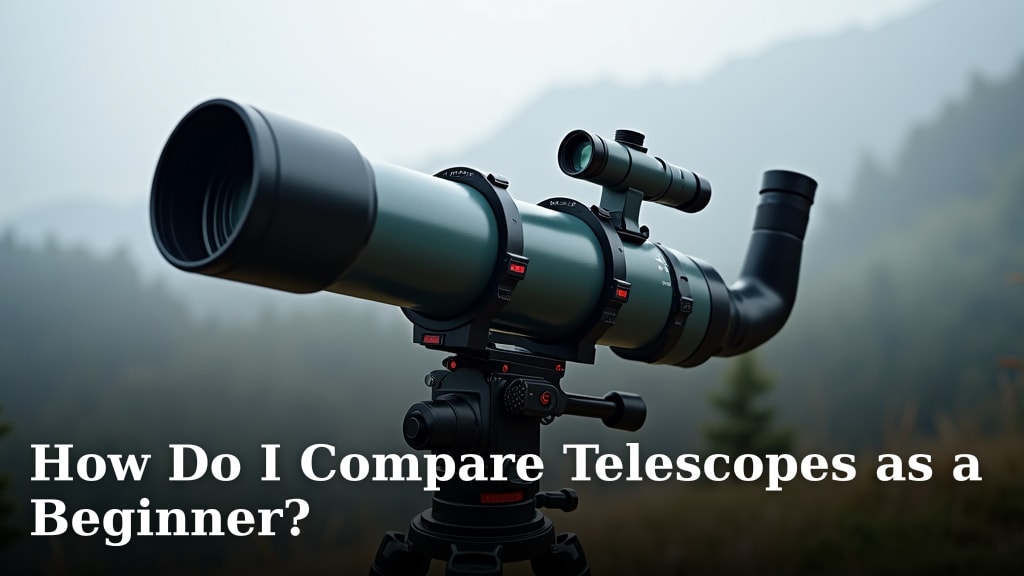
A 70mm telescope is generally considered a great first telescope for anyone curious about the night sky. It’s a type of refractor telescope, meaning it uses lenses to gather light and form an image. Think of it like a camera lens, but for looking at stars.
What Does “70mm” Actually Mean?
That “70mm” refers to the aperture of the telescope. Aperture is simply the diameter of the main lens or mirror. In a 70mm refractor, it’s the diameter of the front lens. A larger aperture means the telescope can collect more light. More light means you can see fainter objects and see brighter objects with more detail.
Light Gathering Power Explained
For a 70mm scope, the light-gathering ability is about 10,000 times more than your naked eye. This is a huge jump from just looking up. It’s enough to make a noticeable difference in what you can observe.
What Can You Actually See?
This is the exciting part! With a 70mm telescope, you can expect to see some amazing sights. The Moon is a favorite for a reason. You’ll see craters, mountains, and plains in stunning detail. It’s like looking at a black-and-white map brought to life.
Our Solar System Neighbors
Planets are another big draw. You can see the rings of Saturn, though they might appear small. Jupiter’s four largest moons, sometimes called the Galilean moons, will be visible as tiny dots next to the planet. You might even be able to make out cloud bands on Jupiter. Venus will show phases, similar to how our Moon does.
Beyond Our Planet
You can also observe brighter star clusters, like the Pleiades. These are groups of stars that are relatively close together. Some brighter nebulae, like the Orion Nebula, might appear as faint smudges. These are clouds of gas and dust where stars are born.
What You Won’t See (and Why That’s Okay!)
It’s important to set realistic expectations. A 70mm telescope isn’t powerful enough to see faint, distant galaxies or nebulae in great detail. These objects require much larger apertures to gather enough light. For example, seeing the Andromeda Galaxy as anything more than a faint glow requires a much bigger scope.
But don’t let that discourage you! For a beginner, focusing on brighter targets is the best way to learn. It helps you get comfortable with your telescope and the sky without feeling overwhelmed.
Pros and Cons: A 70mm Telescope for Newbies
Like any piece of equipment, a 70mm telescope has its advantages and disadvantages. Understanding these will help you decide if it’s the right fit for your stargazing journey.
The Good Stuff (The Pros)
- Portability: These scopes are generally lightweight and compact. You can easily carry them to a backyard, a local park, or even on a camping trip. Setup is usually quick, meaning less time fiddling and more time observing.
- Ease of Use: Most 70mm telescopes come with simple mounts. This makes them easy to point and track celestial objects. You won’t be wrestling with complicated equipment when you’re trying to find Jupiter.
- Affordability: Compared to larger or more complex telescopes, 70mm refractors are very budget-friendly. This is a major plus for beginners who don’t want to invest a lot of money before knowing if they’ll stick with the hobby.
- Good for Terrestrial Viewing: Many 70mm telescopes can also be used for daytime viewing. With the right adapter, you can use them like a spotting scope to look at birds or distant scenery.
Things to Consider (The Cons)
- Limited Deep-Sky Views: As mentioned, faint deep-sky objects are a challenge. If your main goal is to see distant galaxies and nebulae, you’ll eventually want a larger telescope.
- Magnification Limits: While you can increase magnification with different eyepieces, there’s a practical limit. Pushing magnification too high on a 70mm scope can result in dim, blurry images. You need a good balance.
- Chromatic Aberration (Sometimes): Some less expensive 70mm refractors can show color fringing, especially around bright objects. This is called chromatic aberration. More advanced versions use special glass to minimize this effect.
Key Features to Look For in a Beginner 70mm Telescope
When you’re shopping, a few things can make a big difference in your experience. These aren’t just about the 70mm aperture itself, but about the overall package.
The Mount Matters!
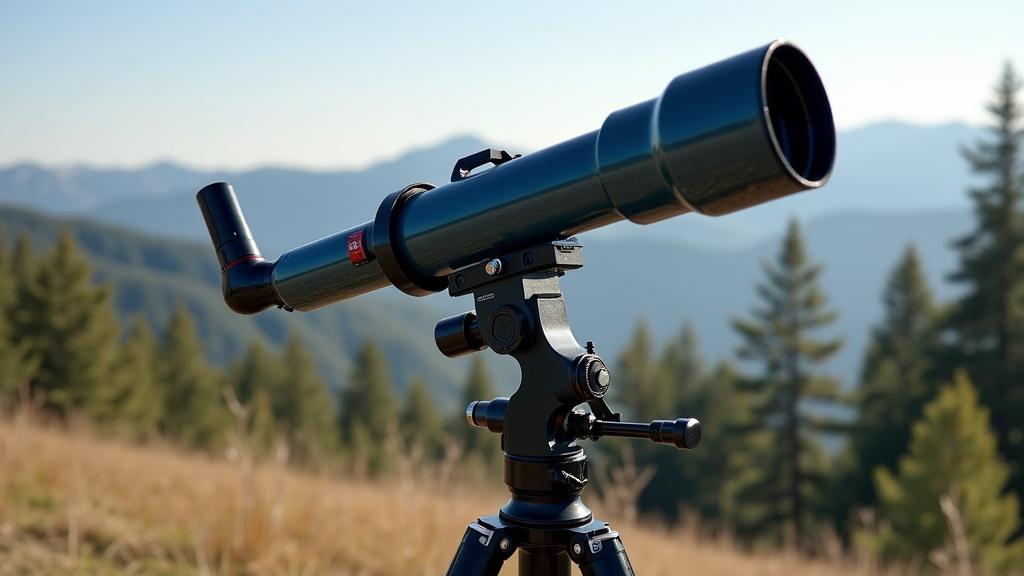
The mount is what holds your telescope and allows you to move it. For beginners, a simple alt-azimuth mount is often best. These move up/down and left/right. Some might have slow-motion controls to help you make fine adjustments.
Understanding Mount Types
An alt-azimuth mount is intuitive. It moves like a camera on a tripod. Equatorial mounts are more complex but track the sky more smoothly once aligned. For a 70mm scope, an alt-azimuth is usually perfectly adequate.
Eyepieces: Your Magnification Tools
Your telescope will come with eyepieces. These are the small tubes you look through. Different eyepieces give you different magnifications. A good starting set might include a low-power eyepiece (like 25mm) for wide views and a medium-power eyepiece (like 10mm) for more detail.
Eyepiece Quality
The quality of the eyepiece can impact the view. Basic eyepieces are fine to start. As you get more into the hobby, you might upgrade to better ones for sharper images. Many starter kits include two decent eyepieces.
Finder Scope: Your Navigation Aid
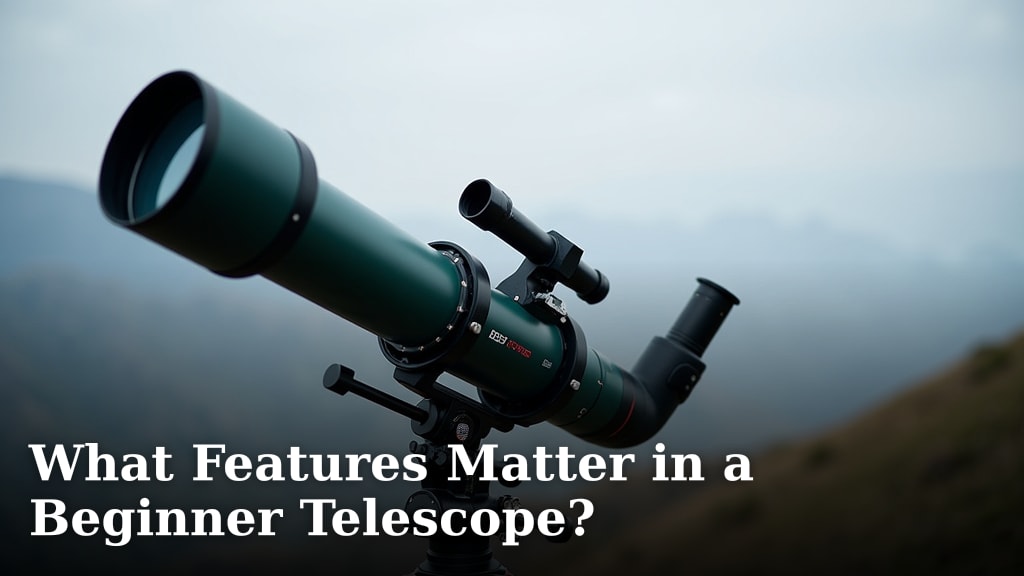
Finding faint objects can be tricky. A finder scope is a small, low-power telescope mounted on top of your main telescope. It helps you aim your main scope more easily. Some are simple red-dot finders, which project a red dot onto the sky.
Red-Dot vs. Optical Finders
Red-dot finders are very user-friendly. Optical finders look like tiny telescopes and offer a magnified view. Both work well to help you locate your targets.
Setting Realistic Expectations for Your First Year
Stargazing is a journey, not a race. Your first year with a 70mm telescope is about learning and discovery. You’ll get to know the Moon intimately. You’ll learn the names and locations of the brightest planets. You’ll start to recognize major constellations. Learning the names and locations of constellations is easier with a star chart.
Think of your 70mm telescope as your personal guide to the brighter parts of the cosmos. It’s the perfect tool for building fundamental stargazing skills. You’ll learn how to set up your equipment, how to find objects, and how to use different eyepieces. These are skills that will serve you well, no matter what size telescope you might get later on.
Here’s a quick checklist to help you remember the basics:
- Confirm aperture is 70mm.
- Check for a stable, easy-to-use mount.
- Ensure it comes with at least two eyepieces.
- Look for a helpful finder scope.
- Know what celestial objects you can expect to see.
- Remember that it’s a great learning tool!
Many beginners find that a 70mm telescope opens up a whole new world. It’s accessible, affordable, and provides plenty of rewarding views. It’s a solid choice for taking your first steps into the captivating universe above.
Conclusion
You’ve learned that a 70mm telescope is a fantastic starting point for your stargazing journey. It offers clear views of the Moon and bright planets, and its portability and ease of use make learning the night sky enjoyable. While it won’t show you faint galaxies, it’s the perfect tool to build essential skills. Ready to start looking up? Consider purchasing a 70mm refractor telescope with a stable mount and a couple of good eyepieces to begin your cosmic adventures.
Frequently Asked Questions
Can a 70mm telescope see stars other than the ones that look like dots?
Yes, a 70mm telescope can reveal more than just single stars. You’ll be able to see star clusters, which are groups of stars that appear close together. Some brighter nebulae, like the Orion Nebula, may also show up as faint, fuzzy patches.
Is a 70mm telescope good for viewing the International Space Station (ISS)?
Viewing the ISS with any telescope is challenging due to its speed and brightness. A 70mm scope might catch a glimpse if you’re lucky and it’s passing overhead at a good angle, but it’s not its primary strength.
Will I need special filters for a 70mm telescope?
For viewing the Moon and planets with a 70mm telescope, special filters are generally not required for beginners. You might consider a light pollution filter if you observe from a very bright area, but it’s not essential to start.
How much magnification can I realistically use with a 70mm telescope?
While you can technically use high magnifications, the practical limit for a 70mm telescope is typically around 100x to 140x. Pushing magnification much higher will usually result in dim and blurry images that are hard to see clearly.
Can a 70mm telescope be used for astrophotography?
Basic astrophotography of the Moon and brighter planets is possible with a 70mm telescope, but it requires extra equipment like a T-ring and adapter. Capturing detailed images of fainter objects is generally beyond the capability of this aperture size.