Is a Bigger Telescope Always Better? What to Know
On this page (8 sections)
- How Big Should Your Telescope Be? Weighing the Options
- Aperture: The Heart of Your Telescope
- Portability and Ease of Use: Don’t Underestimate These
- Your Viewing Location: Light Pollution and More
- Types of Telescopes and Their Size Considerations
- Making Your Choice: A Practical Checklist
- Conclusion
- Frequently Asked Questions
No, a bigger telescope isn’t always better for everyone. While larger apertures gather more light and show fainter objects, they can also be more challenging to use. Your personal needs and viewing goals matter most when picking the right telescope size.
Choosing a telescope involves balancing aperture size with practical considerations. A bigger telescope might seem like the obvious choice for seeing distant galaxies. But factors like portability, ease of setup, and even your budget play a huge role in your overall enjoyment.
- Bigger telescopes gather more light.
- They can show fainter objects in space.
- Larger telescopes are often heavier and harder to move.
- Consider your storage and transport needs.
- Your viewing location also matters.
We found that understanding these trade-offs can help you make the best choice. Let’s walk through what to consider when deciding if a bigger telescope is truly the right fit for you.
How Big Should Your Telescope Be? Weighing the Options
You’re probably wondering if bigger is always better with telescopes. We’ve looked into it, and the short answer is no. While a larger aperture can certainly show you more, it comes with trade-offs you need to consider.
The main benefit of a larger telescope is its light-gathering ability. Think of it like a bucket collecting rainwater. A bigger bucket catches more rain. Similarly, a telescope with a larger lens or mirror (its aperture) collects more light from faint celestial objects. This means you can see fainter stars, nebulae, and galaxies that a smaller telescope would miss.
However, size isn’t everything. There are other important factors to think about before you buy. We found that managing expectations and understanding your personal situation is key.
Aperture: The Heart of Your Telescope
The aperture is the diameter of the telescope’s main lens or mirror. It’s the most important specification because it determines how much light the telescope can gather. More light means brighter images and the ability to see fainter details.
What Aperture Can Do For You
For example, a 4-inch telescope might show you the four largest moons of Jupiter as tiny dots. But a 10-inch telescope could reveal Jupiter’s cloud bands and the Great Red Spot. Similarly, you might see a fuzzy patch where the Andromeda Galaxy is with a small telescope. A larger one can reveal its spiral arms and star-forming regions.
We found that for deep-sky objects like galaxies and nebulae, aperture makes a noticeable difference. If your primary goal is to see these faint wonders, a larger aperture is generally a good thing.
The Limits of Aperture
But here’s the catch: aperture is directly related to the telescope’s size and weight. A telescope with a 10-inch mirror is much larger and heavier than one with a 4-inch mirror. This is where the “bigger isn’t always better” idea really comes into play.
We also found that the “seeing” conditions – atmospheric turbulence – can limit how much detail a large aperture can resolve. On nights with shaky air, a smaller, steadier image might be more pleasing than a large, blurry one. Many astronomers suggest that aperture fever can sometimes lead people to buy more telescope than they can effectively use.
Portability and Ease of Use: Don’t Underestimate These
This is where a bigger telescope can become a real challenge. Think about what you’ll be doing with your telescope. Will it live in your backyard, or will you need to carry it to a dark sky site? These questions are critical.
Weight and Size Matters
A small 60mm or 70mm refractor telescope can often fit in a backpack. You can easily take it to a park or a friend’s house. Compare that to a 10-inch Dobsonian telescope. These can weigh 50 pounds or more and are quite bulky.
We found that if you have to wrestle with your telescope every time you want to use it, you’re less likely to use it at all. Setting up should be quick and easy. Otherwise, the experience can become more of a chore than a joy. Consider your physical strength and how much effort you’re willing to put in.
Storage and Transport
Where will you keep your telescope when you’re not using it? A large telescope requires significant storage space. Do you have a garage, a large closet, or a dedicated spot?
Transporting a big telescope can also be difficult. You might need a larger vehicle, and careful packing is needed to prevent damage. For many people, a more portable telescope is a better practical choice, even if it means sacrificing a bit of light-gathering power.
Your Viewing Location: Light Pollution and More
Where you plan to do most of your stargazing is a huge factor. We found that the environment around you significantly impacts what you can see.
Dealing with Light Pollution
If you live in a city or suburban area, you’re likely dealing with significant light pollution. This artificial light washes out faint celestial objects. While a larger aperture telescope gathers more light, it also gathers more of this stray light. This can make faint objects appear even more washed out.
For heavily light-polluted areas, a telescope with a moderate aperture, perhaps 4-6 inches, can still provide great views of planets and brighter deep-sky objects. We found that sometimes, contrast is more important than sheer brightness when fighting light pollution. Specialized filters can help, but they work best with telescopes that aren’t overwhelmed by too much light.
Open Skies vs. Backyard
If you have access to truly dark skies away from city lights, a larger aperture telescope really shines. That extra light-gathering power is put to its best use. You’ll be able to see fainter galaxies, nebulae, and star clusters that are invisible from brighter locations.
We found that a telescope’s performance is a combination of its aperture, optical quality, and the viewing conditions. Even the biggest telescope won’t show you faint details if the sky itself is too bright or turbulent.
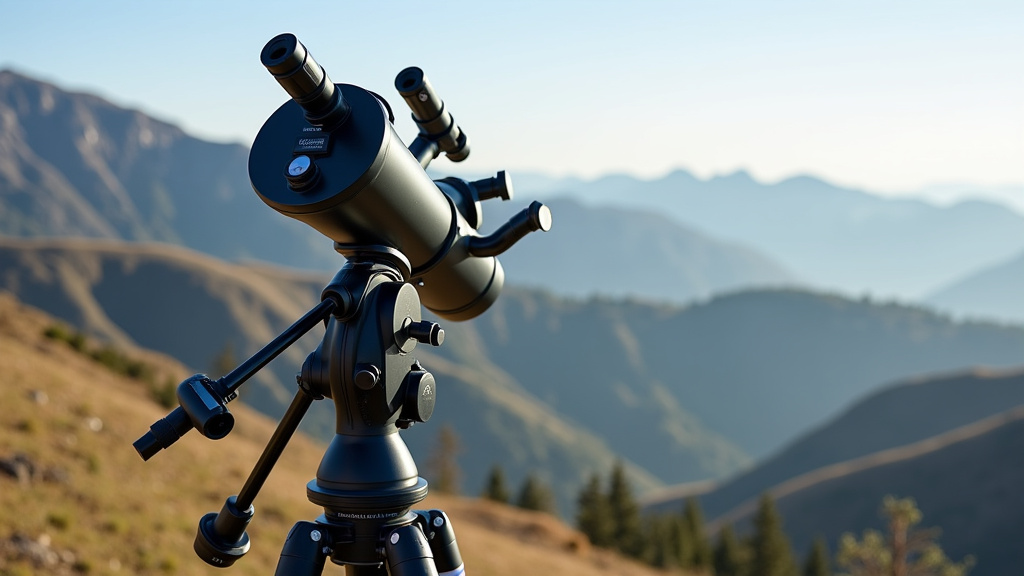
Types of Telescopes and Their Size Considerations
Different telescope designs have different size and portability characteristics. This is an important distinction to make when thinking about what’s best for you.
Refractors: Sharp Views, Bigger Price
Refracting telescopes use lenses to gather light. Smaller refractors (like 70mm or 80mm) are very portable and excellent for terrestrial viewing and brighter celestial objects like the Moon and planets. As refractors get larger (e.g., 100mm or 120mm), they become quite long, heavy, and expensive.
We found that the longer focal length of larger refractors can make them unwieldy. They often require sturdy equatorial mounts to handle the weight and stability needs. For most beginners, smaller refractors are a good starting point.
Reflectors: More Aperture for Your Buck
Reflecting telescopes use mirrors. Dobsonian reflectors are a very popular type. They offer the most aperture for the money and are generally simpler in design. A 6-inch or 8-inch Dobsonian is a common choice for many amateur astronomers.
However, we found that larger Dobsonian reflectors (10 inches and up) can be quite cumbersome. They sit low to the ground and require a large mount called a “rocker box.” While they gather incredible amounts of light, their size and weight are their primary drawbacks for portability.
Catadioptric Telescopes: Compact Powerhouses
These telescopes, like Schmidt-Cassegrains and Maksutov-Cassegrains, use a combination of mirrors and lenses. They offer a long focal length in a relatively compact tube. This makes them powerful for planetary and deep-sky viewing while being more portable than similarly sized refractors or Dobsonians.
We found that while they offer a good balance, they can also be more complex and costly than basic reflectors. Their apertures typically range from 4 to 14 inches, and larger models still require careful handling and sturdy mounts.
Making Your Choice: A Practical Checklist
Before you decide, let’s recap what’s most important for you. We recommend considering these points:
- Do you need to move your telescope often?
- How much storage space do you have available?
- What is your budget for the telescope and accessories?
- How much time are you willing to spend setting up?
- What is your typical viewing location like (city, suburbs, dark sky)?
- What types of objects do you most want to see (planets, galaxies, nebulae)?
Many astronomy guides suggest that a telescope in the 4-inch to 8-inch aperture range offers a fantastic balance for most beginners and intermediate observers. We found this to be a commonly held piece of advice because it provides good views without being overly difficult to manage.
| Telescope Size (Aperture) | Portability | Light Gathering | Ease of Use | Best For |
|---|---|---|---|---|
| 2-3 inches (Refractor) | Excellent (Backpackable) | Low (Planets, Moon, Bright Stars) | Very Easy | Beginners, Travel, Terrestrial |
| 4-6 inches (Reflector/Dobsonian) | Good (Manageable Size) | Moderate (Planets, Brighter Deep Sky) | Easy | Most Beginners, General Observing |
| 8-10 inches (Reflector/Dobsonian) | Fair (Can be Heavy/Bulky) | High (More Faint Objects) | Moderate (Setup Takes Time) | Dedicated Observers, Darker Skies |
| 12+ inches (Reflector/Dobsonian) | Poor (Very Heavy/Bulky) | Very High (Faintest Objects) | Challenging (Requires Practice) | Advanced Amateur Astronomers, Dark Sites |
We found that this table summarizes the general trends. Your personal needs may shift these recommendations slightly. Remember, the best telescope is the one you’ll actually use!
Conclusion
So, is a bigger telescope always better? As you’ve seen, the answer is a clear no. While larger apertures offer impressive views of faint objects, they come with significant trade-offs in portability, ease of use, and even your specific viewing location. We found that the “best” telescope is truly the one that fits your lifestyle and viewing goals. Don’t get caught up in aperture fever; focus on what you can realistically manage and enjoy. Your next step is to honestly assess your personal needs and budget, then choose a telescope that will bring you joy, not frustration.
Frequently Asked Questions
What’s the biggest downside to a larger telescope?
The main challenge with larger telescopes is their weight and bulk. They can be difficult to transport, set up, and store. If you have to struggle with your telescope every time you want to use it, you’re less likely to go stargazing often. We found that portability is often overlooked but is essential for regular use.
Can a smaller telescope still show me cool things?
Absolutely! Smaller telescopes, especially good quality refractors or 4-6 inch reflectors, can provide stunning views of the Moon, planets like Jupiter and Saturn, and brighter star clusters. We found that for beginners or those in light-polluted areas, a smaller, more manageable telescope can be very rewarding.
How does light pollution affect my telescope choice?
If you live in a city or suburban area with lots of artificial light, a huge aperture telescope might not perform as well as you’d hope. That extra light-gathering power can also collect more of the skyglow, washing out faint details. We found that a moderate aperture telescope with good contrast can often be a better choice when fighting light pollution.
Should I prioritize portability over aperture?
That’s a personal decision! If you plan to travel to dark sky sites or have limited storage space, portability is key. You might sacrifice some faint object detail, but you’ll gain the ability to use your telescope more often. We found that many astronomers suggest starting with a telescope that’s easy to handle and upgrade later if needed.
What’s a good general recommendation for a beginner’s telescope size?
For most beginners, a telescope with an aperture between 4 and 8 inches offers a great balance. This size range provides good views of a variety of celestial objects without being overly cumbersome. We found this to be a common recommendation because it balances performance with practicality for many new observers.