What Is the Ideal First Telescope? What to Know
On this page (9 sections)
The ideal first telescope is typically a refractor or reflector telescope with an aperture of at least 70-100mm. These sizes offer a good balance of portability and capability for viewing planets and brighter deep-sky objects without breaking the bank. Many experts suggest starting with a telescope that is easy to set up and use.
Choosing your first telescope can feel like a big decision. You want something that shows you amazing sights but isn’t so complicated it ends up collecting dust. We found that simplicity and clear optics are key for beginners. Focusing on a telescope that lets you easily see the moon’s craters and Jupiter’s moons is a great starting point.
- The best first telescope is usually a 70-100mm refractor or reflector.
- Prioritize ease of use and setup for a positive experience.
- Look for models that show details on the moon and planets well.
- Avoid overly complex or large telescopes for your initial purchase.
Below, we’ll walk through exactly what makes a telescope a great starting point and what to look for as you begin your stargazing journey. To help you find these objects, our guide to what is a star chart explains how to use one.
Your First Telescope: What to Look For
Choosing your first telescope is an exciting step toward exploring the night sky. You want a telescope that’s easy to use and shows you clear, detailed views. We’ve found that focusing on a few key features will help you make a great choice. This guide will help you understand what makes a telescope ideal for beginners.
Telescope Types for Beginners
When you start looking at telescopes, you’ll notice two main types: refractors and reflectors. Both can be excellent choices for your first instrument. The best one for you depends on what you plan to observe and how portable you need it to be.
Refractor Telescopes: Clear and Simple
Refractor telescopes use lenses to gather and focus light. Think of them like a very powerful magnifying glass. They are often chosen for their sharp images and low maintenance. Because they are sealed, dust and air currents inside the tube don’t affect the view as much.
Refractors are great for viewing the Moon and planets. You’ll be able to see craters on the Moon and the bands on Jupiter clearly. Many experts suggest that smaller refractors are very beginner-friendly. They are also generally robust and don’t require much alignment before use.
Reflector Telescopes: Bigger Views for Your Buck
Reflector telescopes use mirrors to gather and focus light. They are often less expensive than refractors of the same size. This means you can often get a reflector with a larger aperture (the main mirror’s diameter) for your money. A larger aperture collects more light, allowing you to see fainter objects.
For beginners, reflector telescopes, especially Newtonians, can offer a lot of observing power. They are excellent for looking at star clusters and nebulae in addition to planets. We found that larger reflectors are wonderful for deep-sky objects but can sometimes require a bit more setup.
Key Features for Your First Telescope
Beyond the type of telescope, several other features are important for a good first experience. These include aperture, focal length, and mount type. Getting these right will make your stargazing adventures more enjoyable and less frustrating.
Aperture: The Most Important Number
The aperture of a telescope is its most critical specification. It refers to the diameter of the main lens (in a refractor) or mirror (in a reflector). Aperture determines how much light the telescope can gather. More light means brighter and more detailed images. For a first telescope, we recommend an aperture of at least 70mm to 100mm.
A 70mm refractor or an 80-100mm reflector is a fantastic starting point. These sizes are large enough to show you impressive details on the Moon and planets. They also strike a good balance between performance and portability. You won’t be overwhelmed by a huge instrument.
Focal Length and Magnification
The focal length is the distance from the main lens or mirror to the point where light is focused. It affects the magnification you can achieve. Magnification tells you how much larger an object will appear.
While higher magnification sounds better, it’s not always the case for beginners. Too much magnification can make the image blurry and shaky, especially if the telescope is small or the night is unsteady. It’s more important to have a telescope with good light-gathering ability (aperture) and a stable mount.
Most telescopes come with a couple of eyepieces. These eyepieces, combined with the telescope’s focal length, determine the magnification. You can calculate magnification by dividing the telescope’s focal length by the eyepiece’s focal length. For example, a 1000mm telescope with a 25mm eyepiece gives you 40x magnification (1000 / 25 = 40).
The Mount: Stability is Key
The mount is the part of the telescope that holds it up and allows you to point it at the sky. For beginners, a stable and easy-to-use mount is crucial. A wobbly mount will make it very difficult to keep your target in view, especially at higher magnifications.
There are two main types of mounts: Alt-Azimuth and Equatorial.
- Alt-Azimuth Mounts: These move up-down (altitude) and left-right (azimuth). They are generally simpler to operate and are often found on smaller, more portable telescopes. Many computerized telescopes also use this type of mount.
- Equatorial Mounts: These are designed to track celestial objects as the Earth rotates. One axis needs to be aligned with the celestial pole. While powerful for astrophotography, they can be more complex for beginners to set up and use.
What Can You Actually See?
It’s natural to wonder what amazing sights await you. With a good beginner telescope, the Moon is an absolute showstopper. You can see craters, mountains, and valleys in stunning detail. It’s like looking at a black-and-white photograph that’s incredibly sharp.
Planets are also excellent targets. You can see the phases of Venus, the rings of Saturn, and the moons of Jupiter. Observing Jupiter’s four largest moons, the Galilean moons, is a common first experience for new astronomers. They appear as tiny dots of light near the planet.
Beyond the solar system, brighter deep-sky objects like the Orion Nebula and the Andromeda Galaxy are within reach for telescopes in the 70-100mm range. These will appear as faint, fuzzy patches of light, but seeing them with your own eyes is still incredibly rewarding. Many sources, like astronomy guides, confirm these are achievable targets.
Portability and Ease of Use: Don’t Overcomplicate Things
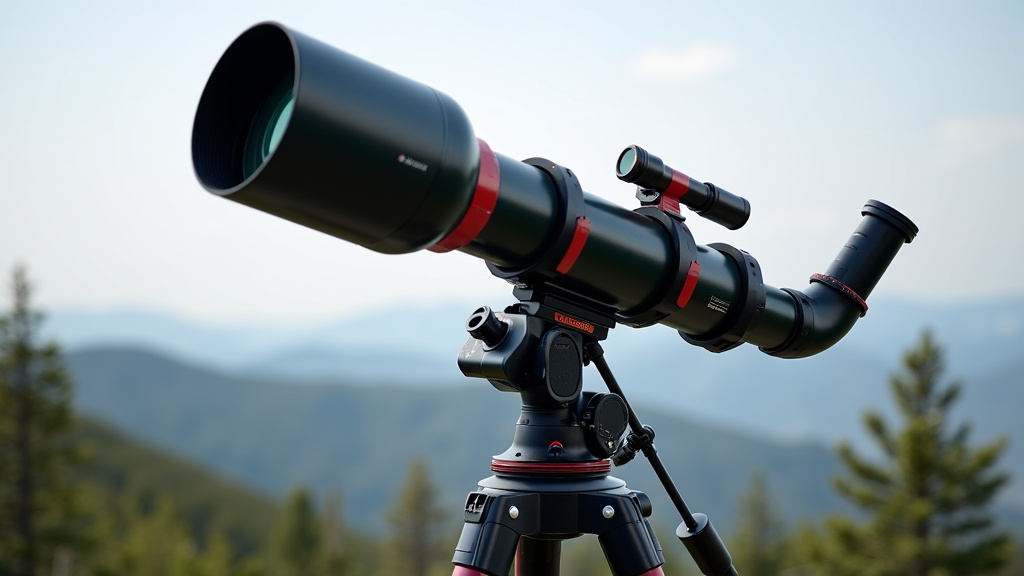
Your first telescope should be something you’re excited to take out and use. If it’s too big, too heavy, or too complicated to set up, it’s more likely to end up in a closet. We found that portability and ease of setup are critical for keeping that initial enthusiasm alive.
Smaller refractors and tabletop reflectors are often great options because they are compact and can be set up quickly. You want to spend more time looking at the stars and less time fiddling with equipment. Research suggests that beginner frustration often stems from difficult-to-use gear.
What to Avoid in Your First Telescope
There are some common pitfalls for new telescope buyers. You might see telescopes advertised with incredibly high magnifications, like 500x or more. Resist this temptation! Very high magnification often leads to blurry, unstable images with small telescopes. It’s a marketing tactic, not a practical feature.
Also, be wary of telescopes that look more like toys than scientific instruments. Cheaply made telescopes with plastic parts and poor optics will lead to disappointment. Stick to reputable brands known for producing quality beginner equipment. We recommend avoiding anything that seems too good to be true for the price.
Putting It All Together: Your Checklist
Here’s a quick checklist to help you choose your ideal first telescope:
- Aperture: Aim for at least 70mm for refractors or 80-100mm for reflectors.
- Type: Refractors for sharp planetary views, reflectors for better deep-sky views for the money.
- Mount: Choose a sturdy, easy-to-use Alt-Azimuth mount.
- Portability: Make sure it’s light enough and simple enough to set up quickly.
- Reputation: Stick to well-known brands that offer good quality for beginners.
- Magnification: Focus on aperture and mount; don’t be fooled by extremely high numbers.
Conclusion
Choosing your first telescope doesn’t have to be complicated. We’ve found that focusing on a good aperture (70-100mm) and a stable, easy-to-use mount are your most important guides. Whether you choose a refractor for sharp planetary views or a reflector for deeper sky objects, the key is selecting an instrument that’s portable and simple to set up. This ensures you’ll spend more time enjoying the wonders of the night sky. Ready to start stargazing? Look for reputable brands offering these beginner-friendly features and take the next step towards your cosmic adventures.
Frequently Asked Questions
What’s the biggest mistake beginners make when buying a telescope?
A common mistake is being drawn in by extremely high magnification claims. While tempting, very high magnification often results in blurry, unstable images with smaller telescopes. We’ve found it’s more important to prioritize aperture and a sturdy mount for clear views.
How much should I expect to spend on a good first telescope?
You can find excellent beginner telescopes for around $200 to $500. This price range typically offers a good balance of aperture, build quality, and a stable mount. While cheaper options exist, they often compromise on optical performance or durability.
Can I see planets like Saturn’s rings with a beginner telescope?
Yes, with a telescope of 70-100mm aperture, you can definitely see Saturn’s rings! You’ll also be able to view Jupiter’s moons and cloud bands, and the craters on our Moon. These are fantastic targets for your first astronomical observations.
Do I need a very dark sky to use a beginner telescope?
While darker skies are always better for viewing faint objects, you can still have a great experience with a beginner telescope even in suburban areas. The Moon and planets are bright enough to be seen even with some light pollution. Focusing on these bright targets is a great way to start.
Is a computerized telescope better for a beginner?
Computerized telescopes can be convenient, but they also add complexity and cost. For your very first telescope, we often recommend a simpler manual Alt-Azimuth mount. This helps you learn the sky and telescope operation more intuitively before moving to more advanced options.