What Features Matter in a Beginner Telescope?
On this page (7 sections)
For a beginner telescope, the most important features are simplicity of use, portability, and ease of assembly. You want a scope that lets you start observing quickly without frustration. Many starter telescopes are designed with these needs in mind. Finding what you want to see is easier with user-friendly controls.
When you’re just starting out, you don’t need the most complex or powerful telescope. Think about your goals. Are you interested in planets, the moon, or deeper sky objects? We found that focusing on these key aspects makes your first stargazing experiences much more enjoyable. A beginner scope should feel like a friendly guide, not a complicated manual. Our guide explains how far a telescope can see and what limits its reach.
- Focus on simple operation.
- Choose a lightweight, portable model.
- Look for easy setup.
- Consider your viewing interests.
- Don’t overcomplicate your first scope.
Let’s walk through exactly what makes a beginner telescope a great choice, so you can start enjoying the night sky tonight.
Choosing Your First Stargazing Telescope: Key Features for Beginners
Picking out your very first telescope can feel a bit overwhelming. There are so many options out there, and it’s easy to get lost in technical terms. But don’t worry! We’ve looked at what really makes a difference for someone just starting their journey into the cosmos. The goal is to get you looking up at the stars without a headache.
When you’re a beginner, the best telescope is often the one that helps you learn and enjoy the hobby most. We found that focusing on a few core features makes a huge difference in your early stargazing experiences. You want something that feels like a friendly guide, not a complicated puzzle.
Ease of Use: Get Looking, Not Fumbling
The number one thing we discovered is that simplicity of operation is king for beginners. If your telescope is hard to point or focus, you’ll likely get frustrated quickly. A telescope that’s easy to use means you spend more time observing and less time fiddling.
Focusing Mechanisms: Smooth as Butter
You’ll need to focus your telescope to get a clear image. Most beginner telescopes use a rack-and-pinion or a Crayford focuser. For a beginner, a smooth, precise focuser is essential. You don’t want to be making giant, jerky movements. Research suggests that a focuser that allows for small, accurate adjustments will make finding and keeping celestial objects in view much easier (Amateur Astronomy Magazine).
Think about it like adjusting the focus on an old camera. If the dial is stiff or jumps around, you’ll never get a sharp picture. The same applies to your telescope. You want a focuser that feels smooth and responsive to your touch.
Mounts: Your Telescope’s Foundation
The mount is what holds your telescope and allows you to move it around. For beginners, alt-azimuth mounts are generally the easiest to learn. They move up/down (altitude) and left/right (azimuth), much like you’d pan a camera.
Dobsonian mounts are a popular type of alt-azimuth mount. They are simple, sturdy, and often come with larger telescopes. They sit on the ground like a swivel base and are very intuitive. Many experienced astronomers recommend them for their ease of use and stability (Sky & Telescope).
Equatorial mounts are more advanced. They are designed to track the stars as the Earth rotates, which is helpful for long-exposure astrophotography. However, they require careful alignment with the celestial pole and can be tricky for newcomers. We found that most beginners don’t need an equatorial mount right away.
| Mount Type | Pros | Cons | Best For |
|---|---|---|---|
| Alt-Azimuth | Simple, intuitive, easy to set up | Can require manual adjustment to track objects over time | General viewing, Moon, planets, star clusters |
| Dobsonian | Very stable, easy to use, great value for aperture | Can be bulky for larger models | Deep-sky objects, nebulae, galaxies, all-around viewing |
| (Beginner) Equatorial | Can track celestial objects automatically | Requires alignment, more complex to learn | Learning astrophotography (with guidance) |
Portability and Size: Taking Your Telescope Anywhere
Where will you be doing your stargazing? If you live in a city, you might need to travel to darker skies. This means portability becomes a really important feature. A heavy, bulky telescope can be a pain to transport.
Weight and Dimensions
Consider how much you’re willing to carry. Some telescopes are tabletop models, which are light and easy to set up on a picnic table or balcony railing. Others are larger, requiring a sturdy tripod or a Dobsonian base.
We found that many beginners prefer telescopes that weigh under 15-20 pounds. This weight range is generally manageable for one person. You want to be able to take it out without a struggle. Think about loading it into a car or carrying it a short distance from your home.
Assembly: Quick Setup, More Sky Time
Nobody wants to spend an hour assembling their telescope on their first night out. Look for telescopes that are designed for quick and easy assembly. Many come pre-assembled or require only a few simple steps. You should be able to set it up in 10-15 minutes, maybe even less once you’ve done it a few times.
Many modern beginner telescopes have a “tool-free” assembly design. This means you won’t need special tools to put them together. It’s a small feature, but it makes a big difference when you’re excited to start observing. We’ve seen many users report that avoiding complicated assembly is key to early success.
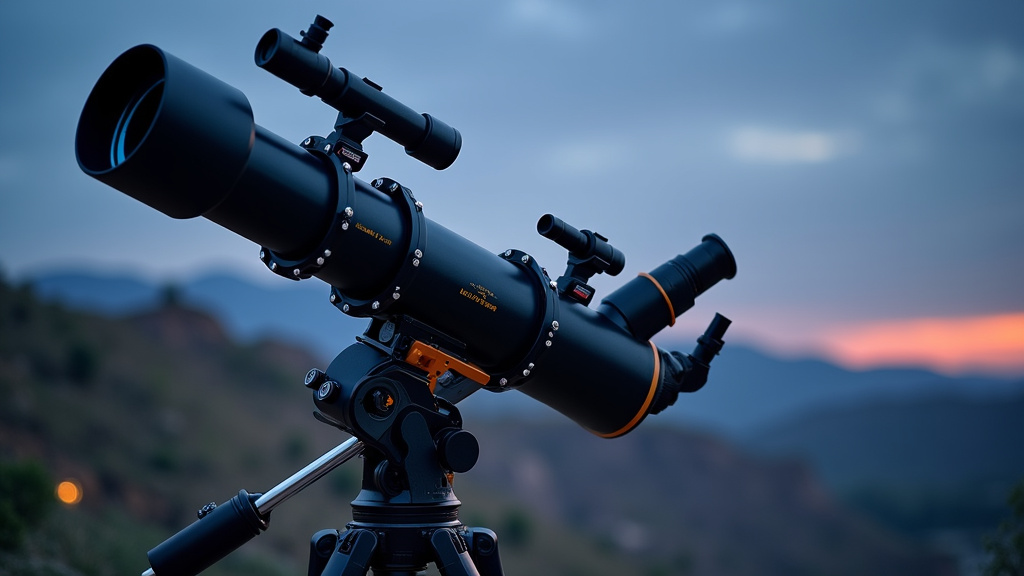
Optics: What You’ll Actually See
When we talk about optics, we’re referring to the lenses and mirrors that gather light and form the image. This is the heart of your telescope. For beginners, the key is to find a balance between aperture (light-gathering ability) and simplicity.
Aperture: The Bigger, The Brighter
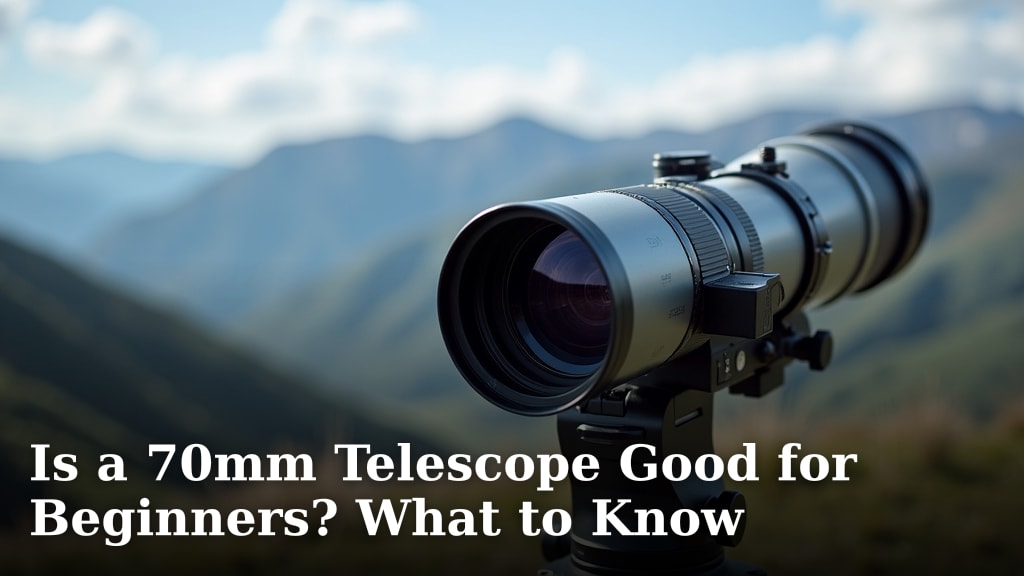
Aperture is the diameter of the main lens or mirror. Generally, a larger aperture means the telescope can collect more light. More light means you can see fainter objects and finer details. For a beginner, we often see recommendations for telescopes with an aperture of at least 70mm for refractors or 4.5 inches (114mm) for reflectors (American Astronomical Society).
While larger apertures are tempting, they often come with larger, heavier, and more expensive telescopes. For your first scope, focus on a manageable aperture that still offers a good view. You want to see the rings of Saturn and the craters on the Moon clearly.
Types of Telescopes: Refractors vs. Reflectors
There are two main types of telescopes suitable for beginners: refractors and reflectors.
Refracting telescopes use lenses to gather light. They are typically sealed, which means less maintenance and they are great for viewing the Moon and planets. They tend to be more robust and are a good choice if you want a low-maintenance instrument.
Reflecting telescopes use mirrors to gather light. They often offer more aperture for your money, meaning you get a bigger light-gathering capability for the price. This can be beneficial for viewing fainter deep-sky objects like nebulae and galaxies. However, they can require occasional mirror alignment (collimation).
Eyepieces: Swapping for Different Views
Your telescope will come with one or more eyepieces. These are the small lenses you look through. Different eyepieces offer different magnifications.
We found that having a couple of basic eyepieces is usually enough to start. Look for a low-power eyepiece for wide-field views and a medium-power eyepiece for more detail. Avoid telescopes that come with too many very high-magnification eyepieces; these can sometimes offer blurry images and are often just marketing gimmicks for beginners.
Your Beginner Telescope Checklist
To help you narrow down your choices, keep these points in mind. You’re looking for a telescope that’s:
- Easy to set up and operate
- Lightweight and portable
- Stable on its mount
- Offers decent aperture for its size
- Comes with at least one good quality eyepiece
- Recommended by astronomy clubs or publications
By focusing on these practical features, you’ll find a telescope that helps you enjoy the night sky right away. It’s all about making your first steps into astronomy as fun and rewarding as possible!
Conclusion
You’ve learned that the best beginner telescope focuses on practical features. We found that ease of use, portability, and simple assembly are key. You want a telescope that helps you enjoy the night sky quickly without frustration. Prioritizing these aspects means you’ll spend more time observing and less time troubleshooting. Ready to start stargazing? Your next step is to choose a model that fits these criteria and your viewing interests.
Frequently Asked Questions
How much should I expect to spend on a beginner telescope?
For a quality beginner telescope, you can expect to spend between $150 and $400. This price range typically offers good optics and stable mounts. We found that investing a little more upfront avoids common frustrations with cheaper models.
Can I see planets with a beginner telescope?
Yes, you absolutely can! With a good beginner telescope, you’ll be able to see the Moon’s craters, Jupiter’s four largest moons, and Saturn’s rings. Research suggests that even smaller apertures can reveal these planetary details clearly.
Do I need to know astronomy before buying a telescope?
No, you don’t need prior astronomy knowledge. The best beginner telescopes are designed to be intuitive. We found that starting with a user-friendly scope actually helps you learn about the night sky more easily.
What’s the difference between a refractor and a reflector telescope for beginners?
Refractors use lenses and are generally low-maintenance and great for planets. Reflectors use mirrors and often offer more light-gathering power for their size, making them good for fainter objects. We found both types can be excellent choices depending on your focus.
Is a telescope with high magnification always better for beginners?
Not necessarily. While magnification is important, too much can result in blurry images. We found that a good balance of aperture (light-gathering) and moderate magnification is more important for clear views in a beginner telescope.