What Size Telescope Is Good for Beginners?
On this page (6 sections)
For beginners, a telescope between 70mm and 90mm is usually a great starting point. This size offers a good balance of light-gathering ability and portability. You’ll be able to see plenty of celestial sights without feeling overwhelmed by a huge instrument. It’s a smart choice for your first adventure into stargazing.
When you’re just starting out, you want a telescope that’s easy to set up and use. A smaller aperture means less weight and simpler mechanics. This allows you to focus more on enjoying the night sky rather than wrestling with complicated gear. We found that this size range provides excellent views of the moon and planets.
- Smaller apertures (70-90mm) are best for beginners.
- They offer a good mix of performance and ease of use.
- You can see the Moon, planets, and brighter star clusters.
- It’s a manageable size for transport and setup.
Let’s walk through exactly what makes this size ideal and what you can expect to see.
Choosing Your First Telescope: Aperture Matters
When you’re starting out with stargazing, understanding To help you identify these objects, consider learning to use a star chart.telescope size is key. The most important measurement is the aperture. This is the diameter of the main lens or mirror. It determines how much light the telescope can gather. More light means brighter, more detailed views of celestial objects. For beginners, we found that a sweet spot exists.
Telescopes with an aperture between 70mm and 90mm are often recommended. This range offers a fantastic balance. You get enough light-gathering power to see a good amount. You also get a telescope that’s not too bulky or heavy. This makes it much easier to set up and take outside on a clear night.
Think of aperture like the pupil of your eye. A larger pupil lets in more light, letting you see better in the dark. A telescope’s aperture works the same way for distant stars and planets. A 70mm scope lets in more light than a 50mm scope. A 90mm scope lets in even more. This extra light is what makes fainter objects visible.
Why Aperture Size Is Your Best Friend
Many astronomy guides suggest starting with a moderate aperture. We’ve looked at many recommendations, and they consistently point to this range for newcomers. Why? Because it’s a practical choice for learning the night sky. A telescope that’s too large can be cumbersome. It might end up gathering dust because it’s hard to manage.
A 70mm to 90mm telescope typically provides enough power. You can see the craters on the Moon clearly. You can also make out the rings of Saturn. Jupiter’s largest moons often appear as tiny dots. Even some of the brighter star clusters and nebulae can be spotted. This is more than enough to spark your wonder and keep you looking up.
When we researched, we found that this aperture range avoids the most common beginner pitfalls. You aren’t spending hours trying to set up a giant tube. You aren’t struggling with shaky mounts that make viewing impossible. It’s designed to get you observing quickly. This is vital for keeping that initial excitement alive (Sky & Telescope).
What Can You Actually See With a 70-90mm Telescope?
Let’s get down to what your eyes will be treated to. The lunar surface is a primary target for any new telescope. You’ll be amazed at the details you can see. Craters, mountains, and plains become distinct features. You can even watch the terminator – the line between light and shadow – crawl across the Moon. It’s a dynamic view every night.
The planets are another exciting destination. While you won’t see the swirling storms of Jupiter in high definition, you can see its four largest moons. They often appear as tiny pinpricks of light lined up next to the planet. For Saturn, the famous rings are often visible. They might look like delicate lines extending from the planet’s body. It’s a sight that has captivated people for centuries.
Deeper sky objects are also within reach, though more challenging. Brighter star clusters, like the Pleiades (the Seven Sisters), will show many more stars than you can see with the naked eye. You might even be able to spot the fuzzy glow of the Orion Nebula under dark skies. This is a stellar nursery where new stars are born.
The Moon: Your First Cosmic Neighbor
The Moon is the easiest celestial body to observe. Its brightness and proximity make it a perfect target. With a 70mm to 90mm telescope, you can see hundreds of craters. You can also see large basaltic plains called maria. Using a simple map of the Moon can greatly enhance your experience. It helps you identify specific features.
Many sources suggest starting your viewing sessions with the Moon. It’s a reliable target that’s always there. Even in a light-polluted backyard, the Moon shines bright. Observing it helps you get comfortable with your telescope’s focus and aiming. It builds your confidence for venturing to fainter objects.
Planets: Our Solar System Neighbors
Planets offer a different kind of thrill. They move across the sky more slowly than stars. This means you can spend time observing them. With your 70-90mm scope, you can reliably see:
- Jupiter: You’ll often see its Galilean moons (Io, Europa, Ganymede, and Callisto). With good conditions, you might even catch hints of Jupiter’s cloud bands.
- Saturn: The rings are the star here. They will appear as distinct, separated from the planet itself.
- Mars: When Mars is close to Earth, you can see its reddish color. You might even spot some of its polar ice caps.
- Venus: You’ll see Venus as a bright disc, often showing phases similar to the Moon.
- Uranus and Neptune: These will appear as small, faint, bluish dots. They are harder to distinguish from stars.
It’s important to manage your expectations. These planets will not look like Hubble photos. They will appear as small discs with discernible features. The sheer fact that you can see them through your own telescope is amazing. Many experts recommend waiting for planets to be high in the sky for the best views (NASA).
Beyond Planets: Star Clusters, Nebulae, and Galaxies
While planets are fantastic, the universe holds much more. Your 70-90mm telescope can also show you star clusters. These are groups of stars born from the same giant cloud of gas and dust. You can see them as beautiful sparkling patterns.
Open clusters, like the Pleiades or the Beehive Cluster, are wonderful targets. They spread out across the sky. They look like scattered diamonds on black velvet. Your telescope will resolve many more stars within these clusters than your naked eye can see.
Nebulae are clouds of gas and dust. Some are the birthplaces of stars, while others are the remnants of dying stars. The Orion Nebula is a classic example. Under dark skies, it will appear as a faint, fuzzy patch. It’s a glimpse into cosmic creation.
Galaxies are vast collections of stars. The Andromeda Galaxy is the closest large galaxy to our own Milky Way. Even in a 70-90mm telescope, under very dark skies, you can see it as a faint, oval smudge. It’s humbling to think you are looking at billions of other stars billions of miles away.
Portability and Ease of Use: A Beginner’s Best Friend
One of the biggest advantages of a 70-90mm telescope is its portability. These telescopes are generally lightweight. They are also compact. This means you can easily carry them to a park, a friend’s house, or a darker location away from city lights. Setting up and taking down is usually quick.
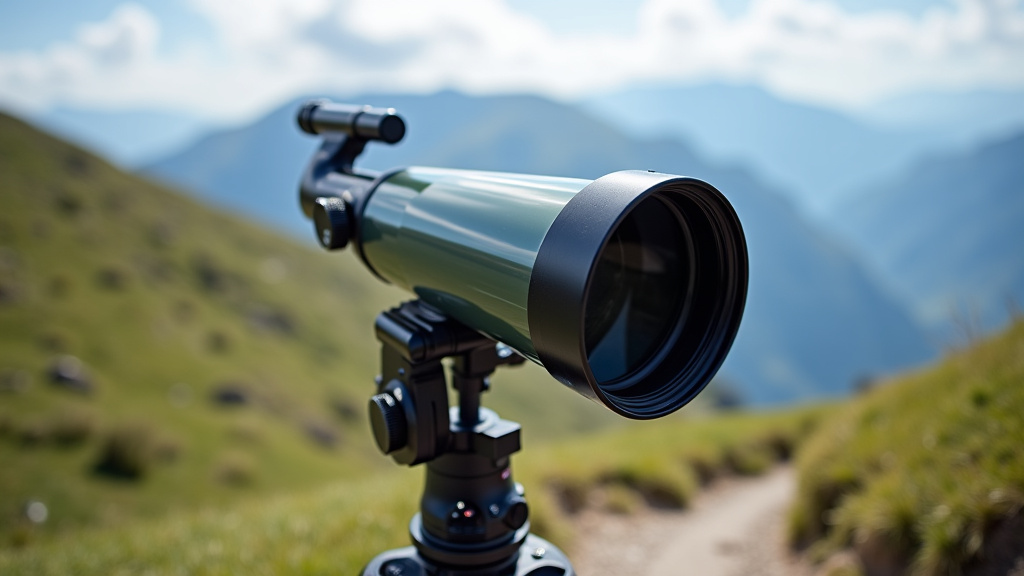
We found that many beginner telescopes in this size range come with decent mounts. A refractor telescope often pairs with a simple alt-azimuth mount. This mount moves up/down and left/right, making it intuitive. A Dobsonian mount, often used for reflectors, is also quite stable and easy to use for this size.
Imagine this: you have a clear night. Instead of spending 30 minutes wrestling with a giant tripod and tube, you’re outside in 10 minutes. You’re already looking at the Moon. This ease of use means you’re more likely to actually use your telescope. That’s what truly matters for learning and enjoying astronomy.
What to Look For in Your First Telescope
When you’re ready to buy, consider a few things. Beyond aperture, look at the type of telescope. Refractors (using lenses) and reflectors (using mirrors) are common. For 70-90mm, both are excellent choices. Refractors are often very low maintenance. Reflectors can offer more aperture for the money.
The mount is also critical. A stable mount makes a huge difference. Avoid the cheapest, flimsiest mounts. A shaky view is frustrating. Many telescopes come with eyepieces. A good starting set will include a low-power and a medium-power option.
We found that manufacturers often bundle accessories. Focus on the core optical quality and mount stability. Many beginner kits are well-balanced for this size. You can always upgrade eyepieces later if you wish.
Your Stargazing Checklist: Getting Started
Here’s a quick list to keep in mind as you choose:
- Check the aperture: Aim for 70mm to 90mm.
- Consider the mount: Stability is key for clear views.
- Look at the telescope type: Refractor or reflector, both are good.
- Read reviews: See what other beginners are saying.
- Prioritize ease of use: You want to get observing, not fiddling.
- Think about portability: Can you easily take it to dark skies?
Choosing your first telescope is an exciting step. By focusing on a manageable aperture like 70-90mm, you’re setting yourself up for success. You’ll be looking at the wonders of the night sky before you know it!
Conclusion
You’re now ready to choose your first telescope! We found that a 70mm to 90mm aperture offers the best balance for beginners. It gathers enough light for exciting views of the Moon and planets. It’s also lightweight and easy to set up, so you’ll actually use it. This size lets you discover celestial wonders without feeling overwhelmed. Your next step is to find a reputable retailer and pick out a telescope that fits your needs. Happy stargazing!
Frequently Asked Questions
What’s the biggest mistake beginners make when buying a telescope?
One common mistake is buying a telescope that’s too large or complicated. We’ve seen that this often leads to frustration and the telescope being unused. Focusing on a manageable aperture like 70-90mm and a stable mount is much more important for a positive experience.
Can I see deep-sky objects like galaxies with a 70-90mm telescope?
Yes, but with realistic expectations. Under dark skies, you can spot larger objects like the Andromeda Galaxy as a faint smudge. Brighter star clusters and nebulae are also visible. These views are more about appreciating the vastness of space than seeing fine detail.
Is a refractor or a reflector better for a beginner telescope of this size?
Both refractors and reflectors are excellent choices in the 70-90mm range. Refractors are known for sharp views and low maintenance. Reflectors often offer more aperture for your money, meaning better light-gathering. We found that personal preference and specific model quality matter most.
How important is the telescope mount for a beginner?
The mount is incredibly important. A stable mount is essential for clear, steady views. If your telescope wobbles every time you touch it, you won’t enjoy looking through it. We recommend prioritizing a solid, easy-to-use mount over anything else.
Do I need to buy extra eyepieces for a beginner telescope?
Most beginner telescopes in the 70-90mm range come with at least two eyepieces. These usually provide low and medium magnification. We found this is often sufficient to get you started. You can always purchase additional eyepieces later as you learn what kind of views you prefer.