Is an 8 Inch Telescope Good for Beginners?
On this page (6 sections)
Yes, an 8-inch telescope is generally a great choice for beginners. It offers a significant step up in performance over smaller beginner telescopes. You’ll be able to see more detail on planets and view fainter deep-sky objects. This size strikes a fantastic balance between capability and portability for new astronomers.
While it’s larger than a small starter scope, an 8-inch model is still manageable. It can provide stunning views of the moon’s craters and Jupiter’s moons. You can also start observing nebulae and galaxies. Many beginners find this size just right for learning and growing their stargazing hobby.
TL;DR:
- An 8-inch telescope is good for beginners.
- It shows more detail than smaller scopes.
- It’s portable enough for easy setup.
- You’ll see planets, the moon, and some galaxies.
- It’s a solid choice for serious hobbyists.
Let’s dive into what makes an 8-inch telescope a popular starting point and what you can expect to see with one.
So, you’re wondering if an 8-inch telescope is a good starting point for your stargazing journey? The short answer is a resounding yes! It hits a sweet spot that many beginners find incredibly satisfying. Let’s break down why this size is so popular and what you can truly expect to see.
Considering an 8-Inch Telescope for New Stargazers
An 8-inch telescope offers a noticeable step up from smaller beginner models. You’re not just getting a slightly bigger lens; you’re getting substantially more light-gathering power. This means you’ll see fainter objects and more detail on brighter ones. It’s a choice that supports your hobby as you grow.
For many new astronomers, this size is just right. It’s powerful enough to show you amazing things without being overwhelmingly large or complicated. You can enjoy a wide variety of celestial sights with it.
The Light-Gathering Advantage
The “inch” measurement on a telescope refers to the diameter of its main lens or mirror. This is also called the aperture. A larger aperture collects more light. Think of it like a bucket catching raindrops – a bigger bucket catches more water. In astronomy, more light means you can see dimmer objects and more detail.
An 8-inch telescope collects significantly more light than a 4-inch or 5-inch telescope. Specifically, it gathers about 4 times more light than a 4-inch scope and about 2.5 times more than a 5-inch scope. This extra light is key to seeing fainter galaxies and nebulae.
What Can You See with an 8-Inch Telescope?
This is where the fun really begins! An 8-inch scope opens up a universe of possibilities for you. You’ll be able to observe a wide range of celestial objects with impressive clarity.
Our Solar System Wonders
Planets will look fantastic. You can see the cloud bands on Jupiter and its four largest moons (the Galilean moons). Saturn’s rings will be clear, and you might even spot the Cassini Division within them. Mars will show polar ice caps and surface features when it’s close enough to Earth. Venus will display its phases, much like our Moon.
The Moon itself is a target that never gets old. With an 8-inch telescope, you’ll see countless craters, mountains, and rilles with incredible detail. You can spend hours just tracing the terminator (the line between sunlight and shadow) as it moves across the lunar surface.
Deep-Sky Delights
This is where the 8-inch aperture really shines. You’ll be able to see many fainter deep-sky objects that are difficult or impossible to spot with smaller telescopes. This includes:
- Galaxies: You can view the Andromeda Galaxy (M31) as a smudge of light. You’ll also start to see other brighter galaxies in constellations like Virgo and Ursa Major.
- Nebulae: Famous nebulae like the Orion Nebula (M42) will show structure and color. You can also observe other nebulae, such as the Lagoon Nebula and the Trifid Nebula.
- Star Clusters: You’ll see bright globular clusters like M13 in Hercules as fuzzy balls of stars. Open clusters, like the Pleiades, will reveal many more stars.
While you won’t see images like those from the Hubble Space Telescope (which are long-exposure photographs), you’ll see these objects as real, albeit faint, celestial sights with your own eyes. It’s a very rewarding experience.
Is It Too Big for a Beginner? Portability and Setup
One of the main concerns for beginners is whether a telescope is too large to handle. An 8-inch telescope is certainly larger than a small grab-and-go scope, but it’s generally quite manageable. Most 8-inch telescopes come in two main types: Dobsonian and Refractor/Reflector on a Mount.
The Dobsonian Advantage
Dobsonian telescopes are often recommended for beginners who want larger apertures. They feature a simple, sturdy alt-azimuth mount that the optical tube rests on. This design is easy to set up and use. You move the telescope up, down, left, and right by simply pushing it.
A typical 8-inch Dobsonian is often a “two-box” design. The optical tube is one part, and the base with the mirror cell is the other. They usually separate easily for transport. While not as light as a small scope, they are designed for practical use. We found many users report they can be set up in just a few minutes once they are familiar with the process.
Other Mount Types
If you opt for an 8-inch reflector or refractor on an equatorial mount, or a Schmidt-Cassegrain telescope (SCT), the setup can be a bit more involved. Equatorial mounts need to be aligned with the celestial pole, which takes practice. SCTs can be more compact but often heavier for their aperture size.
However, even with these types, the 8-inch aperture is still a popular choice. Many astronomers find the learning curve for mounting and alignment is part of the hobby. The views make the effort worthwhile.
Key Considerations Before You Buy
Before you decide that an 8-inch telescope is your perfect match, let’s consider a few practical points. Thinking these through now can save you frustration later.
Weight and Size
An 8-inch Dobsonian telescope, for example, might weigh between 30-50 pounds (13-23 kg) in total. This is not something you’d casually carry around. You’ll need a stable surface to set it up on, like your backyard, a park, or a balcony. It’s also good to consider if you have a vehicle large enough to transport it if you plan to travel to darker skies.
Your Viewing Location
Are you observing from a light-polluted city or a dark rural sky? Light pollution can wash out fainter objects. An 8-inch telescope’s extra light-gathering power helps, but it can’t overcome severe light pollution entirely. If you’re in a city, you’ll still see great views of the Moon and planets, but galaxies and nebulae might be challenging.
We found that even with light pollution, the Moon and planets are bright enough to offer spectacular views. For fainter objects, driving to a darker site, even just 30 minutes outside of town, makes a huge difference.
What’s Included?
Telescopes often come with a basic eyepiece or two. However, to get the most out of an 8-inch scope, you’ll likely want to invest in additional eyepieces. Different eyepieces give you different magnifications and fields of view. A good low-power eyepiece is essential for finding objects and viewing large, faint objects like galaxies. A higher-power eyepiece is great for planets.
Many experts suggest starting with a low-power (around 25mm) and a medium-power (around 10mm) eyepiece. You’ll also need a finderscope to help you aim the telescope. Most 8-inch telescopes come with a basic one, but upgrading can make finding objects much easier.
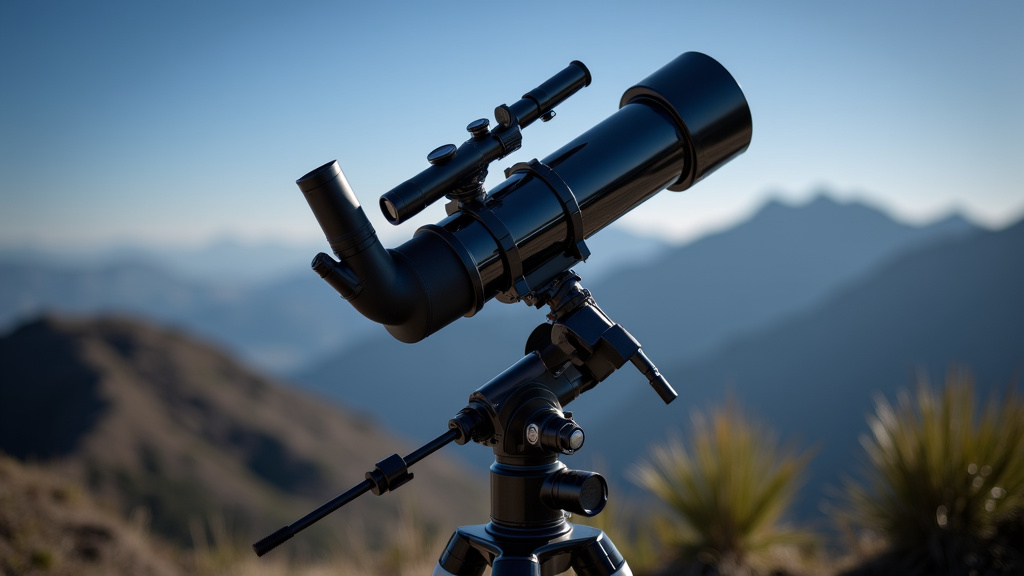
Is an 8-Inch Telescope the Right Choice for You? A Quick Checklist
To help you decide, consider these points. If most of these sound like you, an 8-inch telescope is likely a fantastic choice for your stargazing adventures:
- You want to see more detail on planets than a small telescope provides.
- You are interested in observing brighter galaxies and nebulae.
- You have a backyard or a local park where you can set up a telescope.
- You are willing to learn basic setup and alignment procedures.
- You don’t mind a bit of weight for significantly better views.
- You are looking for a telescope that can grow with your hobby.
Conclusion
You’ve learned that an 8-inch telescope is a really strong choice for beginners. It offers a great leap in what you can see, from detailed planets to faint galaxies. You’ll get more light and more detail than with smaller scopes. While it’s larger, models like Dobsonians are designed to be manageable and easy to set up. Your stargazing journey will be much richer with this size. Ready to start seeing more of the night sky? We recommend finding a local astronomy club or online forum to get hands-on advice before you buy.
Frequently Asked Questions
Can an 8-inch telescope be too heavy for me?
An 8-inch telescope, especially a Dobsonian, typically weighs between 30-50 pounds. You’ll need a stable surface to set it up, like your backyard or a park. While it’s not a grab-and-go scope, most people find it manageable for transport if they plan ahead.
What’s the difference between an 8-inch Dobsonian and other types for beginners?
Dobsonian mounts are simpler and more intuitive, just push and point. Other mounts, like equatorial ones, require alignment with the sky’s poles, which takes practice. We found Dobsonians are often recommended for their ease of use, making them great for new stargazers.
Will I need to buy extra eyepieces for an 8-inch telescope?
Yes, it’s likely. Most 8-inch telescopes come with basic eyepieces. To get the best views of different objects, you’ll probably want to invest in a low-power eyepiece for finding things and a high-power one for planets. This is a common suggestion from experienced astronomers.
How does light pollution affect what I can see with an 8-inch telescope?
Light pollution can make fainter objects harder to see. An 8-inch telescope’s larger aperture helps gather more light, but severe pollution can still hide galaxies and nebulae. You’ll still get great views of the Moon and planets, though!
Is an 8-inch telescope good for viewing deep-sky objects like galaxies?
Absolutely. This is where an 8-inch telescope really shines over smaller ones. You’ll be able to see many brighter galaxies, nebulae, and star clusters with more detail than you ever could before. You’ll see them as faint smudges or fuzzy patches, which is still a rewarding experience.