How Portable Should a Beginner Telescope Be?
On this page (5 sections)
The best portable telescope for a beginner is one that strikes a balance between size, weight, and optical quality. You don’t want something so heavy it stays in the closet, nor so flimsy it offers a blurry view. Think of it as Goldilocks’s telescope: just right for easy setup and good stargazing.
Portability matters a lot for beginners because convenience often dictates how often you’ll actually use your telescope. We found that telescopes that are easy to transport and set up are much more likely to be enjoyed regularly. This means considering not just the telescope itself, but also its mount and accessories.
- Portability means the telescope is easy to carry.
- It also means it’s quick to set up.
- A good beginner scope is lightweight but sturdy.
- Consider the entire package, not just the scope.
Let’s break down what makes a beginner telescope portable and how to choose the right one for your adventures under the stars. Learning to use a star chart can enhance your stargazing experience.
You’ve decided you want to explore the night sky, which is fantastic! But before you get there, you’re wondering about the telescope itself. Specifically, how portable does it need to be for someone just starting out? You want a telescope that’s easy to manage but still offers a great view. Let’s figure out that sweet spot.
Finding the Right Size and Weight for Your Beginner Telescope
Portability is all about making stargazing convenient and accessible. You don’t want a telescope that’s a workout just to get outside. We found that many beginners get discouraged if their telescope is too cumbersome. It ends up sitting unused, which is the opposite of what we want!
Understanding Telescope Weight and Dimensions
Telescope size isn’t just about the tube itself. It includes the mount and any accessories. A larger aperture (the main lens or mirror) generally means a heavier telescope. But it also means you can see more detail. It’s a trade-off you’ll navigate.
For beginners, we found that telescopes weighing between 10 to 30 pounds (about 4.5 to 13.5 kg) are often a good starting point. This range usually includes the telescope tube, mount, and tripod. Anything much heavier might feel like a chore to set up. Anything lighter could be a bit wobbly.
What Affects Telescope Weight?
The main factors influencing weight are the size of the optics (aperture) and the type of mount. A bigger lens or mirror means more glass or metal. More robust mounts, like sturdy equatorial mounts, tend to be heavier than simpler alt-azimuth mounts.
How to Judge Portability at a Glance
Look at the product description. It usually lists the assembled weight. Also, check if it folds down compactly. Some telescopes have quick-release legs on their tripods, which helps a lot. Think about how it will fit in your car or if you can carry it from your house to your backyard easily.
The Role of the Mount in Portability
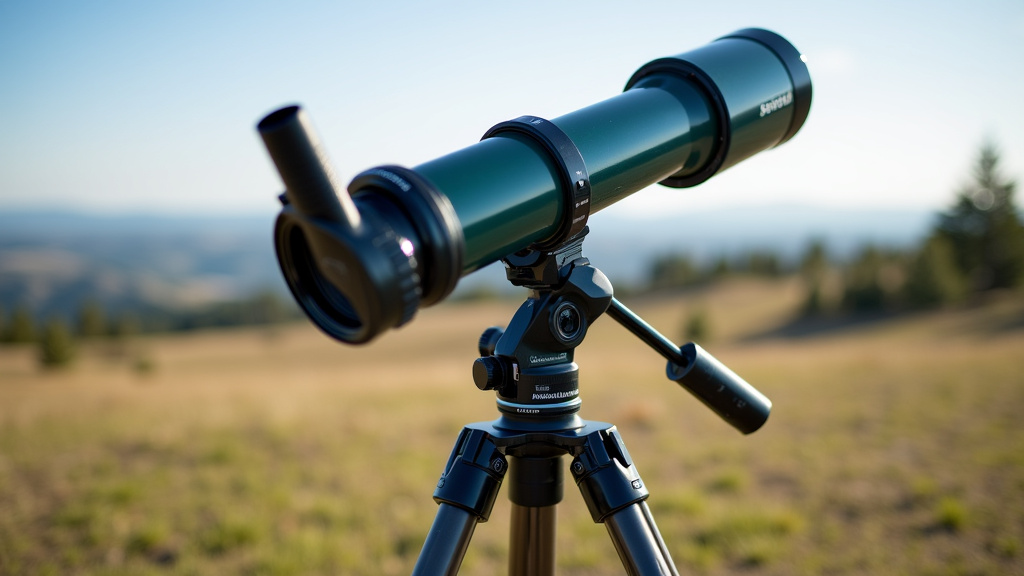
The mount is just as critical as the telescope tube for portability. A heavy tube on a flimsy mount is useless. Likewise, a sturdy mount that’s too heavy to move defeats the purpose. We found that tabletop mounts or lighter field tripods are often best for beginners. A tabletop telescope for beginners is another compact option to consider.
Tabletop Mounts: Small but Mighty
These are great for small, lightweight telescopes. You can place them on a sturdy table or deck railing. They are incredibly portable, often fitting into a small carrying bag. However, you need a stable surface to use them effectively.
Field Tripods: Your Stargazing Stand
Most beginner telescopes come with a tripod. Look for ones made of aluminum; they are a good balance of strength and weight. Tripods with adjustable legs are also a plus. They allow you to level the telescope on uneven ground.
Balancing Portability with Optical Performance
You don’t want to sacrifice the view for convenience, right? The goal is a telescope that’s easy to use and provides clear images. We found that many entry-level telescopes do a good job of this.
Aperture: The Heart of the Telescope
The aperture is the diameter of the main lens or mirror. It’s measured in millimeters or inches. A larger aperture gathers more light. This means you can see fainter objects and more detail. For beginners, an aperture between Our guide to how far a telescope can see explains the factors involved.70mm and 130mm (2.7 to 5 inches) is often recommended.
This range offers a good balance. You can see craters on the Moon, the rings of Saturn, and some of Jupiter’s moons. Telescopes in this range are usually not too large or heavy. They are manageable for transport and setup.
Focal Length and Its Impact
Focal length affects magnification and the field of view. A longer focal length gives higher magnification. It can also make the telescope physically longer and heavier. For portability, a shorter focal length might be preferable. It leads to a more compact design.
However, very short focal lengths can sometimes produce images that are harder to focus for beginners. We found that a moderate focal length, often around 500mm to 900mm, works well. It provides good views without making the telescope unwieldy.
Choosing Between Refractor and Reflector Telescopes
Both types can be portable. Refractor telescopes use lenses. They are often simple and robust, with a long, slender tube. Reflector telescopes use mirrors. They can offer larger apertures for the same price or weight.
Refractors are generally maintenance-free. They are great for planetary viewing. Some smaller refractors are very portable. Reflectors, especially Newtonian reflectors, are popular for their light-gathering power. Dobsonian reflectors are known for being easy to set up.
We found that smaller Dobsonian reflectors (like 4.5-inch or 6-inch) are surprisingly portable. They consist of a tube and a simple wooden base. You just lift them and place them on the ground. They are a favorite among many stargazers.
Putting It All Together: What to Look For
So, what does the ideal portable beginner telescope look like? It’s a combination of factors. Think of it as a toolkit for exploring the cosmos.
| Feature | What to Look For | Why It Matters |
|---|---|---|
| Weight | Under 30 lbs (13.5 kg) including mount and tripod | Easy to carry and set up without strain. |
| Size | Compact when assembled and especially when stored/transported | Fits in cars, closets, and doesn’t take over your yard. |
| Mount Type | Tabletop, simple alt-azimuth, or lightweight Dobsonian | Stable but easy to move and point. |
| Assembly Time | Under 10 minutes from bag to ready-to-use | Less frustration, more time for stargazing. |
| Included Accessories | Basic eyepieces, finder scope | You can start observing right away. |
Your Personal Portability Needs
Consider where you’ll be stargazing most. Will you be in your backyard? Do you plan to drive to darker skies? If you live in an apartment with a small balcony, a tabletop scope might be perfect. If you have a car and can visit dark-sky sites, a slightly larger scope might be manageable.
We found that the best telescope for you is the one you’ll actually use. If a telescope is too much hassle to move, it’s more likely to stay inside. Don’t buy a telescope that will become a dust collector!
Tips for Easy Transport and Setup
Many telescopes come with carrying bags or cases. These are essential for keeping everything protected and organized. Look for scopes with quick-release latches or simple locking mechanisms.
Practice setting it up at home before your first night out. Familiarity breeds confidence and speed. You’ll be amazed at how quickly you can go from unpacking to observing with a little practice.
Here’s a quick checklist to keep in mind:- Is it light enough for you to comfortably carry?
- Does it fold or pack down to a manageable size?
- Is the mount stable yet easy to move?
- Can you set it up in under 10 minutes?
- Does it come with what you need to start observing?
- Does it feel sturdy, not flimsy?
Conclusion
You’ve learned that the ideal beginner telescope balances portability with performance. A weight under 30 pounds, compact storage, and a user-friendly mount are key. Remember, the most important factor is choosing a telescope you’ll actually use. We found that convenience leads to more stargazing. Don’t let a heavy or complicated setup become a barrier to enjoying the night sky. Start your astronomical journey with a scope that’s ready when you are.
Frequently Asked Questions
What’s the maximum weight a beginner telescope should be?
For most beginners, we found that a telescope weighing 10 to 30 pounds (4.5 to 13.5 kg) is a good sweet spot. This usually includes the telescope tube, mount, and tripod. Anything heavier might feel like a chore to carry and set up each time.
How small does a portable telescope need to be to fit in a car?
Portability for car transport means looking at how compactly the telescope packs down. Many beginner scopes are designed to fit into carrying bags or cases. You’ll want to check the product details for assembled versus packed dimensions to ensure it fits your vehicle.
Is a tabletop telescope truly portable enough for beginners?
Yes, tabletop telescopes are incredibly portable. They are lightweight and often fit into small carrying cases. We found they are excellent for small spaces or when you need to set up very quickly. Just ensure you have a stable surface to place them on.
Do I need a special bag for a portable telescope?
While not always essential, a carrying bag or case is highly recommended for portability. It protects your telescope during transport and keeps all the parts organized. Many good beginner scopes come with these included, which is a great bonus.
Can a telescope be too portable and sacrifice viewing quality?
It’s a trade-off, but not always a sacrifice. We found that many portable beginner scopes offer good optical performance. Look for a decent aperture (around 70mm to 130mm) on a sturdy, even if lightweight, mount. This ensures you get clear views without excessive wobbling.