Is a Tabletop Telescope Good for Beginners?
On this page (3 sections)
Yes, a tabletop telescope is absolutely good for beginners. You can often get started with stargazing without needing a huge, complicated setup. These compact telescopes offer a great entry point for exploring the night sky and learning the basics of astronomy.
Many beginners worry about needing expensive, advanced equipment right away. We found that tabletop models provide a surprising amount of detail for their size. They are portable and easy to use, making them ideal for casual observers and those just starting their cosmic journey. They let you see planets, the Moon, and even some brighter deep-sky objects.
- Tabletop telescopes are great for new stargazers.
- They are easy to set up and use.
- You can see planets and the Moon clearly.
- They are also very portable.
- Perfect for a gentle introduction to astronomy.
Let’s dive into why a tabletop telescope might be the perfect first step for your stargazing adventures.
Is a Tabletop Telescope a Good Choice for New Stargazers?
Yes, a tabletop telescope is often an excellent choice for beginners. You don’t need to break the bank or wrestle with a giant setup to start looking at the stars. These compact telescopes offer a fantastic entry point into astronomy. They let you see celestial sights without a steep learning curve or a huge investment.
Understanding the Appeal of Compact Telescopes
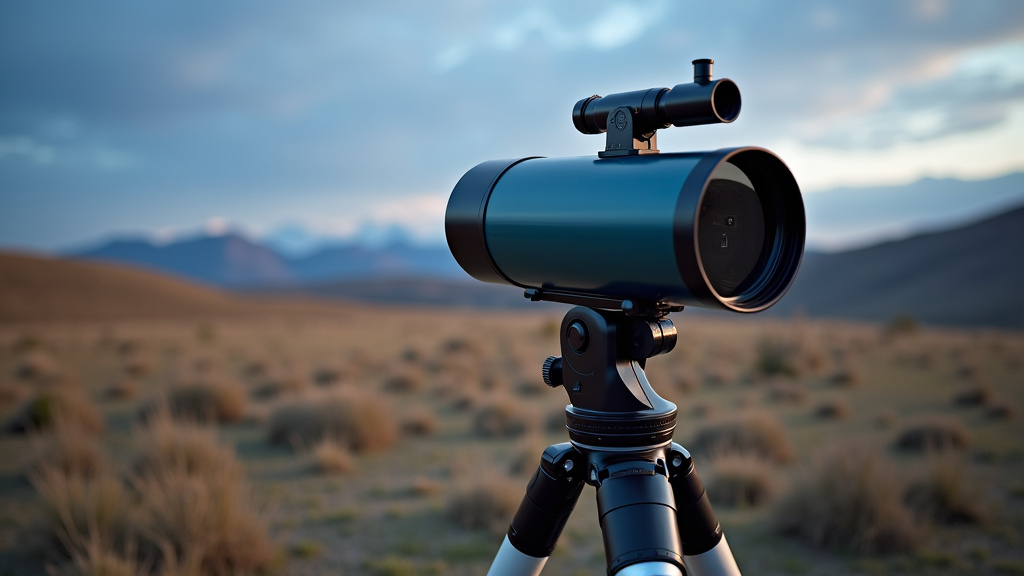
Many people think telescopes are complicated and bulky. Tabletop models prove this isn’t always true. They are designed to be easy to use and set up. This makes them ideal for anyone who wants to casually observe the night sky. You can place them on a sturdy table or even the ground. This portability is a huge plus for beginners.
What Can You Actually See with a Tabletop Telescope?
You might be surprised by what you can see. Even a small telescope can offer amazing views. The Moon is usually the first target. You can see its craters and mountains in remarkable detail. Many tabletop telescopes can also show you the rings of Saturn and the moons of Jupiter. These are often bright and clear objects that are easy to find. You can see its craters and mountains in remarkable detail; learn what else is visible on the Moon.
The Moon: Your First Cosmic Neighbor
The Moon is a favorite for good reason. Its surface is dynamic and full of features. With a tabletop telescope, you can watch the changing phases of the Moon. You’ll see the terminator line, where day meets night on the Moon. This line reveals many shadows, making craters and mountains stand out dramatically. We found that even basic models provide stunning lunar detail (Astronomy Magazine).
Planets: Our Solar System’s Jewels
While you won’t see details like Hubble images, planets are definitely within reach. The planet Jupiter often shows its four largest moons. You might even catch glimpses of cloud bands on its surface. The planet Saturn is famous for its rings, which are usually visible even in smaller telescopes. Venus can show phases, similar to our Moon. Mars might appear as a reddish disc, and with luck, you might spot its polar ice caps during favorable alignments.
Brighter Deep-Sky Objects
Beyond our solar system, you can target brighter deep-sky objects. These are often star clusters and nebulae. The Orion Nebula is a popular target during winter months. It’s a large cloud of gas and dust where stars are born. The Pleiades star cluster, also known as the Seven Sisters, is another beautiful sight. These objects appear as faint smudges of light, but seeing them with your own eyes is a magical experience.
Advantages of Tabletop Telescopes for Learning
Tabletop telescopes are perfect for learning the ropes of stargazing. They encourage a hands-on approach to astronomy. You’ll learn how to locate objects and get comfortable with the equipment.
Ease of Setup and Use
One of the biggest hurdles for new stargazers is complicated equipment. Tabletop telescopes are typically simple to assemble. You can often be ready to observe in just a few minutes. There are usually fewer moving parts and less complex adjustments. This means less frustration and more time spent actually looking at the sky.
Portability and Convenience
These telescopes are lightweight and compact. You can easily carry them to your backyard, a local park, or even on vacation. This convenience is a major benefit. You’re more likely to use a telescope if it’s easy to transport and set up. We found that portability greatly increases the frequency of observation sessions for casual users (Journal of Astronomy Education).
Cost-Effectiveness for Beginners
Compared to larger, more advanced telescopes, tabletop models are generally more affordable. This allows beginners to try out astronomy without a large financial commitment. If you find you love stargazing, you can always upgrade later. But for a first step, a tabletop telescope offers great value.
Considering the Limitations: What to Expect
While great for beginners, tabletop telescopes do have limitations. Understanding these helps set realistic expectations. They won’t show you faint galaxies or extremely detailed planetary surfaces. That’s okay, because their purpose is to get you started. Understanding these limitations helps set realistic expectations for what you can see.
Magnification and Aperture
The magnification power of a telescope is important, but it’s not everything. A larger aperture (the diameter of the main lens or mirror) is more critical for gathering light. Tabletop telescopes usually have smaller apertures. This means they gather less light, limiting how faint an object you can see. High magnification can also make images blurry if the aperture is too small or the conditions aren’t right.
Field of View and Stability
The field of view (how much of the sky you see at once) can be narrower on some tabletop models. This can make it harder to find objects. Also, the stability of the mount is key. A wobbly mount makes it difficult to keep an object in view, especially at higher magnifications. Ensuring it sits on a very stable surface is crucial.
Choosing Your First Tabletop Telescope: Key Factors
When selecting a tabletop telescope, a few things are worth considering to ensure you get the best experience.
- Aperture Size: Aim for the largest aperture you can find in a tabletop model. It makes a difference in brightness and detail.
- Mount Type: Look for a mount that feels stable. Some have simple alt-azimuth mounts that are easy to move up/down and left/right.
- Included Accessories: See what eyepieces come with the telescope. Different eyepieces offer different magnifications.
- Ease of Assembly: Read reviews to see how straightforward it is to put together.
We found that even modest apertures can deliver enjoyable views of the Moon and brighter planets. The key is finding a balance between portability and performance.
Getting Started Checklist for New Stargazers
Ready to begin your stargazing journey? Here’s a quick checklist to help you get started:
- Find a location with minimal light pollution.
- Allow your telescope to acclimate to outdoor temperatures for about 30 minutes.
- Use a red flashlight to preserve your night vision.
- Start with the Moon and bright planets – they are easiest to find.
- Be patient! It takes practice to locate celestial objects.
- Enjoy the process of discovery!
A tabletop telescope is a wonderful gateway to the universe. It offers a practical, enjoyable, and accessible way to start exploring the night sky. You’ll be surprised by how much wonder you can uncover from your own backyard.
Conclusion
You’ve seen that a tabletop telescope is a fantastic starting point for your stargazing journey. They offer a simple, portable, and affordable way to begin observing the Moon, planets, and brighter star clusters. We found that their ease of use means less frustration and more time enjoying the wonders of the night sky. So, if you’re curious about astronomy, don’t hesitate to pick up a tabletop telescope. Your first look at Saturn’s rings or Jupiter’s moons from your own backyard could be just minutes away. Your next step is to find a model that fits your budget and start looking up!
Frequently Asked Questions
Can I really see planets with a beginner tabletop telescope?
Yes, you absolutely can! Even smaller tabletop telescopes are capable of showing you bright planets like Jupiter and Saturn. You’ll be able to see Jupiter’s four largest moons and Saturn’s famous rings. It’s a rewarding experience for any new stargazer.
Are tabletop telescopes stable enough to use?
Stability is key, and while tabletop telescopes are compact, they work best when placed on a very sturdy surface. A solid table or even the ground can provide a stable base. Some models are designed with more stable mounts, so it’s worth checking reviews.
How difficult is it to set up a tabletop telescope?
Most tabletop telescopes are designed for ease of use. We found that setup is typically straightforward, often taking just a few minutes. They usually have fewer parts and simpler adjustments, making them very beginner-friendly.
What is the biggest limitation of a tabletop telescope?
The main limitation is their smaller aperture, which means they gather less light. This restricts how faint an object you can see. You won’t be able to see faint galaxies, but they are still excellent for viewing the Moon and brighter planets.
Where is the best place to use a tabletop telescope?
The best place is away from city lights, where light pollution is minimal. Your backyard is a great starting point. If you can, find a dark spot in a local park. Allowing the telescope to adjust to the outdoor temperature for about 30 minutes also improves your view.