Do Beginners Need a Computerized Telescope?
On this page (8 sections)
- Are Computerized Telescopes a Must for New Stargazers?
- Understanding Manual vs. Computerized Telescopes
- Do You Need a Computerized Telescope to Start? Consider These Factors.
- A Simple Comparison Table
- The Journey of Discovery: What Matters Most?
- Your First Steps to Stargazing Success: A Checklist
- Conclusion
- Frequently Asked Questions
No, beginners don’t strictly need a computerized telescope to enjoy stargazing. While these advanced scopes can automatically find objects, many wonderful beginner telescopes require no computers at all. You can still have amazing views with simpler models.
Computerized telescopes, also called GoTo scopes, use motors and databases to point. They make it easy to find faint objects quickly. However, learning to find things yourself with a manual telescope is a rewarding skill. It helps you understand the night sky better.
- Computerized telescopes find objects automatically.
- Manual telescopes require you to find things by sight.
- Beginners can enjoy stargazing with either type.
- Manual scopes can be more affordable and simpler.
- Learning with a manual scope builds sky knowledge.
Let’s walk through whether a computerized telescope is the right choice for your first stargazing adventure.
Are Computerized Telescopes a Must for New Stargazers?
When you’re starting out in astronomy, the idea of a telescope that points itself sounds pretty amazing. You might wonder if you absolutely need a computerized telescope to see anything cool. The simple answer is no. Many beginners start with wonderful telescopes that don’t use computers at all. You can absolutely enjoy the night sky with a manual telescope.
Computerized telescopes, often called GoTo telescopes, have motors and built-in databases. These help them find celestial objects for you. They can make it easier to find faint galaxies or nebulae quickly. But there’s a special kind of joy in learning to locate these targets yourself. We found that this process can really deepen your connection to the stars. Computerized telescopes have motors and databases to help them find celestial objects, but understanding how far a telescope can see is also important.
Understanding Manual vs. Computerized Telescopes
Let’s break down what makes these two types different. It’s not about one being “better,” but about what suits your stargazing style.
The Charm of Manual Telescopes
A manual telescope relies on your eyes and your understanding of the sky. You’ll use star charts or apps to find an object. Then, you’ll move the telescope by hand to point it. This might sound like more work, but many beginners find it incredibly rewarding. You become an active participant in your own cosmic journey.
Building Your Sky Skills
Learning to navigate the night sky manually is like learning to read a map. First, you might need help. But soon, you’ll start recognizing patterns and constellations. We found that this hands-on approach helps you learn the layout of the sky much better than just having a computer do it for you. It’s a skill that lasts a lifetime.
Affordability and Simplicity
Generally, manual telescopes are less expensive than their computerized counterparts. They also tend to have fewer parts that can go wrong. This means less worry about technical glitches and more time spent observing. For someone just dipping their toes into astronomy, this simplicity is a big plus.
The Convenience of Computerized (GoTo) Telescopes
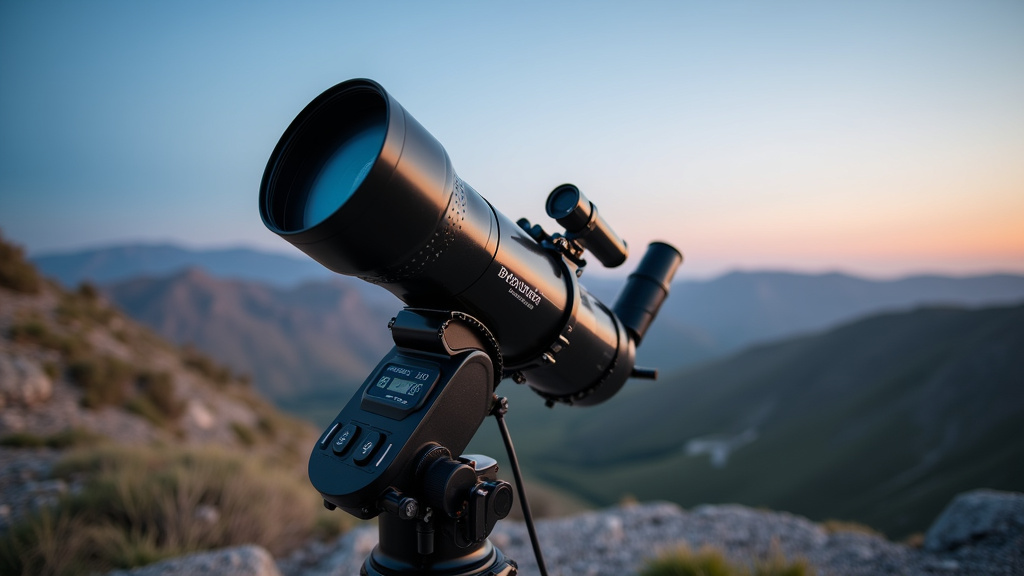
Computerized telescopes take much of the guesswork out of finding objects. For an overview of these computer-guided models, see our guide to GoTo telescopes. You enter the name of a planet, star, or deep-sky object into a hand controller or app. The telescope then slews (moves) itself to point directly at it. This is fantastic for viewing faint objects that are hard to spot manually.
Faster Access to Celestial Wonders
If your main goal is to see as many different objects as possible in a single night, a GoTo scope can be a huge advantage. Imagine wanting to see Jupiter, then Saturn, then the Orion Nebula. A manual telescope might take several minutes to find each one. A computerized scope can do it in seconds.
Overcoming Light Pollution Challenges
In areas with significant light pollution, faint objects can be very difficult to locate with manual pointing. The sky’s brightness can hide subtle stars that you’d normally use for navigation. A GoTo system bypasses this issue by pointing the telescope directly. We found this can be a real lifesaver for urban astronomers.
The Learning Curve for GoTo Scopes
While GoTo scopes do the pointing, they still require some setup. You’ll need to “align” the telescope. This usually involves pointing it at a few bright stars. Getting this alignment just right can sometimes be a bit fiddly. Some beginners find this initial setup process more challenging than using a manual scope.
Do You Need a Computerized Telescope to Start? Consider These Factors.
The decision really boils down to your personal preferences and goals. Think about what kind of stargazing experience you’re hoping for.
Your Budget and Expectations
Are you looking for a casual hobby, or are you ready to invest more time and money? Manual telescopes are a fantastic entry point. They often offer excellent optics for the price. For example, a good quality 6-inch Dobsonian telescope will show you Jupiter’s moons and Saturn’s rings clearly. You can get this for a fraction of the cost of a comparable computerized telescope. (Sky & Telescope magazine often reviews these budget-friendly options).
Your Patience and Learning Style
How do you learn best? Do you enjoy the challenge of figuring things out yourself? Or do you prefer a more direct, guided approach? If you like the idea of becoming a skilled navigator of the night sky, a manual scope is a great teacher. If you want to spend more time looking and less time searching, a GoTo might appeal to you.
Where You’ll Be Stargazing
If you live in a city with lots of light pollution, or if you plan to observe from a location with few easily identifiable landmarks in the sky, a computerized telescope can be very helpful. It reduces the frustration of not being able to find anything. For those in very dark skies, manual navigation is often easier and more intuitive.
A Simple Comparison Table
Here’s a quick look at how they stack up:
| Feature | Manual Telescope | Computerized (GoTo) Telescope |
|---|---|---|
| Object Finding | By hand, using charts/apps | Automatic slewing to target |
| Learning Curve | Builds sky knowledge, navigation skills | Setup and alignment can take practice |
| Cost | Generally more affordable | Typically more expensive |
| Complexity | Simpler mechanics, fewer potential issues | More electronics, motors, databases |
| Best For | Learning the sky, budget-conscious beginners | Maximizing viewing time, overcoming light pollution |
The Journey of Discovery: What Matters Most?
Ultimately, the best telescope for a beginner is the one that gets used. If a computerized telescope helps you get out under the stars more often, and it makes the experience enjoyable, then it’s a great choice for you. However, we found that the skills learned with a manual telescope provide a deep and lasting understanding of the cosmos.
Don’t Underestimate the Power of Basic Tools
A good pair of binoculars can also be an amazing starting point for astronomy. You can see the craters on the Moon, Jupiter’s four largest moons, and even some brighter star clusters. Many experienced astronomers still keep binoculars handy for wide-field views. This is a very low-cost way to begin your exploration.
Think About What Excites You
What do you dream of seeing? Is it the rings of Saturn? The misty glow of the Orion Nebula? Or are you excited by the idea of learning constellations and finding your way around the celestial sphere? Your answer can guide you toward the right type of telescope.
Your First Steps to Stargazing Success: A Checklist
To help you decide, ask yourself these quick questions:
- Am I comfortable learning to use star charts or astronomy apps?
- Is my budget a primary concern for my first telescope?
- Do I enjoy the process of discovery and learning new skills?
- How much time am I willing to spend on telescope setup and alignment each session?
- How important is it for me to see faint objects quickly versus learning to find them myself?
- Am I prepared for the possibility of technical troubleshooting with more complex equipment?
No matter which path you choose, the universe is waiting. Both manual and computerized telescopes offer incredible views and can lead to a lifelong passion for astronomy. It’s about finding the tool that best fits your personality and helps you connect with the night sky.
Conclusion
You don’t need a computerized telescope to start enjoying the night sky. While GoTo scopes offer convenience, manual telescopes build essential sky knowledge and are often more budget-friendly. We found that learning to navigate the stars yourself is deeply rewarding. Consider your budget, learning style, and observing location. If you want a simpler, more hands-on experience, a manual scope is excellent. If maximizing viewing time is your priority, a GoTo might be better. For your first step, grab a good star chart or app and a comfortable chair. Then, decide which telescope will best help you connect with the cosmos.
Frequently Asked Questions
Can I see planets with a basic manual telescope?
Yes, you absolutely can! Many manual telescopes, especially those with decent aperture (like 4 inches or larger), will show you Jupiter’s moons, Saturn’s rings, and the phases of Venus. You just need to know where to look. Learning to find them yourself adds to the satisfaction.
Is a computerized telescope harder to set up than a manual one?
Computerized telescopes require an initial alignment process, which can sometimes be tricky for beginners. Manual telescopes typically involve less setup, often just assembling the tripod and attaching the telescope tube. Many beginners find manual setup more straightforward.
How much do beginner telescopes typically cost?
You can find good beginner manual telescopes for well under $300. Computerized telescopes usually start around $400-$500 and go up from there. For a first telescope, a manual Dobsonian or refractor is often a great value for the views you get.
Will I get bored with a manual telescope if I can’t find objects?
It’s a common concern, but we found that with a little practice and a good star chart or app, finding objects becomes easier and more fun. The challenge of locating something yourself can actually make the view more rewarding when you finally spot it.
What if I buy a manual telescope and then want a computerized one later?
That’s a smart way to approach it. Many astronomers start with manual scopes and later upgrade or add a computerized one. The skills you learn with a manual scope – like understanding star hopping – will still be useful even with a GoTo system.