Different Types of Optical Telescopes Compared
The best optical telescope design depends on what you want to observe: choose a refractor for simple lunar and daytime viewing, a Newtonian reflector for more aperture and deep-sky targets, or a compound design when compact size matters.
On this page (14 sections)
- What are the different types of optical telescopes?
- How does a refractor telescope work?
- How does a reflecting telescope work?
- What is a compound optical telescope?
- How do you identify different types of telescopes?
- Which telescope type is best for the Moon and planets?
- Which telescope type is best for deep-sky objects?
- Which optical design needs the least upkeep?
- How do focal length and aperture change the view?
- How should you choose between these different types of telescopes?
- What should beginners check before buying?
- Can optical telescopes be used for astrophotography?
- What telescopes do astronomers use?
- Final decision: which optical design should you choose?
The best optical telescope design depends on your observing goals. Choose a refractor for simple setup and low upkeep, a Newtonian reflector for more light-gathering ability, or a compound telescope when you want a compact optical tube with a wider range of uses.
The word “optical” describes telescopes that collect visible light with lenses, mirrors or both. The design affects brightness, image orientation, tube size, maintenance and how easily you can point at an object.
This guide compares the different types of optical telescopes in plain terms. It also shows how the three example scopes fit different beginner needs.
What are the different types of optical telescopes?
The 3 main types of optical telescopes are refractors, reflectors and compound telescopes. Refractors bend light through lenses, reflectors bounce light to a mirror, and compound telescopes use both systems.
| Telescope type | Main optical part | Common strengths | Main trade-off |
|---|---|---|---|
| Refractor | Glass objective lens | Simple, sealed tube and useful daytime image | Larger apertures can become long or heavy |
| Reflector | Primary mirror | More aperture in a practical tube | Mirrors may need occasional alignment |
| Compound | Lenses and mirrors | Compact tube and flexible viewing | More complex design and often higher cost |
| Newtonian reflector | Parabolic primary mirror and secondary mirror | Bright deep-sky views and strong aperture value | Needs collimation and usually gives an upside-down image |
| Catadioptric | Lens corrector and mirrors | Compact optical tube with long focal length | More parts and a narrower field in many models |
These labels describe the optical path, not the mount. A refractor can sit on an altazimuth or equatorial mount, and a reflector can use several mount styles.
The mount matters because a sharp telescope on a shaky support can be frustrating. For a broad introduction to the parts and purpose of a telescope, read what is an astronomical telescope.
How does a refractor telescope work?
A refractor uses a front objective lens to bend incoming light toward a focus. You look through an eyepiece at the rear of the tube, where the focused image is enlarged.
The glass objective stays in a fixed cell, so the optical path is protected inside the tube. This sealed layout usually means less internal dust and no mirror alignment for normal use.
Refractors are often a good match for the Moon, bright planets, star fields and daytime land targets. With an erecting diagonal, the image can be right-side up, which makes the design more practical for scenery and wildlife.
A short refractor can be easy to carry, but its focal length affects the view. A 400mm focal length gives a wider, lower-power starting view than a 900mm focal length when used with the same eyepiece.
Chromatic aberration is the main optical trade-off in a basic achromatic refractor. Bright objects can show a colored fringe, especially at higher magnification or around the edge of a high-contrast target.
Which beginner refractors suit simple viewing?
Choose a refractor when you want a straightforward telescope for the Moon, planets and occasional daytime use. The two refractors below show how aperture, focal length and accessories can change the experience.
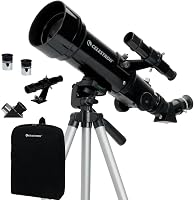
The Gskyer Telescope suits a beginner or family that values portability. Its 70mm aperture collects more light than a very small starter scope, while the 400mm focal length supports a wider view than a longer planetary-focused tube.
Its 2 replaceable eyepieces, 3x Barlow lens and 5x24 finder scope give you several ways to frame and locate targets. The adjustable tripod and carry bag also make storage and travel simpler.
The short tube is useful for broad lunar views and bright targets, but it is not the same as having a large deep-sky aperture. The included phone adapter and wireless camera remote can help you view or capture through a smartphone, but your phone and the telescope still need steady alignment.
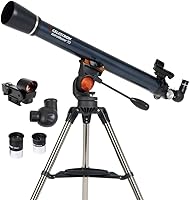
The Celestron AstroMaster 70AZ Refractor Telescope for Moon suits someone who wants a longer focal length and simple manual controls. Its 900mm tube gives more emphasis to lunar and planetary views than a 400mm travel refractor with the same 70mm aperture.
The 20mm and 10mm eyepieces provide 45x and 90x magnification with this focal length. The erect image diagonal supports daytime use, while the adjustable tripod can be set for seated or standing viewing.
Both refractors use a 70mm objective, so they collect a similar amount of light. The practical difference is the focal length, tube size and included setup.
The Gskyer is more travel-focused, while the AstroMaster is better suited to a longer backyard setup.
How does a reflecting telescope work?
A reflecting telescope uses a curved primary mirror to collect and focus light. A smaller secondary mirror redirects the light to the focuser, where an eyepiece forms the view.
The Newtonian reflector is the most familiar beginner reflector. Its open tube can provide a large aperture without requiring an unusually long enclosed tube, because the light path folds between the primary and secondary mirrors.
More aperture means more light collection and greater resolving potential, but it does not guarantee a sharp view every night. Atmospheric turbulence, poor focus, stray light and an unsteady mount can limit what you see.
Newtonian reflectors usually show an upside-down image. That does not matter for most night-sky observing, but it makes the design less convenient for ordinary daytime scenery.
The open tube also allows the primary mirror to collect dust and to adjust slightly over time. Collimation, or mirror alignment, is a normal maintenance task for many Newtonian owners.
What is the main benefit of a Newtonian reflector?
The main benefit is more aperture in a practical beginner telescope. A 114mm Newtonian mirror gathers more light than a 70mm objective lens, which can make bright nebulae, galaxies and star clusters easier to see under dark skies.
The Celestron StarSense Explorer LT 114AZ Newtonian Smartphone suits a beginner who wants more aperture and guided help finding targets. Its 114mm mirror has more light-gathering area than either 70mm refractor here.
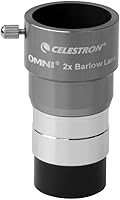
The 1000mm focal length supports lunar and planetary magnification with the included 25mm and 10mm eyepieces. The 2x Barlow lens can increase the eyepiece magnification when the atmosphere and focus support the higher power.
Its StarSense Explorer system uses a smartphone dock and sky-recognition guidance to help point toward stars, planets, nebulae, galaxies and clusters. The mount remains manual, with altitude slow-motion adjustment, so you still move the telescope and follow the target as it crosses the sky.
This reflector has a larger optical aperture than the 2 refractors, but its open mirror system needs more care. Keep the tube protected during storage, use gentle cleaning practices and learn how to check alignment before expecting the sharpest view.
What is a compound optical telescope?
A compound telescope combines mirrors with a correcting lens or front optical element. The folded light path gives the tube a long effective focal length without making the physical tube equally long.
Schmidt-Cassegrain and Maksutov-Cassegrain telescopes are common compound designs. They can suit observers who want a compact optical tube for planets, double stars and smaller deep-sky targets.
The trade-off is complexity. A corrector plate, secondary mirror and focusing system create more optical surfaces and may add weight or cost compared with a basic refractor or Newtonian.
Compound telescopes can also have narrower fields of view at long focal lengths. That helps frame planets, but it can make large star clusters or broad nebulae harder to fit in one view.
For a beginner, the mount and finding system may matter as much as the optical design. A compact telescope that is difficult to align can be less useful than a simpler model you will set up often.
How do you identify different types of telescopes?
You can identify different types of telescopes by looking at the front opening, the rear of the tube and the light path. A large glass lens at the front usually means refractor, while an open tube with a mirror at the bottom usually means reflector.
Use this quick check:
- Look for a large objective lens at the front.
- If the front holds glass and the rear holds the focuser, it is likely a refractor.
- If the tube is open at the front and has a large mirror at the bottom, it is likely a reflector.
- If the tube is short but has a long stated focal length, it may be a compound design.
- Check the product name for terms such as refractor, Newtonian, Dobsonian, Schmidt-Cassegrain or Maksutov-Cassegrain.
- Confirm the aperture and focal length separately from the marketing name.
Do not identify a telescope only by its color, tripod or magnification claim. Different optical designs can use similar altazimuth mounts, eyepieces and finder scopes.
The aperture is the diameter of the main lens or mirror. The focal length is the distance the optical system uses to bring light to focus.
These 2 numbers tell you more about the view than a single maximum-magnification number.
Which telescope type is best for the Moon and planets?
A refractor or reflector with enough aperture and stable support can work well for the Moon and planets. Choose the refractor for a simple sealed system, or the reflector when you want more aperture for the same general class of beginner setup.
The Moon is bright and detailed through all 3 example telescopes. The 70mm refractors can provide useful lunar views, while the 114mm Newtonian has more light-gathering area and can show a larger image at comparable eyepiece choices.
Planets need steady air as well as magnification. On a turbulent night, increasing power may make the image larger without revealing more detail.
A 900mm or 1000mm focal length makes it easier to reach useful planetary magnification with common eyepieces. A 400mm travel refractor can still show bright planets, but it may rely more heavily on a Barlow lens for higher power.
The mount should move smoothly and settle quickly after you touch the focuser. If the image shakes, optical quality and aperture cannot solve the whole problem.
Which telescope type is best for deep-sky objects?
A reflector with the largest practical aperture is often the strongest choice for deep-sky observing. Galaxies, nebulae and many clusters are faint, so light collection and dark skies matter more than a large magnification number.
The Celestron StarSense Explorer LT 114AZ has a 114mm mirror, giving it more light-gathering area than the 70mm refractors in this guide. Its smartphone guidance can also reduce the time spent searching for targets.
A refractor can still show bright star clusters and nebulae, especially under a dark sky. Its sealed tube and simple setup may encourage more frequent observing, which is a real advantage.
The observing location changes the result. A smaller telescope under dark skies can show more than a larger scope under heavy city light pollution, especially for faint galaxies and extended nebulae.
Use a star map or digital guide to plan targets before you begin. A star chart guide can help you understand how maps organize constellations, coordinates and seasonal targets.
Which optical design needs the least upkeep?
A refractor usually needs the least optical upkeep because its objective lens is fixed and its tube is sealed. A Newtonian reflector needs more attention because its mirrors can collect dust and its alignment can change.
Basic care applies to every design:
- Cover the front and rear openings when the telescope is stored.
- Let the tube reach outdoor temperature before demanding high magnification.
- Avoid touching optical surfaces.
- Use a stable surface and tighten controls only enough to remove looseness.
- Keep moisture from remaining inside a case or tube.
- Transport the telescope with its optical openings protected.
- Read the manufacturer’s care instructions before cleaning glass or mirrors.
Do not clean optics every time you observe. Frequent cleaning can cause more harm than careful storage, especially if you press on a coated surface.
Refractors can develop dew on the front lens during humid sessions. Reflectors can also be affected by moisture, dust and temperature changes.
A dry storage area and protective covers are useful for both.
How do focal length and aperture change the view?
Aperture controls light collection and resolving potential, while focal length affects image scale and the field of view. You need both numbers to understand how a telescope will behave.
Aperture is the diameter of the main lens or mirror. A 114mm mirror has a larger light-collecting area than a 70mm lens, so it can show fainter targets when the sky and optics allow.
Focal length works with the eyepiece to determine magnification:
Magnification = telescope focal length ÷ eyepiece focal length
For example, a 900mm telescope with a 10mm eyepiece gives 90x magnification. A 400mm telescope with the same 10mm eyepiece gives 40x.
A longer focal length usually narrows the field of view at the same aperture and eyepiece. That can help with planets but makes it harder to fit very large targets into one frame.
A shorter focal length can make it easier to find broad star fields. It can also require a shorter eyepiece or Barlow lens when you want high magnification.
How should you choose between these different types of telescopes?
Choose the design that fits your most common observing target, storage space and patience for maintenance. The right telescope is the one that gives you a useful view without creating setup problems that stop you from using it.
Use this decision rule:
- Pick a refractor if you want simple care, a sealed tube and useful daytime viewing.
- Pick a short refractor if portability and wide views matter more than deep-sky aperture.
- Pick a longer refractor if the Moon and planets are your main targets.
- Pick a Newtonian reflector if you want more aperture for nebulae, galaxies and clusters.
- Pick a compound telescope if a compact tube and long effective focal length matter most.
- Pick a guided telescope if finding targets is the part of stargazing that slows you down.
- Pick the mount only after checking that it can hold the optical tube steadily.
If you are still unsure, compare Newtonian telescope vs refractor by target, setup and maintenance. You can also read our broader reflecting vs refracting telescope comparison before choosing a design.
What should beginners check before buying?
Beginners should check aperture, focal length, mount stability, finder design and included eyepieces before focusing on a maximum-magnification figure.
Start with the target list. Moon and planets can work with a modest refractor, while faint deep-sky targets usually benefit from more aperture and darker skies.
Next, check the physical setup. A telescope that fits your storage space and can be carried outside is more useful than one that stays packed away.
Look at the finder system. A red dot finder gives a simple aiming reference, while a smartphone-guided system can show directions and target suggestions.
Neither removes the need to learn the sky and use steady movements.
Check the eyepiece sizes and calculate the actual magnification. A 3x or 2x Barlow can extend the range, but extra power only helps when the atmosphere, focus and mount can support it.
Finally, consider image orientation. A refractor with an erect image diagonal is more convenient for daytime scenes.
A Newtonian’s upside-down view is normal for astronomy and does not usually affect celestial observing.
Can optical telescopes be used for astrophotography?
Optical telescopes can support basic smartphone images of the Moon and bright targets, but visual observing and astrophotography have different requirements. A telescope that is easy to use by eye may not track the sky accurately enough for long exposures.
The Gskyer Telescope includes a smartphone adapter and wireless camera remote. Those accessories can help reduce movement when taking a phone image through the eyepiece.
The Celestron StarSense Explorer LT 114AZ also includes smartphone guidance, but its manual altazimuth mount is still designed around manual pointing. Smartphone guidance helps you find objects, but it does not turn the mount into an automated tracking system.
For serious long-exposure imaging, the camera, focuser, mount and tracking method all matter. A telescope designed for visual use should not be judged by the same standard as a dedicated imaging setup.
Solar observing needs special safety equipment. Never point any optical telescope at the Sun without a properly designed front-aperture solar filter.
A guide to a hydrogen alpha solar telescope explains how specialized solar designs differ from ordinary night-sky scopes.
What telescopes do astronomers use?
Professional astronomers use large specialized optical, radio, infrared and space-based instruments, not one universal telescope type. Their choice depends on the wavelength, target, location, detector and research question.
Optical observatories may use large reflecting mirrors because mirrors can be supported from behind and scaled to very large diameters. Space telescopes avoid much of the atmosphere, while ground observatories use high locations, adaptive optics or long observing campaigns.
This does not mean a beginner needs a professional-style telescope. A small refractor or Newtonian can teach you how light, magnification, focus and sky conditions affect an observation.
Read what telescopes do astronomers use if you want to compare home observing equipment with research observatories.
Final decision: which optical design should you choose?
Choose a refractor for simple, low-maintenance viewing, a Newtonian reflector for more aperture and deep-sky targets, or a compound telescope for a compact long-focal-length system.
The Gskyer Telescope is the portable 70mm refractor choice, with a 400mm focal length, adjustable tripod, carry bag and smartphone accessories. The Celestron AstroMaster 70AZ Refractor Telescope for Moon is the longer 70mm option, with a 900mm focal length and beginner-friendly manual controls.
The Celestron StarSense Explorer LT 114AZ Newtonian Smartphone is the aperture-focused choice. Its 114mm mirror and smartphone-guided finding system suit a beginner who wants to explore more deep-sky targets while accepting more reflector care.
The best choice among these different types of optical telescopes is the one that matches how you will actually observe. Start with your targets, then check aperture, focal length, mount stability, storage and upkeep before deciding.
Frequently asked questions
What are the main types of optical telescopes?
The main optical telescope types are refractors, reflectors and compound telescopes. Refractors use lenses, reflectors use mirrors, and compound designs combine lenses and mirrors.
For beginners, a small refractor is simple to use, while a Newtonian reflector can provide more aperture for deep-sky observing.
Which type of telescope is best for beginners?
A small refractor or tabletop Newtonian is often easiest for a beginner because both can be used with a simple manual mount. Choose a refractor for low-maintenance lunar and daytime viewing, or a Newtonian when you want more light-gathering ability for nebulae and star clusters.
Are refractors or reflectors better?
Neither design is always better. Refractors are sealed, simple and useful for daytime viewing, while reflectors usually offer more aperture for the size and cost.
Your observing targets, storage space, tolerance for alignment and need for portability should decide between them.
What telescope type is best for planets?
A refractor or reflector can show planets well when it has suitable aperture, stable support and enough focal length for useful magnification. A refractor gives a right-side-up image with an erecting diagonal, while a Newtonian reflector can provide bright planetary views with a larger mirror.
What telescope type is best for deep-sky objects?
A reflector is often a strong choice for deep-sky observing because its mirror can provide a larger aperture in a practical tube. Bright nebulae, galaxies and star clusters still depend on dark skies, clear weather, steady support and your ability to find and track targets.