How to Choose a 6-Inch Dobsonian Telescope
The best 6-inch Dobsonian depends on where you observe and how you want to find targets: choose a tabletop model for compact storage, a full-height mount for easier standing use, or phone guidance if locating objects is your main hurdle.
On this page (12 sections)
- What should you look for in a dobsonian telescope 6 inch?
- Tabletop or full-size Dobsonian: which is easier to use?
- Is a 6-inch Dobsonian better with phone guidance?
- Manual Dobsonian or tracking mount: which should you choose?
- Which 6-inch Dobsonian design fits your observing style?
- How should you choose eyepieces for a 6-inch Dobsonian?
- How do you set up and care for a Dobsonian?
- Is a 6-inch Dobsonian enough for dark-sky trips?
- Can a 6-inch Dobsonian be used for solar observing?
- How does a Dobsonian telescope work?
- Is an 8-inch Dobsonian a better choice?
- Final choice: which dobsonian telescope 6 inch should you buy?
A 6-inch Dobsonian telescope is a strong middle choice for beginners because its 150mm class aperture can show bright lunar, planetary and deep-sky targets without the bulk of a much larger telescope. The main decision is not only aperture.
You also need to choose between a tabletop base, a full-height mount, manual target finding and smartphone guidance.
A 6-inch Dobsonian usually means a Newtonian reflector on a simple altazimuth mount. The optical tube gathers light, while the Dobsonian base lets you move left, right, up and down without a complex equatorial setup.
If you are still deciding whether this design suits your experience, read our guide to Is a Dobsonian Telescope Good for Beginners?. It explains why simple movement and large aperture appeal to new observers.
What should you look for in a dobsonian telescope 6 inch?
Choose a 150mm-class reflector when you want a useful balance of light gathering, portability and cost. Then compare the mount, tube size, finder system, included eyepieces and the surface or tripod needed for comfortable viewing.
Aperture is the diameter of the primary mirror. A 150mm mirror has more light-gathering area than a 114mm or 130mm mirror, which can make faint objects easier to see under the same sky.
The mount affects your experience just as much as the mirror. A tabletop Dobsonian needs a firm table, platform or other support.
A full-height altazimuth mount puts the eyepiece higher and may be easier to use while standing.
Manual movement is normal for a Dobsonian. You point the tube toward a target, make small adjustments, and keep nudging it as the object moves across the sky.
Phone guidance changes the finding process, not the basic optical design. It can show you where to point, while the telescope still needs manual movement unless the model has a separate tracking system.
How much does 6-inch aperture matter?
A 6-inch or 150mm reflector gathers enough light for more than casual Moon viewing. It can support observations of bright planets, star clusters, double stars and several brighter nebulae and galaxies when the sky and conditions cooperate.
A larger mirror does not guarantee a better view every night. Clouds, haze, light pollution, poor alignment and unstable air can hide detail even when the telescope has plenty of aperture.
The telescope's focal length also shapes how it behaves. A longer focal length can make higher-power viewing easier to manage, while a shorter design may be more compact and offer a wider view with the same eyepiece.
Do not choose by aperture alone. A slightly smaller telescope that you can carry outside and use often may show you more over a year than a larger model that stays stored.
Tabletop or full-size Dobsonian: which is easier to use?
A tabletop Dobsonian is best when you have a solid support ready, while a full-height mount is better when you want to observe without placing the telescope on furniture. The right choice depends on storage, transport and how you prefer to stand or sit.
Tabletop models can be compact because the base and optical tube occupy one small observing package. They are useful for balconies, patios, travel and homes where a full tripod would be difficult to store.
The trade-off is that a weak table can make focusing and high-power viewing frustrating. A stable support should not wobble when you touch the focuser or make a small directional adjustment.
A full-height tripod or mount gives you more freedom about where you set up. It can also make the eyepiece easier to reach for standing observers, but the legs add storage space and can introduce vibration if they are not placed firmly.
What does a tabletop Dobsonian need?
A tabletop telescope needs a level, stable surface at a comfortable height. A low coffee table may place the eyepiece too close to the ground, while a narrow or light table may shake during focusing.
Before buying, identify the surface you will use. Check whether it can hold the telescope securely, leave room for your hands and eyepieces, and stay clear of railings or nearby obstacles.
The Sky-Watcher Heritage model is a compact tabletop Dobsonian with a 130mm aperture, a collapsible design, manual focus, an altazimuth mount, a 650mm focal length and a 19.2 lb weight. It includes 10mm and 25mm 1.25-inch eyepieces, a lens cap, a manual and a red dot finder.
Its 130mm aperture is smaller than a full 150mm reflector, so it is not a true 6-inch optical tube. It can still be a sensible alternative if compact storage and easy transport matter more than matching the full 6-inch aperture class.
The collapsible design can reduce the space needed when the telescope is stored. Before each session, check that the support is stable and that the optical tube is set up securely for focusing.
The included red dot finder helps you point toward a bright target. The two eyepieces give you different viewing powers, so you can start with the wider view and then change eyepieces when the target is centered.
Choose this model when compact tabletop use is your priority. Choose a larger 150mm tabletop telescope if you want to stay closer to the 6-inch aperture goal.
Is a 6-inch Dobsonian better with phone guidance?
A phone-guided telescope helps most when you know what you want to see but struggle to find it. It can reduce the time spent searching for objects, but you still need to move the telescope manually and keep your phone aligned with the system.
The Celestron StarSense Explorer 150mm is a 6-inch class Newtonian reflector with a manual altazimuth tabletop Dobsonian base. It has a 150mm aperture, a 650mm focal length, manual focus, a 25mm eyepiece, a 10mm eyepiece, a StarPointer red-dot finderscope and a StarSense Explorer smartphone dock.
Its StarSense system uses the phone to analyze star patterns and provide on-screen arrows toward selected objects. The app can suggest targets based on your time and location, which may help when you do not yet have a long list of familiar stars.
This model remains a manual telescope. The base does not automatically follow an object, so you move the telescope by hand after finding the target and continue making small corrections as it drifts.
The 25mm eyepiece is a useful starting point for locating a target because it gives a broader view than the 10mm eyepiece. Once the object is centered, the 10mm eyepiece can provide a closer view, though the narrower view makes manual tracking more demanding.
Its tabletop base is compact, but you still need a stable surface. The listed dimensions are 19 in deep, 19 in wide and 32.5 in high, with a weight of 25 lb, so measure your storage and support area before choosing it.
Choose this model when smartphone guidance is worth more to you than a full-height mount. It is the closest match here to a true 6-inch Dobsonian telescope.
Does phone guidance replace learning the sky?
Phone guidance can shorten the first step between setting up and finding a target. It does not replace basic observing skills such as recognizing bright stars, choosing a suitable eyepiece and checking whether a target is above nearby trees or buildings.
A phone also needs a clear view of the sky for its recognition system to work well. Bright lights, clouds and obstructions can make any target-finding method less useful.
Use the phone to build confidence, then learn a few bright reference stars and constellations. That combination gives you a backup when the phone battery is low or the app cannot identify the sky.
Manual Dobsonian or tracking mount: which should you choose?
Choose a manual Dobsonian for simple setup and direct control, or choose tracking if keeping an object centered without frequent nudges is your main goal. A standard Dobsonian does not automatically follow the sky.
Manual movement has a short learning curve. You push the telescope toward a target, make small corrections, and use the finder or phone guidance to return to the object.
Tracking matters most at higher magnification. The narrower the field of view, the faster a target appears to move out of the eyepiece, so manual nudging becomes more frequent.
A tracking mount can help with long viewing sessions or shared observing, but it adds mechanical and power requirements. It may also change the setup routine compared with a simple tabletop Dobsonian.
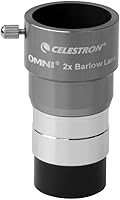
The Celestron StarSense Explorer LT 114AZ uses a 114mm Newtonian reflector on a manual altazimuth mount with altitude slow-motion adjustment and a sliding rod. It includes 25mm and 10mm eyepieces, a 2x Barlow lens, a preassembled mount and tripod, an optical tube and a StarPointer finderscope.
This is a 114mm reflector, not a 6-inch telescope. Its 1000mm focal length and included 2x Barlow lens may appeal to someone who wants a full-height setup and phone guidance, while the smaller aperture gives up some light-gathering ability compared with a 150mm model.
The full-height tripod changes the setup trade-off. You do not need a separate tabletop support, but you need enough space for the tripod and a stable surface under its legs.
At 10.4 lb, it is lighter than the two tabletop models described above. Its listed dimensions are 36 in deep, 36 in wide and 57 in high, so consider both the stored size and the space needed when the tripod is open.
Choose this model when a tripod and lighter carry weight matter more than 6-inch aperture. Choose the 150mm tabletop Celestron if brighter deep-sky views and a larger mirror are the stronger priorities.
Which 6-inch Dobsonian design fits your observing style?
Your observing style should decide the design. A tabletop telescope suits quick sessions and compact storage, while a larger base or tripod suits observers who want a more familiar standing height.
Use this comparison to narrow the choice:
| Priority | Better fit | Main trade-off |
|---|---|---|
| True 6-inch class aperture | Celestron StarSense Explorer 150mm | Needs a stable tabletop support |
| Small storage and collapsible design | Sky-Watcher Heritage 130mm | Smaller than 6-inch aperture |
| Full-height viewing | Celestron StarSense Explorer LT 114AZ | Smaller 114mm aperture |
| Smartphone target finding | Either Celestron StarSense model | Phone guidance is not automatic tracking |
| Lightest carry weight | Celestron StarSense Explorer LT 114AZ | Gives up aperture compared with 150mm |
| Simple manual observing | Any of the 3 models | You must keep targets centered by hand |
The best 6-inch Dobsonian telescope is not automatically the largest or most feature-rich model. It is the one that matches your support, storage, transport and patience for finding targets.
If you are comparing this class with a larger mirror, our guide to a dobsonian telescope 12 inch explains what you gain in aperture and what becomes harder to store and move.
How should you choose eyepieces for a 6-inch Dobsonian?
Start with the widest practical eyepiece to locate and center objects, then increase magnification only when the target and sky conditions support it. A narrow, high-power view is harder to keep steady on a manual mount.
The included 25mm eyepiece on the Celestron 150mm model is a sensible starting point for broad views. The 10mm eyepiece gives a closer view, but the target will cross the field faster.
The Sky-Watcher model includes 25mm and 10mm 1.25-inch eyepieces. The Celestron LT 114AZ includes 25mm and 10mm eyepieces plus a 2x Barlow lens.
Use the lower-power eyepiece first when you are unfamiliar with the sky. Once the target is centered, switch to the shorter focal length eyepiece if the image remains sharp and the object stays manageable.
High magnification cannot fix poor focus, turbulence or a target that is still low over the horizon. Good observing often means using less magnification than you expected.
How do you set up and care for a Dobsonian?
Set up on stable ground, let the telescope reach the outdoor temperature, focus slowly and cover the optical tube after observing. These simple habits protect the viewing experience without adding a complex maintenance routine.
Place the base or tripod away from foot traffic and direct vibration. A stable support matters because touching the focuser or moving the tube transfers motion into the view.
Give the optical tube time to adjust when moving from a warm room into cool outdoor air. Temperature differences can make the view shimmer until the optics and surrounding air settle.
Keep dust caps on when the telescope is stored. Avoid touching the mirrors or using household cleaning products on optical surfaces.
Manual reflectors also need correct optical alignment for the best image. Follow the instructions for the specific model and make small adjustments rather than turning alignment controls without a clear reason.
Before observing, check that the finder is aligned with the main telescope. Point at a distant daytime object only if the instructions allow it and never point a telescope at the Sun without a proper solar filter designed for that telescope.
Is a 6-inch Dobsonian enough for dark-sky trips?
A 6-inch Dobsonian is portable enough for many dark-sky trips if its size and support fit your vehicle, and darker skies can make faint objects easier to see. You still need a stable setup area and a plan for carrying the telescope safely.
A dark site can improve contrast around nebulae and galaxies by reducing sky brightness. It cannot remove clouds, haze, nearby lights or poor focus.
Tabletop models can travel well when you already have a suitable platform at the observing site. A tripod model may be easier if you do not want to depend on a picnic table or other support.
Read Do You Need a Dark Sky to Use a Telescope? for a closer look at what city skies, suburban skies and dark sites change.
The Moon and bright planets remain worthwhile from many locations. A darker site becomes more valuable when you want to search for fainter deep-sky targets.
Can a 6-inch Dobsonian be used for solar observing?
Never point an ordinary Dobsonian at the Sun without a properly fitted solar filter made for the telescope. Solar viewing has different safety needs from nighttime observing, and improvised filters can cause permanent eye damage.
A hydrogen-alpha solar telescope is a dedicated option for observing solar features at a specific wavelength. If solar viewing is your main interest, compare a hydrogen alpha solar telescope rather than adapting a night-sky telescope casually.
Photography adds another set of requirements. A manual Dobsonian can be useful for visual observing, but it is not automatically the best design for tracking or long-exposure imaging.
If your goal is solar imaging, read our guide to the best solar telescope for photography before choosing equipment.
How does a Dobsonian telescope work?
A Dobsonian uses a Newtonian reflector on a simple altazimuth base. The primary mirror gathers and reflects light to a secondary mirror, which redirects the image to the side of the tube where you look through the eyepiece.
The base moves in altitude and azimuth. That means you can point up and down, then left and right, with direct hand pressure.
This design keeps the mount simple and places more of the buying decision on aperture, optical alignment and practical support. It is one reason Dobsonians often offer substantial light-gathering ability without a complicated mount.
For a fuller explanation of the parts and movement, read how does a Dobsonian telescope work.
A 6-inch Dobsonian is usually a good middle ground for observers who want more light than a small beginner telescope but do not want the size of a 10-inch or 12-inch tube.
Is an 8-inch Dobsonian a better choice?
An 8-inch Dobsonian can show more than a 6-inch model, but it also needs more storage and transport planning. Choose it when you have a clear place to keep it and expect the extra aperture to matter more than compact handling.
A 6-inch model may be easier to carry outside for short sessions. That convenience can matter more than theoretical capability if you observe from a balcony, small yard or shared space.
Read Is an 8 Inch Telescope Good for Beginners? if you are deciding whether to move up in aperture.
Our guide to a dobsonian telescope 8 inch compares the larger size with the same basic manual Dobsonian approach.
The practical rule is simple: choose the larger telescope only when you can carry, store and set it up without turning every observing session into a major task.
Final choice: which dobsonian telescope 6 inch should you buy?
Choose the Celestron StarSense Explorer 150mm if you want the closest match to a 6-inch Dobsonian with smartphone target guidance and a tabletop base. Choose the Sky-Watcher Heritage 130mm if compact storage and a collapsible tabletop design matter more than reaching the full 150mm class.
Choose the Celestron StarSense Explorer LT 114AZ if you want a lighter full-height tripod setup with smartphone guidance and manual slow-motion altitude adjustment. It is the least suitable match for a strict 6-inch requirement, but it can fit a different observing style.
If you are new to Dobsonian telescopes, start by deciding where the telescope will sit, how far you will carry it and whether you want phone help finding targets. Those answers will narrow the right dobsonian telescope 6 inch design faster than comparing features alone.
Frequently asked questions
What is the best 6-inch Dobsonian telescope for a beginner?
A 6-inch Dobsonian with a simple manual mount suits beginners who want bright views without a complex setup. Choose a tabletop model if you have a stable surface and value compact storage.
Choose phone guidance if finding stars, planets and deep-sky objects feels harder than moving the telescope.
Is a 6-inch Dobsonian good for planets?
A 6-inch Dobsonian can show the Moon and bright planets with useful detail when the optics are aligned and the air is steady. Higher magnification narrows the view and makes manual tracking more demanding, so a comfortable low-power eyepiece still matters.
Can you use a 6-inch Dobsonian from a city?
You can use a 6-inch Dobsonian from a city for the Moon, planets, double stars and brighter deep-sky objects. Light pollution reduces contrast on faint galaxies and nebulae, but it does not make the telescope useless.
A darker site expands what you can see.
Do 6-inch Dobsonian telescopes track objects automatically?
Most classic Dobsonian mounts are manual altazimuth designs, so you move the telescope by hand as Earth turns. Phone guidance can help you locate a target, but it does not automatically keep the object centered.
Choose a motorized tracking mount only if hands-free following is essential.