How Far Can a 300mm Telescope See?
A 300mm telescope can show distant objects such as the Moon, planets, star clusters, and galaxies, but it has no fixed viewing distance. If 300mm is the aperture, it describes the mirror or lens width; if it is the focal length, it describes a different part of the telescope.
On this page (7 sections)
- How far is 300mm telescope vision?
- Does 300mm mean aperture or focal length?
- What can you see through a 300mm telescope?
- What affects how much detail you can see?
- How should you choose an eyepiece and observe?
- Is a 300mm telescope right for a beginner?
- How far is 300mm telescope vision in practical terms?
A 300mm telescope can show the Moon, planets, star clusters, and galaxies, but it has no fixed viewing distance. First check whether 300mm refers to aperture or focal length, because they describe different things.
Aperture is the width of a telescope's main mirror or lens. Focal length is the distance over which the optics bring light to focus, and it helps set magnification when paired with an eyepiece.
How far is 300mm telescope vision?
A telescope does not have a simple maximum distance measured in miles or kilometers. It gathers light from a target and helps you see its apparent details, so the target's brightness and size matter as much as its distance.
For astronomy, objects outside our galaxy can appear as faint smudges through a telescope. The view depends on the object's light, your sky, the telescope's optics, and how steadily you can observe.
For land viewing, distance depends on the target's size, haze, obstacles, and the telescope's ability to focus at that range. Read how far can a telescope see on land for more on terrestrial viewing.
Does 300mm mean aperture or focal length?
A 300mm aperture means the main mirror or lens is 300mm wide; a 300mm focal length means the telescope focuses light over a 300mm distance. Check the label or manual to see which measurement a telescope uses.
A larger aperture generally gathers more light, which can help reveal dimmer objects and finer detail when conditions allow. Focal length is used with eyepiece focal length to estimate magnification: divide the telescope's focal length by the eyepiece's focal length.
For example, a telescope with a 300mm focal length and a 10mm eyepiece gives 30x magnification. That calculation alone doesn't predict how sharp or bright the image will look.
If you're comparing aperture sizes, see what can you see with a 70mm telescope. A smaller aperture can still make a useful observing instrument, especially for bright targets and learning the sky.
What can you see through a 300mm telescope?
A 300mm aperture can show the Moon, planets, double stars, star clusters, and some nebulae and galaxies. The exact view changes with sky darkness, atmospheric steadiness, optics, magnification, and your eyes.
The Moon is bright and large enough to show craters and surface features. Planets can appear as small disks, but atmospheric turbulence may soften their detail even when the telescope has ample aperture.
Star clusters can show many individual stars, while nebulae and galaxies often look like dim patches rather than colorful images. The view through a telescope is usually less vivid than long exposure astrophotography.
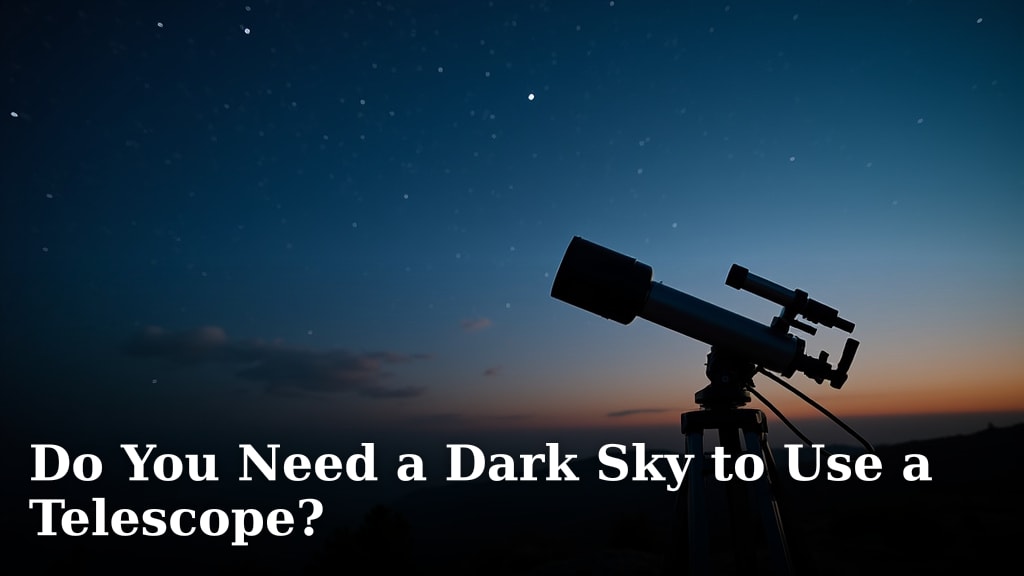
A clear night does not always mean a dark sky. City lights can wash out faint objects, so read Do You Need a Dark Sky to Use a Telescope? for help choosing targets and observing conditions.
Can you see satellites with a 300mm telescope?
You may see a satellite pass through the field of view, but it moves quickly and can be hard to track by hand. A telescope's narrow field makes it less convenient for casual satellite spotting than looking with your eyes.
For what to expect and how to plan a pass, see Can You See Satellites With a Telescope?. A moving satellite is different from a fixed deep-sky target, so don't judge a telescope's reach by how long it stays in view.
What affects how much detail you can see?
The sky and the observing setup can limit detail before the telescope's aperture does. Haze, light pollution, unsteady air, poor focus, and excessive magnification can all make an object harder to see.
Let the telescope adjust to outdoor temperatures if its instructions recommend it. Use a stable mount, focus carefully, and give your eyes time to adapt to darkness; bright phone screens can interrupt that adjustment.
Magnification comes from the telescope's focal length and the eyepiece. More power enlarges the image, but it also makes the view dimmer and magnifies blur from the atmosphere or shaky support.
Does a Barlow lens make the telescope see farther?
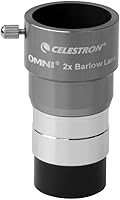
A Barlow lens increases magnification, but it doesn't increase aperture or reveal more light by itself. It can make an object look larger within the limits of the telescope, eyepiece, atmosphere, and target brightness.
The Celestron Omni 1.25" 2X Barlow Lens doubles the magnification of compatible 1.25 in eyepieces and fits 1.25 in focusers and diagonals. For eyepiece care, see how to clean telescope eyepieces.
Use it when the image remains sharp at the added power. If the view becomes dim or blurry, return to a lower magnification.
How should you choose an eyepiece and observe?
Start with a lower magnification to find and focus the target, then increase power gradually. A wider, brighter view can make it easier to locate objects and judge the sky before switching to a shorter focal length eyepiece.
Keep the telescope steady while focusing. If the target drifts or shakes, wait for it to settle before deciding whether the image is sharp.
A diagonal can make viewing more comfortable when a refractor or catadioptric telescope points high in the sky. The Celestron 1.25" Star Diagonal for Refractor fits telescopes with 1.25 in focusers or visual backs and provides a 90 degree viewing angle.
A diagonal can reverse the view left to right, so it may not suit every terrestrial use. Check your telescope's compatibility before choosing an accessory.
Is a 300mm telescope right for a beginner?
A 300mm aperture can show a lot, but the telescope's size, setup, and mount matter to everyday use. A large instrument may need more room and careful handling than a smaller one, so think about where you will store and use it.
A compact option is a Lunarscope tabletop telescope; see the Lunarscope tabletop telescope guide.
For wide sky views or quick observing sessions, binoculars are another option. The Celestron SkyMaster 15x70 Astronomy Binoculars for Stargazing has 15x magnification, 70mm objective lenses, and a built-in ¼"-20 tripod adapter.
The binoculars are a separate observing option, not a way to add 300mm telescope aperture. For a telescope with an alignment aid, see how to use Celestron StarSense.
If you have a Newtonian reflector, accurate mirror alignment helps its optics work as intended. Follow how to collimate a Newtonian telescope when the manual calls for collimation.
How far is 300mm telescope vision in practical terms?
Think in terms of targets and detail rather than a distance number. If 300mm is aperture, it tells you the width of the main mirror or lens; if it is focal length, it helps determine magnification with an eyepiece.
Choose a dark location and bright targets when learning, then try fainter objects as you get familiar with focusing and the sky.
For a broader explanation of viewing distance and what telescopes can reveal, read How Far Can a Telescope See? A Simple Guide.
Frequently asked questions
How far can a 300mm telescope see?
There is no single distance limit. A telescope collects light and makes distant objects appear larger, so a 300mm aperture can show celestial objects far beyond the Solar System under suitable conditions.
What you can distinguish depends on the target, sky, optics, magnification, and observing conditions.
Does 300mm mean aperture or focal length?
It can mean either, so check the telescope's label or manual. A 300mm aperture is the width of the main mirror or lens and affects light gathering and detail.
A 300mm focal length is the distance over which the optics bring light to focus.
It helps determine magnification with an eyepiece.
Can a 300mm telescope see planets?
Yes, a 300mm aperture telescope can show planets, though their apparent size, altitude, atmospheric steadiness, and the telescope's setup affect the view. Start with a lower magnification to find and focus the planet, then increase power only while the image stays clear.
Can a 300mm telescope see galaxies?
A 300mm aperture can show some galaxies as faint, extended patches of light, especially from a dark location. Many galaxies won't look like detailed photographs through an eyepiece; light pollution, transparency, viewing experience, and the galaxy's brightness all matter.