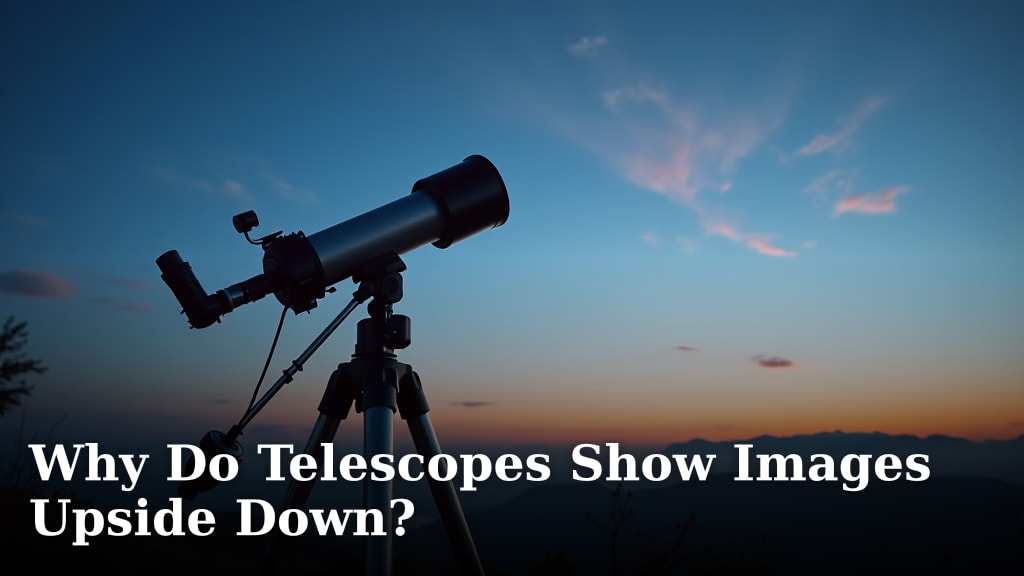
Do Refractor Telescopes Flip Images?
A refractor telescope usually shows an upside-down image. A star diagonal makes the view right side up but reverses it left to right, while a Barlow lens increases magnification without correcting orientation.
On this page (7 sections)
- Do refractor telescopes flip images?
- How does a star diagonal change the view?
- What happens if you use a refractor without a diagonal?
- Does image orientation matter for planets?
- Can a Barlow lens correct the image?
- Are binoculars a simpler way to get an upright view?
- Which accessory should you choose for refractor viewing?
A refractor telescope usually shows an upside-down image when used without an image-correcting accessory. A standard star diagonal makes the view right side up but reverses it left to right.
The direction you see depends on the accessories between the objective lens and your eye. That does not prevent you from viewing the Moon or planets.
Do refractor telescopes flip images?
Yes, a refractor usually inverts the image, making the view appear upside down. The objective lens bends light to form an image at the focal point, and that image is inverted before it reaches the eyepiece.
The eyepiece magnifies that image. Magnification makes the target look larger, but it does not automatically correct its orientation.
The view through a telescope can seem unfamiliar because the field of view is small and the target moves as the Earth turns. Give yourself time to learn how your telescope responds to small adjustments.
Do refractor telescopes flip images left to right?
A refractor without a diagonal generally shows an inverted view, not a simple mirror image. When you add a standard star diagonal, the view becomes upright but reversed left to right.
This difference is easiest to notice with a terrestrial target that has readable text. For astronomy, there usually isn't a familiar horizon or lettering to make the reversal obvious.
How does a star diagonal change the view?
A standard star diagonal makes the view upright and reverses it left to right. It redirects light through an angled mirror or prism so you can look into the eyepiece from a more comfortable position.
That angle can help when a target is high overhead, since you can look down into the eyepiece instead of bending beneath the telescope. The Celestron 1.25" Star Diagonal fits telescopes with 1.25 in focusers or visual backs and accepts standard 1.25 in eyepieces.
A diagonal isn't the same as an image-erecting accessory. If you need a correctly oriented view of a landscape, check that an accessory corrects both up-down and left-right orientation.
For a fuller explanation of the inverted view, see Why Do Telescopes Show Images Upside Down?.
What happens if you use a refractor without a diagonal?
Without a diagonal, expect an upside-down view and a viewing position that can be awkward for targets high in the sky. The image orientation comes from the telescope's optics, while the diagonal changes the direction you look into the eyepiece.
You can observe astronomical objects without a diagonal if your telescope allows direct eyepiece viewing. A diagonal may be more comfortable, especially when pointing high, but it adds another component to the optical path.
If you're new to refractors, Is a Refractor Good for a Beginner? What to Know explains other practical points to consider, including the basic design.
Does image orientation matter for planets?
Usually, the orientation does not matter much when viewing planets. You can recognize a planet by its appearance and position, even if it looks inverted or reversed.
The view's orientation also doesn't tell you how much detail you'll see. For examples of what this aperture can reveal, see what a 70mm telescope can show.
Aperture, atmospheric conditions, focus, magnification, and steady tracking all affect the image.
See what planets you can see with a telescope for a guide to common targets. If you're having trouble locating one, how to find planets with a telescope covers the search process.
Can a Barlow lens correct the image?
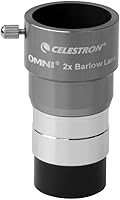
No, a Barlow lens increases magnification but doesn't correct image orientation. It goes between the telescope and eyepiece to increase the eyepiece's effective power.
The Celestron Omni 1.25" 2X Barlow Lens doubles the magnification of an eyepiece. It fits 1.25 in focusers and diagonals and accepts 1.25 in eyepieces.
Higher magnification can make a target harder to keep centered because it appears to move across a narrower field. Start with a lower-power eyepiece, center the target, and add magnification only when the view remains clear.
For a closer look at the role of magnification, read How Does a Telescope Magnify Images? A Simple Guide.
Are binoculars a simpler way to get an upright view?
Astronomy binoculars show an upright view, which may feel more natural for casual sky watching. They use prisms to correct the image before it reaches your eyes.
The Celestron SkyMaster 15x70 Astronomy Binoculars for Stargazing are made for astronomical or long-distance terrestrial viewing. Their size and weight make tripod mounting useful for extended sessions, and they include a tripod adapter.
Binoculars don't replace a telescope for every target or observing style. Compare their field of view, magnification, and support needs with what you want to observe.
Which accessory should you choose for refractor viewing?
Choose a standard star diagonal for a more comfortable angle and an upright view, or an image-erecting accessory when correct orientation matters. For observing planets and other night-sky targets, the usual inverted or reversed view is often easy to work with.
Pick the Celestron diagonal if your telescope has a compatible 1.25 in focuser or visual back and you want a 90-degree viewing angle. Add a Barlow only if you want more magnification, and consider tripod-mounted binoculars if an upright view suits your casual observing better.
The useful rule is simple: the diagonal changes how you look into the telescope, while the Barlow changes magnification. Once you know which orientation your setup gives, small movements and familiar targets make the view easier to follow.
Frequently asked questions
Do refractor telescopes show images upside down?
Usually, yes. A refractor's objective lens forms an inverted image, so without an image-correcting accessory the view is upside down.
A star diagonal typically turns the image right side up while reversing it left to right.
The exact view depends on the optical path and accessories.
Does a telescope diagonal flip the image?
A standard star diagonal changes the view so it is right side up, but left and right are reversed. It bends the light path to a more comfortable viewing angle, especially for objects overhead.
Check the diagonal type if correct left-to-right orientation matters for daytime viewing.
Does image orientation matter when viewing planets?
For planets, image orientation usually matters less than finding and focusing the target. The planet may appear inverted or reversed, but that does not change what it is.
Learn the eyepiece view and use small, deliberate movements when centering it.
Can I make a refractor show an upright image?
Yes. A correct-image or erecting accessory can make the view upright, and some diagonal designs also correct orientation.
A typical star diagonal makes the image upright but left-to-right reversed.
For astronomy, an upright view is often optional, so choose an accessory based on your target and viewing needs.