How to Collimate a Newtonian Reflector Telescope
To collimate a Newtonian telescope, align the secondary mirror under the focuser, then adjust the primary mirror until its reflection is centered. Use a sight tube or collimation cap, make small changes, and recheck the view.
On this page (8 sections)
- What does collimation do on a Newtonian telescope?
- What do you need before adjusting the mirrors?
- How do you collimate a Newtonian reflector telescope?
- Can a laser help collimate a Newtonian or Dobsonian?
- How can you confirm the alignment on a star?
- Which accessories help after collimation?
- What mistakes should you avoid while collimating?
- How do you know when to collimate a Newtonian telescope?
To collimate a Newtonian telescope, center the secondary mirror under the focuser, tilt it toward the primary mirror, then adjust the primary mirror until the reflections line up. Work in small steps with a sight tube, collimation cap, or a correctly aligned laser tool.
Newtonian reflectors and Dobsonian telescopes share this mirror-alignment process. If you need the broader overview first, see how to collimate a telescope.
What does collimation do on a Newtonian telescope?
Collimation aligns the telescope's mirrors so their optical paths meet correctly at the eyepiece. It doesn't clean the optics or change the telescope's magnification.
A Newtonian has a primary mirror at the back of the tube and a smaller diagonal secondary mirror near the front. The secondary redirects light from the primary into the focuser, where you place the eyepiece.
If these parts are out of alignment, stars may look less sharp, especially at higher magnification. Learn how a Newtonian telescope works to see how the mirrors send light through the tube.
What do you need before adjusting the mirrors?
Use a collimation tool that fits your focuser and can show the mirror alignment clearly. Common options include a collimation cap, a sight tube, or a laser collimator.
Set the telescope on a steady surface and point it horizontally. Remove the eyepiece, then check the manual to identify which screws adjust the secondary and primary mirrors.
Don't touch the mirror surfaces. If you use a laser, make sure it is seated securely and check its alignment according to the tool's instructions; a misaligned laser can give a misleading result.
A laser can make the return beam easy to see, but it isn't the only option. Read how a telescope laser collimator works before deciding whether one suits your setup.
How do you collimate a Newtonian reflector telescope?
Align the secondary first, then the primary, and recheck both views before observing. The secondary's position and tilt affect what you see while adjusting the primary.
How do you center the secondary mirror?
Look through the focuser with a sight tube or cap. The secondary should appear centered beneath the focuser, and its reflection should show the primary mirror.
If the secondary looks noticeably off-center, use the secondary's center screw and tilt screws as described in the manual. Make tiny changes, then look again; loosening too much can let the mirror move unexpectedly.
How do you aim the secondary at the primary?
Adjust the secondary tilt until the primary mirror's center mark appears centered in the secondary's view. The center mark is a visual reference, not a screw or a part to remove.
If you can't see the mirror edges or center mark clearly, pause and improve the lighting or use a suitable sight tube. Avoid trying to compensate for an off-center secondary by adjusting the primary.
How do you align the primary mirror?
Use the primary mirror's adjustment screws to bring its center mark toward the center of the tool's view. Turn one screw only a small amount at a time, checking the view after each change.
Some telescopes have separate locking screws. Follow the manual's order for loosening and tightening them, since tightening a lock screw can shift the alignment.
Finish by checking the secondary view again. If the reflections no longer line up, make a small correction and repeat the checks.
Can a laser help collimate a Newtonian or Dobsonian?
A laser collimator can help show the secondary and primary alignment, if the laser itself is accurately aligned. Follow the tool's directions and make sure it sits squarely in the focuser.
For a Dobsonian, the same Newtonian mirror procedure applies. A stable base helps keep the view steady while you make small adjustments; this beginner's guide to Dobsonian telescopes explains what to expect from the design.
A laser is an optional aid, not a requirement. See how to collimate a laser collimator for alignment checks, and how to use an Apertura laser collimator for a tool-specific walkthrough.
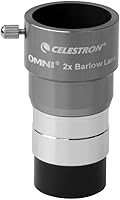
A Barlow lens doesn't collimate the telescope. Use it after alignment when you want more magnification and viewing conditions allow.
How can you confirm the alignment on a star?
Check a star at moderate magnification after the telescope has adjusted to outdoor conditions. A centered, focused star should look crisp; poor seeing or thermal currents can also soften the view.
If the star appears distorted, make sure it is centered in the field and refocus before changing the mirrors again. A star test is a final check, not a substitute for inspecting the mirror reflections.
For a simple observing session with a tabletop telescope, see how to use a Lunarscope tabletop telescope. A refractor uses a different optical layout, so follow how to collimate a refractor telescope for that type.
Which accessories help after collimation?
Choose accessories for observing, not for mirror alignment. A Barlow can add magnification, while binoculars offer a separate way to explore the sky.
These binoculars have 15x magnification and 70 mm objective lenses, plus a tripod adapter for mounting on a sturdy photographic tripod. Their size and weight make tripod support useful for extended viewing.
This diagonal fits telescopes with 1.25-inch focusers or visual backs. It isn't a Newtonian collimation tool, and its 90-degree viewing angle can make it easier to observe objects overhead.
What mistakes should you avoid while collimating?
Avoid large screw turns, touching the mirror surfaces, and relying on a laser you haven't checked. Small adjustments make it easier to see which change improved or worsened alignment.
Don't force a screw that feels stuck, and don't remove the secondary mirror just to make a routine correction. If a mirror seems loose or the adjustment range is exhausted, stop and consult the telescope manual or a qualified service provider.
How do you know when to collimate a Newtonian telescope?
Check collimation after transport and whenever the view suggests the mirrors may have shifted. You don't need to make adjustments if the reflections are already aligned.
To collimate a Newtonian telescope, use a cap or sight tube for a simple check, or a verified laser if you prefer a visible beam. Adjust the secondary first and the primary last, then confirm the result on a star.
Frequently asked questions
How often should you collimate a Newtonian telescope?
Check collimation before observing, especially after transporting the telescope or moving it over rough ground. A stable telescope may need only a small correction, while a bumped or frequently moved tube may need a closer check.
Use the telescope's manual to identify its adjustment screws.
Can you collimate a Newtonian telescope without a laser?
Yes. A collimation cap or sight tube can help you align the secondary and primary mirrors without a laser.
The procedure still depends on seeing the mirror edges and center mark clearly, so use a well-lit space and follow the tool's instructions.
Does a Dobsonian telescope need collimation?
Most Dobsonian telescopes use a Newtonian reflector optical design, so their mirrors may need alignment. Check collimation after transport and before a session if stars look soft or the image seems uneven.
Make only small adjustments and follow the telescope manual.
Which mirror do you adjust first on a Newtonian?
Start by checking the secondary mirror's position under the focuser, then align its tilt, and adjust the primary mirror last. This order helps keep each reflection centered in the next.
A sight tube, cap, or laser can make the alignment marks easier to see.