How to Find the Ecliptic in the Night Sky
To find the ecliptic, trace the broad path the Sun follows across the sky over a year. The Moon and planets appear near this line, which you can follow between familiar constellations and check on a star chart.
On this page (8 sections)
- What is the ecliptic in the night sky?
- How can you find the ecliptic without a telescope?
- Which visible landmarks help you trace the ecliptic?
- Why does the ecliptic change position through the night?
- Can binoculars or a telescope help locate the ecliptic?
- Is the ecliptic the same as the celestial equator?
- How do you know you have found the planetary path?
- How to find the ecliptic on your next observing night
To find the ecliptic, trace the broad path the Sun follows across the sky over a year. The Moon and planets appear near this path, which runs through familiar constellations and can be checked on a star chart.
The ecliptic is not a glowing line you can see at night. It is a reference path against the stars, so finding it means using objects that travel near it and a chart to confirm their positions.
What is the ecliptic in the night sky?
The ecliptic is the Sun's apparent yearly path through the constellations. It reflects Earth's orbit around the Sun, and it also marks the plane of Earth's orbit projected onto the sky.
The phrase plane of the ecliptic describes the flat orbital plane from which the sky path is viewed. The planets orbit close to that plane, so they tend to appear in a band near the ecliptic; the Moon's orbit is tilted a little more.
The ecliptic passes through the zodiac constellations. Depending on the date and time, that path may be high overhead, low near the horizon, or partly below the horizon.
How can you find the ecliptic without a telescope?
Start with the Moon or a bright planet, then use a chart to trace the path around it. These objects appear near the ecliptic, though they do not sit exactly on it at all times.
Look for a bright planet after sunset or before sunrise when one is visible. The Moon is an easy guide on many nights, but it moves noticeably against the stars from night to night.
For a first session, choose a clear view and give your eyes time to adjust to the dark. A beginner's stargazing tips guide covers basic preparation, while Stargazing for Beginners: A Beginner’s Guide explains how to plan a simple observing session.
How to find the ecliptic with a star chart
A star chart shows where the ecliptic lies for a given date and location. A Tirion Explorer planisphere guide can help you read one.
Find the Moon or a planet on the chart, then follow the marked ecliptic through nearby constellations.
Check the chart's orientation and time setting before comparing it with the sky. If you're new to charts, start with how to read a star chart and what a star chart shows.
A chart can also help distinguish a planet from a star. Planets generally hold their place among the constellations over a single observing session, while their positions shift over days and weeks.
Which visible landmarks help you trace the ecliptic?
The zodiac constellations provide landmarks along the ecliptic. Their stars are not equally bright or easy to recognize, so use a chart to connect the constellations rather than trying to identify them all from memory.
The ecliptic may pass through Aries, Taurus, Gemini, Cancer, Leo, Virgo, Libra, Scorpius, Sagittarius, Capricornus, Aquarius, and Pisces. Because Earth's axis is tilted, the apparent path changes height and angle through the night and across the seasons.
The Moon can make one part of the route easier to spot. If it is near a bright star or planet, compare that patch of sky with the same date and time on your chart.
Why does the ecliptic change position through the night?
The ecliptic appears to move because Earth rotates. As the night goes on, the path and the objects near it shift across your view of the sky.
Its angle above the horizon also depends on your location, date, and time. In some seasons, the evening ecliptic is steep; in others, it lies at a shallower angle near the horizon.
Light pollution can hide faint stars that would otherwise help identify a constellation. The Moon and bright planets can still be visible from many locations; this guide explains whether you need a dark sky to use a telescope.
Can binoculars or a telescope help locate the ecliptic?
You can locate the ecliptic with your eyes and a chart; optical equipment helps inspect objects near it. A wide sky view is often more useful for tracing the path than high magnification.
The Celestron SkyMaster 15x70 astronomy binoculars are intended for night-sky viewing, and their 4.4-degree field of view shows a patch of sky at a time. Their 15x magnification can make them hard to hold steady, so the binoculars include a tripod adapter.
Binoculars won't reveal a drawn ecliptic line. Use the chart to identify a planet or constellation first, then point the binoculars toward that area.
Does a Barlow lens help you find the ecliptic?
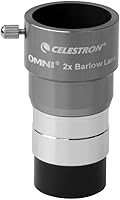
A Barlow lens increases eyepiece magnification, but it does not help you trace a broad sky path. It can be useful after you have found an object and want to view it at higher power.
The Celestron Omni 2X Barlow fits 1.25-inch focusers and diagonals and accepts 1.25-inch eyepieces. It doubles the magnification of an eyepiece, according to its stated function.
Higher magnification narrows the amount of sky in view. For locating the ecliptic, begin with unaided eyes or binoculars, then use a telescope for a specific target.
When does a star diagonal make observing easier?
A 90-degree star diagonal changes the viewing angle at the eyepiece, not the telescope's view of the ecliptic. It can make looking at objects high overhead more comfortable with a compatible telescope.
The Celestron 1.25-inch Star Diagonal fits telescopes with 1.25-inch focusers or visual backs and accepts standard 1.25-inch eyepieces. It shows objects right side up but reverses them left to right.
Check that your telescope has a compatible connection before choosing a diagonal. A diagonal is an observing accessory, not a finder for the ecliptic itself.
Is the ecliptic the same as the celestial equator?
No, the ecliptic and celestial equator are different reference lines. The ecliptic follows the Sun's apparent yearly path; the celestial equator projects Earth's equator onto the sky.
The two lines cross at two points and tilt about 23.4 degrees relative to each other. That tilt explains why the Sun's path changes height across the seasons.
A star chart may show both lines, depending on its settings. Make sure you are following the ecliptic label rather than mistaking the celestial equator for the planetary path.
How do you know you have found the planetary path?
You have likely found the ecliptic when a chart's marked path passes near the Moon or a visible planet. One object alone is not proof, because the Moon and planets can lie a little above or below the exact line.
Check the date and time, then compare more than one landmark. The zodiac constellations provide a second check when they are visible.
The Sun also follows the ecliptic, but never look directly at it through binoculars, a telescope, or any optical aid. For solar observing, use a purpose-made solar filter that fits securely over the front of the instrument; see our guide to Baader solar filters for telescopes.
How to find the ecliptic on your next observing night
To find the ecliptic, use a chart for your date and location, locate the Moon or a planet, and trace the nearby path through the zodiac constellations. Choose binoculars for a wider view, and use a telescope only after you have identified a specific target.
The ecliptic is a useful guide to the planetary path, but it remains an invisible reference line. If the chart and sky seem out of sync, check the time zone, date, and direction you are facing.
What should you remember about finding the ecliptic?
The ecliptic is the projected plane of the solar system's main orbital path, marked in the sky by the Sun's apparent yearly route. The Moon and planets help you estimate its position, while a chart confirms the line.
Use your eyes or binoculars to trace the sky, then choose a telescope accessory based on the object you want to observe. Never point optical equipment at the Sun without a properly fitted solar filter.
Frequently asked questions
What is the easiest way to find the ecliptic?
Use a star chart or sky app to find the ecliptic for your date and location, then look for the Moon or a bright planet near that path. The ecliptic is the Sun's apparent yearly route through the constellations, so it forms a broad line across the sky rather than a visible mark.
Can you see the ecliptic in the sky?
No, the ecliptic itself isn't a visible line. You can estimate its position by following where the Sun, Moon, and planets appear against the stars, then confirm the path with a chart that shows the zodiac constellations.
Is the ecliptic the same as the celestial equator?
No. The ecliptic is the Sun's apparent yearly path against the stars, while the celestial equator is Earth's equator projected onto the sky.
They cross at two points and tilt about 23.4 degrees relative to each other.
Do all planets stay exactly on the ecliptic?
No. The planets orbit close to the plane of Earth's orbit, so they usually appear near the ecliptic, but their paths can sit a few degrees above or below it.
The Moon also has a tilted orbit, so it does not follow the line exactly.