Seestar S30 Pro vs DWARF Mini: Which Should You Choose? (November 2026)
Choose the Seestar S30 Pro for wider-field imaging and the DWARF Mini for lighter travel and longer single-frame exposures. The right pick depends on portability, target size and how much setup control you want.
On this page (7 sections)
- Seestar S30 Pro vs DWARF Mini: which is easier to carry?
- Which telescope gives you a wider view?
- Which one suits automated deep-sky imaging?
- How do EQ mode and leveling affect setup?
- How should you choose between the two?
- What should beginners expect from either telescope?
- Which smart telescope should you choose?
Choose the Seestar S30 Pro for wider-field imaging and the DWARF Mini for lighter travel and longer single-frame exposures. The seestar s30 pro vs dwarf mini choice depends on portability, target size, app control and the kind of imaging sessions you expect to have.
The DWARF Mini weighs 1.85 lb, or about 840 g, compared with 3.6 lb for the Seestar S30 Pro. That makes the DWARF Mini easier to carry in a backpack or take to a dark-sky location, while the Seestar remains portable but adds more weight to a camping or hiking load.
The telescopes also frame the sky differently. The Seestar has a 4.6° field of view, compared with 2.45° for the DWARF Mini.
Its wider view suits broad night landscapes, the Milky Way and star trails, while the DWARF Mini gives targets a tighter composition with less surrounding sky.
Both models use app control, automated pointing and tracking rather than a traditional finder and eyepiece. The Seestar works with a smartphone or tablet, while the DWARF Mini app includes an interactive sky atlas for selecting targets.
Their imaging tools create different strengths. The Seestar combines automatic GOTO, tracking, one-tap capture and processing.
The DWARF Mini adds AZ and EQ modes, auto-stacking and single-frame exposures up to 90 seconds, which can help with automated deep-sky imaging but makes a stable, stationary setup important.
This is a comparison of compact automated imaging systems, not conventional visual telescopes. Both are built around sensors, app control, tracking and captured images.

Seestar S30 Pro vs DWARF Mini: which is easier to carry?
The DWARF Mini is the better travel choice because it weighs about half as much as the Seestar S30 Pro. Its 1.85 lb weight and compact design suit backpacks, camping trips and dark-sky travel.
The Seestar S30 Pro weighs 3.6 lb. That is still portable, but the extra weight matters when you also carry a tripod, power equipment and personal gear.
The DWARF Mini measures 2.39 x 3.95 x 7.23 inches. The Seestar S30 Pro measures 3.1 x 5.5 x 8.3 inches.
Choose the DWARF Mini when you expect to walk from a vehicle to an observing spot. Choose the Seestar S30 Pro when a wider field of view and included tripod matter more than the lightest possible kit.
DWARF Mini vs Seestar S30 Pro for camping
Pick the DWARF Mini for camping when every pound and inch matters. Its all-in-one design, battery power and app control support a simple portable setup.
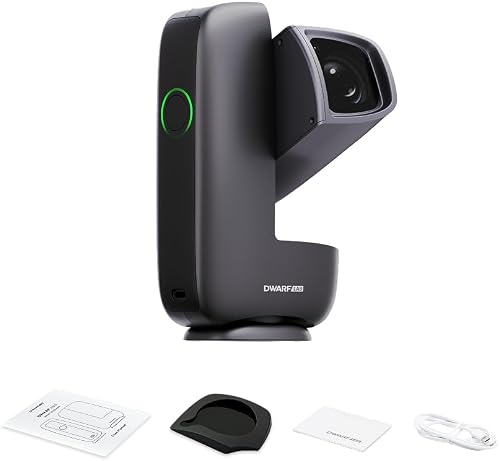
The DWARF Mini includes a filter, USB-C to USB-C charging cable and cleaning cloth. It also has a built-in sky atlas, Auto GOTO and 360° pivot freedom.
The Seestar S30 Pro includes a tripod, filter, quick start guide, safety instructions, astronomy-themed sticker and Type-C cable. That included tripod may reduce the need to pack a separate support.
Which telescope gives you a wider view?
The Seestar S30 Pro gives you the wider view, with a 4.6° field of view compared with 2.45° for the DWARF Mini. A wider frame helps when you want more sky around large targets or wide night landscapes.
The Seestar S30 Pro has a 160 mm focal length and a 30 mm objective lens. Its dual-camera design supports 4K-quality imaging, and its imaging modes include deep sky, the Moon, the Sun, the Milky Way and star trails.
The DWARF Mini has a 150 mm focal length, a 30 mm objective lens and a 2.45° field of view. Its Sony IMX662 sensor, Auto GOTO and automated processing support compact deep-sky imaging.
Field of view is not the same as image quality. A wider frame can make target placement easier, while a narrower frame may keep a smaller subject more prominent.
For a broader comparison, see our guide to Seestar S30 vs S50 vs DWARF 3.
Which one suits automated deep-sky imaging?
Choose the Seestar S30 Pro for wide-field deep-sky imaging, or choose the DWARF Mini for automated imaging with exposures up to 90 seconds. Both use app control and automated tracking, but their listed strengths differ.
The Seestar S30 Pro uses automatic GOTO targeting and tracking. Its apochromatic optics, built-in light pollution filters and AI imaging tools are aimed at clearer astrophotography in urban night skies.
The DWARF Mini uses Auto GOTO, auto-stacking and one-tap processing. Its EQ mode supports single-frame exposures up to 90 seconds, and its built-in filters include dark, astro and duo-band options.
Longer exposures can help collect more light, but they also make stable setup and accurate tracking more important. Keep either telescope stationary during deep-sky imaging and follow its manual for the correct setup.
What does the Seestar S30 Pro do best?
The Seestar S30 Pro is the stronger fit for beginners who want a wider automated view and simple mobile control. It works with a smartphone or tablet and includes automatic tracking, one-tap capture and processing.
Its 4.6° field of view favors large sky scenes and wide-field targets. The product information also describes Milky Way and star trail imaging, automatic mosaic stitching and landscape use.
The S30 Pro is not intended for planetary observation. If planets are your main goal, compare the target requirements before choosing a smart telescope built around deep-sky and wide-field imaging.
Use the Seestar S30 vs DWARF Mini guide if you are also considering the standard Seestar S30.
What does the DWARF Mini do best?
The DWARF Mini is the stronger fit for lightweight automated imaging and longer single-frame exposures. Its 90-second exposure support, EQ mode and built-in processing give you more ways to approach compact deep-sky sessions.
The DWARF Mini has manual-and-auto focus, a 150 mm focal length and a Sony IMX662 sensor. The app includes an interactive star map, so you can select a target instead of manually searching across the sky.
Its 360° pivot freedom helps with automated positioning. The smaller 2.45° field of view may suit a tighter composition, but it gives you less surrounding sky than the Seestar S30 Pro.
How do EQ mode and leveling affect setup?
EQ mode needs a stable, accurately leveled setup, so leveling is worth treating as part of the imaging workflow. Both the DWARF Mini and Seestar S30 Pro support EQ mode, which gives you another way to approach tracking when the imaging session calls for it.
EQ mode is useful when you want tracking for longer exposures, but it does not remove the need for careful placement. Start on a firm surface with a clear view of the sky, keep the telescope stationary during deep-sky imaging and follow the setup instructions for the selected model.
A tripod that is not level can make alignment and tracking less predictable. The Seestar S30 Pro is especially easy to pair with a dedicated leveling accessory because the Leftfoto Tripod Leveler is designed for the Seestar S50 and S30 Pro EQ mode.
The Leftfoto has three adjustment dials and locking rings, with plus or minus 5 degrees of fine adjustment. That gives you a way to make small corrections without repeatedly changing the tripod legs.
Its 3/8-inch stud and socket fit between a tripod and a compatible ball, video or panoramic head, while the included 3/8 to 1/4 adapter supports other gear.
The leveler is made from aircraft aluminum, weighs 202 g and supports up to 33.1 lb or 15 kg. It is an accessory, not a telescope, and it is not water resistant, so keep it protected from rain and damp storage.
Use it when repeatable fine leveling matters, especially for a stationary Seestar EQ setup.
The Leftfoto Tripod Leveler is made from all-metal aircraft aluminum and weighs 202 g. It supports up to 33.1 lb/15 kg and includes a 3/8 to 1/4 adapter screw for compatible gear.
It is not a telescope and does not replace the telescope's own tripod or mount. Use it when fine leveling is more convenient than adjusting tripod legs, especially for a stationary imaging session.
How should you choose between the two?
Choose by your most common observing location and target size, not by automation alone. Both telescopes automate pointing and tracking, so portability and framing become major differences.
Pick the DWARF Mini if:
- You carry the telescope in a backpack.
- You want the lower weight of 1.85 lb.
- You value exposures up to 90 seconds.
- You want AZ and EQ modes with built-in processing.
- You prefer a 2.45° field of view for tighter framing.
Pick the Seestar S30 Pro if:
- You want a wider 4.6° field of view.
- You prefer smartphone or tablet control.
- You want an included tripod.
- You plan to capture wide-field skies, landscapes or star trails.
- You want one-tap imaging for deep-sky targets, the Moon and the Sun.
Our guide on How Do I Know What Telescope to Choose? What to Know can help if you are still weighing target type, portability and setup time.
What should beginners expect from either telescope?
Both are designed to reduce manual sky searching, but you still need a clear setup, a stable surface and realistic target expectations. App automation makes it easier to point at a selected object, but it does not replace preparation before an imaging session.
Charge the telescope before heading outside, install the control app and check that your phone or tablet can connect. The DWARF Mini uses app control with an interactive sky atlas, Auto GOTO and 360° pivot freedom, while the Seestar S30 Pro supports smartphone and tablet control with automatic GOTO and tracking.
Place either telescope on a firm surface with a clear view of the sky. For deep-sky imaging, keep the device stationary while it tracks.
A person walking into the setup, a tripod being moved or an unstable surface can interfere with the consistency that longer imaging sessions require.
Think about framing before selecting a target. The Seestar S30 Pro has a 4.6° field of view, which suits wider sky scenes, while the DWARF Mini has a 2.45° field of view for a tighter view.
Neither field of view guarantees the same result for every object, so target size and the surrounding sky both matter.
Light pollution filters can help with urban imaging, and both products include listed tools for working with bright night skies. They cannot remove every source of sky glow, however, so a darker location, clear weather and an unobstructed view remain valuable.
The Seestar S30 Pro is designed for deep-sky and wide-field imaging rather than planetary observation. New users may benefit from our How to Choose a Telescope for Beginners: A Simple Guide before deciding which targets and setup style fit their plans.
Which smart telescope should you choose?
Choose the DWARF Mini for the lightest portable setup and 90-second exposure support. Choose the Seestar S30 Pro for a wider field of view, included tripod and beginner-friendly wide-field imaging.
Both are compact smart telescopes, but they suit different observing routines.
The DWARF Mini weighs 1.85 lb and is designed for hiking, camping and travel. Its compact, battery-powered, all-in-one format fits more easily into a backpack or dark-sky kit.
It includes a filter, USB-C to USB-C charging cable and cleaning cloth, though you still need a phone for app control and should plan your power before a longer outing.
The Seestar S30 Pro weighs 3.6 lb, making it the heavier option, but its included tripod can simplify setup. Smartphone and tablet control, automatic GOTO, tracking, one-tap capture and processing make it a convenient choice for beginners who want a guided path from setup to image.
Pick the DWARF Mini when reducing carried weight matters most. Its 2.45° field of view, 150 mm focal length, Auto GOTO, 360° pivot and EQ mode support automated imaging, while single-frame exposures up to 90 seconds provide an option for longer exposure work.
Keep the telescope stable during those sessions.
Pick the Seestar when you want more sky in the frame. Its 4.6° field of view suits wide-field scenes, the Milky Way and star trails, and its imaging modes cover deep-sky objects, the Moon and the Sun.
It is designed for deep-sky and wide-field imaging, not planetary observation.
The Seestar also suits users who value tablet support and included equipment more than minimum weight. Its 160 mm focal length, 30 mm objective lens, apochromatic optics and built-in light pollution filters support straightforward mobile astrophotography.
If you plan to use EQ mode, the Leftfoto Tripod Leveler can help with fine adjustment. Its three dials provide plus or minus 5 degrees of leveling, while its 3/8-inch mount and 3/8 to 1/4 adapter fit several tripod and head arrangements.
It adds another part to carry and is not water resistant, so keep it dry.
There is no universal winner. The DWARF Mini favors light travel and longer single-frame exposure support, while the Seestar S30 Pro favors wider framing, included tripod convenience and broad app-controlled imaging.
For another three-way comparison, see Seestar S50 Pro vs DWARF 3.
Frequently asked questions
Is the Seestar S30 Pro better than the DWARF Mini?
The Seestar S30 Pro is better for a wider field of view, smartphone or tablet control and a setup that includes a tripod. The DWARF Mini is better when low weight, backpack portability and single-frame exposures up to 90 seconds matter more.
Which is lighter, the Seestar S30 Pro or DWARF Mini?
The DWARF Mini is lighter at 1.85 lb, while the Seestar S30 Pro weighs 3.6 lb. That difference matters for hiking, camping and dark-sky travel, especially when you also carry power, a phone and other observing gear.
Can both telescopes use EQ mode?
Yes. The DWARF Mini has AZ and EQ modes, and the Seestar S30 Pro supports EQ mode.
Accurate leveling helps with EQ setup, so the Leftfoto Tripod Leveler can be useful with the Seestar S30 Pro when precise adjustment matters.
Which smart telescope has the wider field of view?
The Seestar S30 Pro has the wider field of view at 4.6 degrees. The DWARF Mini has a 2.45-degree field of view, which frames a smaller area of sky and may suit targets that benefit from a tighter composition.
Are these smart telescopes good for planets?
The Seestar S30 Pro is designed for deep-sky objects and wide-field imaging, and its product information says it is not intended for planetary observation. The DWARF Mini is built around automated sky imaging, so check the target and framing before choosing either one.