Best 8-Inch Telescopes: Top 5 Picks (November 2026)
The best 8 inch telescopes include the Celestron NexStar 8SE Computerized Telescope for computerized observing, the Sky-Watcher Classic 200 Dobsonian 8-inch Telescope for manual deep-sky observing, and the Celestron AstroMaster 130EQ Telescope for Deep-Sky Beginners for a smaller first reflector.
On this page (5 sections)
The best 8 inch telescope for computer-assisted observing is the Celestron NexStar 8SE, while the Sky-Watcher Classic 200 is a strong fit for manual viewing with an 8-inch reflector. Both offer 8-inch apertures, but their optical designs, mounts and setup needs are different.
An 8-inch mirror or lens gathers substantially more light than smaller beginner scopes, making aperture a useful factor for viewing the Moon, planets and deep-sky objects. The tradeoff is a larger setup to store, carry and align.
If you're deciding whether the extra aperture fits your routine, compare it with a best 6 inch aperture telescope or a 10 inch telescope. For more context on learning the basics, see is an 8 inch telescope good for beginners?.
Our picks at a glance
-
1
 Best for computerized observing
Celestron NexStar 8SE Computerized Telescope
9.3/10 our score
See it on Amazon -
2
 Best for manual deep-sky observing
Sky-Watcher Classic 200 Dobsonian 8-inch Telescope
9.2/10 our score
See it on Amazon -
3
 Best for a smaller first reflector
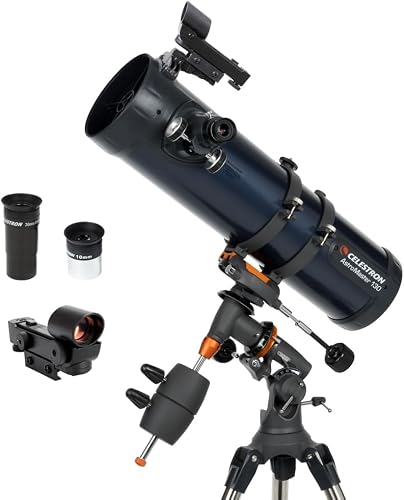
Celestron AstroMaster 130EQ Telescope for Deep-Sky Beginners
9.3/10 our score
See it on Amazon
- 4
 Check it
Sky-Watcher Heritage 150 Tabletop Dobsonian Telescope
Best for compact manual viewing - 5
 Check it
Blue Marble NASA Lunar Telescope for Kids Ages
Best for introducing children to the Moon
Which 8-inch telescope fits your observing style?
The NexStar 8SE suits observers who want GoTo object finding, while the Classic 200 suits those who prefer to move a manual Dobsonian by hand. Smaller reflectors here are alternatives for buyers who value storage or a simpler first step over an 8-inch aperture.
We compared optical design, aperture, mount style, included accessories and the practical space each approach asks you to manage.
| Product | Best for | Aperture | Optical design | Mount | Our score |
|---|---|---|---|---|---|
| Celestron NexStar 8SE Computerized Telescope | computerized observing | 8 in | Schmidt-Cassegrain | Computerized altitude-azimuth single fork arm | 9.3 |
| Sky-Watcher Classic 200 Dobsonian 8-inch Telescope | manual deep-sky observing | 8 in | Altazimuth Dobsonian | 9.2 | |
| Celestron AstroMaster 130EQ Telescope for Deep-Sky Beginners | a smaller first reflector | 130 mm | Newtonian reflector | Equatorial | 9.3 |
| Sky-Watcher Heritage 150 Tabletop Dobsonian Telescope | compact manual viewing | 150 mm | Altazimuth tabletop | 8.5 | |
| Blue Marble NASA Lunar Telescope for Kids Ages | introducing children to the Moon | 9.4 |
Celestron NexStar 8SE Computerized Telescope: Best for computerized observing
- 8-inch Schmidt-Cassegrain optics
- Computerized GoTo mount
- 40,000+ object database
- SkyAlign technology
The 8SE combines an 8-inch aperture with automated object finding and tracking. It fits observers who want computer-assisted pointing in a compact optical design.
Pros
- Computerized GoTo system
- SkyAlign uses three bright stars or planets
- Includes NexStar+ hand control
Cons
- Computerized mount adds setup steps
- Requires alignment before GoTo observing
The Celestron NexStar 8SE is the most direct fit if you want 8-inch aperture with computerized object finding. Its Schmidt-Cassegrain optical design sits on a computerized single fork arm mount.
The included NexStar+ hand control offers a database of more than 40,000 objects, and the mount can slew to selected targets and track them. SkyAlign uses any three bright stars or planets for alignment, so you do not need to identify those objects by name.
This design makes sense for observers who want help locating targets, especially if learning the sky by star hopping is not their main goal. The setup still involves alignment and a powered computerized mount, so consider whether those steps fit how you like to observe.
The 8SE is also described as compact for an 8-inch telescope, with a 25mm eyepiece, star diagonal and StarPointer finder included. Choose it when automation matters more than the simplicity and lower setup complexity of a manual base.
Sky-Watcher Classic 200 Dobsonian 8-inch Telescope: Best for manual deep-sky observing
- 8-inch parabolic primary mirror
- Traditional Dobsonian mount
- Tension control handles
- 25mm and 10mm eyepieces
This 8-inch reflector pairs a large mirror with a simple manual Dobsonian base. It suits visual observers who prefer to aim the telescope themselves.
Pros
- Large 8-inch aperture
- Tension control handles support movement
- Includes two eyepieces and a 9x50 finder
Cons
- Manual aiming instead of GoTo
- Fully assembled weight is 45 lb
The Sky-Watcher Classic 200 is the straightforward choice for an 8 inch reflector telescope with a manual Dobsonian mount. Its 8-inch parabolic primary mirror and 1200mm focal length are paired with an altazimuth base.
Tension control handles support movement without requiring perfect balance, while Teflon bearings help the base move in azimuth. The included 25mm and 10mm eyepieces and 9x50 finder provide the basic pieces for getting started.
This telescope is aimed at visual observing, where you point the tube by hand and follow objects yourself. That can be rewarding if you want to learn the sky directly, but it lacks the automated target selection and tracking of the NexStar 8SE.
The complete setup weighs 45 lb, split between a 20 lb tube and 25 lb base. Make sure you can store and carry both parts to your observing spot before choosing it.
Celestron AstroMaster 130EQ Telescope for Deep-Sky Beginners: Best for a smaller first reflector
- 130mm Newtonian reflector
- German equatorial mount
- Slow-motion controls
- StarPointer red dot finder
The 130mm AstroMaster gives beginners a smaller reflector with manual slow-motion controls. It can be a more manageable step before choosing an 8-inch telescope.
Pros
- 130mm mirror
- Two slow-motion control knobs
- Includes 20mm and 10mm eyepieces
Cons
- Smaller aperture than the 8-inch models
- Equatorial mount has a learning curve
The Celestron AstroMaster 130EQ is a smaller reflector for someone weighing an 8-inch telescope against a first scope. Its 130mm Newtonian mirror gathers less light than an 8-inch aperture, but the package includes a German equatorial mount with slow-motion controls.
The two control knobs move the telescope in right ascension and declination, giving you a way to center and follow targets manually. A StarPointer red dot finder and 20mm and 10mm eyepieces are included.
This is a different kind of learning curve from a Dobsonian. An equatorial mount needs to be oriented and used in a way that may take practice, but the slow-motion controls provide fine manual adjustments once set up.
Consider it if you want a smaller reflector and adjustable tripod rather than the bulk of an 8-inch Dobsonian. For beginner setup and aiming advice, read How to Use a Telescope for Beginners: A Beginner’s Guide.
Sky-Watcher Heritage 150 Tabletop Dobsonian Telescope: Best for compact manual viewing
- 150mm parabolic primary mirror
- Collapsible tube
- Tabletop Dobsonian base
- 750mm focal length
The Heritage 150 offers a smaller aperture in a collapsible tabletop format. It suits observers who value storage and portability over a larger mirror.
Pros
- Collapsible tube for storage
- Tabletop design
- 150mm parabolic mirror
Cons
- Needs a stable table or similar support
- Smaller aperture than an 8-inch reflector
The Sky-Watcher Heritage 150 is a compact manual reflector for observers who want easier storage and a tabletop format. Its 150mm parabolic mirror has a 750mm focal length, and the optical tube collapses for portability and storage.
The tabletop base has rubber feet, and the tube uses a 1.25-inch helical focuser. You will need a sturdy support surface at a comfortable height, so factor in a table or observing platform along with the telescope itself.
A 150mm aperture is smaller than an 8-inch reflector, which is about 203mm across. That makes the Heritage a portability-focused alternative, not an equal-aperture substitute.
If you want a compact tabletop scope with optional computerized assistance, compare the Sky-Watcher Virtuoso GTi and check which size matches your storage and observing plans.
Blue Marble NASA Lunar Telescope for Kids Ages: Best for introducing children to the Moon
- Child-focused lunar observing
- Tabletop tripod
- Finder scope
- Low- and high-power eyepieces
This small telescope is designed to help children locate and view the Moon. It is a starter option for a young observer, not an 8-inch deep-sky instrument.
Pros
- Includes finder scope
- Tabletop tripod and smooth mount
- Learning guide included
Cons
- Designed for lunar observing by children
- Not an 8-inch telescope
The Blue Marble NASA Lunar Telescope is for children starting with Moon viewing, rather than adults comparing 8-inch optics. It comes with a tabletop tripod, finder scope, low- and high-power eyepieces, and a learning guide.
Its smooth mount is intended to make scanning across the lunar surface easier. The stated age range is 8 years and up, making it a different use case from the deep-sky and planet observing setups above.
This pick belongs in a comparison only if a child’s first look at the Moon is your goal. It does not have an 8-inch aperture, so choose one of the reflector or Schmidt-Cassegrain models for greater light gathering.
How do 8-inch telescope designs compare?
An 8-inch Dobsonian gives you a manual Newtonian reflector on a simple altazimuth base, while an 8-inch Schmidt-Cassegrain combines folded optics with a computerized mount in the NexStar 8SE. The right format depends on whether you value direct manual control or help finding and tracking objects.
A reflector uses mirrors, and a Newtonian design places a secondary mirror near the front of the tube to direct light to the eyepiece. An 8-inch reflector can offer a broad aperture at a lower level of mechanical complexity, but a traditional solid tube and base need room.
A Schmidt-Cassegrain folds the light path inside the tube using mirrors and a corrector plate. The compact tube can make an 8-inch aperture easier to package, though the mount and alignment system are part of the overall setup.
To compare the optical approaches in more detail, read is a refractor or reflector telescope better?. The answer depends on what you observe, how you transport the telescope and what maintenance or setup you are willing to handle.
Is an 8-inch telescope worth choosing over a smaller one?
An 8-inch telescope is worth considering if you have room for the full setup and want more light gathering than a 130mm or 150mm scope provides. If easy transport, quick setup or shared family use matters more, a smaller aperture can be a better match.
A telescope 8 inch across is not automatically the best choice for every backyard. A reflector and Dobsonian base may be large to move, while a computerized model can add alignment steps and a tripod or fork mount.
Think about where you will observe and how often you will carry the telescope outside. A scope that is easy to set up is more likely to be used regularly than a larger one that stays stored.
Adults looking for easier travel between observing spots can compare best portable telescopes for adults. If you still want an 8-inch aperture, the 8SE's compact optical format may suit you better than a solid-tube Dobsonian.
What should you check before buying an 8-inch telescope?
Before buying, check the complete setup weight, storage dimensions, mount type and included accessories. Those details affect how quickly you can start observing and whether the telescope fits your home and transport plans.
For a manual Dobsonian, plan for both the optical tube and the base. The Classic 200 weighs 45 lb fully assembled, so it may be easier to move in two pieces than as one unit.
For a computerized telescope, consider the alignment routine and the mount's power needs as part of setup. The NexStar 8SE uses SkyAlign and a NexStar+ hand control, which makes target selection easier after alignment but adds a computer-assisted workflow.
Also check what comes with the telescope, including eyepieces and finders. An included finder can help you place targets in the main telescope, while multiple eyepieces provide different magnifications for different views.
Which 8-inch telescope should you choose?
Choose the NexStar 8SE if computerized GoTo pointing and tracking are your priorities, or the Classic 200 if you want an 8-inch reflector on a manual Dobsonian base. Pick the AstroMaster 130EQ or Heritage 150 when a smaller, more manageable telescope better fits your space or experience.
An 8 inch telescope is a substantial instrument, so base your choice on the complete setup rather than aperture alone. For a larger aperture comparison, see our best 10 inch aperture telescope.
For an 8-inch scope, decide first whether you prefer to find objects yourself or have a computer help with pointing. That choice narrows the field between a traditional reflector telescope 8 inch format and a compact computerized design.
Our top 3 picks at a glance
-
1
Best for computerized observing
Celestron NexStar 8SE Computerized Telescope
9.3/10 our score
See it on Amazon -
2
Best for manual deep-sky observing
Sky-Watcher Classic 200 Dobsonian 8-inch Telescope
9.2/10 our score
See it on Amazon -
3
Best for a smaller first reflector
Celestron AstroMaster 130EQ Telescope for Deep-Sky Beginners
9.3/10 our score
See it on Amazon
Frequently asked questions
What can you see with an 8-inch telescope?
An 8-inch telescope gathers more light than smaller common beginner scopes, which can help show lunar detail, planets and deep-sky targets. What you see depends on the target, sky conditions, optical quality and observing skill.
A larger aperture does not make faint objects look like bright photographs.
Is an 8-inch reflector a good choice?
An 8-inch reflector can be a strong visual observing choice if you have room to store and move it. The Sky-Watcher Classic 200 uses a manual Dobsonian mount, while the NexStar 8SE adds computerized pointing in a Schmidt-Cassegrain design.
Compare the full setup, including its base or tripod, before choosing.
Is an 8-inch telescope too large for a beginner?
An 8-inch telescope can work for a beginner who is ready to learn setup, aiming and storage. The mount style matters: a manual Dobsonian keeps operation direct, while a computerized telescope requires alignment.
If you want a smaller learning step, compare 130mm and 150mm models first.
Should you choose a Dobsonian or computerized 8-inch telescope?
Choose a Dobsonian if you want a manual telescope with a simple altazimuth base and are comfortable finding targets yourself. Choose a computerized model like the NexStar 8SE if automated object selection and tracking matter more.
Both designs can provide an 8-inch aperture, but their setup and use differ.
Is an 8-inch telescope portable?
Portability depends on the optical tube, mount and how far you need to carry them. The Sky-Watcher Classic 200 weighs 45 lb fully assembled, while a Schmidt-Cassegrain design can package an 8-inch aperture in a more compact form.
Check the separate components and your storage space before buying.