8 Best Portable Telescopes for Adults (November 2026)
The best portable telescopes for adults include the Celestron Travel Scope 70mm Beginner Portable Telescope for a ready-to-carry optical kit, the Gskyer Telescope for phone-assisted travel viewing, and the DWARFLAB Dwarf Mini Smart Telescope for the lightest grab-and-go setup.
On this page (5 sections)
The Celestron Travel Scope 70mm is the best portable telescope for most adults because it weighs 4.2 lb and packs into its included backpack. For even less weight, the DWARF Mini is 1.85 lb; for more aperture, consider a larger scope if you can carry its mount and tripod.
Portability depends on the whole kit, not just the optical tube. Think about the distance from your car to the observing spot, storage at home, and how quickly you want to be ready.
If city glow affects your observing site, compare telescopes for light pollution.
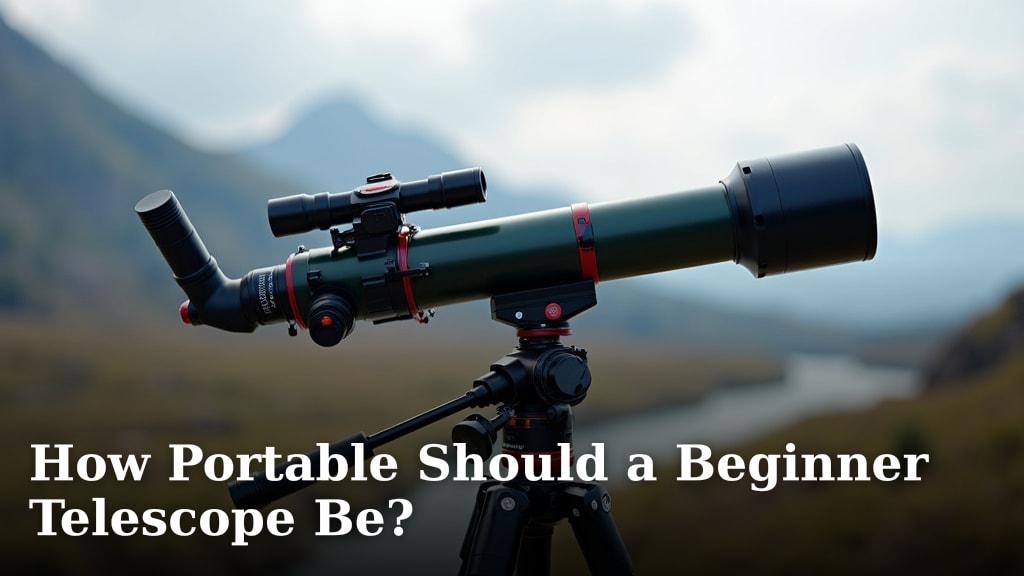
For a fuller checklist, see What Is a Good Travel Telescope? What to Know and How Portable Should a Beginner Telescope Be?.
If your priority is a small setup for home storage, compare these picks with best small telescopes for astronomy.
Our picks at a glance
-
1
 Best for a ready-to-carry optical kit
Celestron Travel Scope 70mm Beginner Portable Telescope
9.7/10 our score
See it on Amazon -
2
-
3
 Best for the lightest grab-and-go setup
DWARFLAB Dwarf Mini Smart Telescope
9.5/10 our score
See it on Amazon
- 4
 Check it
CELTICBIRD Telescope for Adults High Powered
Best for a larger refractor in a backpack - 5
 Check it
Celestron StarSense Explorer LT 114AZ Newtonian Smartphone
Best for guided sky tours - 6
 Check it
PhysioPhyx 80x100 High‑Powered Monocular Telescope HD Portable
Best for daytime scenery and wildlife - 7
 Best for larger-aperture car tripsCheck it
- 8
 Check it
MEEZAA Telescope for Adults & Kids
Best for family trips with a backpack
How we chose portable telescopes for adults
The best portable telescopes for adults balance carry weight, packed storage and the observing setup you want. We compared the stated weight, included bags, tripod or mount, and features that affect setup and use.
A backpack matters when you need to keep the tube and small parts together. A carry bag helps with transport, but it does not make a heavier mount convenient for a long walk.
We also separated optical telescopes from a smart digital telescope and a monocular. Those options serve different purposes, so the right choice depends on whether you want an eyepiece view, app-guided imaging or daytime outdoor viewing.
Our score weighs specs, features and buyer feedback against what you’re shopping for.
Portable telescope features compared
The lightest telescope here is the DWARF Mini at 1.85 lb, while the Celestron Travel Scope 70mm is the lightest traditional telescope with a stated weight. The larger 114mm and 150mm scopes add aperture, but their setups are heavier or more involved.
| Product | Best for | Aperture | Weight | Carry setup | Our score |
|---|---|---|---|---|---|
| Celestron Travel Scope 70mm Beginner Portable Telescope | a ready-to-carry optical kit | 70mm | 4.2 lb | Backpack included | 9.7 |
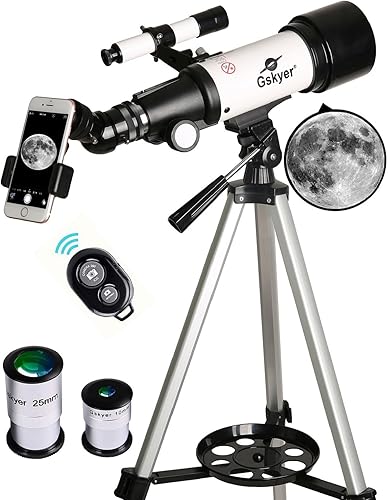
| Gskyer Telescope | phone-assisted travel viewing | 70mm | 5.7 lb | Carry bag included | 9.7 |
| DWARFLAB Dwarf Mini Smart Telescope | the lightest grab-and-go setup | 1.85 lb | Fits in a backpack or large pocket | 9.5 | |
| CELTICBIRD Telescope for Adults High Powered | a larger refractor in a backpack | 80mm | 5.8 lb | Backpack included | 9.5 |
| Celestron StarSense Explorer LT 114AZ Newtonian Smartphone | guided sky tours | 114mm | 10.4 lb | Tripod and tube | 9.5 |
| PhysioPhyx 80x100 High‑Powered Monocular Telescope HD Portable | daytime scenery and wildlife | Pocket, backpack or travel bag | 9.4 | ||
| MEEZAA Telescope | larger-aperture car trips | 150mm | Large carry bag included | 9.4 | |
| MEEZAA Telescope for Adults & Kids | family trips with a backpack | 80mm | Waterproof backpack included | 8.8 |
A bag is useful for storage and carrying, but compare what must go into it. Some kits include a tripod and accessories, while a larger scope may need more room and a shorter carry.
The best portable telescopes for adults
The right pick depends on the trip: choose the Travel Scope for a lightweight optical kit, the DWARF Mini for digital observing, and larger scopes when more aperture matters more than carry weight.
Celestron Travel Scope 70mm Beginner Portable Telescope: Best for a ready-to-carry optical kit
- 70mm aperture
- 4.2 lb
- No-tool setup
- Backpack included
A 70mm refractor with a 4.2 lb weight and a backpack for the scope and accessories. It includes a full-height tripod and no-tool setup.
Pros
- Lightweight kit
- Backpack included
- Day and night use
Cons
- Optical telescope setup includes a tripod to carry
The Celestron Travel Scope 70mm is a straightforward option when you want a traditional refractor that packs as a kit. It weighs 4.2 lb and includes a backpack, full-height tripod, finderscope, star diagonal and two eyepieces.
Its 70mm aperture and fully coated glass lenses are suited to the Moon, planets and daytime scenery. No-tool setup helps keep preparation simple at a campsite or backyard.
For more options suited to campsite observing, see the best telescopes for camping.
The included 20mm and 10mm eyepieces provide wide and closer views. The backpack has room for accessories, and Celestron includes a Starry Night software download for identifying objects and planning sessions.
This scope is a good fit if you want a carryable refractor with a separate tripod and accessories in one package. If you want a pocket-size setup or more aperture, choose another type.
Gskyer Telescope: Best for phone-assisted travel viewing
- 70mm aperture
- 400mm focal length
- 5.7 lb
- Carry bag and phone adapter
This 70mm refractor includes a carry bag, adjustable tripod, phone adapter and wireless camera remote. Its 5.7 lb weight makes it a little heavier to carry than the lightest picks.
Pros
- Phone adapter and wireless remote
- Carry bag included
- Adjustable tripod
Cons
- Heavier than the 4.2 lb Celestron Travel Scope
The Gskyer 70mm refractor adds a phone adapter and wireless camera remote to a travel-ready kit. Its 5.7 lb weight and carry bag make it reasonable for car trips, although it is heavier than the Celestron Travel Scope.
The 70mm aperture and 400mm focal length are intended for lunar, planetary and terrestrial viewing. Two eyepieces and a 3x Barlow lens provide viewing options, while the adjustable tripod supports different positions.
The phone adapter and remote can help you take pictures through the telescope. Keep expectations realistic: a phone setup does not remove the need to align and steady the telescope.
Choose the Gskyer if taking phone pictures matters and you can manage the extra weight. For a lighter optical kit, the Celestron is easier to carry.
DWARFLAB Dwarf Mini Smart Telescope: Best for the lightest grab-and-go setup
- 1.85 lb
- App control
- Auto GOTO
- 90-second exposures
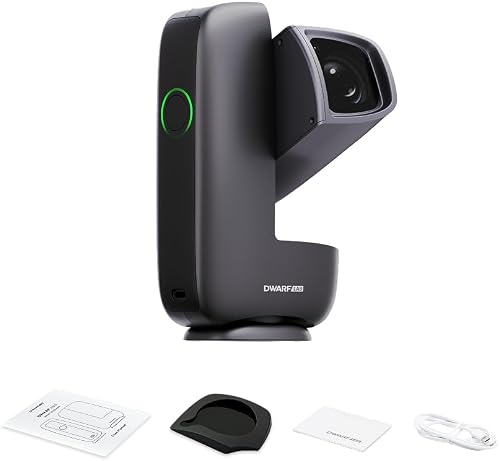
At 1.85 lb, this compact digital telescope is the lightest pick here. App control, automated pointing and image processing make it a different kind of observing setup from an eyepiece telescope.
Pros
- Very low carry weight
- Compact body
- App-controlled pointing
Cons
- Designed for digital observing rather than a traditional eyepiece view
The DWARFLAB Dwarf Mini is the easiest pick to carry because it weighs 1.85 lb and fits in a backpack or large pocket. It uses app control and automated pointing, so its workflow differs from a telescope you look through with an eyepiece.
The app includes an interactive star map, and the scope offers automated target selection and a 360-degree pivot. DWARFLAB describes long-exposure imaging up to 90 seconds, plus built-in filters and cloud processing.
This is a strong fit for hiking, camping or travel when compact imaging is the main goal. Check whether you prefer viewing through an eyepiece before choosing a digital telescope.
CELTICBIRD Telescope for Adults High Powered: Best for a larger refractor in a backpack
- 80mm aperture
- 600mm focal length
- 5.8 lb
- Backpack included
An 80mm refractor with a 5.8 lb weight, adjustable tripod and backpack. Its larger aperture and longer focal length suit buyers who can carry a little more gear.
Pros
- 80mm aperture
- Backpack and phone adapter
- Tripod adjusts from 17.7 to 52 in
Cons
- Heavier than the smaller travel refractors
The CELTICBIRD refractor gives you an 80mm aperture and a backpack, with a stated weight of 5.8 lb. It is a larger carry kit than the 70mm options, but still designed around portable storage.
The 600mm focal length and 20mm and 9mm eyepieces offer two magnifications, while a 5x24 finderscope helps locate targets. The adjustable aluminum tripod ranges from 17.7 to 52 in, and the phone adapter supports taking pictures through the scope.
This model makes sense if you want a larger refractor and can carry the tripod, tube and accessories together. For a simpler and lighter trip, choose one of the 70mm scopes.
Celestron StarSense Explorer LT 114AZ Newtonian Smartphone: Best for guided sky tours
- 114mm aperture
- 10.4 lb
- Smartphone sky recognition
- Manual altazimuth mount
This 114mm Newtonian uses a smartphone app to guide you to targets. At 10.4 lb, it is better for car trips or short carries than hikes.
Pros
- Larger aperture
- App-guided target finding
- Manual slow-motion adjustment
Cons
- Heavier and bulkier than the travel refractors
The Celestron StarSense Explorer LT 114AZ is the guided choice for adults who want help finding targets. Its app uses sky recognition and on-screen arrows to point you toward selected objects.
The 114mm Newtonian reflector provides more aperture than the small refractors here, but the complete scope weighs 10.4 lb. That makes it better for short carries from a car than for hiking with other gear.
A manual altazimuth mount with a slow-motion adjustment rod gives you control as you point. The app also generates target suggestions based on time and location.
Pick it if smartphone guidance and a larger aperture matter more than low carry weight. For a more compact optical option, see best portable 70mm telescopes with backpacks.
PhysioPhyx 80x100 High‑Powered Monocular Telescope HD Portable: Best for daytime scenery and wildlife
- Pocket-friendly body
- Wide-angle design
- Phone adapter
- Tripod included
This monocular is built for outdoor viewing such as wildlife, hiking and travel. It is not a substitute for an astronomy telescope with a tripod and eyepieces.
Pros
- Compact to carry
- Phone adapter included
- Wide-angle design
Cons
- Monocular rather than a telescope for astronomy
The PhysioPhyx monocular is for outdoor viewing, such as wildlife, hiking and scenery, rather than astronomy through a telescope eyepiece. Its pocket-friendly body and included phone adapter make it easy to add to a day pack.
The wide-angle design can help keep moving subjects in view, and the adjustable eyecup is intended for glasses and non-glasses wearers. A tripod and packing bag are included.
Choose this for daytime travel viewing when a full telescope setup would be too much to carry. For the Moon and planets, pick one of the refractors or reflectors above.
MEEZAA Telescope: Best for larger-aperture car trips
- 150mm aperture
- 650mm focal length
- Equatorial mount
- Large carry bag
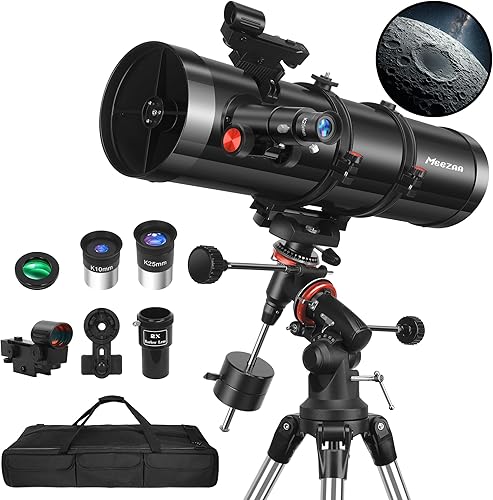
A 150mm reflector with an equatorial mount and a large carry bag. Its bigger scope and mount make it a choice for car-based observing, not a light hiking kit.
Pros
- Largest aperture in this group
- Carry bag included
- Slow-motion mount controls
Cons
- More involved setup than a compact refractor
The MEEZAA 150EQ favors aperture over quick carrying. Its 150mm aperture and 650mm focal length come with an equatorial mount, stainless steel tripod and large carry bag.
The kit includes two eyepieces, a 2x Barlow lens, finderscope, Moon filter and phone adapter. Those parts add capability, but the equatorial mount takes more planning to pack and set up than a small refractor.
This is a better match for car trips to an observing location than a hike. If you want more detail on larger portable models, compare best most powerful portable telescope.
MEEZAA Telescope for Adults & Kids: Best for family trips with a backpack
- 80mm aperture
- 500mm focal length
- Foldable tripod
- Waterproof backpack
This 80mm refractor pairs a foldable tripod with a waterproof backpack. Its all-in-one kit suits family outings where daytime scenery and nighttime viewing are both of interest.
Pros
- Backpack and phone adapter
- Foldable tripod
- Day and night use
Cons
- More pieces to pack than a compact digital telescope
The MEEZAA 80mm refractor is designed as a family travel kit, with a foldable tripod and waterproof backpack. The 80mm aperture and 500mm focal length support nighttime viewing, while the 45-degree mirror also makes daytime viewing more comfortable.
The kit includes 25mm and 10mm eyepieces, a 3x Barlow lens, finderscope and phone adapter. Its tripod adjusts from 16.92 to 44.48 in.
Choose it when the backpack and family-friendly extras matter more than carrying the smallest possible scope. For shorter setup and simpler packing, consider the lighter Celestron Travel Scope.
How should you choose a portable telescope?
Choose a portable telescope by total carry weight, packed storage and the kind of observing you plan to do. A light optical tube can still need a separate tripod, mount and accessories.
Is weight or aperture more important for portable telescopes for adults?
For walking trips, weight often matters more because you carry the whole setup. For car-based observing, a heavier scope can be practical if you want its larger aperture and have time to set up.
The 1.85 lb DWARF Mini is the easiest to carry, while the 150mm MEEZAA offers the largest aperture here. These are different tools, so decide whether compact imaging or a larger optical setup fits your outings.
Should you choose a backpack or carry bag?
A backpack can make a telescope easier to carry hands-free, especially when it holds accessories as well as the tube. A carry bag still helps keep a kit together, but check whether the tripod and mount fit inside too.
The Celestron Travel Scope includes a backpack with room for accessories. The Gskyer has a carry bag, while the MEEZAA 150EQ includes a large carry bag for its larger setup.
Are portable telescopes suitable for beginners?
Yes, if setup and target finding fit your comfort level. The Travel Scope offers no-tool setup, while the StarSense Explorer uses phone guidance and the DWARF Mini uses app control.
For a first telescope, consider how much adjustment you want to do at the observing site. Our How to Use a Telescope for Beginners: A Beginner’s Guide covers basic setup and viewing steps.
What should you check before taking a telescope on a trip?
Check that the packed kit fits your storage space and that you can carry it comfortably with other supplies. Confirm which accessories and tripod parts go in the bag, then plan a stable spot for setup.
If you’re comparing by budget, start with best telescope under 300 or best telescope under 500, then check each model’s current included accessories.
Which portable telescope should you choose?
Choose the Celestron Travel Scope 70mm for a balanced optical kit with a backpack and modest carry weight. Pick the DWARF Mini when low weight and app-guided imaging are the priority, or the 114mm and 150mm scopes when you can trade easier carrying for more aperture.
For a traditional travel telescope, compare the complete packed kit, not only the tube. The best portable 70mm telescope with backpack guide can help narrow that choice.
Our top 3 picks at a glance
-
1
Best for a ready-to-carry optical kit
Celestron Travel Scope 70mm Beginner Portable Telescope
9.7/10 our score
See it on Amazon -
2
-
3
Best for the lightest grab-and-go setup
DWARFLAB Dwarf Mini Smart Telescope
9.5/10 our score
See it on Amazon
Frequently asked questions
What makes a telescope portable?
A portable telescope is manageable to carry, store and set up for the kind of trip you take. Check the full carry weight, including tripod and accessories, and see whether a bag or backpack is included.
A compact optical tube can still take up space once its mount and tripod are packed.
Is a small telescope good for adults?
Yes. A small telescope can suit adults who want an easy kit for the Moon, bright planets and daytime scenery.
A 70mm refractor is a practical starting point, while larger apertures gather more light but usually mean a heavier setup.
Match the scope to what you can carry and where you plan to observe.
Can I take a telescope hiking?
You can take a lightweight setup hiking if you can comfortably carry the scope, tripod and accessories together. The 1.85 lb DWARF Mini is the lightest telescope in this group, while traditional refractors also need room for their tripod and eyepieces.
Check packed dimensions and total weight before a long walk.
Do portable telescopes need a tripod?
Most optical telescopes need a stable mount or tripod to keep the view steady. The compact DWARF Mini uses an integrated automated setup, while the refractors and Newtonian here include or use a separate tripod and mount.
Include those parts in your transport plan.