8 Best Telescopes for Astrophotography (November 2026)
The best telescopes for astrophotography include the Celestron StarSense Explorer DX 130AZ Smartphone Guided for learning the night sky, the DWARFLAB Dwarf Mini Smart Telescope for compact automated imaging, and the Celestron AstroMaster 130EQ Telescope for Deep-Sky Beginners for manual equatorial tracking.
On this page (8 sections)
- How we chose telescopes for astrophotography
- Compare these astrophotography telescopes
- The best telescopes for astrophotography by setup
- Which telescope design works best for imaging?
- What should you check before attaching a camera?
- Should you choose a smart telescope or a camera-ready OTA?
- More guides on this topic
- What is the best telescope for astrophotography?
The best telescope for astrophotography depends on your target and camera plan. For a dedicated camera and broad deep-sky views, consider a flat-field refractor; for automated capture, choose a smart telescope; for planets, look at longer focal lengths and a tracking mount.
Astrophotography is a system choice. The optical tube, camera, mount, field of view and software all affect what you can capture.
A telescope that excels at visual observing may need additional adapters or a different mount before it becomes a practical imaging setup.
Our picks at a glance
-
1
 Best for learning the night sky
Celestron StarSense Explorer DX 130AZ Smartphone Guided
9.6/10 our score
See it on Amazon -
2
 Best for compact automated imaging
DWARFLAB Dwarf Mini Smart Telescope
9.5/10 our score
See it on Amazon -
3
 Best for manual equatorial tracking
Celestron AstroMaster 130EQ Telescope for Deep-Sky Beginners
9.3/10 our score
See it on Amazon
- 4
 Check it
ZWO Seestar S30 Pro Smart Telescope
Best for one-tap wide-field imaging - 5
 Check it
Celestron NexStar 8SE Computerized Telescope
Best for a large aperture and GoTo - 6
 Check it
Askar 71F Flat-Field Telescope
Best for a dedicated imaging refractor - 7
 Check it
DWARFLAB Dwarf 3 Smart Telescope
Best for travel and dual-camera use - 8
 Check it
SVBONY MK127 Telescope for Adults
Best for longer focal length targets
How we chose telescopes for astrophotography
We compared optical designs, imaging features, tracking approach and camera compatibility against common astrophotography goals. The scores reflect how closely each option fits the searcher’s likely needs, with attention to whether it is a complete smart system or an optical tube that needs other equipment.
A telescope’s aperture matters, but it does not decide the whole result. Focal length determines how much sky fits in the frame, while the mount must track smoothly enough for the exposures and camera you plan to use.
Compare these astrophotography telescopes
The key difference is how much of the imaging system each pick includes. Smart telescopes combine camera, control and processing, while conventional optical tubes leave more choices to you.
| Product | Best for | Optical design | Aperture | Mount | Our score |
|---|---|---|---|---|---|
| Celestron StarSense Explorer DX 130AZ Smartphone Guided | learning the night sky | Newtonian reflector | 130 mm | Manual altazimuth | 9.6 |
| DWARFLAB Dwarf Mini Smart Telescope | compact automated imaging | 9.5 | |||
| Celestron AstroMaster 130EQ Telescope for Deep-Sky Beginners | manual equatorial tracking | Newtonian reflector | 130 mm | Manual equatorial | 9.3 |
| ZWO Seestar S30 Pro Smart Telescope | one-tap wide-field imaging | 9.3 | |||
| Celestron NexStar 8SE Computerized Telescope | a large aperture and GoTo | Schmidt-Cassegrain | 8 in | Computerized altazimuth | 9.3 |
| Askar 71F Flat-Field Telescope | a dedicated imaging refractor | Quadruplet apochromatic refractor | 71 mm | 9.2 | |
| DWARFLAB Dwarf 3 Smart Telescope | travel and dual-camera use | 9.1 | |||
| SVBONY MK127 Telescope for Adults | longer focal length targets | Maksutov-Cassegrain | 127 mm | 7.8 |
The best telescopes for astrophotography by setup
The right pick depends on whether you want to learn the sky visually, build a camera system or automate image capture. Start with the workflow you prefer, then confirm camera and mount compatibility.
Celestron StarSense Explorer DX 130AZ Smartphone Guided: Best for learning the night sky
- 130 mm Newtonian reflector
- Smartphone sky recognition
- Manual altazimuth mount
Smartphone guidance and a 130 mm reflector make this a strong visual-first choice for learning targets before adding camera gear.
Pros
- App guides users to targets
- 130 mm aperture
- Slow-motion controls
Cons
- Manual altazimuth mount
- No dedicated imaging camera
The Celestron StarSense Explorer DX 130AZ is best suited to a visual-first beginner who wants help finding targets before adding imaging gear. Its 130 mm Newtonian reflector is paired with a smartphone app that recognizes the sky and points you toward selected objects.
The manual altazimuth mount has dual-axis slow-motion controls. That makes it useful for visual learning and simple target framing, but the mount is not an automated imaging tracker.
The supplied eyepieces and red-dot finder support observing without a camera. If you plan to connect a DSLR or astronomy camera, check the required adapter path and mount limits first.
Choose it if you want a guided introduction to the Moon, planets and bright deep-sky objects. For a camera-first setup, compare a dedicated imaging tube such as the best 8 inch telescope for astrophotography.
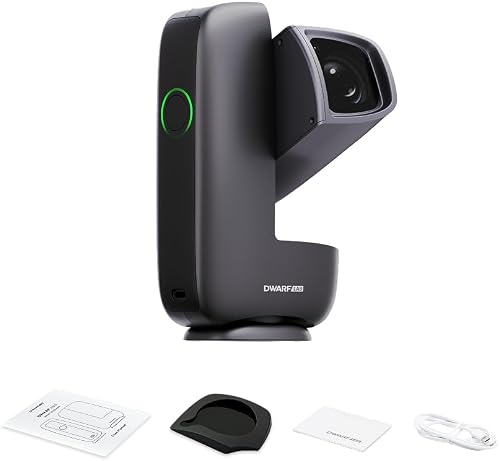
DWARFLAB Dwarf Mini Smart Telescope: Best for compact automated imaging
- 1.85 lb portable design
- Auto GOTO and tracking
- EQ mode and exposures up to 90 seconds
This compact smart telescope combines automated target selection and tracking with an EQ mode for longer exposures.
Pros
- Very light to carry
- App-controlled target selection
- Supports exposures up to 90 seconds
Cons
- Integrated imaging system
- Small sensor format
The DWARFLAB Dwarf Mini is a compact smart telescope for users who value automated capture and portability. It weighs about 1.85 lb and combines app control, Auto GOTO, tracking and an EQ mode.
It supports single-frame exposures up to 90 seconds, according to DWARFLAB. Built-in filters and cloud processing are designed to reduce setup steps, while the integrated sensor and camera keep the system self-contained.
That convenience also means less freedom to choose a separate camera or optical tube. Treat it as a ready-to-use imaging device, rather than a conventional scope for adapting your own camera.
Choose it for travel, quick setup and app-led deep-sky sessions. If you are new to the hobby, the best beginner telescope for astrophotography guide can help compare a smart system with a more traditional setup.
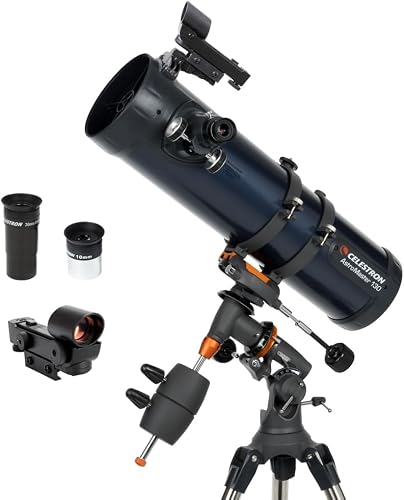
Celestron AstroMaster 130EQ Telescope for Deep-Sky Beginners: Best for manual equatorial tracking
- 130 mm Newtonian reflector
- German equatorial mount
- Slow-motion RA and declination controls
The equatorial mount and manual controls give beginners a way to learn polar-style tracking with a 130 mm reflector.
Pros
- Equatorial mount
- 130 mm aperture
- Slow-motion controls
Cons
- Manual pointing and tracking
- Camera setup requires additional compatibility checks
The Celestron AstroMaster 130EQ is a manual Newtonian setup for learning how an equatorial mount follows celestial motion. Its 130 mm reflector sits on a German equatorial mount with slow-motion controls for right ascension and declination.
Unlike a smart telescope, this scope does not automate imaging or include a dedicated camera. You’ll need to learn polar alignment and check how your camera and any adapters fit the focuser.
The equatorial design can be a useful foundation for basic tracking practice, though the mount’s capacity and precision should guide exposure expectations. The included eyepieces and StarPointer are aimed at visual use.
Choose it if you want a traditional telescope and are willing to build imaging skills step by step. For a camera-focused Newtonian, compare the best imaging Newtonian telescope.
ZWO Seestar S30 Pro Smart Telescope: Best for one-tap wide-field imaging
- Automated GOTO and tracking
- Dual-camera 4K imaging
- Built-in light-pollution filters
Automated capture and processing suit users who want a self-contained system for wide-field and deep-sky imaging.
Pros
- Automatic tracking
- One-tap capture and processing
- Portable 3.64 lb design
Cons
- Designed for deep-sky targets
- Not intended for planetary observation
The ZWO Seestar S30 Pro is a self-contained smart telescope for automated wide-field and deep-sky imaging. Its app provides GOTO targeting and tracking, while dual-camera imaging and automatic processing reduce the need to assemble a separate camera chain.
Built-in light-pollution filters are intended to help with urban imaging. The compact unit weighs about 3.64 lb, making it easier to bring on trips than a full-size telescope and mount.
ZWO says the S30 Pro is designed for deep-sky objects and is not intended for planetary observation. Its integrated workflow favors simple capture and sharing over manual control of individual imaging components.
Choose it if convenience and broad sky targets matter more than swapping cameras or telescopes. For a dedicated camera workflow, see the best telescope for DSLR astrophotography.
Celestron NexStar 8SE Computerized Telescope: Best for a large aperture and GoTo
- 8-inch Schmidt-Cassegrain optics
- Computerized GoTo mount
- 40,000+ object database
Its large aperture and computerized object finding appeal to visual observers who also want imaging flexibility, with mount choice in mind.
Pros
- 8-inch aperture
- Automated target finding and tracking
- SkyAlign setup
Cons
- Altazimuth mount
- Camera and mount compatibility need planning
The Celestron NexStar 8SE pairs an 8-inch Schmidt-Cassegrain optical tube with a computerized GoTo mount. It can locate and track objects from a database of more than 40,000 targets after alignment.
The aperture and long focal length suit observers who want detailed views of the Moon, planets and smaller deep-sky targets. Imaging use needs more thought: the included mount is altazimuth, so consider how field rotation affects longer exposures.
The computerized mount simplifies object finding, but a GoTo system alone does not guarantee imaging-ready tracking. Check camera attachment, balance and the exposure style you plan to use.
Choose it when visual observing is central and you want an upgrade path into imaging. For galaxy-specific framing and focal-length tradeoffs, read about the best galaxy astrophotography telescope.
Askar 71F Flat-Field Telescope: Best for a dedicated imaging refractor
- 71 mm ED quadruplet refractor
- Self-flattened optical design
- Camera-compatible OTA
The self-flattened design and camera compatibility make this optical tube a direct fit for dedicated imaging setups.
Pros
- Self-flattened design
- ED glass
- Camera compatible
Cons
- Optical tube only
- Requires a suitable mount and camera
The Askar 71F is a dedicated optical tube for buyers assembling a deep-sky camera rig. It uses a 71 mm ED quadruplet refractor with a self-flattened design, which avoids the need to add a separate field flattener for its intended imaging setup.
Its 490 mm focal length gives a comparatively broad view of the sky, making it a natural fit for larger nebulae and star fields. The tube is camera-compatible, but it does not include the camera or a tracking mount.
The focuser has a 1:10 fine adjustment and a 360-degree rotator for camera framing. Before buying, match the focuser and connection requirements to your camera and accessories.
Choose this tube if you want to select your own camera and mount around a corrected refractor. For broader target advice, see our guide to the best telescope for deep sky astrophotography.
DWARFLAB Dwarf 3 Smart Telescope: Best for travel and dual-camera use
- 3 lb portable design
- Dual imaging system
- Auto tracking and app processing
A portable dual-camera system offers app-guided imaging for deep-sky objects and wide night landscapes.
Pros
- Compact for travel
- Dual imaging system
- One-touch app processing
Cons
- Integrated camera system
- Limited manual camera customization compared with an OTA setup
The DWARFLAB Dwarf 3 combines a telephoto imaging system and a wide-angle camera in a portable smart telescope. It weighs about 3 lb and uses app-based control, automatic tracking and cloud-powered processing.
The telephoto lens is intended for deep-sky objects, while the wide-angle lens captures the Milky Way and star trails. That two-camera approach gives it more range for travel photography than a single-purpose optical tube.
This is an integrated device, so it won’t provide the same component choices as a camera-ready OTA and separate mount. Its automated workflow is the main appeal for users who want to capture images without building a complex rig.
Choose it for portability and mixed night-sky subjects. If carrying gear is your main concern, compare more options in our best portable telescope for astrophotography guide.
SVBONY MK127 Telescope for Adults: Best for longer focal length targets
- 127 mm Maksutov-Cassegrain OTA
- 0.65x flat-field reducer included
- Dual-speed focuser
The long focal length and included reducer offer flexibility for higher-magnification targets and imaging experiments.
Pros
- 127 mm aperture
- Flat-field reducer included
- Dual-speed focus
Cons
- Long focal length can frame wide targets tightly
- OTA does not include a mount
The SVBONY MK127 is a 127 mm Maksutov-Cassegrain optical tube with a long 1495.6 mm focal length. The included 0.65x flat-field reducer gives you another imaging configuration to consider.
Long focal length can make smaller targets appear larger in the frame, but it narrows the field and makes accurate tracking more demanding. The dual-speed focuser supports fine focus adjustments, and the tube accepts common 1.25 in and 2 in eyepiece interfaces.
This is an OTA without a mount, so the final setup depends on your mount’s capacity, tracking and camera connections. Check compatibility before choosing it for long exposures.
Choose it for lunar, planetary or smaller deep-sky experiments where the longer focal length fits your target. For Moon-focused framing options, see the best telescope for moon photography.
Which telescope design works best for imaging?
A refractor is often a flexible choice for wide-field deep-sky work, while a long-focus catadioptric scope can frame smaller targets more tightly. Newtonian reflectors offer aperture at accessible sizes, but the mount, focuser and camera connection still matter.
A flat-field refractor helps keep stars better shaped across the image, which is why the Askar 71F is aimed at imaging. A Newtonian may need coma correction for a clean field, so include that accessory and its back-focus needs in your plan.
A Maksutov or Schmidt-Cassegrain gives a long focal length in a compact tube. That can help with planets and smaller targets, but it places more demand on tracking and focusing.
What should you check before attaching a camera?
Check the camera connection, focuser travel, available back focus and the telescope’s image circle before you buy. Then make sure the mount can carry the complete imaging load, including camera, adapters and any guiding gear.
A DSLR may connect through a T-ring and adapter, while dedicated astronomy cameras can use different thread sizes. Confirm that the exact camera reaches focus and that the required spacing works with any reducer or flattener.
For planetary imaging, a camera can record short video clips that are stacked later. Deep-sky photography usually needs longer tracked exposures, so mount performance and polar alignment become more important.
If you want a view of galaxies before planning a camera rig, our guide answers Can You See Galaxies With a Home Telescope?. New users can also start with How to Use a Telescope for Beginners: A Beginner’s Guide.
Should you choose a smart telescope or a camera-ready OTA?
Choose a smart telescope if you want integrated imaging, automated tracking and app processing in one unit. Choose a camera-ready optical tube if you want to select your own camera, mount and accessories.
Smart systems such as the Seestar S30 Pro and Dwarf models reduce setup complexity. Their integrated cameras and software can be convenient, though they limit how much you can change individual parts.
A conventional OTA gives you more control over the imaging chain. That flexibility comes with more decisions about mounting, adapters, focus, guiding and processing.
More guides on this topic
- Best Telescopes for Planetary Astrophotography
- Best Budget Telescopes for Astrophotography
- Celestron vs Meade for Astrophotography: Which Should You Choose?
What is the best telescope for astrophotography?
The best telescope for astrophotography is the one that matches your target, camera and mount as a complete system. Choose Askar 71F for a dedicated corrected refractor, a DWARF model or Seestar for an app-led workflow, and a longer focal-length tube when small targets matter.
For an 8-inch aperture, use our best 8 inch telescope for astrophotography comparison. For portable imaging, the best portable telescope for astrophotography guide narrows the choice around weight and travel.
Use the score as a starting point, then verify camera compatibility and mount tracking for the images you want. A camera-ready tube gives you more control, while a smart telescope can make the first capture simpler.
Our top 3 picks at a glance
-
1
Best for learning the night sky
Celestron StarSense Explorer DX 130AZ Smartphone Guided
9.6/10 our score
See it on Amazon -
2
Best for compact automated imaging
DWARFLAB Dwarf Mini Smart Telescope
9.5/10 our score
See it on Amazon -
3
Best for manual equatorial tracking
Celestron AstroMaster 130EQ Telescope for Deep-Sky Beginners
9.3/10 our score
See it on Amazon
Frequently asked questions
What type of telescope is best for astrophotography?
A small apochromatic refractor is a flexible starting point for deep-sky imaging because its field can suit larger nebulae and galaxies, and camera-ready optical tubes pair with separate mounts. Smart telescopes combine optics, camera, tracking and processing in one system.
Planets often call for a longer focal length.
Can you use a regular telescope for astrophotography?
Yes, if the telescope can connect to your camera and the mount can track the target for the exposure you need. A visual telescope on a manual altazimuth mount can work for short Moon images, but long deep-sky exposures need accurate tracking and a suitable camera connection.
Is a reflector or refractor better for astrophotography?
Neither design wins for every target. Refractors can offer a wide field and straightforward camera pairing, while reflectors can provide more aperture for the same tube length.
Compare focal length, image correction, focuser capacity and mount support alongside the optical design.
Do I need a tracking mount for astrophotography?
A tracking mount is strongly useful for deep-sky exposures because it follows the sky as Earth rotates. Planetary video and brief lunar captures can work with less tracking, though a stable mount makes framing and focusing easier.
Match the mount to the telescope and camera load.
What telescope is good for photographing planets?
A longer focal-length telescope can frame planets larger on the camera sensor, and a stable tracking mount helps keep them in view. The 8-inch Schmidt-Cassegrain and 127 mm Maksutov designs here suit planetary interests, but camera sampling and atmospheric conditions also shape detail.