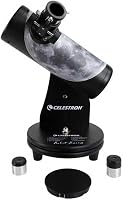
5 Best Smart Telescopes for Beginners (November 2026)
The best smart telescopes for beginners include the Celestron Travel Scope 80mm Telescope Kit for simple travel viewing, the Celestron StarSense Explorer DX 130AZ Smartphone Guided for guided eyepiece observing, and the DWARFLAB Dwarf Mini Smart Telescope for compact automated imaging.
On this page (4 sections)
The best smart telescope for beginners depends on whether you want eyepiece views or automated imaging. The ZWO Seestar S30 Pro automates targeting and imaging, while the Celestron StarSense Explorer DX 130AZ uses phone guidance to help you find targets for direct viewing.
“Smart telescope” can mean two different things. Some telescopes use a phone to guide your manual aiming; others use an app to control an imaging system that sends pictures to your screen.
For a broader smart telescope comparison, start by deciding whether you want to look through an eyepiece, save images, or do both. Beginners who want a traditional view can also read How to Use a Telescope for Beginners: A Beginner’s Guide.
Our picks at a glance
-
1
 Best for simple travel viewing
Celestron Travel Scope 80mm Telescope Kit
9.6/10 our score
See it on Amazon -
2
 Best for guided eyepiece observing
Celestron StarSense Explorer DX 130AZ Smartphone Guided
9.6/10 our score
See it on Amazon -
3
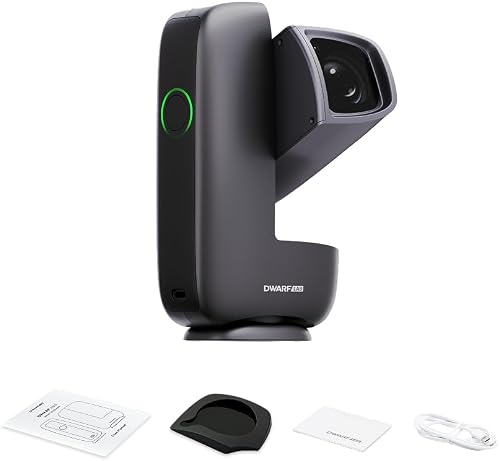 Best for compact automated imaging
DWARFLAB Dwarf Mini Smart Telescope
9.5/10 our score
See it on Amazon
- 4
 Check it
Celestron StarSense Explorer LT 114AZ Newtonian Smartphone
Best for guided observing on a lighter scope - 5
 Check it
ZWO Seestar S30 Pro Smart Telescope
Best for simple app-based imaging
How we chose smart telescopes for beginners
We compared each option by automation, setup effort, portability and what you can observe. Our scores weigh the listed features and specifications against what a beginner is likely to need, including whether the telescope guides eyepiece viewing or automates imaging.
The Travel Scope 80 is a manual telescope with a phone adapter, so it is included as a simple reference point rather than a fully automated smart telescope. The StarSense models add phone-guided target finding; the Dwarf Mini and Seestar S30 Pro add app-controlled imaging features.
| Product | Best for | Optical type | Setup | Included phone feature | Our score |
|---|---|---|---|---|---|
| Celestron Travel Scope 80mm Telescope Kit | simple travel viewing | 80mm refractor | No tools required | Smartphone adapter | 9.6 |
| Celestron StarSense Explorer DX 130AZ Smartphone Guided | guided eyepiece observing | 130mm Newtonian reflector | 9.6 | ||
| DWARFLAB Dwarf Mini Smart Telescope | compact automated imaging | 9.5 | |||
| Celestron StarSense Explorer LT 114AZ Newtonian Smartphone | guided observing on a lighter scope | 114mm Newtonian reflector | 9.5 | ||
| ZWO Seestar S30 Pro Smart Telescope | simple app-based imaging | 9.3 |
Which smart telescope fits your first nights under the sky?
The strongest choice is the one that matches how you want to observe: with your eye at an eyepiece, through a phone screen, or with a portable kit you can carry outside. These picks are ordered by their assigned scores.
Celestron Travel Scope 80mm Telescope Kit: Best for simple travel viewing
- 80mm refractor
- 20mm and 10mm eyepieces
- No-tool setup
- Smartphone adapter and backpack
A portable manual telescope with a smartphone adapter, eyepieces and a backpack. It suits beginners who want a simple kit for Moon viewing and daytime scenery.
Pros
- No-tool setup
- Backpack included
- Two eyepieces
Cons
- Manual focus
- Phone adapter does not provide automated sky guidance
The Celestron Travel Scope 80 is a simple starting point for beginners who want a portable telescope kit. It is a manual refractor, not an automated smart telescope, but its smartphone adapter lets you attach a phone to the eyepiece for photos.
The 80mm aperture and fully coated glass optics are designed for views of the Moon, planets and daytime scenery. The included 20mm and 10mm eyepieces give you two viewing options, while the finderscope helps you aim the telescope.
Setup needs no tools, and the tripod and tube pack into the included backpack. That makes it convenient for a backyard, campsite or daytime outing, though you will aim and focus it yourself.
Choose it if you want direct views through an eyepiece and a straightforward kit. If you expect the telescope to locate and track targets automatically, consider one of the app-guided or imaging models below.
Celestron StarSense Explorer DX 130AZ Smartphone Guided: Best for guided eyepiece observing
- 130mm Newtonian reflector
- StarSense sky recognition
- Manual altazimuth mount
- Dual-axis slow-motion controls
Smartphone sky recognition guides the telescope to targets, while the eyepiece provides a direct view. Its 130mm reflector and slow-motion controls suit beginners ready to learn manual observing.
Pros
- App points to suggested targets
- 130mm reflector
- Slow-motion controls
Cons
- Requires manual aiming and tracking
- Phone and app compatibility matter
The Celestron StarSense Explorer DX 130AZ is the best fit here for beginners who want phone guidance but still want to view through an eyepiece. Dock your phone, open the StarSense app and follow its on-screen arrows toward suggested targets.
StarSense uses sky recognition to estimate the telescope’s position from star patterns overhead. Once you reach the target, the app’s bullseye turns green; the telescope itself remains on a manual altazimuth mount, with dual-axis slow-motion controls for aiming.
Its 130mm Newtonian reflector is suited to observing the Moon, planets, and bright deep-sky objects such as the Orion Nebula and Andromeda Galaxy. The two eyepieces provide different views, and the included tripod and mount are preassembled.
This model makes sense if finding objects is the main beginner hurdle and you want to learn by looking through the telescope. Check phone compatibility before buying: StarSense Explorer works with Android 12 and later and iOS 18 and newer, including iPhone XR and newer.
DWARFLAB Dwarf Mini Smart Telescope: Best for compact automated imaging
- App control and built-in sky atlas
- Auto GOTO
- 360-degree pivot
- EQ mode and exposures up to 90 seconds
This compact imaging telescope pairs app control and an interactive star map with automatic targeting. Its small, light body suits trips where packing space matters.
Pros
- Built-in sky atlas
- Auto GOTO
- Portable at 1.85 lb
Cons
- Primarily an imaging device
- Advanced EQ and exposure options may take practice
The DWARFLAB Dwarf Mini suits beginners who want a compact app-controlled imaging telescope. Its app includes an interactive star map, and the telescope supports automatic GOTO targeting and tracking, so you select a target in the app instead of steering a conventional tube by hand.
At 1.85 lb, it is easy to pack for a trip to a darker observing spot. The app also offers an equatorial mode and exposures up to 90 seconds, features that give you options to explore as you gain experience with imaging.
The automated workflow has a learning curve of its own. You’ll need to get familiar with the app, its imaging settings and how to choose a stable place for the telescope, even though it removes much of the manual aiming.
Choose the Dwarf Mini if portability and app-based imaging matter most. For a bigger screen-first imaging setup with built-in filters, compare it with the Seestar S30 Pro below and our guide to the best smart telescope for deep sky.
Celestron StarSense Explorer LT 114AZ Newtonian Smartphone: Best for guided observing on a lighter scope
- 114mm Newtonian reflector
- StarSense sky recognition
- Manual altazimuth mount
- Altitude slow-motion adjustment
The LT 114AZ combines phone-guided target finding with traditional eyepiece viewing. Its reflector and manual mount make it a fit for beginners who want help locating objects but still want to steer the telescope.
Pros
- App suggests targets for the time and location
- 114mm reflector
- Preassembled mount and tripod
Cons
- Manual aiming and tracking
- Guidance requires a compatible smartphone
The Celestron StarSense Explorer LT 114AZ is a phone-guided manual telescope for beginners who want eyepiece observing. Its StarSense app analyzes the sky and points you toward targets with on-screen arrows, while you move the telescope on its altazimuth mount.
The 114mm Newtonian reflector is designed for views of the Moon, planets, and bright deep-sky favorites. Its mount includes an altitude slow-motion adjustment, which gives you finer control as you follow a target.
Like the DX 130AZ, this is not a fully automated imaging system. You still aim and track manually, but the phone’s sky recognition can make it easier to locate objects than starting from a blank sky.
Choose the LT 114AZ if you want guided locating in a more compact reflector setup. If you’re weighing aperture and setup against a conventional telescope, our guide answers Is an 8 Inch Telescope Good for Beginners?.
ZWO Seestar S30 Pro Smart Telescope: Best for simple app-based imaging
- Automatic GOTO targeting and tracking
- App-controlled imaging
- Built-in light pollution filters
- Deep-sky, Moon and Sun imaging modes
Automatic targeting and tracking, app control and one-tap imaging make this a straightforward entry to astrophotography. Its imaging modes cover deep-sky targets, the Moon and Sun, but it is not intended for planetary observation.
Pros
- Automatic GOTO and tracking
- Built-in light pollution filters
- App-based imaging
Cons
- Not intended for planetary observation
- Deep-sky imaging requires a stationary setup
The ZWO Seestar S30 Pro is the best fit for beginners who want automated astrophotography with app control. Power it on, connect the app and use automatic GOTO targeting and tracking to capture images without manually steering a telescope from target to target.
Its imaging modes cover deep-sky objects, the Moon and the Sun, with built-in light pollution filters for urban conditions. ZWO also describes dual-camera 4K imaging and automatic mosaic stitching, which can help produce wide-field images with less manual setup.
This is an imaging-first telescope, not an eyepiece scope for planetary viewing. The Seestar S30 Pro is explicitly not intended for planetary observation, so choose an eyepiece telescope such as a StarSense model if seeing planets directly is your main goal.
Pick it if you want the app to handle much of the imaging workflow. For other camera-focused options, see our guide to the best telescope with camera built in and best smart telescope for astrophotography.
What should beginners compare before choosing?
Beginners should compare the observing method, level of automation and setup demands before focusing on extra features. A telescope that makes target finding easier may still require manual tracking, while an imaging scope may remove eyepiece viewing from the experience.
Should a beginner choose app guidance or full automation?
Choose app guidance if you want to learn the sky and see targets directly through an eyepiece. The StarSense DX 130AZ and LT 114AZ help locate objects, but you still move the telescope manually.
Choose an automated imaging system if your main goal is to collect and view photos on a phone. The Dwarf Mini and Seestar S30 Pro handle targeting and tracking through their apps, but you’ll spend time learning their imaging controls.
How much setup can you manage?
A manual telescope has simple equipment, but you need to aim, focus and follow objects yourself. The Travel Scope 80 requires no tools to set up; StarSense adds a phone dock and app calibration to the manual observing process.
App-controlled imaging can reduce manual aiming, though it still takes preparation. Plan for a charged device, a stable surface, app setup and enough time to understand the controls before a dark-sky outing.
Do you need a tripod for a smart telescope?
A stable support helps keep an imaging telescope steady, especially during longer sessions. The Seestar S30 Pro includes a tripod, while other compact setups may lead you to compare a separate best tripod for smart telescope option for your use.
For a more traditional eyepiece telescope, tripod stability and mount motion matter too. If you’re comparing a manual option on a budget, see the best telescope under 500 guide.
Which smart telescope is the right beginner choice?
Choose the Seestar S30 Pro if you want app-based imaging with automatic targeting and tracking, or the StarSense DX 130AZ if you want phone help finding objects through an eyepiece. The Dwarf Mini is a compact imaging choice, the LT 114AZ offers guided manual observing, and the Travel Scope 80 is a simple portable kit with a phone adapter.
Match the telescope to the kind of first night you want: looking through an eyepiece, learning the sky with app guidance, or saving images to your phone. Then check phone compatibility and the setup steps before choosing your beginner smart telescope.
Our top 3 picks at a glance
-
1
Best for simple travel viewing
Celestron Travel Scope 80mm Telescope Kit
9.6/10 our score
See it on Amazon -
2
Best for guided eyepiece observing
Celestron StarSense Explorer DX 130AZ Smartphone Guided
9.6/10 our score
See it on Amazon -
3
Best for compact automated imaging
DWARFLAB Dwarf Mini Smart Telescope
9.5/10 our score
See it on Amazon
Frequently asked questions
What is a smart telescope for beginners?
A smart telescope uses a phone app or built-in electronics to help find targets, track them, or capture images. Some models guide a manual telescope while you look through an eyepiece; others automate imaging and show results on your phone.
Decide which kind of observing you want before choosing.
Do smart telescopes show planets through an eyepiece?
Some do, including the Celestron StarSense models here, which use phone guidance while you view through an eyepiece. The Seestar S30 Pro is designed for imaging and is not intended for planetary observation.
Check whether you want a direct eyepiece view or app-based images.
Are smart telescopes easy to set up?
Setup depends on the design. The Travel Scope 80 is a no-tool manual kit, StarSense models use a phone dock and manual mount, and the Dwarf Mini and Seestar S30 Pro use app-controlled imaging with automatic targeting.
Allow time to charge devices, connect the app and learn its controls.
Can a beginner use a smart telescope in a city?
Yes, but city light affects what you can observe and image. The DX 130AZ app suggests targets based on time and location, while the Dwarf Mini and Seestar S30 Pro include light pollution filters for imaging.
A darker observing location can reveal more faint targets.
Should a beginner choose a smart telescope or a regular telescope?
Choose a smart imaging telescope if you want automated targeting and phone-based photos. Choose a guided manual telescope if you want to learn the sky while viewing through an eyepiece.
A conventional kit like the Travel Scope 80 can also be a simpler way to start, though its smartphone adapter does not automate finding targets.