Celestron FirstScope Tabletop Telescope Review: Worth It? (November 2026)
The Celestron FirstScope is a compact, simple tabletop telescope for early observing sessions, with a 76mm mirror and manual Dobsonian mount. It suits Moon viewing and casual sky sweeps, but its small aperture and tabletop setup limit what it can show.
On this page (9 sections)
- What does the Celestron FirstScope offer?
- How does the FirstScope perform for a beginner?
- What can you see through the FirstScope?
- What are the FirstScope's main limits?
- Is the FirstScope Signature Series Moon worth considering?
- What alternatives should you compare?
- How does a tabletop scope compare with larger reflectors?
- How should you choose your first observing targets?
- Who should choose the Celestron FirstScope?
The Celestron FirstScope is a compact tabletop reflector for simple first observing sessions, especially the Moon and brighter sky targets. Its 76mm mirror and manual Dobsonian mount make setup and pointing straightforward, while the small aperture limits views of faint objects.
The Signature Series Moon version adds a lunar map wrap and includes 4mm and 20mm eyepieces. Choose it if portability and direct manual control matter more than a full-height tripod or larger aperture.
What does the Celestron FirstScope offer?
The FirstScope pairs a 76mm spherical glass mirror with a manual tabletop Dobsonian mount. You place it on a steady surface, insert an eyepiece and move the tube by hand in azimuth and altitude.
Celestron FirstScope Signature Series Moon Tabletop Dobsonian: Best for simple lunar sessions
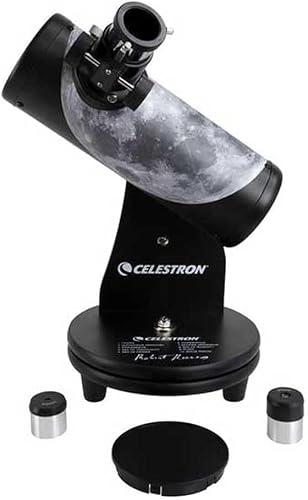
- 76mm spherical glass mirror
- Manual tabletop Dobsonian mount
- 4mm and 20mm eyepieces
- Compact, lightweight design
A compact reflector for straightforward Moon viewing and casual sky sweeps. Its tabletop Dobsonian mount keeps pointing simple, while its small aperture sets limits on faint targets.
Pros
- Simple manual azimuth movement
- Compact and lightweight
- Includes 4mm and 20mm eyepieces
- Moon map wrap highlights lunar features
Cons
- Small 76mm aperture
- Finderscope is not included
- Needs a firm, raised surface for comfortable viewing
The Moon edition has a custom wrap marking 10 lunar features, including Tycho, Plato and Copernicus. It also includes a lunar landscape eBook by Robert Reeves, which gives new observers a few named features to look for.
What comes in the Moon edition?
The telescope includes an optical tube, Dobsonian mount and 4mm and 20mm eyepieces. A finderscope is not included, so locating objects may take practice, especially when you move beyond the Moon.
The short 300mm focal length and 76mm aperture make this a compact, wide-field design. The stated field of view is 1.3 degrees, though the view you get depends on the eyepiece and observing conditions.
How does the FirstScope perform for a beginner?
The FirstScope is easiest to recommend to a beginner who wants low-fuss lunar observing and casual star-field browsing. There is no equatorial mount to align, and the simple base lets you move toward a target with a small hand nudge.
That simplicity still asks you to learn how the sky moves. At higher magnification, objects drift across the view, so you will need to make small adjustments to keep them centered.
A tabletop base also shifts some setup work to the observer. Use a sturdy table, bench or similar support at a comfortable height; a wobbly surface makes precise aiming harder.
If you are weighing this style against other beginner options, our guide to whether a tabletop telescope is good for beginners explains the strengths and trade-offs of the format.
What can you see through the FirstScope?
The FirstScope is most suited to the Moon, bright planets and brighter star clusters. Celestron describes lunar craters and mountains, Saturn's rings, open clusters and the Orion Nebula among its possible targets.
The Moon is a practical first target because it is bright and easy to find. The included map wrap can help you connect visible surface features with names, though fine detail depends on focus, atmospheric steadiness and the Moon's phase.
Bright planets can also be rewarding, but keep expectations modest. A 76mm aperture has less light-gathering capacity than larger reflectors, and a small tabletop scope will not show every feature in the way photographs do.
For faint galaxies and nebulae, dark skies matter, but aperture matters too. The FirstScope can introduce you to brighter deep-sky objects, yet a larger telescope is a better fit if faint targets are your main goal.
What are the FirstScope's main limits?
The main limits are small aperture, no included finderscope and the need for a separate support surface. These are manageable for casual sessions, but they affect how quickly you find objects and what detail you can expect.
At 76mm, it gathers less light than a 130mm reflector or an 8-inch telescope. That does not make it unsuitable for a beginner, but it does set a ceiling on faint-object viewing and fine planetary detail.
Without a finderscope, you may need to sight along the optical tube or add a compatible finder. Start with bright targets and a low-power eyepiece, then move to higher power after the target is centered.
The tabletop form is portable, but you still need a stable place to set it. A small camping table or a solid outdoor bench can work if it does not shake when touched.
Is the FirstScope Signature Series Moon worth considering?
The Moon edition is worth considering if you want a simple reflector with lunar-themed details and included eyepieces. Its core appeal is an uncomplicated manual mount in a compact package, rather than advanced controls or a large aperture.
The Moon wrap and accompanying eBook give the telescope a clear lunar focus. They can help turn a first session into a search for named craters and other visible landmarks.
Celestron also includes a 2-year US warranty and unlimited support from its US-based experts. Check the warranty terms and service availability for your location before buying, since coverage can depend on where you live.
If you want a tabletop telescope with more aperture and phone-based object guidance, compare it with our Celestron StarSense Explorer 150mm review. That larger tabletop Dobsonian is aimed at a different budget and learning style.
What alternatives should you compare?
The best alternative depends on whether you want a tripod, more aperture or a different mount. The Gskyer is a small refractor on an adjustable tripod, while the AstroMaster 130EQ provides a larger mirror and an equatorial mount.
Gskyer Telescope: Best for a tripod setup
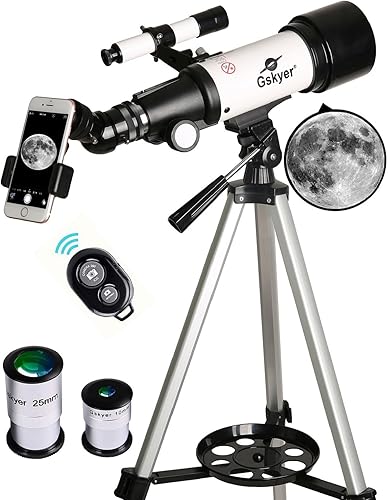
- 70mm aperture
- 400mm focal length
- Altazimuth mount
- Adjustable tripod and carry bag
A small refractor with an adjustable tripod, carry bag and smartphone adapter. Consider it if you prefer a standing setup over placing a tabletop telescope on a separate surface.
Pros
- Adjustable aluminum tripod
- Carry bag included
- Smartphone adapter and wireless remote included
- Two eyepieces and a 3x Barlow lens
Cons
- Still a small-aperture telescope
- Tripod setup takes more space than a tabletop base
The Gskyer has a 70mm objective, 400mm focal length and altazimuth tripod mount. It includes a carry bag, smartphone adapter, wireless camera remote, two eyepieces and a 3x Barlow lens, making it a more complete travel-style setup.
Celestron AstroMaster 130EQ Telescope for Deep-Sky Beginners: Best for more aperture
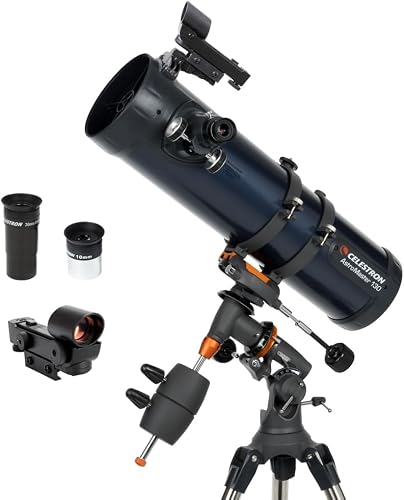
- 130mm Newtonian reflector
- German equatorial mount
- Slow-motion control knobs
- Adjustable tripod
A larger reflector with an adjustable tripod and slow-motion controls for buyers who want more aperture and are ready to learn an equatorial mount.
Pros
- 130mm optics
- Slow-motion controls for right ascension and declination
- Includes 20mm and 10mm eyepieces
- Adjustable full-height tripod
Cons
- More setup and learning than a tabletop Dobsonian
- Heavier and less compact than the FirstScope
The AstroMaster 130EQ has 130mm optics and a German equatorial mount with slow-motion controls. It takes more learning than the FirstScope's tabletop Dobsonian, but its larger aperture is more suitable if you want to move beyond bright targets.
A Celestron PowerSeeker 114EQ review can help if you are comparing another reflector with an equatorial mount. For a refractor option, see the Celestron PowerSeeker 70EQ review.
How does a tabletop scope compare with larger reflectors?
A tabletop telescope trades aperture and raised positioning for a smaller, simpler package. If you have room for a larger tube and mount, an 8-inch or 10-inch reflector can show more on many targets, but it is bulkier and calls for more storage space.
The FirstScope is easier to carry and store than many full-size telescopes. A 10-inch telescope needs a larger base and a more deliberate plan for transport and setup; use our 10-inch telescope guide to see what that size involves.
For a broader shortlist, compare the best 8-inch telescope options and the best 10-inch aperture telescopes. Those larger-aperture choices make more sense when light gathering is a higher priority than portability.
A different compact option is covered in our Celestron StarSense Explorer DX 5 review. Compare mount style, included accessories and setup needs alongside aperture before deciding.
How should you choose your first observing targets?
Start with bright, easy-to-find objects, then build skill before trying faint targets. The Moon is a strong first choice because it is visible without dark skies and the Moon edition's wrap highlights features to explore.
Use the 20mm eyepiece first to get a wider view and make locating a target easier. Once it is centered, try the 4mm eyepiece, keeping in mind that higher magnification makes the view narrower and small tracking movements more noticeable.
Let the telescope adjust to outdoor temperatures before observing, and use it away from direct indoor window glass. Choose a steady surface, keep the eyepieces secure, and never aim the telescope at or near the Sun.
Who should choose the Celestron FirstScope?
Choose the FirstScope if you want a compact, manual telescope for the Moon and brighter targets and have a stable table or bench available. Its simple Dobsonian movement and included eyepieces suit a first look at the sky without a complex mount.
Choose a tripod refractor if you prefer a standing setup and a carry bag, or a larger reflector if faint deep-sky objects are central to your plans. The FirstScope makes the most sense when portability and ease of use come before aperture.
Frequently asked questions
Is the Celestron FirstScope good for beginners?
The FirstScope can suit beginners who want a simple manual telescope for the Moon and casual sky viewing. Its tabletop Dobsonian mount moves by hand, so pointing is direct, but you need a stable surface at a comfortable height.
Its 76mm aperture makes it a starter scope rather than a tool for faint deep-sky targets.
What can you see with the Celestron FirstScope?
The FirstScope is suited to the Moon, bright planets, open star clusters and other brighter targets. Celestron describes views of lunar craters, Saturn's rings and the Orion Nebula, but what you see depends on sky conditions, target position and expectations.
Its 76mm mirror won't show faint objects with the reach of a larger telescope.
Does the Celestron FirstScope include a finderscope?
No, a finderscope is not included with the FirstScope Signature Series Moon model. It comes with 4mm and 20mm eyepieces, so plan on learning to aim along the tube or check whether a compatible finder can be added if locating targets feels difficult.
Does the Celestron FirstScope need a tripod?
The FirstScope uses a manual tabletop Dobsonian mount, so it needs a firm, level surface such as a sturdy table or bench. It does not come with a full-height tripod.
Check that your chosen surface lets you observe comfortably and won't wobble as you nudge the telescope.


