9 Best Telescopes for Adults (November 2026)
The best telescopes for adults include the Gskyer Telescope for lightweight travel, the Dianfan Telescope for a 90mm refractor kit, and the MEEZAA Telescope for flexible tripod height.
On this page (6 sections)
The best telescope to buy for most adults is the Celestron StarSense Explorer DX 130AZ, with phone-guided target finding and a 130mm reflector. Adults who value easy carrying may prefer a compact refractor, while those interested in manual tracking can consider an equatorial model.
A telescope that gets used regularly is a better fit than one that feels impressive on paper but is awkward to store or set up. Think about where you'll observe, how far you'll carry the equipment and whether you want help finding targets.
For beginner-friendly options, compare beginner telescopes for adults.
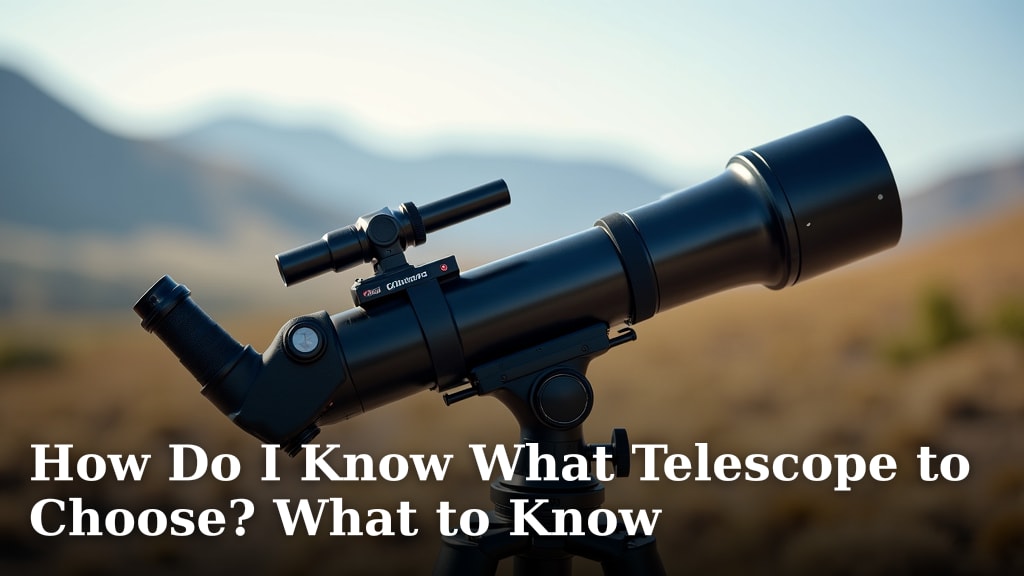
For a wider decision framework, start with How to Choose a Telescope for Beginners: A Simple Guide. If you are still comparing features, [How Do I Know What Telescope to Choose?
What to Know](/how-do-i-know-what-telescope-to-choose/) explains the main choices in plain terms.
Our picks at a glance
-
1
-
2

-
3

- 4
 Check it
Celestron StarSense Explorer DX 130AZ Smartphone Guided
Best for phone guided sky tours - 5
 Check it
CELTICBIRD Telescope for Adults High Powered
Best for adjustable reach - 6
 Best for learning an equatorial mountCheck it
- 7
 Check it
Koolpte Telescope for Adults & Beginner Astronomers
Best for tool-free setup - 8
 Check it
Celestron AstroMaster 130EQ Telescope for Deep-Sky Beginners
Best for manual slow-motion tracking - 9
 Check it
Hawkko 90mm Aperture 900mm Telescope for Adults
Best for a longer focal length
Which adult telescopes stand out for different needs?
The best match depends on how much aperture, portability and guidance you want. These picks are ordered by their assigned scores, with each suited to a different way of observing.
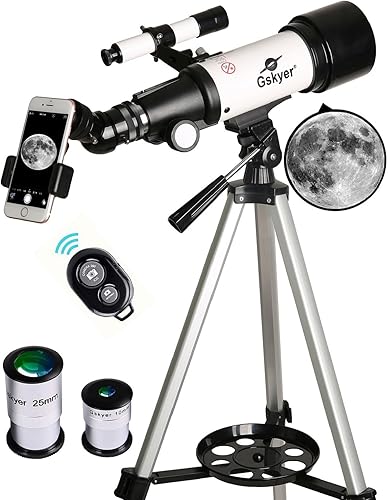
Gskyer Telescope: Best for lightweight travel
- 70mm aperture
- 400mm focal length
- Altazimuth mount
- Carry bag and adjustable tripod
A compact refractor with a carry bag and adjustable aluminum tripod suits adults who want to take a telescope along. Its 70mm aperture and short 400mm focal length make it a portable starting point.
Pros
- Carry bag included
- Phone adapter and wireless remote
- 70mm refractor
Cons
- Smaller aperture than the other picks
- Short focal length
The Gskyer is the lightest listed setup here at 5.7 lb, with a 70mm aperture and 400mm focal length. Its compact refractor and carry bag suit adults who want to move the telescope between the backyard, a campsite or a storage closet.
The adjustable aluminum tripod supports different viewing positions, and the phone adapter with wireless remote can help you take pictures through the telescope. It includes two eyepieces and a 3x Barlow lens, so you can try different magnifications as you learn.
This is a practical choice when portability matters more than having the largest aperture in the group. Adults hoping to compare larger reflector options should look at the Celestron models below.
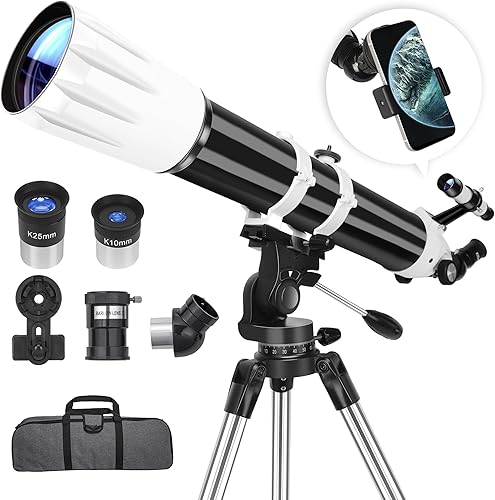
Dianfan Telescope: Best for a 90mm refractor kit
- 90mm aperture
- 800mm focal length
- Stainless steel tripod
- Carry bag and phone adapter
This 90mm refractor includes a stainless steel tripod, bag and phone adapter. The 800mm focal length and two eyepieces make it a straightforward kit for home or travel use.
Pros
- 90mm aperture
- Bag and phone adapter included
- Stainless steel tripod
Cons
- Longer tube than compact travel picks
- Manual focusing
Dianfan pairs a 90mm aperture with an 800mm focal length in an altazimuth refractor. Its stainless steel tripod and included carry bag make it a useful middle ground for adults who want a larger aperture than a travel telescope without choosing an equatorial mount.
The kit includes two eyepieces, a 3x Barlow lens and a 45° zenith mirror. The maker describes assembly as beginner-friendly, but any telescope benefits from a careful first setup and a level surface.
A longer tube needs more room than the Gskyer, so check the space available in your car or storage area. For adults who want adjustable tripod height, the MEEZAA refractor below has a stated range.
MEEZAA Telescope: Best for flexible tripod height
- 90mm aperture
- 800mm focal length
- Tripod adjusts from 28 to 46 inches
- Carry bag and phone adapter
The stainless steel tripod adjusts from 28 to 46 inches, giving adults more choice in viewing height. The kit also includes a carry bag and phone adapter.
Pros
- Adjustable tripod height
- 90mm refractor
- Carry bag included
Cons
- 80cm tube length
- Manual focusing
This MEEZAA refractor also has a 90mm aperture and 800mm focal length, with a tripod that adjusts from 28 to 46 in. That range gives adults more choice in whether to observe standing or seated.
The included carry bag, phone adapter, two eyepieces and 3x Barlow lens make it a complete kit for backyard observing or taking on a trip. The 80cm optical tube is longer than a compact travel telescope, so plan for storage and handling before choosing it.
Consider this model if tripod height and a 90mm aperture are priorities. If app-guided pointing and a wider range of targets are more important, the StarSense model is the next pick.
Celestron StarSense Explorer DX 130AZ Smartphone Guided: Best for phone guided sky tours
- 130mm Newtonian reflector
- StarSense phone guidance
- Manual altazimuth mount
- Dual-axis slow-motion controls
StarSense uses a smartphone to guide you toward suggested targets, while the 130mm reflector supports a broader range of observing. The 18 lb setup is less suited to frequent long-distance carrying.
Pros
- Phone-guided target finding
- 130mm reflector
- Slow-motion mount controls
Cons
- 18 lb weight
- Requires a compatible smartphone
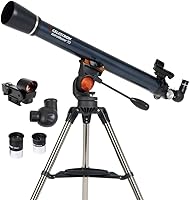
The StarSense Explorer DX 130AZ is the top pick for adults who want phone-guided target finding and a larger reflector. Dock your phone, follow on-screen arrows and use the app's suggested targets for your time and location.
Its 130mm Newtonian reflector is a step up in aperture from the refractors in this roundup. The manual altazimuth mount has dual-axis slow-motion controls, and the setup weighs 18 lb, so it is less convenient to carry than the lightest options.
A compatible smartphone is required for the StarSense guidance. Adults who prefer to learn mount controls without relying on a phone may find the AstroMaster 130EQ more appealing.
CELTICBIRD Telescope for Adults High Powered: Best for adjustable reach
- 80mm aperture
- 600mm focal length
- Tripod adjusts from 17.7 to 52 inches
- Backpack and phone adapter
The tripod's wide height range and included backpack suit adults who need flexibility in setup and storage. Its 80mm refractor balances a moderate aperture with a portable kit.
Pros
- Wide tripod height range
- Backpack included
- 80mm aperture
Cons
- Tripod height needs adjustment before observing
- Manual focusing
The CELTICBIRD has an 80mm aperture and a tripod that adjusts from 17.7 to 52 in, making it flexible for adults with different viewing positions. Its backpack helps keep the telescope and accessories together for storage or travel.
Two eyepieces provide 30x and 66x magnification, and a moon filter is included for lunar observing. The 600mm focal length makes this a mid-size refractor rather than a short tube travel scope.
Choose it if you need a broad tripod height range and a backpack-style carry option. Adults who want to learn the motions of an equatorial mount can compare the MEEZAA 150EQ.
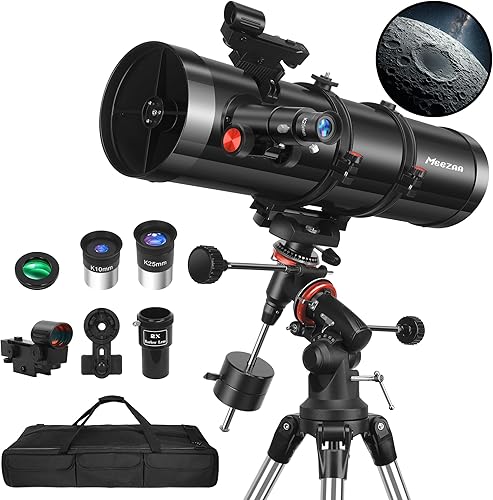
MEEZAA Telescope: Best for learning an equatorial mount
- 150mm Newtonian reflector
- 650mm focal length
- German equatorial mount
- Slow-motion controls and carry bag
The 150mm reflector offers the largest aperture in this group, and its equatorial mount has precision dials and slow-motion controls. It suits adults willing to learn a more involved mounting style.
Pros
- Largest aperture here
- Equatorial mount controls
- Carry bag included
Cons
- Equatorial setup has a learning curve
- Larger kit than compact refractors
The MEEZAA 150EQ has the largest aperture in this roundup at 150mm, paired with a 650mm focal length. Its German equatorial mount uses precision dials and slow-motion control knobs, giving adults a way to learn manual tracking.
An equatorial mount takes more setup than an altazimuth mount because its axes are designed to follow the sky's motion after alignment. The stainless steel tripod and carry bag add portability, but the full kit is larger than the compact refractors.
Consider it if you want to explore a larger reflector and are willing to learn its mount. For a 130mm reflector from Celestron, the AstroMaster is another manual-control option.
Koolpte Telescope for Adults & Beginner Astronomers: Best for tool-free setup
- 80mm aperture
- 600mm focal length
- No-tool setup
- Carry bag and wireless remote
The tool-free setup and carrying bag fit adults who want a simple start. Its 80mm refractor comes with a phone adapter and wireless remote.
Pros
- No-tool setup
- Carry bag included
- Wireless remote
Cons
- Manual focusing
- Tripod height range is not specified
Koolpte is aimed at adults who want a no-tool setup and a portable kit. It has an 80mm aperture, 600mm focal length, adjustable aluminum tripod, carry bag and wireless remote.
The two eyepieces and 3x Barlow lens provide several magnification options, while the 5x24 finder scope helps locate objects. Its tripod height range is not specified, so check whether the setup will suit your usual observing position.
This is a reasonable fit for adults who want a simple refractor setup with phone accessories. If slow-motion controls and a larger reflector matter more, consider the Celestron AstroMaster.
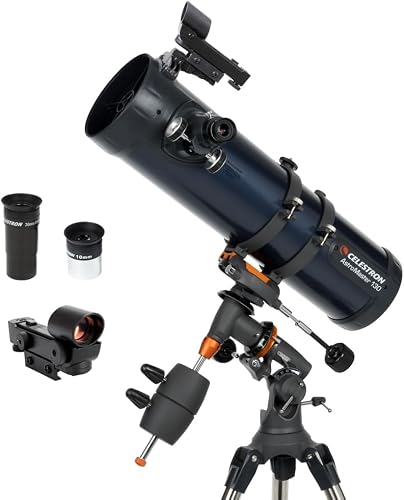
Celestron AstroMaster 130EQ Telescope for Deep-Sky Beginners: Best for manual slow-motion tracking
- 130mm Newtonian reflector
- German equatorial mount
- Slow-motion control knobs
- Adjustable tripod
The 130mm reflector and German equatorial mount suit adults who want to practice manual pointing and tracking. Its slow-motion knobs offer controlled adjustments as objects move across the sky.
Pros
- 130mm aperture
- Slow-motion controls
- Adjustable tripod
Cons
- Equatorial mount takes practice
- 17 lb fully assembled
The AstroMaster 130EQ combines a 130mm Newtonian reflector with a German equatorial mount. Its two slow-motion control knobs let adults make small manual adjustments in right ascension and declination.
The adjustable tripod can be set for standing or seated observing, and the telescope weighs 17 lb fully assembled. The equatorial mount takes practice, but it gives you a way to learn how to track objects across the sky.
Choose it if you want a larger reflector and prefer physical controls over phone-guided finding. For a smartphone-guided version with an altazimuth mount, compare the StarSense Explorer DX 130AZ above.
Hawkko 90mm Aperture 900mm Telescope for Adults: Best for a longer focal length
- 90mm aperture
- 900mm focal length
- Altazimuth mount
- Stainless steel tripod and carry bag
The 900mm focal length is the longest among these refractors, paired with a 90mm aperture. Its stainless steel tripod, bag and phone adapter make it a complete portable kit.
Pros
- 90mm aperture
- 900mm focal length
- Bag and phone adapter included
Cons
- 90cm tube length
- Manual focusing
Hawkko combines a 90mm aperture with a 900mm focal length, the longest focal length among the refractors in this roundup. Its altazimuth mount, stainless steel tripod, carry bag and phone adapter make it a complete kit for adults who want a longer refractor tube.
The package includes a 25mm and 10mm eyepiece plus a 3x Barlow lens. The maker describes assembly as a 15-minute process, though first-time users should allow time to level the tripod and learn the controls.
The 90cm tube needs more storage space than the shorter refractors here. Consider it if the focal length and accessory bundle fit your needs and you have room to store it.
How should adults compare telescope size and handling?
Adults should compare aperture, tube length, assembled weight and storage needs together. A telescope with more aperture may show more, but it can be harder to move and store.
The Gskyer weighs 5.7 lb and has a compact 400mm focal length. At the other end, the 150mm MEEZAA reflector and 130mm Celestron reflectors are larger setups that make sense when you have a stable observing spot and room for storage.
Tripod height also affects comfort. The CELTICBIRD spans 17.7 to 52 in, while the MEEZAA 90mm model adjusts from 28 to 46 in, so compare those ranges with your preferred seated or standing position.
If several people will use the telescope, the best telescope for family use guide can help you weigh setup and shared observing needs. Adults who want the simplest controls can also see our best easy to use telescope recommendations.
What mount is easiest for adults to handle?
An altazimuth mount is usually simpler to point because it moves up, down, left and right. An equatorial mount has axes designed to track the sky after alignment, but its setup takes more learning.
Most refractors here use altazimuth mounts, including the Gskyer, Dianfan, MEEZAA 90mm and Hawkko. The two Celestron 130mm models and the MEEZAA 150EQ use equatorial mounts, with manual slow-motion controls on the Celestron options.
Phone guidance is another way to reduce the challenge of finding targets. The StarSense Explorer DX 130AZ uses a smartphone app for sky tours, while models with a basic finder rely on you to point and locate objects manually.
Is a refractor or reflector better for adult stargazing?
A refractor can be a good fit when a self-contained tube and a simple altazimuth mount matter most. A reflector can offer a larger aperture in this selection, though the mount and tube may take more space.
Refractors in this roundup range from 70mm to 90mm aperture. The reflector options have 130mm or 150mm apertures, which makes them worth considering if you want to explore more than the Moon and bright targets.
If you are ready to compare more capable setups, see telescopes for advanced astronomers.
Neither design removes the need to learn focusing and pointing. Start with the observing targets you care about and choose the setup you are likely to carry outside and use.
What should adults expect to see?
A telescope can show lunar craters and bright planets, but views depend on aperture, sky conditions, target position and how steadily the telescope is set up. A higher magnification number alone does not guarantee a sharper image.
The Moon is a rewarding first target because it is bright and easy to locate. The Celestron 130mm models also describe observing bright nebulae and galaxies, though faint objects are harder to see from light-polluted locations.
Start with a lower-power eyepiece to find and center a target, then try a higher-power eyepiece if the view remains steady. Give your eyes time to adjust to the dark and avoid expecting telescope views to look like processed space photographs.
How do you choose the best telescope to buy for adults?
The best telescope to buy for adults is the one that fits your observing routine, storage space and comfort with setup. Pick the StarSense Explorer DX 130AZ for phone guidance and a 130mm reflector, the Gskyer for lighter travel, or an equatorial Celestron if you want to learn manual tracking.
If you want a longer focal length in a refractor, compare the Hawkko 90mm model with the 800mm Dianfan and MEEZAA options. Adults who want a broader aperture and more involved mount can look at the MEEZAA 150EQ.
Before buying, check the telescope's weight and tripod height against your usual observing location. If you would rather use binoculars for quick sky sessions, read what binoculars to buy.
Our score weighs specs, features and buyer feedback against what you're shopping for.
Our top 3 picks at a glance
-
1
-
2
-
3
Frequently asked questions
What is the best telescope to buy for adults?
The best choice depends on how you plan to observe. The Celestron StarSense Explorer DX 130AZ combines a 130mm reflector with phone guidance, while a 90mm refractor such as the Dianfan or MEEZAA provides a simpler altazimuth setup.
Consider carrying weight, storage and mount style alongside aperture.
What is a good telescope to buy for adults who are beginners?
A good beginner telescope has a mount you can learn, a tripod that fits your viewing position and target-finding tools that make locating objects manageable. The Koolpte offers tool-free setup, while the StarSense Explorer DX 130AZ uses a smartphone to guide you toward targets.
Choose based on whether you prefer simple setup or guided finding.
Are refractors or reflectors better for adult beginners?
Neither design is best for every adult. Refractors like the 90mm Dianfan and MEEZAA use a lens at the front, while reflectors like the Celestron 130mm models use mirrors and have larger apertures in this group.
Think about tube size, carrying needs and the mount you want to learn.
Is a telescope with higher magnification always better?
No. Magnification depends on the eyepiece and conditions, and a high number alone does not guarantee a clear view.
Aperture, stable support, careful focusing and steady air all affect what you can see.
Start with a lower-power eyepiece to find and center a target, then increase power if the image remains steady.
Do adults need a large telescope?
No. A smaller telescope may be easier to store and carry, while a larger aperture can gather more light.
The Gskyer 70mm refractor is compact and comes with a carry bag, while 130mm reflectors offer a larger aperture in a bigger setup.
Choose the largest telescope you can store, transport and set up comfortably.