7 Best Celestron Telescopes (November 2026)
The best Celestron telescopes for different observing needs include the Celestron AstroMaster 70AZ Refractor Telescope for Moon for simple Moon and daytime viewing, the Celestron StarSense Explorer LT 80AZ Smartphone Guided for guided refractor stargazing, and the Celestron NexStar 6SE Schmidt-Cassegrain Telescope for automated GoTo tracking.
On this page (4 sections)
The best Celestron telescope for most beginners is the StarSense Explorer LT 114AZ, because its smartphone guidance helps locate targets and its 114 mm reflector suits Moon, planet and deep-sky viewing. For more options, see our beginner telescopes for adults.
For a simpler setup, choose the AstroMaster 70AZ; for automatic locating and tracking, consider the NexStar 6SE.
Celestron’s range spans compact refractors, manual reflectors and computerized Schmidt-Cassegrain telescopes. Your best fit depends on whether you prefer direct manual controls, app-guided pointing or a mount that moves to selected objects.
If you're comparing brands, start with our guide to what is the best telescope brand. For another price-focused shortlist, see best Celestron telescope under 500 dollars.
Our picks at a glance
-
1
 Best for simple Moon and daytime viewing
Celestron AstroMaster 70AZ Refractor Telescope for Moon
9.7/10 our score
See it on Amazon -
2
 Best for guided refractor stargazing
Celestron StarSense Explorer LT 80AZ Smartphone Guided
9.6/10 our score
See it on Amazon -
3
 Best for automated GoTo tracking
Celestron NexStar 6SE Schmidt-Cassegrain Telescope
9.5/10 our score
See it on Amazon
- 4
 Check it
Celestron StarSense Explorer LT 114AZ Newtonian Smartphone
Best for phone-guided deep-sky browsing - 5
 Check it
Celestron PowerSeeker 127EQ Reflector Telescope for Home
Best for learning an equatorial mount - 6
 Check it
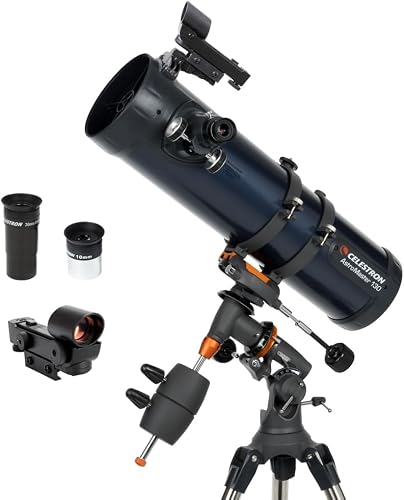
Celestron AstroMaster 130EQ Telescope for Deep-Sky Beginners
Best for manual deep-sky observing - 7
 Check it
Celestron NexStar 8SE Computerized Telescope
Best for a larger computerized telescope
Which Celestron telescope is best for each observing style?
The AstroMaster 70AZ suits simple Moon and daytime use, the StarSense models help you find objects with a phone, and NexStar scopes automate target finding and tracking. Reflector choices give you larger apertures in this lineup, with more involved manual mount controls on the non-computerized models.
We compared the supplied product features against common observing needs: ease of pointing, optical design, aperture, tracking and portability. Our score weighs specs and features against what you're shopping for.
| Product | Best for | Optics | Mount | Included eyepieces | Our score |
|---|---|---|---|---|---|
| Celestron AstroMaster 70AZ Refractor Telescope for Moon | simple Moon and daytime viewing | 70 mm achromatic refractor | Manual alt-azimuth | 20 mm and 10 mm | 9.7 |
| Celestron StarSense Explorer LT 80AZ Smartphone Guided | guided refractor stargazing | 80 mm refractor | Manual alt-azimuth | 9.6 | |
| Celestron NexStar 6SE Schmidt-Cassegrain Telescope | automated GoTo tracking | 6 in Schmidt-Cassegrain | Computerized alt-azimuth fork arm | 9.5 | |
| Celestron StarSense Explorer LT 114AZ Newtonian Smartphone | phone-guided deep-sky browsing | 114 mm Newtonian reflector | Manual alt-azimuth | 9.5 | |
| Celestron PowerSeeker 127EQ Reflector Telescope for Home | learning an equatorial mount | 127 mm Newtonian reflector | Manual German equatorial | 20 mm and 4 mm | 9.4 |
| Celestron AstroMaster 130EQ Telescope for Deep-Sky Beginners | manual deep-sky observing | 130 mm Newtonian reflector | Manual equatorial | 20 mm and 10 mm | 9.3 |
| Celestron NexStar 8SE Computerized Telescope | a larger computerized telescope | 8 in Schmidt-Cassegrain | Computerized alt-azimuth fork arm | 9.3 |
The best Celestron telescopes
These Celestron picks run from an easy manual refractor to a larger computerized telescope. Choose the model whose mount and guidance match how you want to find and follow objects.
Celestron AstroMaster 70AZ Refractor Telescope for Moon: Best for simple Moon and daytime viewing
- 70 mm achromatic refractor
- Manual alt-azimuth mount
- 20 mm and 10 mm eyepieces
- Erect image diagonal
The manual alt-azimuth controls and 70 mm refractor make this a straightforward choice for Moon viewing and daytime targets. The erect image diagonal also supports land-based viewing.
Pros
- Simple up, down and side-to-side controls
- Works for daytime and night viewing
- Includes two eyepieces and a red dot finder
Cons
- No smartphone guidance or automatic tracking
- Smaller aperture than the reflector choices
The AstroMaster 70AZ is a sensible pick when you want simple controls for the Moon and daytime targets. Its 70 mm achromatic refractor and manual alt-azimuth mount keep the setup direct: point up, down or side to side with the panhandle.
Two eyepieces, a StarPointer red dot finder and an erect image diagonal are included. That diagonal makes the telescope suitable for land-based viewing as well as nighttime use.
For scopes selected specifically for birding, see telescopes for bird watching.
Choose it for shared observing with a child or an adult who wants to start with bright, familiar objects. It doesn't provide phone guidance or automatic tracking, so you'll point and follow targets yourself.
Celestron StarSense Explorer LT 80AZ Smartphone Guided: Best for guided refractor stargazing
- 80 mm refractor
- StarSense smartphone sky guidance
- Manual alt-azimuth mount
- Altitude slow motion adjustment
The StarSense app uses sky recognition to guide you toward suggested targets. Its refractor design suits buyers who want phone-assisted pointing with manual controls.
Pros
- App-guided target finding
- Curated targets based on time and location
- Includes 25 mm and 10 mm eyepieces
Cons
- Requires a compatible smartphone
- Still needs manual pointing and tracking
The StarSense Explorer LT 80AZ is the guided refractor choice for someone who wants a phone to help find targets. Dock a compatible smartphone, open the StarSense app and follow its on-screen arrows until the bullseye turns green.
Its 80 mm refractor and manual alt-azimuth mount keep the telescope lighter in approach than a computerized GoTo setup. An altitude slow motion adjustment helps you make controlled movements while following a target.
The app suggests objects based on your location and time, including the Moon, planets and deep-sky targets. You still move the telescope by hand, and the phone must be compatible with the app.
Celestron NexStar 6SE Schmidt-Cassegrain Telescope: Best for automated GoTo tracking
- 6 in Schmidt-Cassegrain optics
- Computerized GoTo mount
- 40,000+ object database
- SkyAlign technology
The NexStar 6SE combines a 6 in optical tube with a computerized mount that locates and tracks selected targets. SkyAlign uses any 3 bright stars or planets for alignment.
Pros
- Automatically locates and tracks selected objects
- Large object database
- SkyAlign does not require naming the alignment objects
Cons
- Computerized setup has more steps than a manual mount
- Heavier than the small manual options
The NexStar 6SE is the step-up choice for automated target finding. Its computerized mount can select from a database of more than 40,000 objects, then slew to and track a target after alignment.
SkyAlign uses any 3 bright stars or planets, so you don't need to know their names. The 6 in Schmidt-Cassegrain optics make this a different kind of buy from the small manual refractors: the mount handles much of the searching, while the setup requires alignment.
Choose the 6SE if you want automated tracking and are comfortable following an alignment process. If you want a larger aperture with similar GoTo features, the 8SE below is the next option.
Celestron StarSense Explorer LT 114AZ Newtonian Smartphone: Best for phone-guided deep-sky browsing
- 114 mm Newtonian reflector
- StarSense smartphone sky guidance
- Manual alt-azimuth mount
- 10 mm and 25 mm eyepieces
This reflector gives you a larger aperture than the LT 80AZ while keeping StarSense phone guidance. The app suggests targets based on your location and time.
Pros
- Largest aperture among the StarSense manual picks
- App-guided target finding
- Includes two eyepieces and a 2x Barlow lens
Cons
- Requires a compatible smartphone
- Manual mount does not track targets automatically
The StarSense Explorer LT 114AZ is the phone-guided reflector pick. Its 114 mm Newtonian optics give it a larger aperture than the LT 80AZ, while the StarSense app keeps target finding approachable for a beginner.
The app uses sky recognition to estimate the telescope's position and points you toward suggested objects. The mount remains manual, with an altitude slow motion adjustment for steadier movement as you center a target.
This model is a strong match if you want guided viewing and a reflector in one package. It includes 25 mm and 10 mm eyepieces and a 2x Barlow lens, but it won't automatically track a target for you.
Celestron PowerSeeker 127EQ Reflector Telescope for Home: Best for learning an equatorial mount
- 127 mm Newtonian reflector
- Manual German equatorial mount
- 20 mm and 4 mm eyepieces
- 3x Barlow lens
The 127 mm reflector offers a broad range of night-sky targets, while the German equatorial mount introduces right ascension and declination controls. It comes with a 3x Barlow lens.
Pros
- Larger reflector aperture
- Slow-motion controls support tracking
- Includes two eyepieces and a Barlow lens
Cons
- Equatorial mount takes more learning than an alt-azimuth mount
- No app-based guidance or automatic GoTo
The PowerSeeker 127EQ is for buyers who want a larger manual reflector and an equatorial mount. Its 127 mm Newtonian optics support viewing the Moon, planets and deep-sky objects, while the German equatorial mount uses slow-motion controls to follow objects.
The mount takes more practice than a simple alt-azimuth design because its axes work differently. You'll need to learn how to point and track with the equatorial controls, rather than moving the tube up, down and sideways.
It includes 20 mm and 4 mm eyepieces plus a 3x Barlow lens. If you want the larger aperture without phone guidance, this is a practical home option, but the learning curve is part of the choice.
Celestron AstroMaster 130EQ Telescope for Deep-Sky Beginners: Best for manual deep-sky observing
- 130 mm Newtonian reflector
- German equatorial mount
- Right ascension and declination controls
- 20 mm and 10 mm eyepieces
The AstroMaster 130EQ pairs a 130 mm reflector with slow-motion equatorial controls. It suits beginners willing to learn manual pointing and tracking.
Pros
- Largest reflector aperture in this group
- Slow-motion controls for both axes
- Includes two eyepieces and a red dot finder
Cons
- Manual equatorial mount requires practice
- No smartphone guidance or computerized tracking
The AstroMaster 130EQ is the manual deep-sky choice in this group. It pairs a 130 mm Newtonian reflector with a German equatorial mount and two slow-motion controls for right ascension and declination.
Those controls can help you center and follow objects once you learn the mount. The 20 mm and 10 mm eyepieces cover two starting magnifications, and a red dot finder helps with initial aiming.
Choose it if you want a substantial reflector and are willing to learn manual tracking. For app guidance with an alt-azimuth mount, the StarSense LT 114AZ is a more direct alternative.
Celestron NexStar 8SE Computerized Telescope: Best for a larger computerized telescope
- 8 in Schmidt-Cassegrain optics
- Computerized GoTo mount
- 40,000+ object database
- SkyAlign technology
The NexStar 8SE offers 8 in Schmidt-Cassegrain optics and automated locating and tracking. It shares the NexStar 6SE's GoTo controls and SkyAlign setup.
Pros
- Largest aperture in this roundup
- Computerized object locating and tracking
- SkyAlign uses 3 bright stars or planets
Cons
- More telescope than a casual beginner may need
- Computerized mount requires alignment
The NexStar 8SE is the larger computerized option for buyers who want an 8 in Schmidt-Cassegrain telescope. Like the 6SE, its GoTo mount selects from a 40,000+ object database, slews to targets and tracks them after alignment.
SkyAlign uses 3 bright stars or planets, even if you don't know what they are. That pairing of larger optics and automated movement makes the 8SE suited to someone who wants a more capable observing setup and is comfortable with its computerized controls.
Pick it over the 6SE if the larger aperture is your priority. For someone still learning the sky and unsure about setup, the manual AstroMaster 70AZ or guided StarSense models have a simpler starting point.
How do you choose the right Celestron telescope?
Choose by how you want to find objects, then compare aperture and optical design. A telescope that matches your preferred setup is easier to use consistently than one chosen on aperture alone.
Is phone guidance or GoTo better for beginners?
StarSense guidance keeps the mount manual while giving you on-screen directions to targets. NexStar GoTo automates locating and tracking, but you must align the mount first.
If you're unsure whether Celestron suits your needs, read is Celestron a good brand. Buyers comparing another established maker can also review Celestron vs Meade telescopes.
Should you choose a refractor or reflector?
Refractors such as the AstroMaster 70AZ and StarSense LT 80AZ use lenses and can be appealing for straightforward lunar and planetary viewing. Newtonian reflectors such as the LT 114AZ and AstroMaster 130EQ use mirrors and offer larger apertures among the manual choices here.
For trips where carrying the telescope matters, compare these choices with what makes a good travel telescope. If you're selecting a telescope for an adult beginner, our guide to what is the best telescope to buy for adults can help narrow the type.
What should you know about Celestron's manual mounts?
A manual alt-azimuth mount moves up, down and side to side. An equatorial mount follows different axes and can take extra practice, while a computerized GoTo mount adds alignment but can locate and track selected objects.
The PowerSeeker 127EQ and AstroMaster 130EQ use manual equatorial mounts. For more reflector options outside Celestron, browse best Explore Scientific telescopes and our Celestron PowerSeeker 114EQ telescope review.
Which Celestron telescope should you choose?
Choose the StarSense Explorer LT 114AZ if phone-guided pointing and a reflector fit your plans. Pick the AstroMaster 70AZ for simple Moon and daytime viewing, the LT 80AZ for guided refractor use, or the NexStar 6SE for computerized tracking.
If you want to learn a manual equatorial mount, consider the PowerSeeker 127EQ or AstroMaster 130EQ. Choose the NexStar 8SE when you want the largest aperture in this group with automated target finding.
Our top 3 picks at a glance
-
1
Best for simple Moon and daytime viewing
Celestron AstroMaster 70AZ Refractor Telescope for Moon
9.7/10 our score
See it on Amazon -
2
Best for guided refractor stargazing
Celestron StarSense Explorer LT 80AZ Smartphone Guided
9.6/10 our score
See it on Amazon -
3
Best for automated GoTo tracking
Celestron NexStar 6SE Schmidt-Cassegrain Telescope
9.5/10 our score
See it on Amazon
Frequently asked questions
Is Celestron a good telescope brand?
Celestron offers several telescope types, from manual refractors to smartphone-guided models and computerized GoTo scopes. The right choice depends on the mount and observing style you want, plus how much setup you are ready to learn.
Compare features and support terms for the exact model you are considering.
Which Celestron telescope is easiest to use?
The AstroMaster 70AZ has simple manual up, down and side-to-side controls, so it is a straightforward option for Moon viewing. If you want help locating objects, the StarSense Explorer models use a compatible smartphone app for sky guidance.
Computerized GoTo models add alignment steps.
Should I choose a StarSense telescope or a NexStar?
Choose StarSense if you want a phone to guide your manual pointing. Choose NexStar if you want the computerized mount to locate and track selected targets after alignment.
StarSense still requires you to move the telescope by hand, while NexStar uses a hand control and motorized mount.
What is the difference between a refractor and a reflector?
A refractor uses lenses, while a reflector uses mirrors. The AstroMaster 70AZ and StarSense LT 80AZ are refractors, while the StarSense LT 114AZ and AstroMaster 130EQ are Newtonian reflectors.
Consider the mount and guidance features along with the optical design.
Can Celestron telescopes be used during the day?
The AstroMaster 70AZ is designed for both astronomical and land-based viewing, and it includes an erect image diagonal. For other models, check whether the image orientation and included accessories suit terrestrial viewing.
Never point a telescope at the Sun without a proper solar filter.