Best 8 Inch Telescope for Astrophotography: Top 7 Picks (November 2026)
The best 8 inch telescopes for astrophotography include the DWARFLAB Dwarf Mini Smart Telescope for grab-and-go deep-sky imaging, the Celestron PowerSeeker 127EQ Reflector Telescope for Home for entry-level visual use with EQ controls, and the Celestron AstroMaster 130EQ Telescope for Deep-Sky Beginners for learning manual equatorial tracking.
On this page (7 sections)
- Which 8 inch telescope works best for astrophotography?
- The best 8 inch telescopes and imaging alternatives
- What should you check before attaching a camera?
- Is an 8 inch scope better than a portable telescope?
- How do you choose between an 8 inch SCT and Dobsonian?
- Is an 8 inch telescope a sensible first imaging setup?
- Which 8 inch telescope should you choose for astrophotography?
The Celestron NexStar 8SE is the clearest match for an 8 inch astrophotography upgrade in this group. It pairs 8 inch Schmidt-Cassegrain optics with a computerized GoTo mount that tracks targets, though the 2032 mm focal length and altitude-azimuth design need consideration for imaging.
An 8 inch aperture does not decide image quality by itself. A camera also needs a stable mount, suitable adapters, focus travel and a field of view that fits your target.
If you are still comparing overall setups, see our guide to the best telescope for astrophotography. For visual observing as well as imaging, the 8 inch vs 10 inch telescope comparison explains the aperture and size trade-off.
Our picks at a glance
-
1
 Best for grab-and-go deep-sky imaging
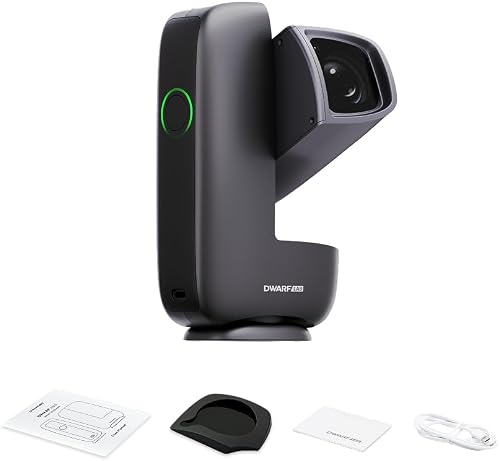
DWARFLAB Dwarf Mini Smart Telescope
9.5/10 our score
See it on Amazon -
2
 Best for entry-level visual use with EQ controls
Celestron PowerSeeker 127EQ Reflector Telescope for Home
9.4/10 our score
See it on Amazon -
3
 Best for learning manual equatorial tracking
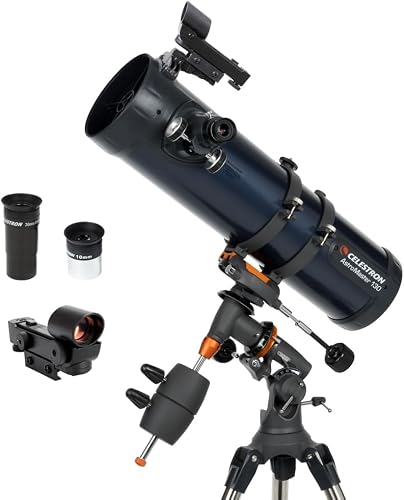
Celestron AstroMaster 130EQ Telescope for Deep-Sky Beginners
9.3/10 our score
See it on Amazon
- 4
 Check it
ZWO Seestar S30 Pro Smart Telescope
Best for automated wide-field imaging - 5
 Check it
Celestron NexStar 8SE Computerized Telescope
Best for an 8 inch computerized upgrade - 6
 Check it
Sky-Watcher Classic 200 Dobsonian 8-inch Telescope
Best for 8 inch visual observing - 7
 Best for a dedicated refractor imaging setupCheck it
Which 8 inch telescope works best for astrophotography?
The NexStar 8SE is the most direct choice because it combines 8 inch optics with computer-controlled target finding and tracking. The Sky-Watcher Classic 200 also has an 8 inch mirror, but its manual Dobsonian mount is aimed at visual observing.
The other products here add useful context: portable smart telescopes and shorter focal length scopes show alternate imaging paths, while smaller reflectors can help newcomers learn telescope handling. They are not 8 inch telescopes.
We compared the stated optical designs, mounts, focal lengths and imaging features against the needs of astrophotography. Our score weighs specs, features and buyer feedback against what you're shopping for.
| Product | Best for | Imaging approach | Mount | Weight | Our score |
|---|---|---|---|---|---|
| DWARFLAB Dwarf Mini Smart Telescope | grab-and-go deep-sky imaging | Smart telescope with app control | Altazimuth and equatorial modes | 1.85 lb | 9.5 |
| Celestron PowerSeeker 127EQ Reflector Telescope for Home | entry-level visual use with EQ controls | Manual German equatorial | 9.4 | ||
| Celestron AstroMaster 130EQ Telescope for Deep-Sky Beginners | learning manual equatorial tracking | Equatorial mount | 9.3 | ||
| ZWO Seestar S30 Pro Smart Telescope | automated wide-field imaging | Smart telescope with app control | 3.64 lb | 9.3 | |
| Celestron NexStar 8SE Computerized Telescope | an 8 inch computerized upgrade | Computerized altitude-azimuth fork arm | 9.3 | ||
| Sky-Watcher Classic 200 Dobsonian 8-inch Telescope | 8 inch visual observing | Manual altazimuth Dobsonian | 9.2 | ||
| SVBONY SV550 AP0 Telescope | a dedicated refractor imaging setup | 9.0 |
The best 8 inch telescopes and imaging alternatives
The NexStar 8SE is the only 8 inch computerized design in this roundup. Choose the other options for a specific reason, such as learning on manual controls, carrying a smart telescope, or using a short focal length refractor.
DWARFLAB Dwarf Mini Smart Telescope: Best for grab-and-go deep-sky imaging
- 1.85 lb portable body
- App-controlled Auto GOTO
- Equatorial mode
- Single-frame exposures up to 90 seconds
This compact smart telescope handles automated targeting and tracking through its app, with an EQ mode and exposures up to 90 seconds. It is portable, but it is not an 8 inch optical tube.
Pros
- Very light to carry
- Auto GOTO and tracking
- EQ mode and long exposures
Cons
- Not an 8 inch telescope
- Small 30 mm objective
The DWARFLAB Dwarf Mini takes a very different path from a conventional 8 inch telescope. Its app control, Auto GOTO and tracking handle much of the aiming process, and its EQ mode supports single-frame exposures up to 90 seconds.
The 1.85 lb body is easy to carry to a dark-sky spot. Its 30 mm objective is much smaller than an 8 inch mirror, so this is a compact imaging tool rather than an aperture upgrade.
Use it if portability and automated capture matter more than a large optical tube. The built-in light pollution filters and app-based processing may suit a simple imaging routine, while the small aperture limits what it can gather compared with an 8 inch scope.
Choose the Dwarf Mini for compact, app-controlled imaging, especially if you want a lightweight setup for travel. It does not replace an 8 inch telescope when aperture is the goal.
Celestron PowerSeeker 127EQ Reflector Telescope for Home: Best for entry-level visual use with EQ controls
- 127 mm Newtonian reflector
- Manual German equatorial mount
- Slow-motion controls
- 20 mm and 4 mm eyepieces plus 3x Barlow
Its manual German equatorial mount introduces basic tracking motions, and the 127 mm reflector gives you a smaller, lower-cost step into telescope observing. It is not an 8 inch imaging setup.
Pros
- Equatorial motions for learning
- Slow-motion controls
- Includes eyepieces and Barlow
Cons
- Smaller aperture than an 8 inch scope
- Manual tracking
The PowerSeeker 127EQ provides a manual German equatorial mount with slow-motion controls. These controls can help you learn how the right ascension and declination axes move, although the scope does not include motorized tracking.
Its 127 mm Newtonian reflector is smaller than an 8 inch telescope. The 1000 mm focal length and included 20 mm and 4 mm eyepieces with a 3x Barlow give it a clear observing role while you learn to locate and follow targets.
For imaging, the main limit is the manual mount. You can practice lunar snapshots, but long exposures require smooth tracking that the supplied setup does not automate.
Choose this as a learning scope with equatorial movement, not as a complete deep-sky imaging rig. If you're new to observing, our guide on how to use a telescope for beginners covers finding and following objects.
Celestron AstroMaster 130EQ Telescope for Deep-Sky Beginners: Best for learning manual equatorial tracking
- 130 mm Newtonian reflector
- German equatorial mount
- Slow-motion RA and declination controls
- 650 mm focal length
The 130EQ offers a shorter focal length and manual equatorial controls for learning how to point and follow targets. Its aperture is well below 8 inches, and no motorized tracking is specified.
Pros
- Shorter 650 mm focal length
- Manual equatorial controls
- Quick assembly without tools
Cons
- Manual tracking
- 130 mm aperture rather than 8 inches
The AstroMaster 130EQ is a 130 mm Newtonian with a 650 mm focal length and a German equatorial mount. The shorter focal length can make it easier to frame broad targets than the 2032 mm NexStar 8SE, but the mount uses manual slow-motion controls.
It includes a 20 mm eyepiece, a 10 mm eyepiece and a StarPointer red dot finder. Those accessories support visual setup and target finding, but the scope's product information does not specify a motor drive for tracking.
This makes the 130EQ a modest learning platform rather than a ready-made long-exposure system. A camera, adapters and a tracking solution would still need to fit the mount and focuser.
Choose it if you want to practice equatorial pointing with a shorter focal length before building a more advanced imaging rig. It is a 5 inch class telescope, not an 8 inch upgrade.
ZWO Seestar S30 Pro Smart Telescope: Best for automated wide-field imaging
- App-controlled automatic GOTO and tracking
- Dual-camera imaging
- Built-in light pollution filters
- Equatorial mode
The S30 Pro automates target finding, tracking and imaging, with a wide 4.6-degree field of view and EQ mode. Its maker says it is designed for deep-sky imaging and not intended for planetary observation.
Pros
- Automated targeting and tracking
- Wide field of view
- Portable 3.64 lb design
Cons
- Not an 8 inch telescope
- Not intended for planetary observation
The Seestar S30 Pro is for people who want automated imaging in a compact unit. App control, automatic GOTO and tracking reduce the need to steer the telescope by hand, and the 4.6 degree field of view suits broad night-sky scenes.
ZWO describes it as designed for deep-sky imaging, with built-in light pollution filters and automatic mosaic stitching. Its maker also says it is not intended for planetary observation, so it is not the pick for close-up lunar or planetary detail.
At 3.64 lb, it is portable for trips and outdoor use. It is not an 8 inch telescope, but it can be a simpler way to explore automated imaging before investing in a larger optical tube and separate mount.
Choose it for automated wide-field imaging and portability, not for an 8 inch aperture or planetary work. For planet-focused equipment, see our best telescopes for astrophotography of planets.
Celestron NexStar 8SE Computerized Telescope: Best for an 8 inch computerized upgrade
- 8 inch Schmidt-Cassegrain optics
- Computerized GoTo mount
- 40,000+ object database
- SkyAlign technology
This is the direct 8 inch option in the group, pairing Schmidt-Cassegrain optics with computerized GoTo and tracking. The long focal length and altitude-azimuth mount mean imaging targets and camera setup need careful planning.
Pros
- 8 inch aperture
- Computerized GoTo and tracking
- Compact optical design for its aperture
Cons
- Long 2032 mm focal length
- Altitude-azimuth mount
The NexStar 8SE combines 8 inch Schmidt-Cassegrain optics with a computerized single-fork altitude-azimuth mount. Its hand control can select from a database of more than 40,000 objects, and SkyAlign uses three bright stars or planets for alignment.
The 2032 mm focal length gives a relatively narrow view compared with shorter imaging scopes. That can suit small targets, but it also makes tracking errors and focusing more visible in long exposures.
Its computerized mount tracks targets for observing, but its altitude-azimuth motion can cause field rotation during long exposures. Imaging plans may call for shorter exposures, camera-specific adapters and potentially an equatorial wedge or another suitable mount solution.
The 8SE is compact for its aperture, yet its imaging setup is not just the optical tube. Check camera connection, back focus and mount capacity against your intended camera and exposure approach before adding accessories.
Choose the NexStar 8SE when 8 inch aperture and computerized target finding are central to your upgrade. If ease of visual use is also part of the decision, our guide to whether an 8 inch telescope is good for beginners covers the learning curve.
Sky-Watcher Classic 200 Dobsonian 8-inch Telescope: Best for 8 inch visual observing
- 8 inch parabolic primary mirror
- Manual Dobsonian mount
- 1200 mm focal length
- Tension control handles
The Classic 200 provides an 8 inch mirror for visual observing, with smooth manual Dobsonian movement. Its mount does not provide motorized tracking, so long-exposure imaging would require a separate tracking solution.
Pros
- 8 inch aperture
- Simple manual movement
- Includes two eyepieces and finder
Cons
- No motorized tracking
- 45 lb assembled weight
The Sky-Watcher Classic 200 gives you an 8 inch parabolic primary mirror on a manual Dobsonian base. It has a 1200 mm focal length, smooth Teflon bearings and tension control handles for aiming by hand.
That design is strong for visual observing because it keeps the mount simple and provides the large mirror. It does not include motorized tracking, which makes long exposures of deep-sky targets impractical without a separate tracking platform or mount.
For the Moon and planets, short video capture may still be possible if you keep the target in view and accept manual adjustments. For longer exposures, the mount is the limiting factor, not the 8 inch mirror.
Choose the Classic 200 for visual observing with the option to explore basic lunar imaging. It is a less direct choice than the 8SE for camera work that depends on automated tracking.
SVBONY SV550 AP0 Telescope: Best for a dedicated refractor imaging setup
- 80 mm triplet apochromatic refractor
- 480 mm focal length
- 1:10 dual-speed focuser
- Designed for camera use
The SV550 is a camera-ready refractor OTA with triplet optics and a 480 mm focal length. It is a different approach from an 8 inch reflector or SCT, and needs a suitable mount and camera.
Pros
- Triplet APO optics
- Short 480 mm focal length
- Fine focus adjustment
Cons
- 80 mm aperture, not 8 inches
- OTA requires a suitable mount
The SVBONY SV550 is an 80 mm triplet apochromatic refractor OTA with a 480 mm focal length and a 1:10 dual-speed focuser. Its shorter focal length and camera-oriented focuser suit a different imaging approach from a long-focus 8 inch SCT.
The triplet optics are designed to reduce chromatic aberration, and the focuser helps with fine adjustments. This is an optical tube assembly, so you need a compatible mount and camera setup to use it for imaging.
Its smaller aperture means less light gathering than an 8 inch telescope. In return, the wider framing from a short focal length can fit larger deep-sky targets more easily.
Choose the SV550 for a dedicated short focal length refractor setup, especially for wider targets. It is not an 8 inch telescope and does not include its own mount.
What should you check before attaching a camera?
Camera fit, focus and mount tracking matter as much as the telescope's aperture. Confirm those points for the exact camera and optical tube combination before buying adapters.
For the NexStar 8SE, identify the camera's sensor size and the target framing you want. A long focal length can make large nebulae difficult to fit in one frame, while smaller galaxies and planetary targets may be better matched.
Check whether the camera can reach focus with the required adapter, diagonal or reducer in place. Also check how the mount behaves during the exposure lengths you plan to use, since a computerized GoTo mount does not automatically guarantee long-exposure performance.
A separate equatorial mount can be useful for long-exposure deep-sky imaging. For a comparison of broader equipment combinations, see best telescopes for astrophotography.
Is an 8 inch scope better than a portable telescope?
An 8 inch telescope gathers more light than the small smart telescopes in this roundup, but portable systems can be easier to carry and operate. The right choice depends on whether you prioritize aperture, convenience, or field of view.
The Dwarf Mini and Seestar S30 Pro handle targeting and imaging through an app. They are compact and automated, but their small objectives are not substitutes for an 8 inch mirror when aperture is the main goal.
A large telescope also needs a mount that can carry it and track accurately. If you travel often, compare our guide to the best portable telescopes for astrophotography before committing to a larger setup.
How do you choose between an 8 inch SCT and Dobsonian?
An 8 inch Schmidt-Cassegrain with computerized tracking is more adaptable to camera use than a manual Dobsonian, though imaging still takes planning. A Dobsonian usually offers a straightforward visual setup with a large mirror and simple movement.
The NexStar 8SE adds GoTo and target tracking, so it is the more direct fit for imaging experiments. Its long focal length and altitude-azimuth mount set limits for long-exposure deep-sky work.
The Classic 200 Dobsonian is a strong visual option, but it has no motorized tracking. Choose it if viewing is the priority and camera work is limited to short lunar or planetary captures.
If the decision is mainly about telescope size and handling, compare the 8 inch vs 10 inch telescope trade-offs. A larger aperture is useful only if the scope and mount fit your storage, transport and imaging needs.
Is an 8 inch telescope a sensible first imaging setup?
An 8 inch telescope can be a first imaging setup if you are prepared to learn alignment, focusing and mount limits. It may be less forgiving than a short focal length refractor or an automated smart telescope.
The 8SE helps with object finding and tracking, but its long focal length makes accurate tracking and camera framing more demanding. A beginner may prefer a simpler route first, then move to 8 inch optics after learning camera control and capture software.
The PowerSeeker and AstroMaster can help teach manual mount movement, but neither provides automated tracking in the stated features. Read our beginner astrophotography telescope guide if you want a setup with a gentler learning curve.
Which 8 inch telescope should you choose for astrophotography?
Choose the NexStar 8SE if you want an 8 inch telescope with computerized target finding and tracking, and you understand the limits of its long focal length and altitude-azimuth mount. Pick the Classic 200 if visual observing matters most and imaging is a secondary experiment.
For convenience and portability, consider one of the smart telescopes, while the SV550 offers a short focal length refractor path with a separate mount. Start with the best telescope for astrophotography guide to compare full setups by imaging style.
Our top 3 picks at a glance
-
1
Best for grab-and-go deep-sky imaging
DWARFLAB Dwarf Mini Smart Telescope
9.5/10 our score
See it on Amazon -
2
Best for entry-level visual use with EQ controls
Celestron PowerSeeker 127EQ Reflector Telescope for Home
9.4/10 our score
See it on Amazon -
3
Best for learning manual equatorial tracking
Celestron AstroMaster 130EQ Telescope for Deep-Sky Beginners
9.3/10 our score
See it on Amazon
Frequently asked questions
Is an 8 inch telescope good for astrophotography?
An 8 inch telescope can collect plenty of light, but astrophotography also depends on a stable tracking mount, camera compatibility and manageable focal length. The NexStar 8SE combines 8 inch optics with computerized tracking, though its altitude-azimuth mount and 2032 mm focal length call for careful setup choices.
For wide-field deep-sky images, a shorter focal length can be easier to frame and track.
Can you use an 8 inch Dobsonian for astrophotography?
You can use a Dobsonian for lunar or planetary imaging, where short video captures can work with manual tracking. Long-exposure deep-sky imaging is harder because a standard Dobsonian mount does not track the sky as it moves.
The Sky-Watcher Classic 200 is a manual Dobsonian, so budget for a separate tracking solution if long exposures are your goal.
Is aperture or mount more important for astrophotography?
The mount often matters more for long-exposure imaging because it must follow the sky smoothly while the camera gathers light. Aperture still matters for visual use and light collection, but a large telescope on a mount that cannot track well can make deep-sky exposures difficult.
Match the mount to the camera, target and exposure length you plan to use.
Should beginners start with an 8 inch telescope for astrophotography?
Beginners can start with an 8 inch telescope if they are ready to learn alignment, focusing and camera setup. A smart telescope can reduce manual steps, while a shorter focal length refractor can make framing easier.
Compare the beginner telescope options for astrophotography if you want an easier first imaging setup.