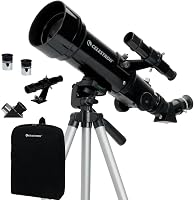
Refractor vs Reflector Telescope: Which Is Better? (November 2026)
A refractor is usually easier to maintain and handle, while a reflector can offer more aperture for deep-sky viewing. Choose by what you want to observe, how much adjustment you're willing to do, and how you'll carry and store the telescope.
On this page (10 sections)
- Refractor vs Reflector Telescope: Which Is Better?
- Is a refractor or reflector telescope better for your observing?
- How do the two designs handle routine care?
- Which design is easier to set up and carry?
- What can each telescope show?
- Does a refractor or reflector suit a first telescope?
- Which optical design offers better value?
- How do compact reflector designs compare?
- What else should you compare besides the optics?
- How can you make the final choice?
Refractor vs Reflector Telescope: Which Is Better?
A refractor is usually easier to maintain and handle, while a reflector often gives you more aperture for deep-sky observing. If you're asking whether a refractor or reflector telescope is better, match the optical design to your targets, storage space and tolerance for adjustment.
A refractor uses lenses at the front of its tube. A reflector uses mirrors, usually with the main mirror at the back.
Each design can work well, but their upkeep, size and typical strengths differ.
The comparison below focuses on those practical tradeoffs. It doesn't assume that either design is always sharper or better value, since aperture, optical quality and the mount also affect what you see.
 Best for guided observing
Celestron StarSense Explorer DX 102AZ App-Enabled Refractor
 Best for a complete starter kit
Gskyer Telescope 600x90mm AZ Astronomical Refractor Telescope
Is a refractor or reflector telescope better for your observing?
Choose a refractor for simpler upkeep and straightforward lunar or planetary sessions; consider a reflector when more aperture for faint objects matters most. Your observing location and willingness to adjust optics can change that choice.
Refractor tubes are typically closed, which helps protect the optics from dust and accidental contact. Their lenses stay aligned during ordinary handling, so routine collimation is generally not part of using one.
Reflectors use mirrors that may need occasional collimation. This is an alignment check, not a repair, but it adds a skill and a step that a beginner should be ready to learn.
A larger aperture gathers more light and can reveal fainter objects under suitable skies. Reflectors often make larger apertures more accessible, though a large tube can be harder to move and store.
How do the two designs handle routine care?
A refractor usually asks for less optical adjustment, while a reflector may need mirror alignment checked over time. Both benefit from careful storage and limited cleaning.
A refractor's front lens sits behind a dew shield on many models, which gives it some protection from stray contact. Dust on the lens rarely calls for immediate cleaning; wiping it often can risk scratching the coating.
A reflector's open tube can expose its mirrors to dust. The primary mirror may need collimation after a bumpy move, or when the view suggests the optics are out of alignment.
Don't touch mirror or lens surfaces to check for dirt. Use the telescope's manual for cleaning and alignment steps, and get help from an experienced observer if you're unsure.
Which design is easier to set up and carry?
A smaller refractor is often easier to carry and start using, while larger reflectors can take more room and setup effort. Compare the full telescope and mount, not just the optical tube.
A short refractor can fit more easily in a closet or car. It can still be heavy or awkward when its tripod, mount and accessories are included.
Reflector size varies widely. A compact tabletop model is very different from a large Dobsonian, whose wide tube and base need more storage space and a clear path to the observing spot.
Think through your whole routine: where the telescope will live, how far you'll carry it, and whether stairs or a narrow doorway are involved. The telescope you'll take outside is more useful than a larger one that's difficult to move.
What can each telescope show?
Both designs can show the Moon and planets, and both can observe deep-sky objects when aperture and sky conditions allow. The design alone doesn't set the limits of what you'll see.
The Moon is a strong target for either type. Jupiter and Saturn can also be rewarding, though the detail depends on factors such as aperture, steady air and careful focusing.
For galaxies and nebulae, aperture and dark skies matter greatly. A reflector can be appealing if you want more light-gathering area without a very long refractor tube.
Bright objects such as the Moon can also bring out optical differences. Some achromatic refractors show color fringing on high-contrast targets; an achromatic vs apochromatic telescope comparison explains how refractor lens designs affect color correction.
Does a refractor or reflector suit a first telescope?
A refractor can suit a first-time observer who values easy setup, while a reflector can work for a beginner who is ready to learn collimation. The mount and target-finding method matter as much as the optical design.
For a first telescope, decide how you'll find objects and keep them in view. A simple manual mount is easy to understand, but you'll still need to aim and track by hand.
If you prefer a refractor and want help locating targets, the Celestron StarSense Explorer DX 102AZ App-Enabled Refractor pairs a 102 mm refractor with smartphone sky recognition and a curated target list.
A beginner who wants a refractor with a range of included eyepieces may prefer the Gskyer Telescope 600x90mm AZ Astronomical Refractor Telescope. It comes with three eyepieces, a 3x Barlow lens and an adjustable tripod.
For a broader introduction, read is a refractor good for a beginner and this beginner's guide to using a telescope. They cover the learning curve and the steps that apply whichever design you choose.
Which optical design offers better value?
A reflector may provide more aperture for a similar budget, while a refractor can offer simpler care and handling. Value depends on what you're buying the telescope to do.
Compare aperture, optical quality, mount stability and included accessories together. A low-cost telescope with a shaky mount can make observing frustrating regardless of whether it uses lenses or mirrors.
For a reflector, include the time needed to learn collimation and the room needed to store it. For a refractor, consider the cost of the aperture and lens design you want, especially if color correction matters to you.
If your budget is firm, compare specific models by features and mount rather than assuming one design always costs less. Our best telescopes under 300 dollars guide can help you compare options in that range.
How do compact reflector designs compare?
Compact reflectors fold the light path to shorten the tube, but their setup and optical upkeep still depend on the design. They can save storage length without removing the need to compare mount and aperture.
A Schmidt-Cassegrain combines mirrors with a corrector plate, while a Newtonian reflector uses a simpler mirror arrangement. Their tube shapes and setup needs differ, so compare them as complete telescope systems.
See our Schmidt-Cassegrain telescope vs Newtonian comparison for the main tradeoffs. If you're considering a compact Maksutov, read Maksutov-Cassegrain vs Newtonian reflector as well.
What else should you compare besides the optics?
Choose a stable, manageable mount and a practical target-finding setup before paying extra for magnification claims. A telescope is only useful if you can aim it and keep the view steady.
A manual altazimuth mount moves up, down and side to side. An equatorial mount can follow the sky differently, but it has its own alignment and learning steps.
Check whether the package includes a finderscope, eyepieces, tripod and any tools you'll need. A phone-guided setup may make it easier to locate targets, while a traditional finder keeps the process independent of a phone.
If you're weighing a specific reflector, the Celestron PowerSeeker 114EQ telescope review can help you examine one model's features and tradeoffs. For other refractor options, see best Sky-Watcher telescopes.
How can you make the final choice?
Pick a refractor if low-maintenance handling and convenient setup fit your routine; pick a reflector if aperture for deep-sky targets matters more and you're comfortable learning collimation. Use the complete telescope's size, mount and accessories as your final check.
Choose the refractor if you want an enclosed optical tube and simple care for regular Moon and planet sessions. Choose the reflector if you have storage space, darker skies to use and interest in observing faint objects.
Before deciding, make sure you can move the telescope, set it up steadily and find targets with the method it provides. That's the practical answer to whether a refractor or reflector telescope is better for you.
Frequently asked questions
Is a refractor or reflector telescope better for beginners?
A refractor often suits beginners who want a simple setup and less routine optical adjustment. A reflector can suit beginners who want more aperture for the money and are willing to learn collimation, the process of aligning its mirrors.
Ease of use also depends on the mount and how you plan to observe.
Which telescope is better for planets?
Both designs can show planets, and the view depends on aperture, optical quality, steady air and magnification. Refractors are often chosen for crisp lunar and planetary views, while a reflector with suitable aperture can also reveal planetary detail.
Allow the telescope to adjust to outdoor temperatures and use a stable mount.
Which telescope is easier to maintain?
A refractor usually needs less routine optical alignment because its lenses stay fixed in the tube. A reflector's mirrors may need periodic collimation, especially after transport or use.
Either design needs careful handling and clean optics, but avoid cleaning glass unless it is needed and follow the manual.
Can a reflector telescope show galaxies?
Yes. A reflector can be a practical choice for galaxies and other faint deep-sky objects because its design can provide substantial aperture at a given budget.
Dark skies, observing experience and realistic expectations matter too; many galaxies appear as faint patches rather than colorful images.
Do refractor telescopes need collimation?
Most refractors don't need regular collimation because their objective lenses are held in alignment at the front of the tube. A major impact or a model with adjustable optics can be an exception.
Check the manual before attempting an adjustment, since changing lens alignment can make the view worse.