Schmidt-Cassegrain vs Newtonian: Which Should You Choose? (November 2026)
Choose a Schmidt-Cassegrain for a compact tube and a Newtonian for a simpler reflector with a wide range of observing uses. Your best fit depends on how you carry the telescope, what you want to view, and how much setup and care you’re comfortable with.
On this page (5 sections)
Choose a Schmidt-Cassegrain for a compact tube and a Newtonian for a simple reflector with broad observing uses. In a Schmidt-Cassegrain telescope vs Newtonian comparison, portability, observing goals, and upkeep are the main decision points.
A Schmidt-Cassegrain folds a long optical path into a shorter tube. A Newtonian uses a primary mirror and a diagonal secondary mirror, with the eyepiece near the front side of the tube.
Both are reflector designs, but their tube layouts and practical tradeoffs differ. If you're still sorting out the larger choice, read our guide to whether a refractor or reflector telescope is better.
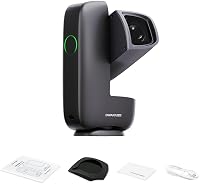
 Best for compact GoTo observing
Celestron NexStar 127SLT Maksutov-Cassegrain Computerized GoTo Telescope
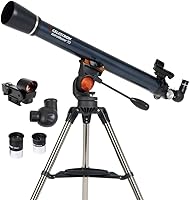
 Best for guided Newtonian viewing
Celestron StarSense Explorer LT 114AZ Newtonian Smartphone
Schmidt-Cassegrain vs Newtonian: which is easier to carry?
A Schmidt-Cassegrain usually has the portability advantage because its folded optics fit a long focal path into a shorter tube. Newtonians can be bulkier as aperture grows, so consider the full tube and mount rather than the optical design alone.
A shorter tube can be easier to carry through a doorway, load into a car, and store at home. The mount, tripod, eyepieces, power supply, and other accessories still add to the total load.
A Newtonian tube may need more room in a closet or vehicle. Large models can be awkward to carry, even when their weight seems manageable on paper.
Portability means more than lifting weight. Think about how long it takes to assemble the setup, where you'll observe, and whether you can transport the full kit without blocking other gear.
Does the folded tube make an SCT ready faster?
A compact tube can simplify storage and transport, but it doesn't remove setup steps. A computerized Schmidt-Cassegrain may still need power, alignment, and a stable surface before it can locate targets.
The Celestron NexStar 8SE is an example of an 8-inch Schmidt-Cassegrain with a computerized GoTo mount. Its SkyAlign process uses 3 bright stars or planets to align the mount, and its hand control includes a database of more than 40,000 objects.
The smaller Celestron NexStar 127SLT uses Maksutov-Cassegrain optics, not Schmidt-Cassegrain optics. It can still help illustrate the compact folded-tube format: the brand describes it as portable and includes computerized object locating.
When does a Newtonian become cumbersome?
A Newtonian becomes harder to manage when its tube is too long or heavy for your storage space, vehicle, or observing routine. Larger aperture can be appealing, but only if the telescope remains practical to carry and set up.
A manual mount may be simpler than a computerized system, but the tube still needs safe handling and adequate support. Check the exact tube length, weight, mount, and packed dimensions before choosing.
The Celestron StarSense Explorer LT 114AZ is a 114 mm Newtonian with a manual altazimuth mount and smartphone sky guidance. It weighs 10.4 lb and includes a preassembled mount and tripod, so its listed parts and weight give a concrete example of a smaller Newtonian setup.
Which design suits your observing goals?
Choose by the objects and observing style you care about, then compare aperture and mount for the exact models. Either optical design can show the Moon, planets, and deep-sky objects when the telescope is suitable for the task.
A Schmidt-Cassegrain's folded path makes longer focal lengths possible in a compact tube. That can make the format attractive for lunar and planetary viewing, and some observers also use SCTs for imaging.
Newtonians are popular for visual astronomy because the design can offer substantial aperture without a long, folded optical path. The tube size and mount capacity still shape how convenient the telescope is in practice.
No design guarantees a better view by itself. Aperture, optics, collimation, thermal adjustment, sky conditions, and the mount all affect what you see.
Are Schmidt-Cassegrains better for planets?
A Schmidt-Cassegrain can suit planetary viewing when you want a compact tube with a longer focal length. Its folded optical path helps keep the tube manageable, while the mount and aperture influence how useful the complete system feels.
The NexStar 8SE combines an 8-inch SCT with automated GoTo and tracking. Celestron describes it for lunar detail, Jupiter’s cloud bands, and deep-sky objects, though those viewing results depend on conditions and setup.
A smaller Maksutov-Cassegrain can also be convenient for the Moon and planets. The 127SLT, for example, has a 127 mm aperture and computerized object locating, but it is a different compound design from an SCT.
Are Newtonians better for deep-sky viewing?
A Newtonian can be a good deep-sky choice when its aperture and mount match your budget, transport limits, and observing site. More aperture can collect more light, but the larger tube may take more space and effort to handle.
The StarSense Explorer LT 114AZ has a 114 mm aperture. Celestron says it can show the Moon, planets, Orion Nebula, and Andromeda Galaxy, with the smartphone app helping identify targets.
For long-exposure imaging, the mount matters as much as the optical tube. Read about Newtonian telescopes for imaging before choosing a scope for a camera and tracking setup.
What upkeep does each telescope need?
A Newtonian usually needs more frequent attention to mirror alignment, while an SCT’s enclosed tube helps protect its primary mirror from dust. Both designs need careful cleaning, sensible storage, and time to adjust to outdoor temperatures.
Newtonian owners may need to check collimation, which is the alignment of the mirrors. A misaligned telescope can make stars look distorted and reduce image sharpness, so learn the maker’s alignment procedure before relying on it.
An SCT's corrector plate is exposed at the front of the tube and can collect dust or dew. Clean it only when needed and follow the manual, since optical coatings can be damaged by rough handling.
Both designs can take time to reach thermal equilibrium after moving from a warm room to cold outdoor air. Let the telescope adjust before judging the sharpness of a high-power view.
Upkeep also includes the mount and accessories. Keep dust caps on when the telescope is stored, protect the tube during transport, and check cables and power connections if you use a computerized mount.
For a related comparison, see Maksutov-Cassegrain vs Newtonian reflector. Maksutov-Cassegrains share a compact folded layout with SCTs, but their corrector and optical design differ.
How should you compare the complete telescope?
Compare the mount, setup, and total carrying load along with the optical tube. A compact telescope on a heavy mount may be less convenient than a larger tube on a simpler setup.
A computerized mount can locate and track objects, which helps if you want guided observing. It also adds alignment steps, power needs, and equipment to transport.
A manual mount keeps the system more direct and can help you learn the sky. You’ll need to locate objects yourself, so a phone app or star chart may make the first sessions easier.
Use this checklist when comparing specific models:
- Tube size and weight: Can you store, carry, and transport the entire setup?
- Mount type: Do you want manual control or computerized locating and tracking?
- Target objects: Are you mainly observing the Moon and planets, or also deep-sky targets?
- Setup: Are you comfortable aligning the telescope or learning a manual mount?
- Upkeep: Can you check Newtonian collimation or care for an SCT corrector plate?
- Imaging plans: Is the mount suitable for the camera and exposure style you want?
Your choice of optical design is only part of the decision. Our guide on how to choose a telescope as a beginner covers the broader tradeoffs, while how to know what telescope to choose can help you narrow down your priorities.
Which telescope should you choose?
Pick a Schmidt-Cassegrain if compact storage and a folded optical tube matter most; pick a Newtonian if you want a straightforward reflector and can manage its tube and alignment. Then compare complete systems by aperture, mount, setup, and intended targets.
For guided observing in a compact package, the NexStar 8SE is an SCT with an 8-inch aperture and automated GoTo mount. For a manually controlled Newtonian with phone guidance, the StarSense Explorer LT 114AZ offers a smaller aperture and a different setup experience.
The NexStar 127SLT is a Maksutov-Cassegrain, so consider it if compactness and computerized locating interest you, but don't treat it as an SCT. For a wider overview of advanced setups, see our guide to professional telescopes for astronomy.
If you’re still comparing optical designs, our achromatic vs apochromatic telescope guide explains another key tradeoff. The right telescope is the one whose setup you can use often and whose capabilities fit the objects you want to observe.
Frequently asked questions
Is a Schmidt-Cassegrain better than a Newtonian?
A Schmidt-Cassegrain is often the better fit when a compact tube and portability matter, while a Newtonian can suit observers who want a straightforward reflector for broad visual use. Neither design is best for everyone.
Compare the exact telescope, mount, aperture, setup needs, and the objects you plan to observe.
Which telescope is easier to maintain?
A Schmidt-Cassegrain's enclosed tube helps keep dust off its primary mirror, but its corrector plate still needs careful handling. A Newtonian's open tube exposes its mirrors more, and the optics may need alignment checks.
Follow the manual for either telescope and avoid touching optical surfaces.
Can you use a Newtonian for astrophotography?
Yes, some Newtonian telescopes are used for imaging, but suitability depends on the optical tube, mount, camera, and target. A stable tracking mount and a compatible camera setup matter.
Check the exact telescope’s imaging requirements before buying, and compare options in our guide to the best imaging Newtonian telescopes.
Which is better for planets, Schmidt-Cassegrain or Newtonian?
Both designs can show planets when the optics are properly set up and the sky is steady. Aperture, optical quality, magnification, and atmospheric conditions affect detail more than the design name alone.
Choose a telescope you can set up consistently, then allow it time to adjust to outdoor temperatures.
Is a Schmidt-Cassegrain good for beginners?
It can be, especially when a computerized mount helps locate targets and the compact tube is easier to store. Beginners should still consider alignment, power needs, total setup weight, and the cost of the full system.
A manual Newtonian can also work well if you prefer learning the sky directly.