9 Best Budget Telescopes for Astrophotography (November 2026)
The best budget telescopes for astrophotography include the Sky-Watcher Sky-Watcher Heritage 130mm Tabletop Dobsonian 5-inch for large-aperture beginners, the MEEZAA Telescope for simple phone capture, and the DWARFLAB Dwarf Mini Smart Telescope for lightweight deep-sky imaging.
On this page (4 sections)
- Which budget telescopes work best for astrophotography?
- How do you choose an affordable telescope for astrophotography?
- Which budget astrophotography telescope should you buy?
- Buy the telescope that fits your site, device and favourite targets. Aperture will reward visual nights, automation will reward imaging nights.
The best budget telescope for astrophotography is the Sky-Watcher Heritage 130mm for buyers who want large aperture without a complex imaging system. Its 130mm reflector suits visual deep sky viewing and lunar work, while smart telescopes make automated capture easier.
A limited budget forces a choice between aperture, tracking and convenience. Traditional reflectors give more optical size for the money, which helps at the eyepiece on the Moon, Jupiter and brighter clusters and nebulae.
Smart telescopes give app control, automated tracking and image processing in smaller bodies. They suit people who would rather tap a target on a screen than learn star hops first.
The trade off is a much smaller objective lens than a 130mm reflector can offer.
The Heritage 130mm works as a visual telescope with imaging experiments around the edges. A phone can record the Moon through an eyepiece, but its altazimuth tabletop mount will not follow a faint galaxy across a long exposure.
Smart scopes reverse those priorities. A Dwarf Mini or Seestar S30 Pro points itself, tracks and stacks images, yet an eyepiece view is not the point of the design.
A simple reflector has fewer electronic parts to fail and no app to depend on for every session. A smart scope is more convenient, but check that your phone or tablet will run its control app.
Set up time matters more than many buyers expect. A tabletop Dobsonian can work in minutes on a kitchen table or camping bench.
A full tripod system takes longer to level, align and pack away.
Care is simple for both styles. Keep caps on the optics, let the tube settle outside before you focus, and avoid handling mirrors or lenses with bare fingers.
If you want a broader shortlist, compare our guide to the best telescope for astrophotography. Buyers focused on a specific optical size can also review the best 8 inch telescope for astrophotography.
Read the picks with your own observing habits in mind. A scope you will carry out often will beat a larger scope that stays in its box.
Our picks at a glance
-
1
 Best for large-aperture beginners
Sky-Watcher Sky-Watcher Heritage 130mm Tabletop Dobsonian 5-inch
9.7/10 our score
See it on Amazon -
2

-
3
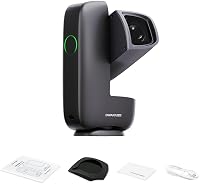
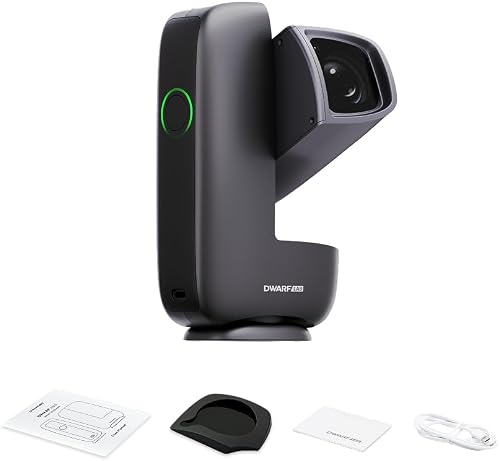 Best for lightweight deep-sky imaging
DWARFLAB Dwarf Mini Smart Telescope
9.5/10 our score
See it on Amazon
- 4
 Best for family lunar imagingCheck it
- 5
 Check it
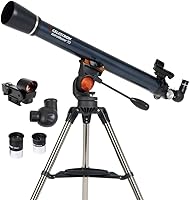
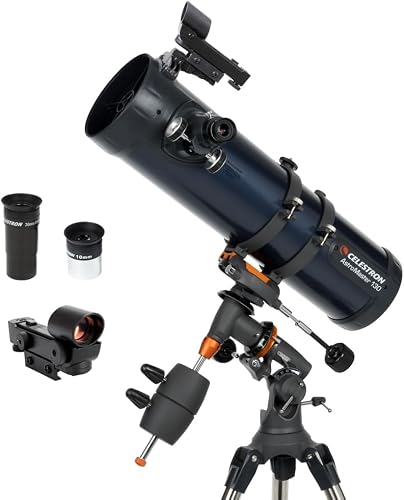
Celestron AstroMaster 130EQ Telescope for Deep-Sky Beginners
Best for learning manual tracking - 6
 Check it
ZWO Seestar S30 Pro Smart Telescope
Best for one-tap urban imaging - 7
 Check it
Celestron NexStar 8SE Computerized Telescope
Best for serious upgrade potential - 8
 Check it
Gskyer 130EQ Professional Astronomical Reflector Telescope
Best for accessory-rich manual setups - 9
 Check it
DWARFLAB Dwarf 3 Smart Telescope
Best for all-around portable imaging
Which budget telescopes work best for astrophotography?
The best budget telescope depends on the kind of images you want to make. Choose the Heritage 130mm or AstroMaster 130EQ for aperture, a smart scope for automated deep sky capture, or a refractor for simple lunar phone photos.
That first choice should follow the target, not the product name. The Moon rewards steady focus and a bright image, while planets reward patience, calm air and modest magnification.
Galaxies and nebulae reward tracking, dark skies and time spent on each exposure.
Aperture is the traditional way to buy more light. A 130mm reflector gathers far more than a 30mm smart lens, so visual detail arrives more easily.
Mount behaviour explains much of the difference in method. A Dobsonian moves up and down and side to side, which is intuitive for browsing.
An equatorial mount follows the sky along one axis, while a computerized or smart mount moves itself for longer exposures.
Our score weighs aperture, mount behaviour, imaging features, included accessories and buyer feedback. We checked stated specifications, then compared trade offs between traditional and smart designs.
Accessories deserve the same scrutiny as the optics. Eyepieces set starting magnifications, a finder helps you land on the target, and a phone adapter decides whether casual photos are easy or fiddly.
Focal length sets the field of view in daily use. Short focal lengths make wide scenes and large objects easier to frame.
Longer focal lengths make small lunar and planetary detail look bigger, while also making shake more obvious.
The picks that follow are ordered to show those contrasts clearly. Traditional reflectors sit beside refractors and smart scopes, so you can see what each design gives up.
| Product | Best for | Aperture | Focal length | Mount | Our score |
|---|---|---|---|---|---|
| Sky-Watcher Sky-Watcher Heritage 130mm Tabletop Dobsonian 5-inch | large-aperture beginners | 130mm | 650mm | Tabletop altazimuth Dobsonian | 9.7 |
| MEEZAA Telescope | simple phone capture | 90mm | 800mm | Altazimuth mount with adjustable stainless steel tripod | 9.6 |
| DWARFLAB Dwarf Mini Smart Telescope | lightweight deep-sky imaging | 150mm | Altazimuth and equatorial modes | 9.5 | |
| HUGERSTAR Telescope | family lunar imaging | 90mm | 800mm | Altazimuth mount with adjustable stainless steel tripod | 9.4 |
| Celestron AstroMaster 130EQ Telescope for Deep-Sky Beginners | learning manual tracking | 130mm | 650mm | German equatorial mount with slow-motion controls | 9.3 |
| ZWO Seestar S30 Pro Smart Telescope | one-tap urban imaging | 160mm | Alt-azimuth with equatorial mode | 9.3 | |
| Celestron NexStar 8SE Computerized Telescope | serious upgrade potential | 8 in | 2032mm | Computerized altitude-azimuth single fork arm mount | 9.3 |
| Gskyer 130EQ Professional Astronomical Reflector Telescope | accessory-rich manual setups | 130mm | 650mm | German equatorial mount | 9.2 |
| DWARFLAB Dwarf 3 Smart Telescope | all-around portable imaging | Altazimuth mount with AZ/EQ modes | 9.1 |
Sky-Watcher Sky-Watcher Heritage 130mm Tabletop Dobsonian 5-inch: Best for large-aperture beginners
- 130mm aperture
- 650mm focal length
- Collapsible tabletop Dobsonian design
- 10mm and 25mm eyepieces
The Heritage 130mm gives budget buyers a 5-inch class reflector in a compact tabletop design. It suits visual astronomy first, with phone-based experiments requiring extra care because the mount is altazimuth.
Pros
- Large aperture for the budget
- Collapsible tabletop design
- Includes 2 eyepieces and a red dot finder
Cons
- Manual altazimuth mount
- Tabletop setup needs a solid support
The Sky-Watcher Heritage 130mm is the strongest all-around value here because its 130mm aperture gives you a 5-inch class reflector in a compact tabletop package. That extra optical size helps when you are viewing the Moon, planets and brighter deep-sky targets before attaching a phone.
Its 650mm focal length gives the scope a useful balance between field width and magnification. The collapsible tube makes storage and transport easier than a full-length reflector, while the tabletop Dobsonian mount keeps the design simple.
The box includes 10mm and 25mm 1.25 in eyepieces plus a red dot finder. Those eyepieces give you two starting magnifications, but astrophotography with a phone still depends on careful alignment, a steady table and a target bright enough for the setup.
Choose this model if you want the most aperture for visual astronomy and occasional lunar imaging. If automated capture is your priority, a smart scope below will be easier to operate.
MEEZAA Telescope: Best for simple phone capture
- 90mm aperture
- 800mm focal length
- 10mm and 25mm eyepieces
- 3X Barlow lens and phone adapter
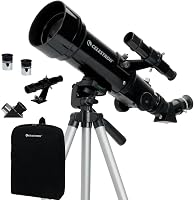
MEEZAA combines a 90mm refractor with a tripod, phone adapter and carry bag. It is a straightforward starting point for lunar photos and casual backyard imaging.
Pros
- Phone adapter included
- Adjustable 28 to 46 in tripod
- Carry bag included
Cons
- Manual altazimuth mount
- Small aperture than the top reflector picks
The MEEZAA Telescope suits a beginner who wants a traditional refractor with a phone adapter already included. Its 90mm aperture and 800mm focal length favor bright lunar and planetary targets, with a longer optical tube than the portable smart scopes.
That longer tube is a practical point in a small garden. The tripod needs room to stand level, and the tube needs clearance to swing toward a high target.
Check the space before you set up, especially if fences or trees close in the view.
The package includes 10mm and 25mm eyepieces, a 3X Barlow lens, an adjustable stainless steel tripod, a carry bag and a finder scope. The 3X Barlow increases the magnification of either eyepiece, but higher magnification also makes shake and atmospheric blur easier to notice.
Start with the 25mm eyepiece to find the Moon and learn the finder. Move to the 10mm eyepiece when the image is steady, and add the Barlow only when focus and tracking feel settled.
That order saves frustration on the first nights.
The altazimuth mount is simple for moving from one target to another. It does not provide the same tracking approach as an equatorial or smart telescope, so plan on short exposures and patient phone positioning.
For phone work, brace your elbows, focus slowly and tap the phone button without pushing the eyepiece. A short burst of frames gives you more chances than one careful press.
Keep the tripod legs tight and the ground firm before you begin.
Choose MEEZAA for a clear beginner path into lunar photos. For a similar refractor with a moon filter, compare the HUGERSTAR below.
DWARFLAB Dwarf Mini Smart Telescope: Best for lightweight deep-sky imaging
- 1.85 lb portable design
- App control and Auto GOTO
- Up to 90-second exposures
- Built-in light pollution filters
The Dwarf Mini is a battery-powered smart telescope for buyers who value portability and automated capture. Its app control, filters and longer exposures make it more purpose-built for astrophotography than a basic visual scope.
Pros
- Very light at about 1.85 lb
- Auto GOTO and app control
- EQ mode and 90-second exposures
Cons
- Small 30mm objective lens
- Depends on app-based operation
The DWARFLAB Dwarf Mini is the best fit for buyers who want a compact astrophotography tool rather than a manual telescope. It weighs about 1.85 lb, uses app control and Auto GOTO, and can operate in altazimuth or equatorial modes.
That weight changes where you can observe from. The unit fits in a backpack or large pocket, so a dark lane, a campsite or a friend's garden becomes a practical site.
You still need a level surface and a clear patch of sky in the app.
Its 30mm objective lens and 150mm focal length are much smaller than the 130mm reflectors here. The trade-off is automation: the Dwarf Mini supports up to 90-second exposures, built-in light pollution filters and smart cloud processing.
Short focal length means wide framing, which suits large nebulae, clusters and Milky Way scenes. Small planets are not the strength of this design, and close lunar detail belongs more to a longer traditional scope.
That combination can reduce the amount of manual alignment and separate image processing needed on a beginner imaging night. Its battery-powered design also suits camping and dark-sky travel where a full tripod telescope is inconvenient.
Charge the battery before you leave and keep the phone with the scope, since app control is central to the setup. Let the device settle on its surface, pick a target in the atlas and let Auto GOTO do the pointing.
Pick it for portability, automated targets and simple deep-sky image capture. Pick the Heritage 130mm when visual aperture matters more than app control.
HUGERSTAR Telescope: Best for family lunar imaging
- 90mm aperture
- 800mm focal length
- 10mm and 25mm eyepieces
- 3X Barlow lens, phone adapter and moon filter
HUGERSTAR is a beginner refractor with a phone adapter and moon filter included. It fits buyers who want family-friendly lunar viewing and occasional smartphone photos without a complex imaging setup.
Pros
- Moon filter included
- Phone adapter included
- Adjustable 28.7 to 46.4 in tripod
Cons
- Manual altazimuth mount
- Not designed around automated tracking
The HUGERSTAR Telescope is a practical choice for family lunar viewing and occasional phone photography. Its 90mm aperture and 800mm focal length give it a similar optical role to the MEEZAA, with a manual altazimuth mount that is easy to understand.
An easy mount matters when several people take turns at the eyepiece. Moving the tube by hand and tightening a simple control is easier to explain than an equatorial axis or a phone menu.
Keep the tripod height within reach of the smallest viewer.
HUGERSTAR includes 10mm and 25mm eyepieces, a 3X Barlow lens, a 5x24 finder scope, an adjustable stainless steel tripod and a carry bag. The included moon filter can reduce glare during bright lunar sessions.
The finder scope helps the group land on the Moon, a bright planet or an open cluster without hunting across the sky. Use the lower magnification first, centre the target, then change eyepieces for a closer look.
The phone adapter helps you place a smartphone over the eyepiece. Keep expectations realistic: this setup is best for bright targets and short captures, not automated long-exposure deep-sky imaging.
Set the phone in the adapter, focus on the eyepiece image and take several frames in a row. A still hand on the tripod and a calm night will do more for lunar photos than extra magnification.
Choose it when the moon filter and phone adapter matter more than a larger reflector. It is also a reasonable fit for shared family use because the manual controls are easy to explain.
Celestron AstroMaster 130EQ Telescope for Deep-Sky Beginners: Best for learning manual tracking
- 130mm Newtonian reflector
- 650mm focal length
- German equatorial mount
- 20mm and 10mm eyepieces
The AstroMaster 130EQ offers 130mm optics with an equatorial mount and slow-motion controls. It suits beginners who want to learn manual tracking while keeping visual deep-sky viewing central.
Pros
- 130mm aperture
- Equatorial mount
- Slow-motion controls and StarPointer finder
Cons
- More setup than a tabletop Dobsonian
- Manual tracking requires practice
The Celestron AstroMaster 130EQ is the better traditional choice when you want to learn how an equatorial mount follows the sky. Its 130mm Newtonian reflector and 650mm focal length match the Heritage 130mm for aperture, but its mount uses slow-motion controls.
Matching aperture means the two scopes compete on mount style rather than light gathering. The AstroMaster asks for more setup, and it gives back a mount that can follow a target in a more sky-like motion.
Those controls let you make small adjustments in right ascension and declination. That can help you keep a target centered during visual observing, although it takes more setup and practice than a tabletop Dobsonian.
Practice changes the experience quickly. Polar alignment, balanced tube position and loose but controlled clamps all affect how smoothly the slow-motion knobs work.
A short session with a bright target teaches more than a long session fighting a stiff mount.
The package includes 20mm and 10mm eyepieces, a StarPointer red dot finder, a tripod and mount. The equatorial design gives you a useful foundation for learning manual tracking before considering more advanced imaging equipment.
The red dot finder is the fastest way to learn the sky on this scope. Put the red dot on a bright star, swap to an eyepiece and narrow the view step by step.
Choose the AstroMaster 130EQ if mount skills are part of your goal. For a simpler first telescope, our best beginner telescope for astrophotography guide covers other beginner-friendly paths.
ZWO Seestar S30 Pro Smart Telescope: Best for one-tap urban imaging
- App control and automatic tracking
- 4K dual-camera imaging
- Built-in light pollution filters
- Auto processing and mosaic stitching
The Seestar S30 Pro is aimed at buyers who want automated astrophotography from a compact, app-controlled device. Its filters and automatic processing are useful when city light makes traditional imaging harder.
Pros
- Automatic GOTO and tracking
- 4K dual-camera imaging
- Portable 3.6 lb design
Cons
- 30mm objective lens
- Not intended for planetary observation
The ZWO Seestar S30 Pro is built for buyers who want one-tap astrophotography with minimal manual setup. Its 30mm objective lens and 160mm focal length are modest beside the 130mm reflectors, but automatic GOTO, tracking and processing change the experience.
The device works with a smartphone or tablet and includes a tripod, filter and Type-C cable. Its built-in light pollution filters are useful for urban locations, where bright skies can hide faint details from a traditional visual telescope.
ZWO describes the S30 Pro as suitable for deep-sky and wide-field imaging, Milky Way scenes, star trails, lunar photos and solar captures. It is not intended for planetary observation, so do not choose it if close planetary views are your main goal.
Pick the Seestar S30 Pro for quick setup and app-based imaging. If portability across both night and daytime subjects matters, the Dwarf 3 offers a dual-camera approach.
Celestron NexStar 8SE Computerized Telescope: Best for serious upgrade potential
- 8 in Schmidt-Cassegrain optics
- Computerized GoTo mount
- 40,000-plus object database
- SkyAlign technology
The NexStar 8SE is the largest-aperture option here and offers computerized object finding. It is better suited to buyers who can accept a larger system and want strong visual performance alongside future imaging work.
Pros
- 8 in aperture
- Computerized GoTo tracking
- SkyAlign and 40,000-plus object database
Cons
- Larger and heavier than the compact picks
- Higher equipment commitment
The Celestron NexStar 8SE is the largest and most capable optical system in this group. Its 8 in Schmidt-Cassegrain optics and 2032mm focal length give you more aperture and a narrower, higher-magnification view than the shorter focal length budget scopes.
Its computerized altitude-azimuth mount uses SkyAlign and a database of more than 40,000 objects. That makes finding targets easier, but the system is a larger commitment than a tabletop reflector or small smart telescope.
The NexStar+ hand control, 25mm eyepiece, star diagonal, StarPointer finder and tripod are included. The scope is suitable for visual astronomy and can support astrophotography plans, but serious long-exposure work requires careful attention to mount behavior and imaging equipment.
Choose the NexStar 8SE if you want to grow into a larger computerized system. It is less suitable when your main constraint is a small travel bag or the simplest first-night setup.
Gskyer 130EQ Professional Astronomical Reflector Telescope: Best for accessory-rich manual setups
- 130mm aperture
- 650mm focal length
- German equatorial mount
- 3 eyepieces, 3X Barlow lens and wireless remote
The Gskyer 130EQ pairs a 130mm reflector with an equatorial mount and several accessories. It is a fit for beginners who want a broader starter kit and Bluetooth phone control for basic photos.
Pros
- 130mm aperture
- 3 eyepieces and 3X Barlow lens
- Wireless remote for phone photography
Cons
- Heavier at 30.1 lb
- Manual equatorial operation
The Gskyer 130EQ gives you 130mm aperture with a German equatorial mount and a broader accessory package. Its 650mm focal length suits lunar, planetary and brighter deep-sky viewing, while the equatorial design supports learning manual target tracking.
A full accessory package helps because each part answers a different need. Eyepieces set the magnification, the Barlow pushes it higher, the finder lands you on the target and the tripod holds the whole system at a comfortable height.
The package includes 3 eyepieces, a 3X Barlow lens, a finder scope, an adjustable tripod and a Bluetooth wireless remote for phone photography. The remote can help with basic capture without touching the phone, but it does not turn the manual mount into an automated tracking system.
Treat the remote as a convenience for timing a shot, not as tracking. You still need to move the mount by hand, keep the target centred and keep exposures short enough for that motion.
At 30.1 lb, this is one of the heavier choices here. Plan the observing location before setup, especially if you need to carry the scope between storage and a backyard or travel site.
Weight also affects storage in daily use. A level patch of ground close to the door beats a perfect dark site that needs two trips with the tube.
Caps on the optics and a dry indoor spot will protect the mirrors between sessions.
Choose it when included accessories and a full-size equatorial setup matter. If weight is your main concern, compare it with the portable smart telescopes.
DWARFLAB Dwarf 3 Smart Telescope: Best for all-around portable imaging
- 3 lb portable design
- Dual imaging system
- 4K auto-tracking
- App-based cloud processing
The Dwarf 3 is a portable smart telescope with telephoto and wide-angle cameras. It suits travelers who want astrophotography plus landscape, wildlife and panorama imaging in one compact device.
Pros
- Portable 3 lb design
- Dual imaging system
- 4K auto-tracking and app processing
Cons
- Less aperture than traditional 130mm scopes
- Smartphone, laptop or computer needed for control
The DWARFLAB Dwarf 3 suits travelers who want astrophotography plus daytime imaging in one compact device. It weighs about 3 lb, uses a telephoto lens for distant subjects and a wide angle camera for Milky Way scenes and star trails.
Two cameras in one body explain the appeal for trips. The telephoto side can frame distant subjects and deep space objects, while the wide side can take in a Milky Way arc or a landscape under the stars.
One bag can hold both kinds of session.
The Dwarf 3 supports 4K auto tracking, app based cloud processing and AZ/EQ modes. It can work with a smartphone, laptop or personal computer, so check how you want to control and process images before choosing it.
Controller choice affects the campsite routine as much as the optics. A phone is easiest to carry, while a laptop may suit longer processing sessions at home.
Decide which device you will actually have with you on a dark night.
Its dual camera design gives it a broader role than a traditional telescope. The trade off is aperture, as the 35mm objective lens does not gather light like the 130mm reflectors or the 8 in NexStar 8SE.
That trade off is fair when portability is the goal. A 35mm lens will not match a 130mm mirror at the eyepiece, yet it can complete a night session without a tripod telescope, a separate camera and a laptop stack.
Pick the Dwarf 3 for portable, flexible imaging. Choose the Dwarf Mini if you want a lighter design with built in light pollution filters and up to 90 second exposures.
How do you choose an affordable telescope for astrophotography?
Start with the target, then choose the mount. Lunar photos can work with a manual refractor and phone adapter, while deep-sky imaging benefits from automated tracking, equatorial operation or a smart telescope.
Is aperture or tracking more important?
For visual observing and bright targets, aperture is often the first budget decision. The Heritage 130mm and AstroMaster 130EQ gather more light than the 30mm smart telescopes, which can make faint objects easier to see through the eyepiece.
More light helps in a direct way. A larger mirror shows fainter stars, tighter clusters and more contrast on the Moon and planets.
For automated astrophotography, tracking can matter more than raw aperture. The Dwarf Mini and Seestar S30 Pro use app control and automated movement, so they are designed around image capture rather than eyepiece observing.
Tracking matters because a long exposure spreads starlight over time. A mount that follows the sky keeps that light in a tight point, while a manual mount lets the image drift.
Mount type sits between those two ideas. A Dobsonian is simple and cheap to move, an equatorial mount teaches manual following, and a computerized mount removes most of the hunting.
Focal length and accessories should be checked next. A short focal length frames wide scenes, a long focal length enlarges small targets, and a finder or phone adapter decides how quickly you reach the view.
In practice, choose the system you will set up on a weeknight. Aperture, tracking and convenience all fail if the scope stays packed away.
What does focal length change?
A longer focal length gives a narrower view and can make smaller targets appear larger. The MEEZAA and HUGERSTAR use 800mm focal lengths, while the Heritage 130mm, AstroMaster 130EQ and Gskyer 130EQ use 650mm.
Shorter focal lengths are often easier for wide sky scenes and larger objects. The Dwarf Mini and Seestar S30 Pro use 150mm and 160mm focal lengths, which fit their wide-field smart imaging approach.
Can a phone adapter replace a camera?
A phone adapter can hold a smartphone over an eyepiece, but it does not replace a dedicated astronomy camera. It is most useful for bright targets such as the Moon, where a short exposure can record visible detail.
The MEEZAA, HUGERSTAR and Gskyer include phone-related accessories. Keep the mount steady, focus carefully and avoid touching the phone during capture.
What setup helps a budget telescope perform better?
Use a level, stable surface and tighten the tripod or mount controls before focusing. Let the telescope adjust to outdoor conditions, keep the optical surfaces capped when stored and avoid exposing lenses or mirrors to unnecessary dust and moisture.
Choose a clear night with calm air and low humidity when possible. Darker skies help faint targets, but a smart telescope with light pollution filters can make urban imaging more practical.
Which budget astrophotography telescope should you buy?
Choose the Sky-Watcher Heritage 130mm if you want the strongest mix of aperture, compact storage and beginner friendly visual use. Choose the DWARFLAB Dwarf Mini or ZWO Seestar S30 Pro if automated imaging and portability matter more than optical size.
That short list covers the two main budget paths. The Heritage gives you a 130mm reflector for the eyepiece, while the smart scopes give you pointing, tracking and processing for the camera.
Pick the MEEZAA or HUGERSTAR for simple phone based lunar photography. Choose the AstroMaster 130EQ or Gskyer 130EQ if you want to learn manual equatorial tracking, and choose the NexStar 8SE when you are ready for a larger computerized telescope.
Before you buy, check the setup you will actually use. A tabletop scope needs a solid table, a tripod scope needs level ground, and a smart scope needs a charged battery and a compatible phone or tablet.
Care will protect the value of any of these picks. Keep optics capped, let the tube adjust to outdoor air, tighten the mount before focusing and store the system dry.
For a smaller setup that is easier to carry, see our guide to best portable telescopes for astrophotography. If your interest is specifically compact monocular style viewing, compare the best budget monocular telescopes.
Buy the telescope that fits your site, device and favourite targets. Aperture will reward visual nights, automation will reward imaging nights.
Our top 3 picks at a glance
-
1
Best for large-aperture beginners
Sky-Watcher Sky-Watcher Heritage 130mm Tabletop Dobsonian 5-inch
9.7/10 our score
See it on Amazon -
2
-
3
Best for lightweight deep-sky imaging
DWARFLAB Dwarf Mini Smart Telescope
9.5/10 our score
See it on Amazon
Frequently asked questions
What is the best budget telescope for astrophotography?
The Sky-Watcher Heritage 130mm is the best budget telescope for astrophotography for buyers who want large aperture and a low-cost visual platform. Its 130mm reflector gathers more light than the compact smart scopes here, but its tabletop altazimuth mount is less suited to long tracked exposures.
Choose the DWARFLAB Dwarf Mini or ZWO Seestar S30 Pro if automated imaging matters more than aperture.
Can a cheap telescope take astrophotography pictures?
Yes, but the type of picture depends on the telescope and mount. A phone adapter on a manual refractor can work for the Moon, while a smart telescope handles tracking and image processing for you.
For longer exposures, look for equatorial operation or a smart telescope with tracking.
A stable setup and clear skies still matter.
Is a reflector or refractor better for budget astrophotography?
A reflector usually gives more aperture for the equipment budget, which helps with faint targets and visual observing. A refractor can be simpler to handle and easier to pair with a phone adapter.
The Heritage 130mm and AstroMaster 130EQ favor aperture.
The MEEZAA and HUGERSTAR favor simple refractor setup.
Are smart telescopes worth it for beginners?
Smart telescopes can be worth it when your main goal is simple astrophotography. The Dwarf Mini, Seestar S30 Pro and Dwarf 3 use app control, automated pointing or processing to reduce manual setup.
They have smaller objective lenses than the 130mm reflectors, so choose them for convenience and portability rather than maximum visual aperture.
What should I check before buying a budget astrophotography telescope?
Check the aperture, mount type, tracking method, focal length, camera connection and total setup size. A manual altazimuth mount can suit lunar photos, but deep-sky exposures need tracking and careful stability.
Also check whether your phone, tablet or computer is compatible with the imaging method you plan to use.