9 Best Telescopes for 4-Year-Olds (October 2026)
The best telescopes for 4-year-olds include the Gskyer Telescope for adult-assisted moon viewing, the Blue Marble National Geographic Pirate Telescope Adventure Activity for pirate-themed backyard play, and the Blue Marble NASA Lunar Telescope for Kids Ages for guided moon discovery.
On this page (4 sections)
The best telescope for a 4 year old is one the child can enjoy with an adult's help. For pretend play, a spyglass or projector offers simpler use; for actual moon viewing, choose a stable refractor and plan to do the setup and aiming yourself.
At age 4, a child may enjoy taking a turn at the eyepiece without being ready to align a finder scope or change eyepieces alone. Keep the first activity short, pick a bright target, and treat the scope as a shared tool.
For more child-friendly sky-viewing options, see telescopes for kids to see planets.
If you're still weighing age, setup and viewing style, read How Do I Pick a Telescope for My Kid? What to Know.
Our picks at a glance
-
1
-
2
 Best for pirate-themed backyard play
Blue Marble National Geographic Pirate Telescope Adventure Activity
9.7/10 our score
See it on Amazon -
3
 Best for guided moon discovery
Blue Marble NASA Lunar Telescope for Kids Ages
9.4/10 our score
See it on Amazon
- 4
 Best for a growing beginnerCheck it
- 5
 Check it
Acoath Binoculars for Kids with Night Vision
Best for daytime nature spotting - 6
 Best for a portable family setupCheck it
- 7
 Check it
Little Experimenter Projector Telescope
Best for indoor space play - 8
 Check it
Temodu 2-in-1 Kids Microscope Telescope
Best for mixed close-up and distance play - 9
 Check it
LeapFrog Magic Adventures Telescope
Best for screen-based learning
Which telescopes work best for a 4-year-old?
The Gskyer is the strongest choice for adult-assisted astronomy, while the spyglass and projector picks make simpler play activities. We compared the listed features with the main needs at this age: straightforward aiming, adult supervision and a clear reason to use the instrument.
Our score weighs specs and features against what you're shopping for. A preschooler's first telescope session is usually about sharing one clear view, so ease of adult setup matters more here than maximum magnification.
| Product | Best for | Aperture | Focal length | Included | Our score |
|---|---|---|---|---|---|
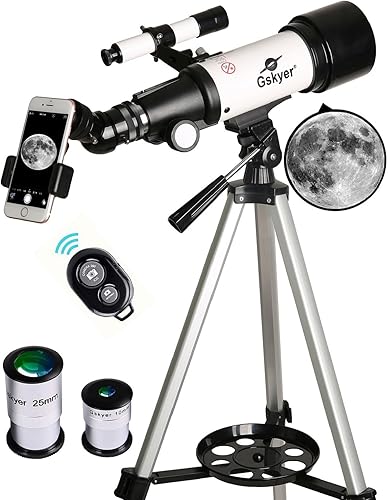
| Gskyer Telescope | adult-assisted moon viewing | 70 mm | 400 mm | Two eyepieces, 3x Barlow lens, finder scope, tripod, phone adapter, wireless remote, carry bag | 9.7 |
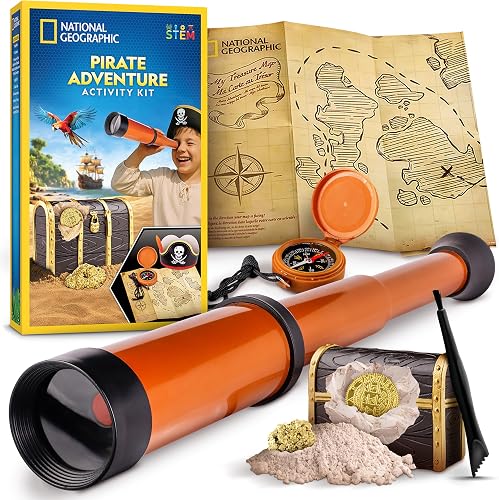
| Blue Marble National Geographic Pirate Telescope Adventure Activity | pirate-themed backyard play | Spyglass, compass, dig kit, tools, pirate hat, map, stickers, learning guide | 9.7 | ||
| Blue Marble NASA Lunar Telescope for Kids Ages | guided moon discovery | Telescope, tabletop tripod, finder scope, two eyepieces, learning guide | 9.4 | ||
| Koolpte Telescope for Kids | a growing beginner | 70 mm | 500 mm | Two eyepieces, finder scope, tripod, phone adapter, wireless remote, carrying case | 9.3 |
| Acoath Binoculars for Kids with Night Vision | daytime nature spotting | 9.2 | |||
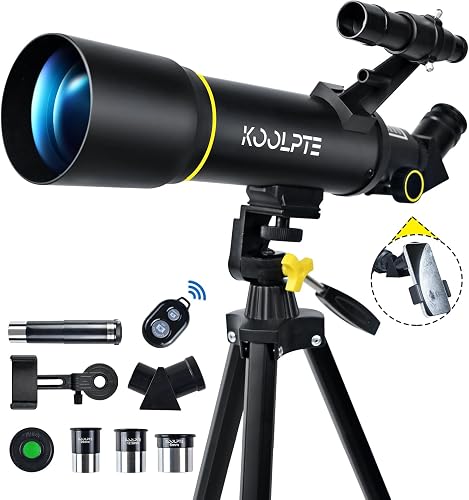
| Koolpte Telescope for Kids | a portable family setup | 70 mm | 400 mm | Three eyepieces, finder scope, tripod, phone adapter, wireless remote | 9.2 |
| Little Experimenter Projector Telescope | indoor space play | Projection discs, foldable tripod, activity book, 3 AG13 batteries | 9.0 | ||
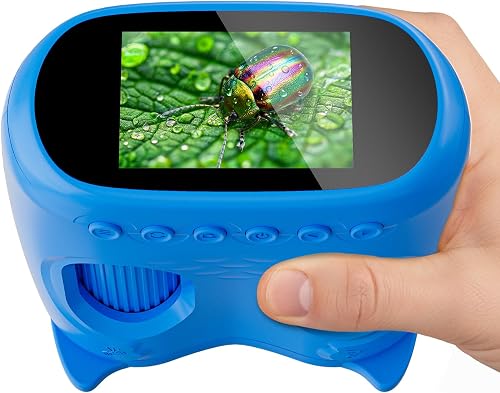
| Temodu 2-in-1 Kids Microscope Telescope | mixed close-up and distance play | 8.9 | |||
| LeapFrog Magic Adventures Telescope | screen-based learning | Detachable tripod, 20 Cosmic Cards, quick start guide | 8.8 |
Gskyer Telescope: Best for adult-assisted moon viewing
- 70 mm aperture
- 400 mm focal length
- Two eyepieces and a 3x Barlow lens
- Adjustable tripod and carry bag
A full-size refractor offers more room to grow into astronomy, but a young child will need an adult to set it up, aim it and manage the eyepieces.
Pros
- 70 mm aperture
- Adjustable tripod
- Carry bag for storage and travel
Cons
- Requires adult help with setup and aiming
- Small eyepieces need careful handling
The Gskyer is the best fit here when an adult plans to handle the telescope and share Moon or nature viewing. Its 70 mm aperture, 400 mm focal length and adjustable tripod give the adult a conventional refractor setup to aim and focus.
It includes two eyepieces, a 3x Barlow lens and a 5x24 finder scope. That gives the adult options for locating and viewing a target, but also means several small components should stay under adult control during a preschooler's turn.
The included phone adapter and wireless remote can help an adult share or capture a view. The carry bag holds the telescope and tripod for storage or travel.
Choose this for a family that wants to introduce real telescope viewing together. If the child mainly wants to explore nearby objects outdoors, binoculars may be easier to carry and point.
Blue Marble National Geographic Pirate Telescope Adventure Activity: Best for pirate-themed backyard play
- Working spyglass and compass
- Pirate craft activities
- Recommended for ages 4 and up
The working spyglass fits a preschooler's pretend-play adventures, alongside a compass, treasure dig and pirate crafts.
Pros
- Designed for ages 4 and up
- Spyglass and compass support outdoor play
- Includes several activities
Cons
- A spyglass for play, not an astronomy telescope
- Some activities need adult supervision
The Blue Marble pirate kit is a play-first pick for a 4-year-old who likes treasure hunts and pretend adventures. Its working spyglass and compass pair with a dig activity, pirate hat, treasure map and stickers.
The activity guide includes facts about pirates, their tools and treasure. The spyglass is for backyard exploration and imaginative play, so choose a different option if the main goal is observing the Moon or planets.
This kit is recommended for ages 4 and up, which makes it one of the few options here with an age range that directly includes preschoolers. An adult can help with the dig and craft steps, then let the child use the spyglass during play.
Blue Marble NASA Lunar Telescope for Kids Ages: Best for guided moon discovery
- Tabletop tripod
- Finder scope
- Low- and high-power eyepieces
- Recommended for ages 8 and up
This moon-focused telescope has a tabletop tripod and finder scope, but its stated age range makes it a better fit for an older child or adult-led family use.
Pros
- Made for lunar viewing
- Tabletop tripod and finder scope included
- Learning guide included
Cons
- Recommended for ages 8 and up
- Preschoolers need close adult help
The Blue Marble NASA Lunar Telescope is designed around Moon viewing, with a finder scope, two eyepieces and a tabletop tripod. Its smooth mounting system allows easy scanning of the lunar surface while the child takes a turn looking.
The stated age range is 8 years and up, so this is not a preschooler's independent-use scope. Consider it only if an adult will manage assembly, aiming and the eyepieces, or if you're buying for an older child in the household as well.
The included learning guide gives families moon-related material to explore together. For a 4-year-old, keep the expectation to a short assisted look rather than operating the telescope alone.
Koolpte Telescope for Kids: Best for a growing beginner
- 70 mm aperture
- 500 mm focal length
- Two eyepieces and a 3x Barlow lens
- Adjustable tripod and carrying case
This refractor has a finder scope and two eyepieces for a beginner exploring the Moon with an adult. Its components call for supervised handling at age 4.
Pros
- 70 mm aperture
- Finder scope included
- Adjustable tripod and carrying case
Cons
- Adult assistance needed for setup and aiming
- More parts to manage than a toy scope
The Koolpte 70 mm refractor gives an adult another full telescope option for shared viewing. It comes with a finder scope, two eyepieces, a 3x Barlow lens, adjustable tripod, phone adapter, wireless remote and carrying case.
Its 500 mm focal length is longer than the Gskyer's, and the adult can handle focus and target finding while the child looks through the eyepiece. As with any setup that includes small accessories, put loose pieces away between turns.
Choose it if you want a travel-ready kit with a carrying case and plan to stay beside the child. If a 4-year-old wants to point and explore without waiting for setup, a simple spyglass or toy projector is likely a better match.
Acoath Binoculars for Kids with Night Vision: Best for daytime nature spotting
- 10x optical zoom for viewing
- 2.4-inch screen
- Night vision with 7 infrared levels
- Designed for young explorers
These kid-focused binoculars suit outdoor discovery and wildlife viewing, with a screen and night vision. They are an alternative for exploring nearby nature rather than a telescope for astronomy.
Pros
- Designed for young explorers
- Daytime viewing and night vision modes
- Built-in camera
Cons
- Not an astronomy telescope
- Not water resistant
The Acoath binoculars are a practical alternative when the child's interest is wildlife, camping or backyard discovery. They offer 10x optical zoom for viewing, a 2.4-inch screen and a night vision mode with seven infrared levels.
These aren't a substitute for an astronomy telescope, but binocular-style handling can suit daytime exploration. Their built-in camera and screen may also keep a young child engaged while an adult helps with outdoor use.
The binoculars are not water resistant, so keep them dry. Choose them for nature spotting rather than a first look at the Moon through an optical telescope.
Koolpte Telescope for Kids: Best for a portable family setup
- 70 mm aperture
- 400 mm focal length
- Three eyepieces and a 3x Barlow lens
- Tripod, phone adapter and wireless remote
This portable refractor gives adults several eyepiece options for shared observing. Its multiple small parts make it a supervised choice for a preschool child.
Pros
- 70 mm aperture
- Three eyepieces included
- Tripod and finder scope included
Cons
- Needs adult setup and aiming
- More small accessories to keep track of
The Koolpte 400 mm refractor is another adult-led option for family observing. Its 70 mm aperture, three eyepieces, 3x Barlow lens and finder scope give an adult several ways to set up a view.
A phone adapter and wireless remote are included, along with an adjustable tripod. For a preschooler, an adult should set the tripod, locate the target and decide which eyepiece to use before inviting the child to take a look.
This model has more eyepieces than the other Koolpte scope above, so it brings more pieces to manage. Pick it when those options matter to the adult who will operate it, not because a 4-year-old needs extra magnification.
Little Experimenter Projector Telescope: Best for indoor space play
- 2x magnification
- Projects 24 space images
- Foldable tripod
- Includes activity book
A low-magnification toy scope and wall projector can make space-themed play accessible without aiming at distant objects. The discs and projection feature give a preschooler an indoor activity.
Pros
- Projects 24 space images
- Foldable tripod
- Activity book included
Cons
- A toy projector, not a telescope for celestial viewing
- Uses 3 AG13 batteries
The Little Experimenter projector telescope is a fit for indoor play about space. Its 24 image discs project space-themed pictures, and the foldable tripod lets a child adjust the viewing angle for wall projection.
The scope has 2x magnification and a soft, flexible eyepiece. Treat it as a toy and learning activity, not as a telescope for detailed night-sky observing.
The included activity book adds facts and activities about the solar system. This can be a low-pressure way to see whether a preschooler enjoys space themes before planning an outdoor observing session.
Temodu 2-in-1 Kids Microscope Telescope: Best for mixed close-up and distance play
- Microscope and telescope modes
- 2-inch color display
- 10x telescope mode
- Photo and video capture
The one-click switch between microscope and telescope modes gives a child more than one kind of discovery. An adult can help with setup and explain what the screen shows.
Pros
- Two exploration modes
- Designed for young children
- Built-in storage for photos
Cons
- Video recording needs a separate memory card
- Digital screen viewing differs from an optical scope
The Temodu combines a microscope and telescope mode in one handheld device. Its 2-inch color screen and one-click mode switch let a child move between close-up exploration and distant viewing with an adult's help.
The telescope mode is described as 10x, while the microscope side has LED lights and built-in storage for photos. Video recording needs a separate TF card, which is not included.
This is a screen-based discovery tool rather than a conventional astronomy telescope. It may suit a child whose interests shift between insects, plants and distant outdoor subjects.
LeapFrog Magic Adventures Telescope: Best for screen-based learning
- 2.4-inch video screen
- Up to 110x zoom
- More than 100 space videos and images
- Intended for ages 5 and up
A digital screen, space content and a game offer guided exploration for children nearing school age. Its stated age starts at 5, so it may suit a family planning ahead.
Pros
- Screen makes viewing easier to share
- Space videos and images included
- Can capture pictures
Cons
- Intended for ages 5 and up
- Requires 4 AA batteries
The LeapFrog Magic Adventures Telescope combines a video screen, space content and a game. It can show the Moon or daytime nature, capture pictures and introduce the child to NASA and European Space Agency videos and images.
Its intended age is 5 years and up, so it sits just beyond the age in this guide. The screen may make shared viewing easier, but a 4-year-old will still need help with the device and its controls.
Choose it if you're planning ahead for a child who enjoys guided digital activities. For other age-specific options, compare our picks for a best telescope for 7 year old, a best telescope for 8 year old and a best telescope for teenagers.
What matters most in a telescope for a preschooler?
For a 4-year-old, simple aiming and adult-assisted viewing matter more than high magnification. A short, shared session with a stable setup is easier to enjoy than a complicated kit the child is expected to operate alone.
Is a real telescope or a toy telescope better for a 4 year old?
A real telescope suits a family ready to guide the child through aiming and focusing, while a toy telescope suits pretend play or indoor activities. The Gskyer and Koolpte refractors are adult-operated astronomy choices; the pirate spyglass and projector are simpler play options.
Don't assume a toy labeled as a telescope will show the Moon in detail. Check whether it is meant for celestial observing, projection or outdoor pretend play.
Should a 4-year-old use a finder scope?
An adult should use the finder scope to locate the target, then invite the child to look through the main eyepiece. Finder scopes and telescope eyepieces can take patience to align, and they are easier to manage when one adult controls the setup.
Keep the telescope pointed away from the Sun at all times. Never look at the Sun through a telescope, finder scope or binoculars.
How long should a preschooler's first viewing session be?
Start with a few minutes and stop while the child is still interested. Let them take turns, describe what they see and return to the target if they ask for another look.
A bright Moon is a practical first target when visible. Avoid making the first session depend on finding faint objects or using high magnification.
How do you choose between the top picks?
Choose the Gskyer if your goal is adult-assisted sky viewing, the pirate kit for imaginative outdoor play, or the projector for an indoor space activity. Those choices separate real astronomical use from pretend and screen-based exploration.
If your child wants to point at birds, trees or distant playground details, the Acoath binoculars or Temodu device may suit that activity better than a telescope. For a younger sibling, see our guide to the best telescope for toddlers.
Which telescope should you choose for a 4-year-old?
Pick the Gskyer for shared Moon viewing, the pirate kit for a 4-year-old who loves pretend play, and the Little Experimenter projector for indoor space activities. Choose an adult-assisted refractor only if you can handle aiming, setup and small accessories throughout the session.
A telescope can be a starting point for family observing, while the child grows into more independent use. For the next age range, compare our guide to the best telescope for 8 year old.
Our top 3 picks at a glance
-
1
-
2
Best for pirate-themed backyard play
Blue Marble National Geographic Pirate Telescope Adventure Activity
9.7/10 our score
See it on Amazon -
3
Best for guided moon discovery
Blue Marble NASA Lunar Telescope for Kids Ages
9.4/10 our score
See it on Amazon
Frequently asked questions
Can a 4-year-old use a real telescope?
Yes, with an adult handling setup, aiming and eyepieces. A preschooler can take turns looking after an adult points the telescope at a bright, easy target such as the Moon.
Keep the session short and make sure the child never aims a telescope at the Sun.
What should I look for in a telescope for a 4 year old?
Look for a simple way to aim, a stable support and a viewing activity that matches the child's attention span. A spyglass or projector can suit play, while a real refractor offers shared astronomy with an adult.
Age guidance matters, especially for scopes with small removable parts.
Is a toy telescope good for stargazing?
A toy telescope can introduce the idea of looking through an instrument, but a projector or spyglass may not show the night sky like an astronomy telescope. Check what the toy is designed to do before expecting lunar or planet views.
For a preschooler, shared viewing and easy aiming often matter more than high magnification.
Should I buy a telescope for a 4-year-old or wait?
Choose a simple toy or outdoor viewer if the child enjoys pretend play and short activities. If they want to observe the Moon, an adult can guide sessions now and save more independent telescope use for when the child is older.
Our guides for toddlers and 7-year-olds cover nearby age ranges.



