What Does 10x50 Mean on Binoculars?
10x50 means 10x magnification with 50-millimeter objective lenses. The first number tells you how much closer an object looks, and the second number tells you how wide each front lens is for gathering light.
On this page (10 sections)
- What Does the 10 in 10x50 Binoculars Mean?
- What Does the 50 in 10x50 Mean on Binoculars?
- Why Is 10x50 a Popular Size for Astronomy?
- How Bright Is a 10x50 Pair Compared With Other Sizes?
- What Can You See With 10x50 Binoculars?
- What Are the Trade-Offs of 10x50 Binoculars?
- Which 10x50 Models Suit Different Observers?
- How Do You Use 10x50 Binoculars Well at Night?
- How Should You Care for 10x50 Binoculars?
- Binoculars 10x50 Meaning: Which Pair Should You Pick?
10x50 means 10x magnification with 50-millimeter objective lenses. The first number tells you how much closer an object looks, and the second number tells you how wide each front lens is for gathering light.
That covers the binoculars 10x50 meaning in brief. Read on to see why this size works for the Moon, bright stars, and daytime viewing, and where a different size may suit you better.
What Does the 10 in 10x50 Binoculars Mean?
The 10 in 10x50 means 10x magnification, so an object looks ten times closer than to your eye. A bird, ship, or ridge fills ten times more of your view than at normal vision.
Magnification also makes shake more visible. At 10x, a small hand movement can move the image across the field, so many people brace their elbows or use a tripod.
Think of 10x as reach, not added light. Light comes from the lens size, which is the next number in the pair.
For a wider, steadier view for close subjects, our post on 12x50 binoculars meaning shows how a higher number changes the feel.
What Does the 50 in 10x50 Mean on Binoculars?
The 50 in 10x50 means 50-millimeter objective lenses, the large front lenses that collect light. Bigger objectives gather more light, so the image stays brighter in low light.
You can check the math with exit pupil size. Divide the objective size by magnification: 50 divided by 10 equals 5.
A 5 mm exit pupil matches a dark-adapted eye well at night.
Objective size also affects bulk. A 50 mm pair is larger and heavier than a 42 mm pair, so it needs a stronger grip and a better case.
For astronomy, that light matters for faint stars, the Milky Way, and soft nebulae.
Why Is 10x50 a Popular Size for Astronomy?
10x50 is popular for astronomy because it balances reach, brightness, and ease of use. It shows the Moon with clear craters, separates many double stars, and fits whole star clusters in one view.
Smaller pairs are easier to hold steady but gather less light. Larger pairs gather more light but need a mount.
Many 10x50 pairs show about 5 to 6 degrees across. That is wide enough to frame the Moon and nearby stars together.
If you are still deciding, our guide on what binoculars to buy compares sizes side by side.
How Bright Is a 10x50 Pair Compared With Other Sizes?
A 10x50 pair is brighter than smaller objectives and steadier than larger high-power pairs. Its 5 mm exit pupil feels bright in twilight and at night.
Compare it with 8x42: 42 divided by 8 also gives about 5.2 mm, so brightness is similar, but 10x50 gives more reach. Compare it with 12x50: 50 divided by 12 gives about 4.2 mm, so the image is a bit dimmer and harder to hold steady.
Brightness also depends on coatings and glass. Fully multi-coated lenses pass more light than basic coatings.
That is why two binoculars both marked 10x50 can feel different. The size sets the ceiling, and the build decides how close the pair gets to it.
What Can You See With 10x50 Binoculars?
With 10x50 binoculars you can see the Moon's craters, bright planets, star clusters, and many bright nebulae. Saturn shows its rings as a clear oval, and Jupiter shows its four large moons in a line.
You can also spot the Andromeda Galaxy as a soft oval patch and follow the Milky Way across the sky. Open clusters like the Pleiades and the Double Cluster fit well in the wide field.
Daytime viewing is strong too. Birds, ships, wildlife, and distant landmarks look crisp and bright.
For a curated short list, see our picks for best 10x50 binoculars for astronomy.
How Does Field of View Affect What You See?
Field of view tells you how much sky fits in one look. A wider field makes it easier to find clusters and to see a whole constellation pattern at once.
Most 10x50 pairs show about 5 to 6 degrees. The Moon covers about half a degree, so you can fit the Moon plus a good margin of sky around it.
A narrower field, near 5 degrees, gives a tighter view with less distortion at the edge. A wider field, near 6 degrees, feels more open for scanning the Milky Way.
Some people love a wide sweep for star hopping, while others prefer a tighter view for planets and double stars.
What Are the Trade-Offs of 10x50 Binoculars?
The main trade-offs of 10x50 binoculars are weight, shake, and narrower field compared with lower power. You gain reach and light, and you give up some ease of handheld use.
At about 1 to 2 pounds for many models, a 10x50 pair is fine for short sessions but can tire your arms over an hour. A chair, a monopod, or a tripod helps a lot.
Focus systems also differ. InstaFocus is fast for moving daytime targets, while center focus with a diopter suits mixed eyesight at night.
Weather sealing is another split. Waterproof and fogproof models handle dew and cold nights, while basic models suit dry daytime use.
Which 10x50 Models Suit Different Observers?
Different 10x50 models suit daytime speed, wet weather, or all-around night use. Focus, sealing, and grip change the daily feel.
The Bushnell Falcon uses Porro prisms, fully coated optics, and InstaFocus for moving targets. It has fold-down eyecups and non-slip rubber pads.
The Pentax SP uses large objectives and multi-layer coatings. It is waterproof and nitrogen-filled to JIS Class 6 for rain and cold.
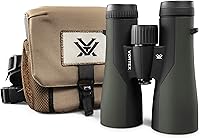
The Vortex Diamondback HD uses fully multi-coated lenses and Armortek protection. It is argon purged with o-ring seals for water and fogproof use.
Who Should Choose the Bushnell Falcon 10x50?
Choose the Bushnell Falcon 10x50 if you want fast focus for daytime and night use on a budget-friendly build. Its InstaFocus system helps you lock onto birds and moving targets quickly.
It has a 5 mm exit pupil, 9 mm eye relief, and a 5.7-degree apparent angle of view. The 300-foot field at 1,000 yards feels wide for scanning.
Bushnell describes the grip as all-weather with non-slip rubber pads. At 830 grams, it carries well on a trail.
If you want to read a full take, see our Bushnell Falcon 10x50 wide angle binoculars review.
Who Should Choose the Pentax SP 10x50 WP?
Choose the Pentax SP 10x50 WP if you want waterproof sealing and strong low-light coatings. Pentax says the large objectives gather maximum light for low light conditions.
It has a 5 mm exit pupil, 20 mm eye relief, and a 5-degree apparent angle of view. The generous eye relief suits people who wear glasses while observing.
The body uses rubber reinforcement and a rigid build to hold alignment. Pentax says the protective coating on some models repels dust, water, and grease to keep optics clean.
For a deeper look, read our Pentax SP 10x50 WP binoculars review.
Who Should Choose the Vortex Diamondback HD 10x50?
Choose the Vortex Diamondback HD 10x50 if you want center focus, diopter adjustment, and tripod use. The center focus wheel moves both barrels, and the diopter tunes the right eyepiece.
It has a 5 mm exit pupil, 17 mm eye relief, and a 6-degree apparent angle of view. Adjustable eyecups twist up and down for use with or without glasses.
Vortex says rubber armor gives a secure grip and protects the body. The pair includes a GlassPak case, harness, neck strap, lens covers, and a lens cloth.
See our Nikon Aculon A211 10x50 binoculars review for budget options, and our Pentax ZD 10x50 ED binoculars review for ED glass.
How Do You Use 10x50 Binoculars Well at Night?
Use 10x50 binoculars well by bracing your elbows, setting the interpupillary distance, and focusing on a bright star. Small steps make a big gain in sharpness.
Sit with your elbows on your knees or armrests. Hold both barrels and pull the strap taut when you stand.
A tripod gives the least shake.
Set the eyepieces so the view becomes one circle. Then focus on a bright star and set the diopter for your weaker eye if your model has one.
Let your eyes adapt for 20 minutes in the dark. Avoid white phone light, since it can wash out faint nebulae.
If you move to a telescope later, our guide to What Does Focal Length Mean on a Telescope? explains how magnification changes there.
How Should You Care for 10x50 Binoculars?
Care for 10x50 binoculars by keeping lenses capped, dry, and free of grit before you wipe them. Most damage comes from dust and rough handling, not from normal use.
Store the pair in its case with lens covers on. Keep silica gel packs in damp climates, and let a cold pair warm up indoors before you open it in a warm room.
Clean lenses with a blower, then a soft brush, then a lens cloth with lens cleaner. Avoid shirts, paper towels, and hard pressure, which can scratch coatings.
Check alignment by looking at a distant straight edge. If the two images do not line up, the pair may need service.
Binoculars 10x50 Meaning: Which Pair Should You Pick?
The binoculars 10x50 meaning is simple: 10x reach with 50 mm lenses for bright, steady viewing. Pick the model by focus style, sealing, and how you observe.
Pick the Bushnell Falcon if fast InstaFocus and a wide field matter most. Pick the Pentax SP if waterproof sealing and long eye relief matter most.
Pick the Vortex Diamondback HD if center focus, diopter tuning, and tripod use matter most.
For more choices across brands, compare our best 10x50 binoculars for astronomy list. It helps you match field of view and eye relief to your sky and your glasses.
Whichever 10x50 you choose, brace your elbows, let your eyes adapt, and start with the Moon.
Frequently asked questions
What does 10x50 mean on binoculars?
It means 10x magnification and 50-millimeter objective lenses. The 10x number makes distant objects appear ten times closer, while the 50 mm lenses gather light to keep the image bright.
This size gives a balance of reach, brightness, and stability.
Are 10x50 binoculars good for astronomy?
Yes, 10x50 binoculars are a common choice for astronomy because they show the Moon, bright planets, star clusters, and many nebulae with useful detail. The 50 mm lenses gather more light than smaller pairs, which helps faint objects stand out under a dark sky.
Is 10x50 better than 8x42 for stargazing?
10x50 gives more reach and a brighter image of faint objects, while 8x42 is easier to hold steady and shows a wider view. Choose 10x50 if you plan to use a support, and 8x42 if you mostly observe while standing without one.